

Why You’ll Love This Roasted Cauliflower Soup
- It’s deceptively creamy without any dairy. The magic here is all in the technique. Roasting the cauliflower breaks it down, making it blend into an incredibly smooth and luxurious texture. You won’t believe it’s cream-free until you taste it.
- The flavor is deep and complex, not one-dimensional. Roasting isn’t just for texture—it’s for taste. The high heat caramelizes the natural sugars in the cauliflower, giving the soup a nutty, almost buttery flavor base that boiling could never achieve.
- It’s a fantastic canvas for your favorite toppings. This soup is delicious on its own, but it truly shines when you add your own personal touch. A drizzle of chili oil, some crispy chickpeas, or a handful of fresh herbs can take it in a whole new direction every time you make it.
- It’s meal-prep heaven. This soup tastes even better the next day, as the flavors have more time to meld. It also freezes beautifully, meaning a wholesome, homemade meal is always just a thaw away on a busy day.
Ingredients & Tools
- 1 large head of cauliflower (about 2–2.5 lbs / 900g-1.1kg), cut into florets
- 1 large yellow onion, roughly chopped
- 3 cloves garlic, peeled
- 3 tablespoons olive oil, divided
- 4 cups (1 liter) vegetable broth
- 1 teaspoon fresh thyme leaves (or ½ tsp dried)
- ½ teaspoon smoked paprika
- To taste: salt and freshly ground black pepper
- For serving (optional): a squeeze of lemon juice, fresh parsley or chives, toasted pepitas (pumpkin seeds), a drizzle of truffle oil or chili crisp.
Tools: A large baking sheet, a large soup pot or Dutch oven, a blender (immersion or countertop).
The quality of your vegetable broth really matters here—since it’s a main flavor component, a good, rich broth will make a noticeable difference. And don’t skip the smoked paprika; it adds a subtle, smoky depth that complements the roasted cauliflower perfectly.
Serves: 4 | Prep Time: 15 minutes | Cook Time: 45 minutes | Total Time: 1 hour
Before You Start: Tips & Ingredient Notes
- Don’t crowd the pan! This is the golden rule of roasting. If you pile all the cauliflower onto one baking sheet, it will steam instead of roast. We want caramelization, which requires space. Use two sheets if necessary.
- Size matters for the florets. Try to cut your cauliflower into similarly sized florets. This ensures they all cook and brown at the same rate, so you don’t end up with some burnt pieces and some undercooked ones.
- Embrace the browned bits. Those dark, crispy edges on your roasted cauliflower? That’s pure flavor gold. Don’t shy away from them! They are the secret to the soup’s deep, complex taste.
- To immersion blend or to countertop blend? An immersion blender is fantastic for convenience (less cleanup!), but a high-speed countertop blender will give you the absolute silkiest, most restaurant-quality texture. If you go the countertop route, just be careful blending hot liquids.
How to Make Roasted Cauliflower Soup
Step 1: Preheat your oven to 425°F (220°C). While it’s heating up, prepare your vegetables. Chop the cauliflower into florets—don’t discard the core and any tender leaves! They add great flavor; just chop them up a bit. Roughly chop the onion and peel the garlic cloves. The trick is to keep everything a similar size for even roasting.
Step 2: Spread the cauliflower florets, onion, and garlic cloves on a large baking sheet. Drizzle with 2 tablespoons of the olive oil and sprinkle generously with salt and pepper. Now, get your hands in there! Toss everything together until all the vegetables are evenly coated in the oil. This hands-on approach ensures every nook and cranny gets glossy and ready to roast.
Step 3: Roast for 25-30 minutes, or until the cauliflower is tender and has beautiful golden-brown spots all over. You’ll notice the edges of the onions might get a little crispy—that’s exactly what we want. The aroma in your kitchen at this point will be absolutely incredible.
Step 4: While the vegetables are roasting, heat the remaining 1 tablespoon of olive oil in a large soup pot over medium heat. Add the thyme and smoked paprika and stir for just 30 seconds until fragrant. This quick bloom in the oil really wakes up their flavors.
Step 5: Carefully add the roasted vegetables to the pot, followed by the vegetable broth. Bring everything to a gentle simmer, then reduce the heat and let it cook for about 10 minutes. This allows the flavors to get to know each other and the cauliflower to become completely tender.
Step 6: Now, for the transformation! If using an immersion blender, carefully blend the soup right in the pot until it’s completely smooth. If using a countertop blender, let the soup cool slightly, then blend in batches, never filling the blender more than halfway, and holding the lid down with a towel. Blend until velvety.
Step 7: Taste and adjust the seasoning. This is the most important step. Does it need more salt? A few cracks of black pepper? The soup might need a little lift—a small squeeze of fresh lemon juice at the end can work wonders to brighten all the flavors. If the soup is too thick for your liking, simply thin it out with a bit more broth or water until it reaches your desired consistency.
Step 8: Ladle the hot soup into bowls and get creative with your toppings. A final drizzle of good olive oil, some fresh herbs, and maybe something crunchy like toasted pepitas will add wonderful contrast and make each bowl a masterpiece.
Serving Suggestions
Complementary Dishes
- A thick slice of crusty, grainy bread — Honestly, this is non-negotiable for dipping and scooping up every last bit of soup. A warm, buttered slice or a piece of focaccia is perfect.
- A simple, crisp side salad — The freshness of a lemony arugula salad with a sharp vinaigrette provides a lovely, palate-cleansing contrast to the rich, creamy soup.
- A gourmet grilled cheese sandwich — Elevate a weeknight classic by using aged cheddar and a thin layer of fig jam on sourdough. The sweet and savory combo alongside the soup is pure comfort.
Drinks
- A crisp, unoaked Chardonnay or Sauvignon Blanc — The bright acidity and citrus notes in these wines cut through the soup’s creaminess beautifully without overpowering its subtle flavors.
- A dry hard cider — The effervescence and apple notes are a surprisingly fantastic match for the earthy, roasted notes of the cauliflower.
- A warm cup of herbal tea — For a non-alcoholic option, a lemon-ginger or peppermint tea is soothing and complements the meal without competing with it.
Something Sweet
- A simple ginger cookie or biscotti — The warm spice of ginger is a classic pairing with creamy soups. A crunchy biscotti is also ideal for a little dunking.
- A small bowl of lemon sorbet — This is a brilliant palate cleanser that ends the meal on a light, refreshing, and tangy note.
- Dark chocolate with sea salt — Just a square or two of high-quality dark chocolate provides a rich, bittersweet finish that feels indulgent but not overly heavy.
Top Mistakes to Avoid
- Mistake: Underseasoning the cauliflower before roasting. This is your first and best chance to build a flavor foundation. Salt draws out moisture and helps with browning, so be generous when tossing the florets with oil.
- Mistake: Blending the soup while it’s piping hot in a countertop blender. I’ve learned this the hard way! The steam can build up pressure and blow the lid off, creating a dangerous mess. Always let it cool for a few minutes and blend in small batches.
- Mistake: Skipping the taste-and-adjust step at the end. Soups need seasoning at every stage. After blending, the flavors have melded and you might find it needs another pinch of salt or a squeeze of acid to really make it sing.
- Mistake: Adding water instead of broth to thin the soup. If your soup is too thick after blending, always reach for more broth, not water. Water will just dilute the flavor you worked so hard to build.
Expert Tips
- Tip: Add a potato for extra silkiness. If you want an even thicker, velvety texture, try roasting a small, peeled russet potato along with the cauliflower. It blends into an incredibly smooth consistency.
- Tip: Make it ahead for deeper flavor. This soup is a perfect make-ahead meal. Let it cool completely and store it in the fridge overnight. The next day, the flavors will have deepened and harmonized beautifully.
- Tip: Freeze it right. For best freezing results, leave out any dairy or potato if you added it. Let the soup cool completely, then portion it into airtight containers, leaving some space for expansion. It will keep well for up to 3 months.
- Tip: Get creative with spices. Love curry? Add a tablespoon of curry powder with the paprika. Want a little heat? A pinch of cayenne or red pepper flakes with the roasting cauliflower works wonders. This recipe is a wonderful base for experimentation.
FAQs
Can I make this soup vegan?
It already is! This recipe is naturally vegan, as we achieve creaminess through roasting and blending, not with dairy. Just double-check that your vegetable broth is certified vegan if that’s a concern. The optional toppings are also easily kept plant-based.
My soup turned out a bit bland. What can I do?
Don’t worry, this is an easy fix! First, make sure you’ve added enough salt—it’s amazing how a little more can brighten all the other flavors. Next, add a squeeze of fresh lemon juice or a tiny splash of white wine vinegar. Acid is the secret weapon for balancing and lifting flavors. Finally, check your seasonings; maybe it needs another pinch of smoked paprika or some black pepper.
Can I use frozen cauliflower?
You can, but the results will be different. Frozen cauliflower has a higher water content, so it won’t roast and caramelize the same way fresh cauliflower does. It will steam and soften, resulting in a soup that’s less nutty and complex. If you must use frozen, thaw and pat it very dry before roasting, but for the best flavor, fresh is definitely the way to go.
How long will this soup keep in the refrigerator?
Stored in an airtight container, your roasted cauliflower soup will stay fresh in the fridge for about 4-5 days. You’ll notice it might thicken up as it sits; just thin it out with a little broth or water when you reheat it gently on the stove.
What’s the best way to reheat it?
The stovetop is your best bet for reheating. Gently warm it over medium-low heat, stirring occasionally, until it’s heated through. If you use a microwave, do it in short bursts, stirring in between to avoid hot spots and to help it heat evenly without splattering.
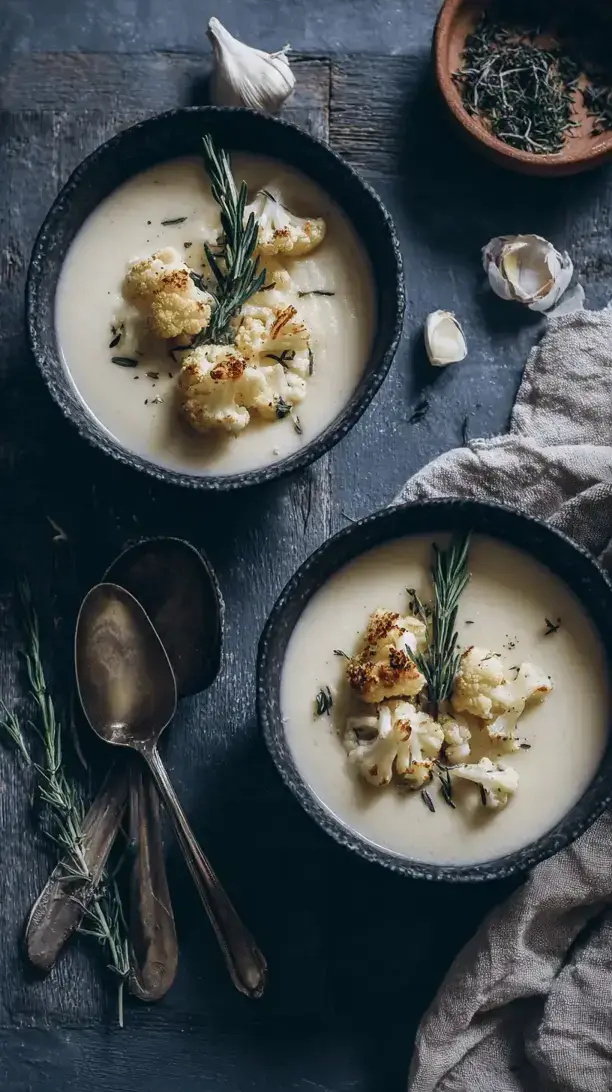
Roasted Cauliflower Soup
Creamy roasted cauliflower soup with no cream! This easy recipe unlocks deep, nutty flavor. Perfect for a cozy dinner & meal prep. Get Mike's foolproof method for a velvety, dairy-free soup.
Ingredients
Ingredients
-
1 large head cauliflower (about 2–2.5 lbs / 900g-1.1kg, cut into florets)
-
1 large yellow onion (roughly chopped)
-
3 cloves garlic (peeled)
-
3 tablespoons olive oil (divided)
-
4 cups vegetable broth (1 liter)
-
1 teaspoon fresh thyme leaves (or ½ tsp dried)
-
½ teaspoon smoked paprika
-
salt (to taste)
-
freshly ground black pepper (to taste)
-
lemon juice (for serving (optional))
-
fresh parsley or chives (for serving (optional))
-
toasted pepitas (pumpkin seeds) (for serving (optional))
-
truffle oil or chili crisp (for serving (optional))
Instructions
-
Preheat your oven to 425°F (220°C). While it's heating up, prepare your vegetables. Chop the cauliflower into florets—don't discard the core and any tender leaves! They add great flavor; just chop them up a bit. Roughly chop the onion and peel the garlic cloves. The trick is to keep everything a similar size for even roasting.01
-
Spread the cauliflower florets, onion, and garlic cloves on a large baking sheet. Drizzle with 2 tablespoons of the olive oil and sprinkle generously with salt and pepper. Now, get your hands in there! Toss everything together until all the vegetables are evenly coated in the oil. This hands-on approach ensures every nook and cranny gets glossy and ready to roast.02
-
Roast for 25-30 minutes, or until the cauliflower is tender and has beautiful golden-brown spots all over. You'll notice the edges of the onions might get a little crispy—that's exactly what we want. The aroma in your kitchen at this point will be absolutely incredible.03
-
While the vegetables are roasting, heat the remaining 1 tablespoon of olive oil in a large soup pot over medium heat. Add the thyme and smoked paprika and stir for just 30 seconds until fragrant. This quick bloom in the oil really wakes up their flavors.04
-
Carefully add the roasted vegetables to the pot, followed by the vegetable broth. Bring everything to a gentle simmer, then reduce the heat and let it cook for about 10 minutes. This allows the flavors to get to know each other and the cauliflower to become completely tender.05
-
Now, for the transformation! If using an immersion blender, carefully blend the soup right in the pot until it's completely smooth. If using a countertop blender, let the soup cool slightly, then blend in batches, never filling the blender more than halfway, and holding the lid down with a towel. Blend until velvety.06
-
Taste and adjust the seasoning. This is the most important step. Does it need more salt? A few cracks of black pepper? The soup might need a little lift—a small squeeze of fresh lemon juice at the end can work wonders to brighten all the flavors. If the soup is too thick for your liking, simply thin it out with a bit more broth or water until it reaches your desired consistency.07
-
Ladle the hot soup into bowls and get creative with your toppings. A final drizzle of good olive oil, some fresh herbs, and maybe something crunchy like toasted pepitas will add wonderful contrast and make each bowl a masterpiece.08


