

Why You’ll Love This Garden Vegetable Soup
- It’s a celebration of simplicity. This recipe doesn’t rely on complex techniques or hard-to-find ingredients. The magic happens when fresh, good-quality vegetables are allowed to shine in a savory, herb-infused broth. It’s honest food that tastes incredible.
- It’s incredibly versatile. Think of this less as a strict recipe and more as a template. I’ll give you a fantastic base, but you can easily swap vegetables based on what’s in season or what you have on hand. It’s a wonderful way to clean out the crisper drawer!
- It’s a true feel-good meal. Light, hydrating, and packed with nutrients from all those veggies, this soup just makes you feel good from the inside out. It’s the perfect reset button after a busy week or a rich meal.
- It makes fantastic leftovers. Honestly, this soup might even be better the next day. The flavors have more time to meld and deepen, making it a brilliant make-ahead option for healthy lunches all week long.
Ingredients & Tools
- 2 tbsp olive oil
- 1 large yellow onion, diced
- 2 medium carrots, peeled and diced
- 2 celery stalks, diced
- 3 cloves garlic, minced
- 1 tsp dried thyme (or 1 tbsp fresh)
- 1 bay leaf
- 1.5 litres (about 6 cups) vegetable broth
- 400 g can of chopped tomatoes
- 1 medium potato, peeled and cubed
- 1 medium zucchini, diced
- 100 g green beans, trimmed and cut into 1-inch pieces
- 1 large handful fresh spinach or kale
- Salt and black pepper to taste
- Fresh parsley for garnish
Tools: A large soup pot or Dutch oven, a sharp knife, and a cutting board.
The quality of your broth really makes a difference here, so if you can, use a good-quality store-bought one or even homemade. And don’t stress about the vegetable sizes—a rough, rustic chop is perfectly fine and adds to the homemade charm.
Serves: 4-6 | Prep Time: 20 minutes | Cook Time: 30 minutes | Total Time: 50 minutes
Before You Start: Tips & Ingredient Notes
- Dice your veggies evenly. This isn’t about being perfect, but try to cut everything into similar-sized pieces. It ensures they all cook at roughly the same rate, so you don’t end up with mushy potatoes and crunchy carrots.
- Don’t rush the first step. Sautéing the onion, carrot, and celery (this trio is called a soffritto or mirepoix) is where you build the foundational flavor of the soup. Let them soften and sweeten properly—it should take a good 8-10 minutes.
- Fresh vs. dried herbs? Dried thyme works wonderfully here as it stands up to the cooking time. If you’re using fresh, add it towards the end for a brighter flavor. The bay leaf, however, is non-negotiable for that subtle, earthy depth.
- Greens go last. Tender greens like spinach or kale will wilt in literally the last minute of cooking. Adding them too early turns them slimy and dulls their vibrant color.
How to Make Garden Vegetable Soup
Step 1: Start by heating the olive oil in your large pot over a medium heat. Once the oil shimmers, add the diced onion, carrots, and celery. You’ll hear a satisfying sizzle. Sprinkle with a pinch of salt—this helps draw out their moisture and speeds up the softening process. Cook, stirring occasionally, for about 8-10 minutes, until the onions are translucent and the carrots have begun to soften. You’re not looking for color here, just tenderness. The aroma at this stage is already fantastic.
Step 2: Add the minced garlic, dried thyme, and the bay leaf. Stir constantly for just about 60 seconds—until the garlic is fragrant. Be careful not to let the garlic burn, as it will turn bitter. This quick bloom of the herbs and garlic in the hot oil unlocks their essential oils and infuses the entire base of the soup with flavor.
Step 3: Now, pour in the vegetable broth and the canned chopped tomatoes with their juices. Add the cubed potato at this point, as it needs the longest time to cook. Give everything a good stir, scraping the bottom of the pot to lift any tasty browned bits. Bring the soup up to a lively boil.
Step 4: Once boiling, reduce the heat to a gentle simmer. Let it bubble away, uncovered, for about 15 minutes. You’ll notice the liquid will reduce slightly and the potatoes will be just about tender when pierced with a fork. This simmering time allows the flavors to start marrying together.
Step 5: Now, stir in the diced zucchini and green beans. These vegetables cook much faster and we want them to retain a bit of bite and bright color. Continue to simmer for another 5-7 minutes, until they are tender-crisp.
Step 6: This is the final touch! Turn off the heat. Stir in the handful of fresh spinach or kale—it will wilt almost instantly from the residual heat. Now, taste the soup. This is the most important step. Season generously with salt and freshly ground black pepper until it tastes just right for you. Remember, the broth you started with will have varying salt levels, so trust your palate.
Step 7: Ladle the hot soup into bowls and garnish with a sprinkle of freshly chopped parsley. A final drizzle of good olive oil on top is never a bad idea, either. Serve it immediately while it’s piping hot and comforting.
Serving Suggestions
Complementary Dishes
- Crusty, buttery sourdough bread — There’s nothing better for dunking and sopping up every last bit of the delicious broth. The contrast of the crunchy crust and soft interior is pure bliss.
- A simple, sharp cheese board — A few slices of aged cheddar or a chunk of parmesan to grate over the top adds a lovely salty, umami kick that complements the vegetable sweetness.
- A robust green salad — Something with a tangy vinaigrette, like an arugula salad with lemon dressing, provides a fresh, peppery counterpoint to the warm, savory soup.
Drinks
- A crisp, unoaked white wine — A Sauvignon Blanc or Pinot Grigio with its bright acidity cuts through the richness and cleanses the palate beautifully between spoonfuls.
- Sparkling water with lemon — For a non-alcoholic option, the bubbles and citrus are incredibly refreshing and highlight the soup’s fresh vegetable flavors.
- A light-bodied pale ale — The herbal, slightly bitter notes in a good pale ale can mirror the thyme and bay leaf in the soup, creating a really harmonious pairing.
Something Sweet
- Lemon drizzle loaf cake — The zesty, sweet sharpness of a lemon cake is a fantastic way to finish the meal, cutting through any lingering savory notes perfectly.
- Simple almond biscotti — They’re not too sweet and their crunchy texture is lovely for dipping into a cup of tea or coffee after your soup.
- Fresh berry compote with vanilla ice cream — The bright, tart berries and cool, creamy ice cream offer a light yet satisfying end to a vegetable-focused meal.
Top Mistakes to Avoid
- Mistake: Overcooking the vegetables. There’s a fine line between tender and mushy. Adding all the veggies at the same time is a common error. By staggering them based on their cooking times (potatoes first, zucchini last), you ensure every component has the perfect texture.
- Mistake: Skipping the taste test at the end. Seasoning is everything. Broths vary wildly in salt content. Not tasting and adjusting the seasoning just before serving can result in a bland soup. Be bold with that salt and pepper shaker!
- Mistake: Boiling too vigorously. A rapid, rolling boil can break down the vegetables too quickly and make the broth cloudy. A gentle simmer is key for a clear broth and intact, perfectly cooked veggies.
- Mistake: Forgetting to remove the bay leaf. It’s easy to do! While the bay leaf is essential for flavor during cooking, it’s not meant to be eaten. A quick reminder to fish it out before serving saves an unpleasant surprise.
Expert Tips
- Tip: Add a parmesan rind. If you have a rind of parmesan cheese lurking in your fridge, toss it into the pot with the broth. It will melt slowly, imparting an incredible savory, umami depth that makes the soup taste like it’s been simmering for hours. Just remember to remove it before serving.
- Tip: Try a squeeze of lemon juice. Right at the end, a squeeze of fresh lemon juice can brighten all the flavors dramatically. It’s a little trick that makes the vegetables taste fresher and more vibrant.
- Tip: Make it a “kitchen sink” soup. This recipe is incredibly forgiving. Got half a bell pepper? Chop it in. Some leftover corn? Toss it in with the zucchini. A can of beans? Rinse them and add them for extra protein. Embrace the improvisation!
- Tip: Freeze it right. This soup freezes beautifully. Let it cool completely, then portion it into airtight containers, leaving a little space for expansion. It’ll keep for up to 3 months. Thaw overnight in the fridge for a quick, healthy meal.
FAQs
Can I use frozen vegetables instead of fresh?
Absolutely, you can! It’s a great time-saver. There’s no need to thaw them—just add frozen vegetables like peas, corn, or mixed veggies directly to the pot. You’ll want to add them in the last 5-7 minutes of cooking, just like you would with the quicker-cooking fresh veggies. The texture might be a tiny bit softer than fresh, but the flavor and convenience are fantastic. I’d avoid frozen onions, though, as they can become a bit watery.
How long will this soup keep in the refrigerator?
Stored in an airtight container, your Garden Vegetable Soup will stay fresh and delicious in the fridge for about 4-5 days. You might notice the potatoes absorb some of the broth, making the soup thicker. Just add a splash of water or extra broth when you reheat it to bring it back to your desired consistency. The flavors often improve after a day, making the leftovers something to look forward to.
Can I make this soup creamy?
You sure can, and it’s easy! For a creamy version, blend about half of the cooked soup with a hand blender or in a stand blender (be careful with the hot liquid!), then stir it back into the pot. Alternatively, stir in a splash of cream, coconut milk, or a dollop of cream cheese or mascarpone at the very end, after you’ve turned off the heat. It creates a lovely, velvety texture.
My soup tastes a bit flat. How can I fix it?
This happens sometimes! The first thing to check is your seasoning—does it need more salt? Salt is a flavor enhancer. If it’s seasoned well but still lacks depth, try adding a splash of something acidic, like a squeeze of lemon juice or a tiny dash of vinegar (balsamic or red wine vinegar work well). Acid can brighten and balance all the other flavors. A pinch of sugar can also help if the tomatoes are particularly acidic.
Is this soup freezer-friendly?
It’s one of the best soups for freezing! Cool the soup completely before transferring it to freezer-safe containers or bags. Leave about an inch of space at the top for expansion. It will keep well for up to 3 months. The potatoes might be a little softer upon thawing, but the overall flavor will be great. To serve, thaw overnight in the refrigerator and reheat gently on the stove.
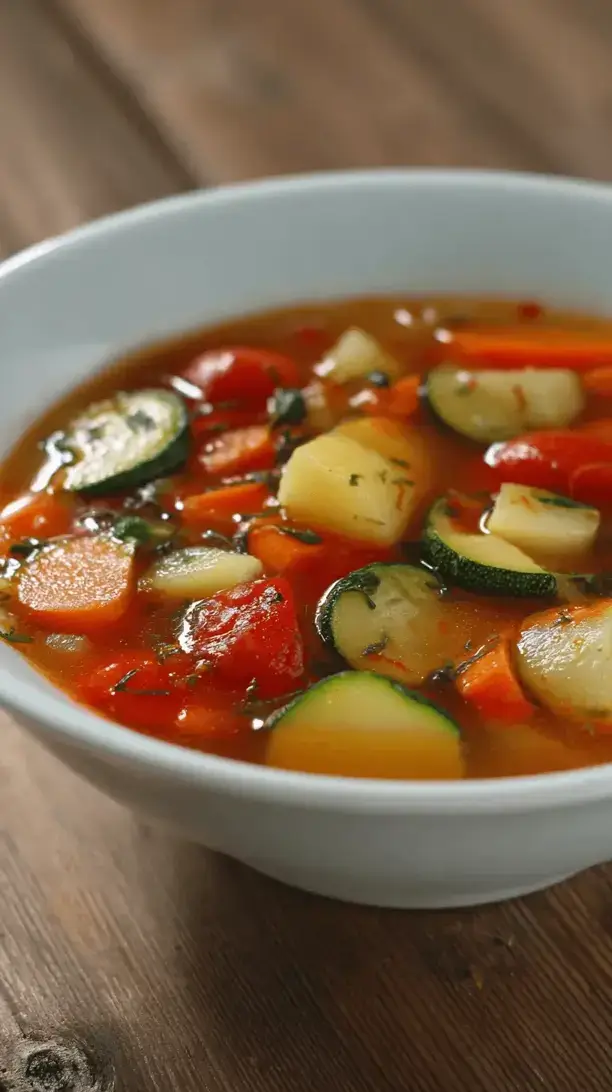
Garden Vegetable Soup
Whip up my easy Garden Vegetable Soup! Packed with fresh veggies & simmered in savory broth, this comforting, healthy recipe is your new go-to weeknight meal. Ready in 50 mins!
Ingredients
Ingredients
-
2 tbsp olive oil
-
1 large yellow onion (diced)
-
2 medium carrots (peeled and diced)
-
2 celery stalks (diced)
-
3 cloves garlic (minced)
-
1 tsp dried thyme (or 1 tbsp fresh)
-
1 bay leaf
-
1.5 litres vegetable broth (about 6 cups)
-
400 g chopped tomatoes (canned)
-
1 medium potato (peeled and cubed)
-
1 medium zucchini (diced)
-
100 g green beans (trimmed and cut into 1-inch pieces)
-
1 large handful fresh spinach or kale
-
Salt and black pepper (to taste)
-
Fresh parsley (for garnish)
Instructions
-
Start by heating the olive oil in your large pot over a medium heat. Once the oil shimmers, add the diced onion, carrots, and celery. You'll hear a satisfying sizzle. Sprinkle with a pinch of salt—this helps draw out their moisture and speeds up the softening process. Cook, stirring occasionally, for about 8-10 minutes, until the onions are translucent and the carrots have begun to soften. You're not looking for color here, just tenderness. The aroma at this stage is already fantastic.01
-
Add the minced garlic, dried thyme, and the bay leaf. Stir constantly for just about 60 seconds—until the garlic is fragrant. Be careful not to let the garlic burn, as it will turn bitter. This quick bloom of the herbs and garlic in the hot oil unlocks their essential oils and infuses the entire base of the soup with flavor.02
-
Now, pour in the vegetable broth and the canned chopped tomatoes with their juices. Add the cubed potato at this point, as it needs the longest time to cook. Give everything a good stir, scraping the bottom of the pot to lift any tasty browned bits. Bring the soup up to a lively boil.03
-
Once boiling, reduce the heat to a gentle simmer. Let it bubble away, uncovered, for about 15 minutes. You'll notice the liquid will reduce slightly and the potatoes will be just about tender when pierced with a fork. This simmering time allows the flavors to start marrying together.04
-
Now, stir in the diced zucchini and green beans. These vegetables cook much faster and we want them to retain a bit of bite and bright color. Continue to simmer for another 5-7 minutes, until they are tender-crisp.05
-
This is the final touch! Turn off the heat. Stir in the handful of fresh spinach or kale—it will wilt almost instantly from the residual heat. Now, taste the soup. This is the most important step. Season generously with salt and freshly ground black pepper until it tastes just right for you. Remember, the broth you started with will have varying salt levels, so trust your palate.06
-
Ladle the hot soup into bowls and garnish with a sprinkle of freshly chopped parsley. A final drizzle of good olive oil on top is never a bad idea, either. Serve it immediately while it's piping hot and comforting.07


