

There’s something truly special about a lazy weekend morning that calls for a stack of pancakes. But these aren’t just any pancakes—we’re taking things to a tropical, creamy, utterly indulgent level. I’m talking about Coconut Cream Pancakes. Honestly, the first time I made these, the aroma that filled my kitchen was pure vacation vibes. They’re incredibly light and fluffy, with a subtle sweetness and richness that comes from using coconut cream right in the batter. You’ll notice they have this beautiful golden-brown exterior and a melt-in-your-mouth texture that’s just… different. The trick is in how the coconut cream interacts with the other ingredients, creating a pancake that’s both decadent and surprisingly simple to whip up. Forget the boxed mix; this from-scratch recipe is a game-changer for anyone who loves a good brunch with a twist.
Why You’ll Love This Coconut Cream Pancakes
- Unbelievably Fluffy Texture. The high fat content in the coconut cream creates an incredibly tender crumb and a lift that makes these pancakes cloud-like. You get that perfect, soft interior that just soaks up syrup beautifully.
- A Fragrant, Tropical Escape. Each bite carries the delicate, sweet aroma of coconut without being overpowering. It’s a subtle flavor that makes your breakfast feel like a special occasion, even on a random Tuesday.
- Surprisingly Simple to Make. You might think a pancake this good requires chef-level skills, but honestly, it’s a one-bowl situation for the most part. The method is straightforward, and the ingredients are simple—the magic is in the combination.
- Naturally Dairy-Free. By using coconut cream and a non-dairy milk, this recipe is a fantastic option for those avoiding dairy, without sacrificing an ounce of richness or flavor. They’re just as satisfying as traditional buttermilk pancakes.
Ingredients & Tools
- 1 ¾ cups all-purpose flour
- 2 tbsp granulated sugar
- 2 tsp baking powder
- ½ tsp baking soda
- ½ tsp salt
- 1 can (13.5 oz) full-fat coconut cream, chilled overnight
- 1 cup coconut milk (from a carton, or the lighter liquid from the can)
- 1 large egg
- 2 tbsp coconut oil, melted (plus more for cooking)
- 1 tsp vanilla extract (or coconut extract for extra punch)
Tools: A large mixing bowl, whisk, measuring cups/spoons, ladle or ¼ cup measure, non-stick skillet or griddle, spatula.
A quick note on the coconut cream—using the full-fat, chilled version is key. You’ll scoop out the thick, solid cream from the top of the can, which gives the pancakes their richness. The coconut milk helps to achieve the right batter consistency. And don’t skip the melted coconut oil; it reinforces that wonderful flavor throughout.
Serves: 4 (makes about 12 pancakes) | Prep Time: 10 minutes | Cook Time: 15 minutes | Total Time: 25 minutes
Before You Start: Tips & Ingredient Notes
- Chill Your Coconut Cream Overnight. This is non-negotiable for the best results. Placing the unopened can in the fridge ensures the cream solidifies and separates from the thinner liquid, making it easy to scoop out the thick, luxurious part we need.
- Don’t Overmix the Batter. A few lumps are your friend! Overmixing develops the gluten in the flour, which can lead to tough, chewy pancakes. Stir until the ingredients are just combined, even if it looks a little shaggy.
- Let the Batter Rest for 5 Minutes. This little pause allows the baking powder and soda to start activating and the flour hydrates fully, resulting in a lighter, more cohesive batter that cooks up fluffier.
- Test Your Skillet’s Heat. The perfect pancake needs a properly heated surface. A drop of water should sizzle and dance across the skillet before you add the batter. Too hot, and they’ll burn; too cool, and they’ll be pale and greasy.
How to Make Coconut Cream Pancakes
Step 1: Prepare the Dry Ingredients. In your large mixing bowl, whisk together the flour, sugar, baking powder, baking soda, and salt. This ensures the leavening agents are evenly distributed, so every pancake rises perfectly. You’ll get a nice, uniform base for your wet ingredients.
Step 2: Scoop the Coconut Cream. Open your chilled can of coconut cream. You’ll see a thick, solid layer on top. Carefully scoop out this solid cream into a separate medium bowl or a liquid measuring cup. You should get about 1 cup of solid cream. Reserve the thinner coconut water at the bottom of the can for smoothies or another use.
Step 3: Combine the Wet Ingredients. To the bowl with the solid coconut cream, add the 1 cup of coconut milk, the egg, melted coconut oil, and vanilla extract. Whisk it all together until it’s relatively smooth. The mixture will be thick and creamy—that’s exactly what you want. Don’t worry if there are a few tiny lumps of coconut cream; they’ll melt away during cooking.
Step 4: Bring It All Together. Pour the wet coconut mixture into the bowl with the dry ingredients. Using a spatula or whisk, gently fold everything together. Stop as soon as you no longer see streaks of dry flour. Remember, a lumpy batter is a fluffy pancake batter! Let this rest for 5 minutes while you heat your skillet.
Step 5: Heat and Grease the Skillet. Place your non-stick skillet or griddle over medium heat. Add a small amount of coconut oil (about half a teaspoon) and let it melt and get hot. You’ll know it’s ready when a drop of water sizzles energetically on the surface. Wipe any excess oil with a paper towel for an even sear.
Step 6: Cook to Golden-Brown Perfection. Using a ¼ cup measure or a ladle, pour batter onto the hot skillet. Cook until you see bubbles forming on the surface and the edges look set and slightly dry, about 2-3 minutes. The bottom should be a lovely golden brown. Then, slide your spatula underneath and flip confidently. Cook for another 1-2 minutes on the second side until golden. You’ll notice the pancakes puff up beautifully.
Step 7: Keep Them Warm. As you cook the pancakes, transfer them to a wire rack set on a baking sheet in a 200°F (95°C) oven. This keeps them warm and crisp without getting soggy, which is a common mistake if you stack them on a plate. You can serve them all at once, hot and perfect.
Serving Suggestions
Complementary Dishes
- Crispy Turmeric Hash Browns — The earthy, savory notes of turmeric and crispy potatoes provide a fantastic textural and flavor contrast to the sweet, soft pancakes.
- Pan-Fried Bananas with a Pinch of Cinnamon — Sliced bananas caramelized in a little coconut oil and cinnamon amplify the tropical theme and add a warm, gooey topping.
- Veggie-Packed Scrambled Tofu — For a savory brunch balance, a scramble with turmeric, black salt, and peppers offers a protein-rich counterpoint that’s also dairy-free.
Drinks
- Iced Coconut Cold Brew Coffee — Double down on the coconut flavor with a smooth, chilled coffee that complements without overpowering the meal.
- Fresh Pineapple-Mint Sparkler — A bubbly, non-alcoholic drink with muddled mint and pineapple juice adds a refreshing, bright element that cuts through the richness.
- A Light, Fruity Rosé — If you’re leaning into a boozy brunch, a dry rosé with notes of strawberry and citrus pairs wonderfully with the coconut’s sweetness.
Something Sweet
- Warm Maple Syrup with Toasted Coconut Flakes — Gently toasting unsweetened coconut flakes and stirring them into warm maple syrup creates a nutty, aromatic topping that’s simply divine.
- Mango Puree — A quick blitz of ripe mango creates a vibrant, fruity sauce that feels luxurious and keeps the tropical vibe going strong.
- Dark Chocolate Shavings — For a more decadent twist, a few shavings of high-quality dark chocolate on top add a bittersweet note that plays beautifully with the coconut.
Top Mistakes to Avoid
- Mistake: Using room temperature coconut cream. If the cream isn’t chilled, it won’t be solid enough to scoop, and you’ll end up with a runny batter that lacks the necessary fat for maximum fluffiness. The texture of the final pancake will be denser.
- Mistake: Flipping the pancakes too early. Impatience is the enemy of a good pancake. If you flip before the surface is covered with bubbles and the edges are set, you’ll tear the pancake and end up with an uneven, undercooked middle. Wait for those visual cues!
- Mistake: Pressing down on the pancakes with the spatula. I’ve messed this up before too… but pressing down squeezes out the precious air bubbles that give the pancakes their light texture. Just flip and let them be.
- Mistake: Crowding the skillet. Giving each pancake enough space ensures they cook evenly and steam doesn’t build up, which can make them soggy. Cook in batches for the best results.
Expert Tips
- Tip: Whip the coconut cream first. For an even lighter, almost soufflé-like texture, you can use a hand mixer to whip the chilled coconut cream until light and fluffy before adding the other wet ingredients. It incorporates more air for an incredible rise.
- Tip: Add a tablespoon of rum or Malibu. For an adult-only version, a splash of coconut rum in the batter enhances the tropical flavor and the alcohol cooks off, leaving just a wonderful aroma behind.
- Tip: Make a big batch and freeze them. These pancakes freeze exceptionally well. Let them cool completely, then layer them between parchment paper in a freezer bag. Reheat in a toaster for a quick, gourmet breakfast on busy mornings.
- Tip: Use an ice cream scoop for perfect portions. A trigger-release ice cream scoop is a fantastic tool for dropping perfectly round, equally sized pancakes onto the griddle with minimal mess.
FAQs
Can I use coconut milk instead of coconut cream?
You can, but the results will be different. Coconut milk is much thinner, so your pancakes will be less rich and noticeably less fluffy. If you must substitute, use the thickest canned coconut milk you can find and reduce the additional coconut milk in the recipe to about ½ cup, adding more only if the batter is too thick. For the authentic texture, though, coconut cream is really the way to go.
My batter is very thick, is that normal?
Yes, it should be quite thick! This isn’t a thin, crepe-like batter. A thicker batter helps create tall, fluffy pancakes that hold their shape. If it’s so thick it’s impossible to pour, you can add a tablespoon or two more of coconut milk to loosen it slightly, but err on the side of thickness. It will spread a little once it hits the hot skillet.
Can I make the batter the night before?
I don’t recommend it. The baking powder and soda will lose their leavening power overnight, resulting in flat, dense pancakes. The best plan is to measure your dry ingredients the night before and have your wet ingredients ready to go in the fridge. Then, just combine them in the morning for the freshest, fluffiest results.
How can I tell when the skillet is at the right temperature?
The water droplet test is your best friend. Sprinkle a few drops of water onto the surface. If they sizzle and evaporate instantly, it’s too hot. If they just sit there, it’s too cold. You want the droplets to “dance” and skitter across the surface before evaporating. That’s the sweet spot for a perfect golden-brown sear.
Are these pancakes vegan?
This specific recipe is not vegan because it contains an egg, which helps with structure and binding. To make a vegan version, you can try a “flax egg” (1 tbsp ground flaxseed mixed with 3 tbsp water, left to thicken for 5 minutes). The texture will be slightly more delicate, but still delicious. You’ll want to be extra gentle when flipping them.
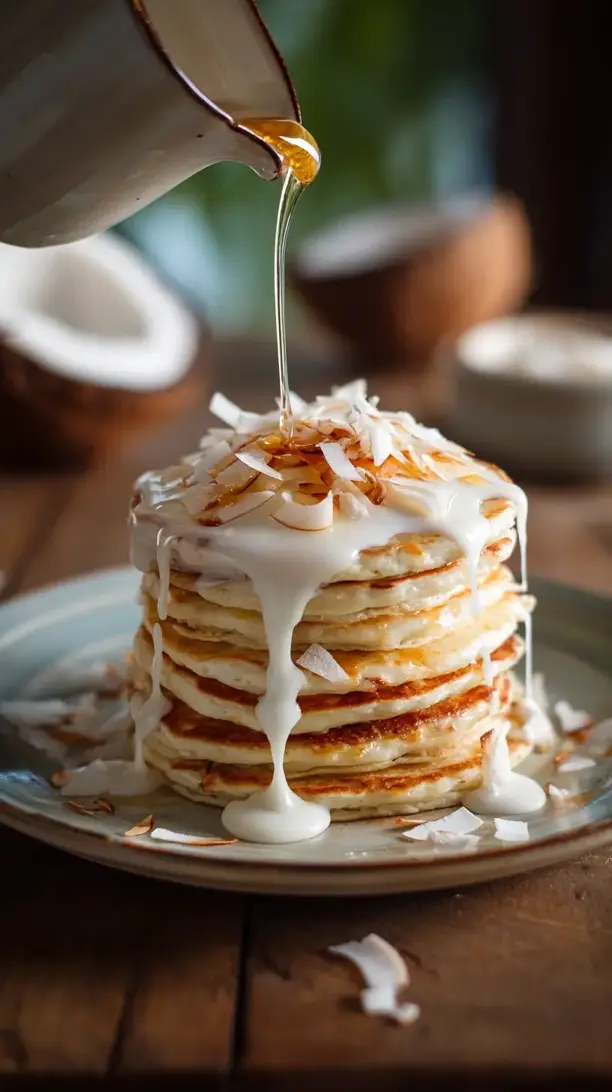
Coconut Cream Pancakes
Whip up incredibly fluffy, dairy-free Coconut Cream Pancakes! This easy recipe brings tropical vacation vibes to your breakfast table in just 25 minutes. Perfect for a special brunch.
Ingredients
Ingredients
-
1 ¾ cups all-purpose flour
-
2 tbsp granulated sugar
-
2 tsp baking powder
-
½ tsp baking soda
-
½ tsp salt
-
1 can full-fat coconut cream (13.5 oz, chilled overnight)
-
1 cup coconut milk (from a carton, or the lighter liquid from the can)
-
1 large egg
-
2 tbsp coconut oil (melted, plus more for cooking)
-
1 tsp vanilla extract (or coconut extract for extra punch)
Instructions
-
Prepare the Dry Ingredients. In your large mixing bowl, whisk together the flour, sugar, baking powder, baking soda, and salt. This ensures the leavening agents are evenly distributed, so every pancake rises perfectly. You'll get a nice, uniform base for your wet ingredients.01
-
Scoop the Coconut Cream. Open your chilled can of coconut cream. You'll see a thick, solid layer on top. Carefully scoop out this solid cream into a separate medium bowl or a liquid measuring cup. You should get about 1 cup of solid cream. Reserve the thinner coconut water at the bottom of the can for smoothies or another use.02
-
Combine the Wet Ingredients. To the bowl with the solid coconut cream, add the 1 cup of coconut milk, the egg, melted coconut oil, and vanilla extract. Whisk it all together until it's relatively smooth. The mixture will be thick and creamy—that's exactly what you want. Don't worry if there are a few tiny lumps of coconut cream; they'll melt away during cooking.03
-
Bring It All Together. Pour the wet coconut mixture into the bowl with the dry ingredients. Using a spatula or whisk, gently fold everything together. Stop as soon as you no longer see streaks of dry flour. Remember, a lumpy batter is a fluffy pancake batter! Let this rest for 5 minutes while you heat your skillet.04
-
Heat and Grease the Skillet. Place your non-stick skillet or griddle over medium heat. Add a small amount of coconut oil (about half a teaspoon) and let it melt and get hot. You'll know it's ready when a drop of water sizzles energetically on the surface. Wipe any excess oil with a paper towel for an even sear.05
-
Cook to Golden-Brown Perfection. Using a ¼ cup measure or a ladle, pour batter onto the hot skillet. Cook until you see bubbles forming on the surface and the edges look set and slightly dry, about 2-3 minutes. The bottom should be a lovely golden brown. Then, slide your spatula underneath and flip confidently. Cook for another 1-2 minutes on the second side until golden. You'll notice the pancakes puff up beautifully.06
-
Keep Them Warm. As you cook the pancakes, transfer them to a wire rack set on a baking sheet in a 200°F (95°C) oven. This keeps them warm and crisp without getting soggy, which is a common mistake if you stack them on a plate. You can serve them all at once, hot and perfect.07


