
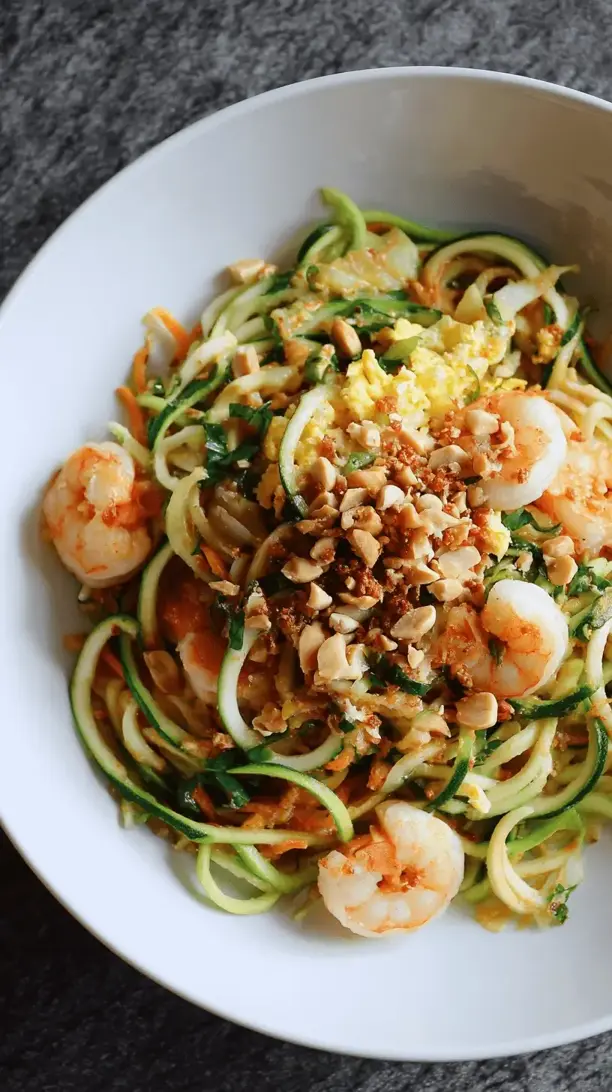

Why You’ll Love This Zucchini Noodle Pad Thai
- It’s a flavour explosion in a bowl. We’re not skimping on the classic Pad Thai sauce here. The combination of tamarind, fish sauce, and a touch of sweetness creates that addictive sweet-sour-salty balance you know and love, clinging perfectly to every strand of zucchini noodle.
- It comes together in under 30 minutes. Seriously, it’s faster than waiting for delivery. Since we’re using raw zucchini noodles, there’s no need to boil a big pot of water. The cooking process is a quick, high-heat stir-fry that locks in all the freshness.
- It’s incredibly versatile. Got some shrimp in the fridge? Toss them in. Prefer tofu? Crumble it in for a plant-based protein punch. This recipe is a fantastic template that welcomes whatever you have on hand.
- It feels nourishing and light. Swapping traditional rice noodles for zucchini spirals means you can enjoy a generous, satisfying portion that’s full of fibre and vitamins, leaving you feeling energised, not sluggish.
Ingredients & Tools
- 4 medium zucchinis (about 600-700g total)
- 2 tbsp avocado oil or coconut oil, divided
- 2 large eggs, lightly beaten
- 1 large carrot, julienned or grated
- 1 red bell pepper, thinly sliced
- 3 spring onions, sliced (whites and greens separated)
- 2 cloves garlic, minced
- 150g bean sprouts
- 50g roasted unsalted peanuts, roughly chopped
- 1 large lime, cut into wedges
- Fresh coriander, for serving
For the Pad Thai Sauce:
- 3 tbsp fish sauce (or soy sauce/tamari for vegetarian)
- 3 tbsp tamarind paste
- 2 tbsp rice vinegar
- 1.5 tbsp coconut sugar or brown sugar
- 1 tbsp soy sauce or tamari
- 1-2 tsp sriracha or chili garlic sauce (adjust to taste)
Tools: A spiralizer (or julienne peeler), a large wok or non-stick skillet, a small bowl for the sauce.
The sauce ingredients are non-negotiable for that authentic taste—especially the tamarind paste, which gives the dish its signature tang. Don’t worry, it’s easy to find in the international aisle! And using a spiralizer for the zucchini makes all the difference, creating those perfect, noodle-like strands.
Serves: 2-3 | Prep Time: 15 minutes | Cook Time: 10 minutes | Total Time: 25 minutes
Before You Start: Tips & Ingredient Notes
- Get your mise en place ready. Stir-fries move fast! Have all your veggies prepped, your sauce mixed, and your eggs beaten before you even turn on the heat. This prevents overcooking and ensures a smooth, stress-free process.
- Don’t skip salting the zucchini noodles. This is a crucial step! Toss your spiralized zucchini with a pinch of salt and let it sit in a colander for 10-15 minutes. This draws out excess water, preventing your Pad Thai from becoming a soupy mess. Just give them a good squeeze with paper towels before cooking.
- Taste your sauce and adjust. The balance of sweet, sour, and salty is personal. Give your mixed sauce a quick taste. Want it tangier? Add a splash more rice vinegar. Sweeter? A pinch more sugar. This is your chance to make it perfect for your palate.
- What if I can’t find tamarind paste? No panic! You can substitute with an equal amount of fresh lime juice. The flavour profile will be slightly different—a bit sharper and more citrusy—but it will still be absolutely delicious.
How to Make Zucchini Noodle Pad Thai
Step 1: Prepare the Zucchini Noodles. Spiralize your zucchinis into noodles. Place them in a colander set over a bowl or the sink, toss with a generous pinch of salt, and let them sit for at least 10 minutes. This is the perfect time to mix your sauce and prep the other vegetables. After they’ve rested, take a handful of the noodles and squeeze them firmly over the sink to remove as much liquid as possible. Pat them dry with a clean kitchen towel or paper towels. You’ll be amazed at how much water comes out—this is the secret to non-watery noodles!
Step 2: Make the Sauce. In a small bowl, whisk together the fish sauce, tamarind paste, rice vinegar, coconut sugar, soy sauce, and sriracha until the sugar is fully dissolved. Give it a taste—this is where you can adjust the flavours to your liking. Remember, the sauce will mellow a little when mixed with all the ingredients, so it should taste quite strong on its own. Set it aside within easy reach of your stove.
Step 3: Scramble the Eggs. Heat a large wok or non-stick skillet over medium-high heat. Add one tablespoon of oil. Once the oil is shimmering, pour in the beaten eggs. Let them set for about 30 seconds before scrambling them gently with a spatula until just cooked through. They should be soft and fluffy. Quickly transfer them back to the bowl you beat them in. No need to wash the wok!
Step 4: Sauté the Aromatics and Veggies. Add the remaining tablespoon of oil to the hot wok. Toss in the white parts of the spring onions, the minced garlic, and the sliced bell pepper. Stir-fry for about 1-2 minutes until they become fragrant and just start to soften. You want them to retain a good crunch. Then, add the julienned carrot and stir-fry for another minute.
Step 5: Bring It All Together. Now, add the well-squeezed and dried zucchini noodles to the wok. Pour the prepared sauce over everything. Using a pair of tongs or two spatulas, toss everything together quickly and efficiently. You only need to cook the zucchini noodles for about 1-2 minutes—just until they are heated through and coated in the sauce. They should be al dente, not mushy.
Step 6: Final Touches. Return the scrambled eggs to the wok. Add about two-thirds of the bean sprouts and most of the green parts of the spring onions. Give everything one final, gentle toss to combine and heat the eggs through. This should take no more than 30 seconds.
Step 7: Serve Immediately. Divide the Zucchini Noodle Pad Thai between bowls. Top generously with the remaining fresh bean sprouts, the chopped peanuts, and a handful of fresh coriander. Serve immediately with lime wedges on the side for squeezing over the top. The fresh, cool toppings against the warm, savoury noodles is pure magic.
Serving Suggestions
Complementary Dishes
- A simple cucumber salad — Thinly sliced cucumbers with a quick dressing of rice vinegar, a pinch of sugar, and a sprinkle of red chili flakes provides a cool, crisp contrast that cuts through the richness of the Pad Thai beautifully.
- Fresh summer rolls — If you’re feeling ambitious, serving these on the side makes the meal feel like a true Thai feast. Their soft, chewy texture and fresh herb filling are a wonderful companion.
Drinks
- A crisp, dry Riesling — The slight sweetness and high acidity of a good Riesling work wonders with the sweet, sour, and spicy notes in the dish, cleansing the palate with every sip.
- A classic Mojito (or a virgin version) — The mint and lime in a mojito are a match made in heaven for Thai flavours. It’s refreshing, zesty, and incredibly uplifting.
Something Sweet
- Mango with sticky rice — It’s the classic Thai dessert for a reason. The sweet, creamy mango and the slightly salty coconut sticky rice are the perfect, not-too-heavy ending to this meal.
- Coconut ice cream — A simple scoop of high-quality coconut ice cream is a no-fuss way to end on a sweet note. The creamy coconut flavour echoes the tropical vibes of the main course.
Top Mistakes to Avoid
- Mistake: Not salting and squeezing the zucchini noodles. This is the number one reason for a watery dish. Skipping this step will release all that liquid into your sauce as it cooks, diluting the flavour and creating a soupy texture. I’ve learned this the hard way!
- Mistake: Overcooking the zucchini noodles. Zucchini noodles need mere minutes in the heat. If you cook them for too long, they’ll turn soft, mushy, and release even more water. Toss them in the sauce just to heat through and wilt slightly—think al dente pasta.
- Mistake: Adding the sauce too early or all at once without control. We add the sauce at the very end, just before the zucchini goes in. This ensures everything gets coated evenly and the sauce reduces slightly without overcooking the delicate veggies.
- Mistake: Crowding the wok. If your pan is too small, the vegetables will steam instead of stir-fry, losing that wonderful crisp-tender texture. Use the largest skillet or wok you have to give every ingredient plenty of room.
Expert Tips
- Tip: For a richer, deeper flavour, toast your peanuts. Even if they’re already roasted, giving them a quick toast in a dry pan for a minute or two until fragrant will amplify their nutty flavour, making them an even better garnish.
- Tip: Add protein with confidence. If using shrimp or chicken, cook them first in the wok after the eggs, then set aside and add back in at the end with the zucchini. For tofu, press it well and pan-fry until crispy before starting.
- Tip: Make it a deconstructed bowl for meal prep. Keep the sauce, dry-squeezed zucchini noodles, and cooked toppings separate in containers. When ready to eat, quickly reheat the toppings and sauce in a pan, toss with the cold zucchini noodles just until warm, and enjoy a fresh-tasting meal in minutes.
- Tip: Use the wide blade of your spiralizer. If your spiralizer has different blades, opt for the one that creates wider, ribbon-like noodles. These hold up better to stirring and have a more satisfying, noodle-like bite compared to very thin strands.
FAQs
Can I make this Zucchini Noodle Pad Thai ahead of time?
You can prep all the components ahead of time, but I highly recommend assembling it just before serving. The salted and squeezed zucchini noodles will keep in an airtight container in the fridge for a day. The sauce can be mixed and stored separately. When ready to eat, the stir-fry itself is so quick that it’s best done fresh. If you have leftovers, they will be softer but still tasty—just know the noodles will release more liquid upon reheating.
Is this recipe gluten-free?
It can be easily! Just ensure you use tamari instead of soy sauce (as tamari is typically wheat-free) and check that your fish sauce is gluten-free (most reputable brands are). All the other ingredients are naturally gluten-free, making this a fantastic option for those with dietary restrictions.
My sauce is too salty/tangy/sweet. How can I fix it?
Don’t worry, sauce balance is easily adjustable! If it’s too salty, add a touch more coconut sugar and a squeeze of lime. Too tangy? Balance it with more sugar. Too sweet? A splash more fish sauce and rice vinegar will fix it. The key is to taste and adjust gradually until it sings to you. Remember, you’re the boss of your wok!
Can I use a different vegetable instead of zucchini?
Absolutely! Yellow summer squash would work almost identically. You could also try a combination of zucchini and carrot noodles, or even use sweet potato noodles (though these will require a slightly longer cooking time). The method remains the same—just adjust the cooking time based on the vegetable’s water content and density.
What’s the best way to reheat leftovers?
The best method is to reheat them in a dry skillet over medium heat, stirring frequently. This helps evaporate some of the excess liquid that will have leached out. Avoid the microwave if you can, as it will steam the noodles and make them even softer. They won’t be quite as perfect as fresh, but they’ll still be a delicious lunch!


