
Why You’ll Love This Zesty Lemon Garlic Shrimp
- It’s incredibly fast. From pan to plate in under 15 minutes, this recipe is a lifesaver on those evenings when you’re short on time but still want a satisfying, home-cooked meal.
- The flavor is bright and vibrant. The combination of fresh lemon zest, juice, and minced garlic creates a sauce that’s tangy, aromatic, and just buttery enough to feel indulgent without being heavy.
- It’s surprisingly versatile. You can serve this shrimp over a bed of pasta or zucchini noodles, alongside rice, or simply with a loaf of crusty bread for dipping — it adapts to whatever you’re craving.
- It feels fancy but is so simple. This dish has a restaurant-quality vibe that will impress anyone you serve it to, yet the process is straightforward and requires no advanced cooking skills.
Ingredients & Tools
- 450 g large raw shrimp, peeled and deveined
- 3 tbsp unsalted butter
- 2 tbsp olive oil
- 4-5 large garlic cloves, minced
- 1 large lemon (you’ll need zest and juice)
- 1/4 cup dry white wine (like Sauvignon Blanc)
- 2 tbsp fresh parsley, finely chopped
- 1/4 tsp red pepper flakes (optional, for heat)
- To taste salt and freshly ground black pepper
Tools: A large skillet (preferably stainless steel or cast iron), a microplane or zester, a sharp knife, and a pair of tongs.
A little note on the shrimp — I really recommend getting raw, peeled, and deveined shrimp to save time. The white wine adds a lovely depth of acidity, but you can swap it for a splash of chicken broth if you prefer. And don’t skip the fresh lemon zest; it’s where a lot of that beautiful, perfumed citrus oil lives.
Nutrition (per serving)
- Calories: 285 kcal
- Protein: 24 g
- Fat: 18 g
- Carbohydrates: 4 g
- Fiber: 1 g
Serves: 3 | Prep Time: 10 minutes | Cook Time: 5 minutes | Total Time: 15 minutes
Before You Start: Tips & Ingredient Notes
- Pat your shrimp dry. This is a small step that makes a huge difference. Moisture is the enemy of a good sear, so giving the shrimp a quick pat with a paper towel ensures they get a nice golden color instead of steaming in the pan.
- Mince, don’t crush, the garlic. For this quick-cooking sauce, you want small pieces of garlic that will infuse the butter and oil without burning. A fine mince gives you the best flavor distribution.
- Zest your lemon first. It is infinitely easier to zest a whole, uncut lemon. Do this before you juice it — you’ll get more zest, and it’s far less messy. Trust me on this one.
- Have all your ingredients ready. Because the cooking process is so fast, you won’t have time to chop or measure once you start. Having everything prepped and within arm’s reach (what chefs call *mise en place*) is the key to a stress-free experience.
How to Make Zesty Lemon Garlic Shrimp
Step 1: Start by preparing your shrimp. If they aren’t already, peel and devein them, leaving the tails on or off based on your preference. Give them a good pat all over with paper towels until they are thoroughly dry. Season them generously with a pinch of salt and black pepper on both sides. This initial seasoning is important as it lays the foundation for the entire dish.
Step 2: Zest your lemon using a microplane or the fine side of a box grater. You’re aiming for about a tablespoon of loosely packed zest. Then, cut the lemon in half and juice it. You should get roughly 3 tablespoons of juice. Set both the zest and juice aside separately. Mince your garlic cloves and chop your parsley, too. Having everything prepped makes the next steps feel like a breeze.
Step 3: Place your large skillet over medium-high heat and let it get properly hot. Add the olive oil and 1 tablespoon of the butter. Once the butter has melted and started to foam a little, it’s time to add the shrimp. You should hear a satisfying sizzle. Arrange them in a single layer, making sure not to overcrowd the pan — you might need to cook in two batches if your skillet is smaller.
Step 4: Cook the shrimp for just about 1-2 minutes per side. You’ll notice them turning pink and opaque around the edges, and they’ll start to curl into a loose “C” shape. Don’t walk away! They cook incredibly fast. The goal is to get a light golden sear on the outside while keeping the inside tender. Use tongs to flip them, then remove them to a clean plate. They will not be fully cooked through yet, and that’s perfectly fine.
Step 5: Reduce the heat to medium. To the same skillet, add the remaining 2 tablespoons of butter. Once it melts, add the minced garlic and the optional red pepper flakes. Cook for just 30-60 seconds, stirring constantly, until the garlic is fragrant. You want it to be golden, not brown, as burnt garlic will turn the sauce bitter. The aroma at this stage is absolutely divine.
Step 6: Carefully pour in the white wine. It will bubble and steam vigorously. Use your spatula to scrape up any of those delicious browned bits stuck to the bottom of the pan — that’s pure flavor! Let the wine simmer and reduce by about half, which should take just a minute or so. The sharp alcohol smell will cook off, leaving behind a wonderful acidity.
Step 7: Stir in the fresh lemon juice and let it bubble for another 30 seconds. You’ll see the sauce start to come together and look a little glossy. Now, return the shrimp and any accumulated juices on the plate back into the skillet. Toss everything together to coat the shrimp in the sauce and heat them through for a final minute. They should be perfectly cooked by now — opaque and firm to the touch.
Step 8: Turn off the heat. Stir in the fresh lemon zest and most of the chopped parsley, reserving a little for garnish. The residual heat will wake up the oils in the zest, making the citrus flavor pop. Give the sauce a final taste and adjust the seasoning with more salt or pepper if needed. The sauce should be a beautiful balance of rich, tangy, and garlicky.
Serving Suggestions
Complementary Dishes
- Over angel hair pasta or orzo — The thin pasta or small rice-shaped pasta is fantastic for soaking up every last drop of that lemony, buttery sauce.
- With a simple arugula salad — The peppery bite of arugula dressed with just a squeeze of lemon and a drizzle of olive oil provides a fresh, crisp contrast to the rich shrimp.
- Alongside creamy polenta or risotto — The smooth, comforting texture of polenta or a simple lemon risotto creates a wonderful base that lets the shrimp truly shine.
Drinks
- A crisp Sauvignon Blanc — The wine’s natural citrus and herbaceous notes mirror the flavors in the dish, creating a perfect pairing that cleanses the palate.
- Sparkling water with lemon — For a non-alcoholic option, the bubbles and citrus are incredibly refreshing and help cut through the richness of the butter.
Something Sweet
- Lemon sorbet — Continuing the citrus theme with a light, palate-cleansing dessert feels like the most natural and satisfying way to end the meal.
- Almond biscotti — The nutty, crunchy cookies are lovely for dipping into a cup of espresso and provide a nice textural contrast after the soft shrimp.
Top Mistakes to Avoid
- Overcooking the shrimp. Shrimp go from perfectly tender to rubbery and tough in a matter of seconds. The moment they turn opaque and form a “C” shape, they’re done. Remember, they’ll continue to cook a little from residual heat even after you take them out of the pan.
- Burning the garlic. Garlic burns very easily and becomes bitter, which can ruin the entire sauce. Keep the heat at medium after the initial sear and stir constantly — you just want it to become fragrant and lightly golden.
- Crowding the pan. If you put too many shrimp in the skillet at once, they’ll steam instead of sear. You want a nice, single layer with a little space between each piece to get that beautiful caramelization.
- Adding the lemon zest too early. The delicate citrus oils in the zest can become bitter if cooked for too long. Stirring it in at the very end, off the heat, preserves its bright, floral aroma.
Expert Tips
- Tip: Use frozen shrimp. Honestly, most “fresh” shrimp at the counter were previously frozen anyway. Buying frozen allows you to always have some on hand. Just thaw them overnight in the fridge in a colander so the water drains away.
- Tip: Brown the butter. For a deeper, nuttier flavor, let the butter cook a little longer in the pan until it turns a light golden brown and smells toasty before adding the garlic. It adds a whole new dimension to the sauce.
- Tip: Finish with a cold knob of butter. After you’ve turned off the heat and added the zest, swirl in one last tablespoon of cold, cubed butter. This professional chef’s trick, called *monter au beurre*, makes the sauce incredibly glossy and luxurious.
- Tip: Add capers for a briny kick. If you love a salty, briny flavor, toss in a tablespoon of rinsed capers along with the garlic. They pair beautifully with the lemon and add a wonderful little pop of flavor.
FAQs
Can I make this dish ahead of time?
You can do most of the prep ahead of time, but I wouldn’t recommend cooking it in advance. Shrimp are best served immediately after cooking. However, you can peel, devein, and season the shrimp a few hours ahead and keep them covered in the fridge. You can also mince the garlic, chop the parsley, and zest/juice the lemon ahead of time. When you’re ready to eat, the actual cooking will take just 5 minutes, so it’s still incredibly fast.
What can I use instead of white wine?
No problem at all! The wine adds acidity, so you’ll want to replace it with something with a similar profile. An equal amount of chicken or vegetable broth with a squeeze of extra lemon juice works wonderfully. You could also use a non-alcoholic wine. The goal is to have a liquid to deglaze the pan and build the sauce, so any of these options will do the trick nicely.
My sauce looks a little separated or greasy. What happened?
This usually happens if the heat was a bit too high when you added the final ingredients, causing the butter and oil to split from the lemon juice. Don’t worry, it’s still perfectly safe to eat! To fix it, remove the pan from the heat and vigorously whisk in a splash of cold water or broth. This should help bring the sauce back together into a more cohesive, creamy emulsion.
Can I use pre-cooked shrimp?
I really don’t recommend it for this recipe. Pre-cooked shrimp are already fully cooked and very easy to overcook, making them tough and rubbery if you try to reheat them in the sauce. Starting with raw shrimp allows them to cook gently in the flavorful sauce, absorbing all the lemon and garlic goodness and staying perfectly tender.
How do I know when the shrimp are fully cooked?
Look for both visual and textural cues. Visually, raw shrimp are gray and translucent, while cooked shrimp are pink and opaque. In terms of shape, they will curl into a loose “C”. If they curl into a tight “O”, they are likely overdone. Texture-wise, they should be firm to the touch but still have a slight springback — think of the feel of the fleshy part of your palm when you press it.
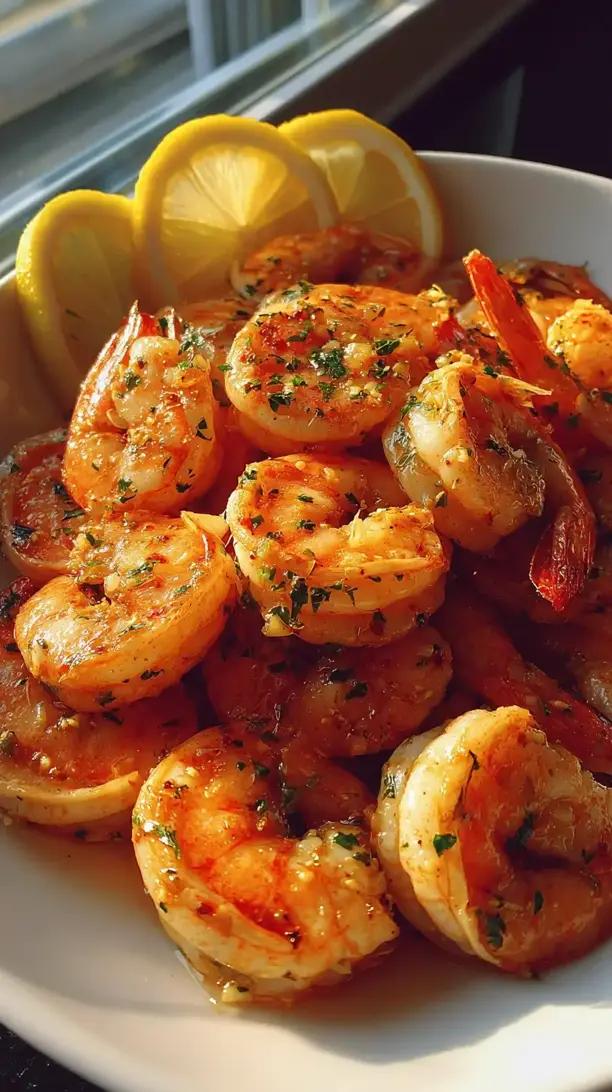
Zesty Lemon Garlic Shrimp
Make this easy Zesty Lemon Garlic Shrimp in just 15 minutes for a bright, flavorful meal. Perfect over pasta or with crusty bread. Get the simple recipe now!
Ingredients
For the Ingredients & Tools
-
450 g large raw shrimp (peeled and deveined)
-
3 tbsp unsalted butter
-
2 tbsp olive oil
-
4-5 large garlic cloves (minced)
-
1 large lemon (you'll need zest and juice)
-
1/4 cup dry white wine (like Sauvignon Blanc)
-
2 tbsp fresh parsley (finely chopped)
-
1/4 tsp red pepper flakes (optional, for heat)
-
salt (to taste)
-
freshly ground black pepper (to taste)