
Why You’ll Love This Winter Vegetable Stew
- It’s incredibly cozy and satisfying. The combination of chunky root vegetables and a rich, savory broth creates a deeply comforting bowl that truly warms you from the inside out. It’s the culinary equivalent of your favorite woolly sweater.
- The flavors develop beautifully over time. This is one of those rare dishes that tastes even better the next day. The vegetables continue to soak up the broth, and the herbs meld together into something even more complex and delicious.
- It’s wonderfully flexible. Don’t have a parsnip? Use a turnip. Out of vegetable broth? Water works in a pinch. This recipe is a fantastic template for using whatever hearty vegetables you have on hand, making it a true pantry-saver.
- It feels both rustic and elegant. There’s a humble beauty to a bowl filled with colorful, tender vegetables, but the final swirl of good olive oil and fresh herbs makes it feel special enough for a weekend dinner party.
Ingredients & Tools
- 2 tbsp olive oil
- 1 large yellow onion, diced
- 3 cloves garlic, minced
- 2 medium carrots, peeled and chopped into 1-inch chunks
- 2 parsnips, peeled and chopped into 1-inch chunks
- 1 large sweet potato, peeled and cubed
- 2 stalks celery, chopped
- 1 small rutabaga, peeled and cubed
- 1 tbsp tomato paste
- 1 tsp dried thyme
- 1/2 tsp smoked paprika
- 1 bay leaf
- 1 (14.5 oz) can diced tomatoes, with their juices
- 1 (15 oz) can cannellini beans, drained and rinsed
- 2 cups chopped kale, tough stems removed
- 1 tbsp balsamic vinegar
- Salt and freshly ground black pepper, to taste
- Fresh parsley, for garnish
4 cups vegetable broth
Tools: A large, heavy-bottomed pot or Dutch oven, a sturdy wooden spoon, and a good chef’s knife.
Don’t stress about finding the exact vegetables listed—honestly, a little swap here and there is part of the charm. The key is using a mix of starchy and firm root vegetables so they hold their shape but still soften nicely. And that balsamic vinegar at the end? It’s not optional, I promise. It lifts all the earthy, savory flavors and makes everything pop.
Nutrition (per serving)
- Calories: 285 kcal
- Protein: 9 g
- Fat: 7 g
- Carbohydrates: 48 g
- Fiber: 12 g
Serves: 6 | Prep Time: 20 minutes | Cook Time: 45 minutes | Total Time: 1 hour 5 minutes
Before You Start: Tips & Ingredient Notes
- Chop your vegetables uniformly. This is the single most important step for even cooking. Aim for 1-inch chunks so that the carrots, parsnips, and sweet potato all become tender at the same time. Nobody wants a mushy sweet potato next to a crunchy parsnip.
- Don’t skip sautéing the tomato paste. Letting the tomato paste cook for a minute or two with the onions and garlic caramelizes its sugars and deepens its flavor, which forms the flavor base of your entire stew. You’ll notice the color darken slightly and the aroma become richer.
- Use a good, flavorful vegetable broth. Since this is a plant-based stew, your broth is doing a lot of the heavy lifting. A low-sodium broth is best so you can control the salt level yourself. If your broth is a bit bland, a splash of soy sauce or a spoonful of miso paste can add wonderful umami depth.
- Wait to add the kale and beans. These ingredients only need a few minutes to wilt and warm through. Adding them at the very end preserves the kale’s vibrant color and pleasant texture and keeps the beans from becoming mushy.
How to Make Winter Vegetable Stew
Step 1: Start by heating the olive oil in your large pot or Dutch oven over medium heat. Once the oil shimmers, add the diced onion and cook, stirring occasionally, for about 5-7 minutes until it becomes soft and translucent. You’re not looking for color here, just sweetness. Add the minced garlic and cook for another minute until it’s wonderfully fragrant—be careful not to let it burn!
Step 2: Now, it’s time for the root vegetables. Add the chopped carrots, parsnips, sweet potato, celery, and rutabaga to the pot. Give everything a good stir to coat the vegetables in the oil and onion mixture. Cook for about 5 minutes, stirring once or twice. You’ll notice the vegetables will start to glisten and their colors will intensify just a little. This step helps to build a foundation of flavor.
Step 3: Push the vegetables to the side to create a little clear spot at the bottom of the pot. Add the tomato paste, dried thyme, and smoked paprika directly onto the hot surface. Let it cook for a full minute, stirring it in that spot. This “blooms” the spices and caramelizes the tomato paste, which is a total game-changer for the depth of your stew. It should smell incredibly savory and rich.
Step 4: Now, pour in the vegetable broth and add the can of diced tomatoes with their juices. Throw in the bay leaf as well. Give everything a thorough stir, making sure to scrape up any browned bits from the bottom of the pot—that’s pure flavor right there. Bring the stew to a lively boil.
Step 5: Once boiling, immediately reduce the heat to low, cover the pot with a lid, and let it simmer gently. This is where the magic happens. Let it cook for 25-30 minutes. You’ll know it’s ready when the sweet potato and rutabaga are easily pierced with a fork but aren’t falling apart completely. The broth will have thickened slightly and taken on a beautiful, warm color.
Step 6: Uncover the pot and stir in the drained cannellini beans and the chopped kale. The kale will seem like a lot at first, but it wilts down dramatically. Let the stew cook for another 5-7 minutes, uncovered, just until the kale is tender and bright green and the beans are heated through.
Step 7: Turn off the heat. This is the final flourish! Stir in the balsamic vinegar. Then, taste the stew and season generously with salt and freshly ground black pepper. The vinegar adds a necessary touch of acidity that brightens all the earthy, sweet, and savory notes. Ladle the stew into bowls, garnish with a handful of fresh parsley, and serve immediately.
Serving Suggestions
Complementary Dishes
- Crusty, buttered sourdough bread — There’s nothing better for sopping up every last bit of the savory broth. The chewy texture and slight tang of the sourdough is a perfect match.
- A simple, crisp green salad — Something with a sharp vinaigrette, like an arugula salad with lemon, provides a refreshing, peppery contrast to the rich, hearty stew.
- Cheesy polenta or grits — Spooning the stew over a creamy, cheesy base turns it into an ultra-comforting, complete meal that feels incredibly indulgent.
Drinks
- A medium-bodied red wine — A Grenache or a Pinot Noir has enough fruitiness to complement the sweet vegetables but won’t overpower the dish.
- A crisp, dry hard cider — The apple notes are a natural pairing with the parsnips and sweet potatoes, and the carbonation cuts through the stew’s richness beautifully.
- Earl Grey tea with a slice of lemon — The bergamot in the tea has a floral-citrus quality that is surprisingly lovely with the herbal, earthy flavors in the stew, especially for a cozy lunch.
Something Sweet
- Warm gingerbread — The warm spices of molasses, ginger, and cinnamon are a classic winter pairing that continues the cozy theme perfectly.
- Poached pears with a dollop of yogurt — A light, not-too-sweet dessert that feels elegant and cleanses the palate after a hearty meal.
- Dark chocolate and orange biscotti — They’re great for dipping into a final cup of coffee or tea, and the bitter chocolate contrasts nicely with the sweet vegetables.
Top Mistakes to Avoid
- Mistake: Boiling the stew aggressively. A gentle simmer is your friend. A rolling boil will cause the starchy vegetables, like the sweet potato, to break down too quickly and turn the broth cloudy and muddy-textured. Patience is key for a clear, beautiful broth.
- Mistake: Underseasoning. Root vegetables and beans can absorb a lot of salt. Be bold with your seasoning, but do it at the end, after the balsamic vinegar is in. Taste and adjust—you’ll likely need more salt and pepper than you think to make all the flavors sing.
- Mistake: Adding the kale too early. If you add the kale with the other vegetables, it will overcook, lose its vibrant green color, and become a sad, slimy mess. It only needs a few minutes at the end to wilt perfectly.
- Mistake: Skipping the acid at the end. That splash of balsamic vinegar (or a squeeze of lemon juice) is not just a garnish. It’s a crucial balancing agent that cuts through the richness and makes the entire dish taste brighter and more complex. I’ve forgotten it before and the stew tastes flat in comparison.
Expert Tips
- Tip: Make a double batch and freeze half. This stew freezes exceptionally well for up to 3 months. Let it cool completely, then portion it into airtight containers. It’s a lifesaver on a busy weeknight—just thaw and reheat.
- Tip: Add a Parmesan rind. If you’re not strictly plant-based, toss a rind of Parmesan cheese into the pot while it simmers. It will melt into the broth, adding an incredible layer of savory, umami depth that is just magical.
- Tip: Roast your root vegetables first. For an even deeper, caramelized flavor, toss your chopped carrots, parsnips, and rutabaga in oil and roast them in a 400°F (200°C) oven for 20-25 minutes before adding them to the stew. It adds a bit of time but the flavor payoff is huge.
- Tip: Thicken the stew naturally. If you prefer a thicker stew, take a ladleful of the cooked vegetables and broth, mash them with a fork or blend them briefly, and stir this puree back into the pot. It thickens the broth beautifully without any flour or cornstarch.
FAQs
Can I make this stew in a slow cooker?
Absolutely! It’s a great set-it-and-forget-it meal. Sauté the onions and garlic on the stove first for the best flavor, then transfer everything except the kale, beans, and vinegar to your slow cooker. Cook on low for 6-7 hours or high for 3-4 hours. Stir in the kale, beans, and vinegar in the last 30 minutes of cooking. The long, slow cook makes the vegetables incredibly tender.
What other vegetables can I use?
This recipe is a fantastic canvas. Feel free to swap in cubed potatoes (any kind), turnips, or even some chopped fennel for a lovely anise note. In the last few minutes, you could also add some frozen peas or corn for a pop of color and sweetness. The key is to consider cooking times—firm root vegetables go in at the start, while quicker-cooking greens and frozen veggies go in at the end.
My stew is a bit too thin. How can I fix it?
No worries, this happens! The easiest fix is to let it simmer uncovered for an extra 10-15 minutes to reduce and concentrate the broth. If you’re in a hurry, you can make a quick slurry: mix one tablespoon of cornstarch with two tablespoons of cold water until smooth, then stir it into the simmering stew. It should thicken up within a minute or two.
How long will leftovers keep in the fridge?
Stored in an airtight container, this stew will keep beautifully for 4-5 days in the refrigerator. In fact, I think it tastes best on day two or three after the flavors have had more time to meld. Just be sure to reheat it gently on the stove over medium-low heat, as microwaving can sometimes make the vegetables a bit mushy.
Can I make this stew oil-free?
You can! For the initial sauté, simply use a few tablespoons of vegetable broth or water instead of oil. You’ll need to stir more frequently to prevent sticking, and the final stew might lack a tiny bit of the richness that oil provides, but it will still be delicious and hearty. You could also stir in a tablespoon of tahini at the end to add back some of that missing richness.
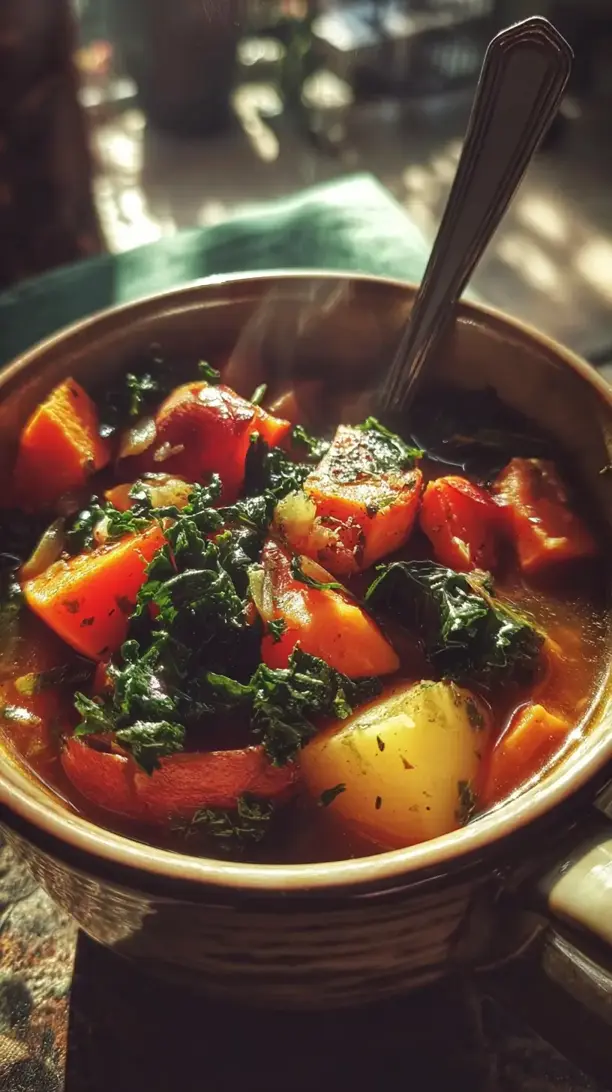
Winter Vegetable Stew
Make the best Winter Vegetable Stew with this easy recipe. It's a hearty, plant-based comfort food perfect for chilly nights. Get the full recipe and tips now!
Ingredients
For the Stew
-
2 tbsp olive oil
-
1 large yellow onion (diced)
-
3 cloves garlic (minced)
-
2 medium carrots (peeled and chopped into 1-inch chunks)
-
2 parsnips (peeled and chopped into 1-inch chunks)
-
1 large sweet potato (peeled and cubed)
-
2 stalks celery (chopped)
-
1 small rutabaga (peeled and cubed)
-
1 tbsp tomato paste
-
1 tsp dried thyme
-
1/2 tsp smoked paprika
-
1 bay leaf
-
4 cups vegetable broth
-
1 can diced tomatoes (14.5 oz, with their juices)
-
1 can cannellini beans (15 oz, drained and rinsed)
-
2 cups chopped kale (tough stems removed)
-
1 tbsp balsamic vinegar
-
Salt and freshly ground black pepper (to taste)
-
Fresh parsley (for garnish)