
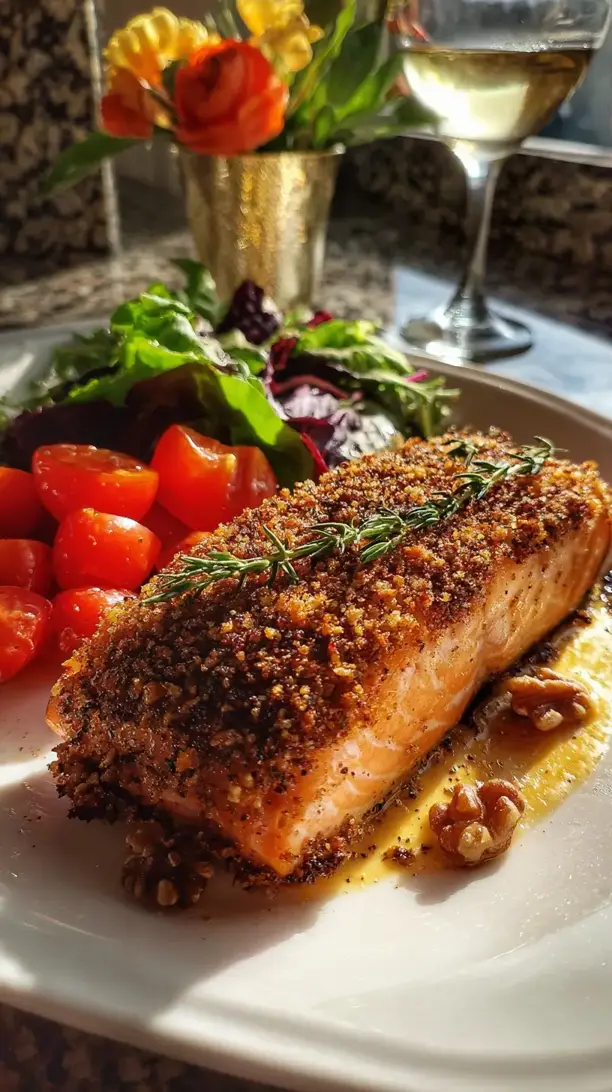
This walnut crusted salmon is an elegant yet easy dinner that feels special enough for guests. The nutty, herbed crust creates a wonderful contrast with the tender, flaky fish. It’s a quick, impressive meal that delivers maximum flavor with minimal effort.
Why You’ll Love This Walnut Crusted Salmon
- Elegant & Easy: Achieve a restaurant-quality meal with straightforward, quick steps.
- Divine Texture Contrast: Tender salmon meets a crisp, nutty crust for a perfect bite.
- Big Flavor, Simple Ingredients: Walnuts, breadcrumbs, parsley, and lemon create a complex, savory profile.
- Versatile Main Course: Pairs beautifully with almost any side, from salads to roasted veggies.
Ingredients & Tools
- 4 (150 g each) salmon fillets, skin-on or skinless
- 100 g walnuts, finely chopped
- 40 g Panko breadcrumbs
- 15 g fresh parsley, finely chopped
- 1 lemon, zested and juiced
- 2 cloves garlic, minced
- 2 tbsp Dijon mustard
- 2 tbsp olive oil
- 1/2 tsp smoked paprika
- Salt and freshly ground black pepper, to taste
Tools: A sharp knife, a cutting board, a small baking sheet, and a small mixing bowl.
Notes: Don’t skip the fresh parsley or lemon zest—they provide crucial freshness. Panko breadcrumbs give an extra-crispy, light texture.
Nutrition (per serving)
| Calories: | 485 kcal |
| Protein: | 35 g |
| Fat: | 32 g |
| Carbs: | 12 g |
| Fiber: | 3 g |
Serves: 4 | Prep Time: 15 minutes | Cook Time: 12-15 minutes | Total Time: 30 minutes
Before You Start: Tips & Ingredient Notes
- What’s the deal with the salmon skin? You can use skin-on or skinless fillets. If using skin-on, place the fillet crust-side up on the baking sheet. The skin will get crispy underneath and is delicious to eat, but it also acts as a natural barrier, preventing the fish from sticking.
- Why chop the walnuts by hand? While a food processor is faster, pulsing it can easily turn your walnuts into a paste. Chopping by hand gives you more control for a perfect, coarse texture that toasts beautifully and provides the best crunch.
- Is Dijon mustard really necessary? Yes, and here’s why—it’s not just for flavor. The mustard acts as a “glue” for the crust, helping it adhere perfectly to the salmon. Its sharp, tangy flavor also balances the richness of the fish and nuts without being overpowering.
- Can I prepare the crust ahead of time? Absolutely! You can mix the walnut, breadcrumb, and herb mixture up to a day in advance. Just store it in an airtight container in the fridge and add the mustard-olive oil binder right before you’re ready to bake.
How to Make Walnut Crusted Salmon
Step 1: First, preheat your oven to 200°C (400°F) and line a small baking sheet with parchment paper. Pat your salmon fillets completely dry with a paper towel—this is a small but crucial step for helping the crust stick and for getting a nice sear on the surface of the fish. Season both sides of the fillets generously with salt and black pepper.
Step 2: Now, let’s make that incredible crust. In your mixing bowl, combine the finely chopped walnuts, Panko breadcrumbs, chopped parsley, minced garlic, lemon zest, and smoked paprika. Use a fork to mix everything together, ensuring the ingredients are evenly distributed. You’ll notice the mixture is already fragrant from the garlic and lemon.
Step 3: In a separate small bowl or a measuring jug, whisk together the Dijon mustard, olive oil, and one tablespoon of the fresh lemon juice. This is our binder. It should form a thick, emulsified paste. Slowly pour this over your dry walnut mixture and stir until everything is evenly moistened. The mixture should hold together slightly when pressed.
Step 4: It’s assembly time! Place your seasoned salmon fillets on the prepared baking sheet. Using a spoon or your fingers, divide the walnut crust mixture evenly among the fillets, pressing it down firmly and gently to form an even layer that completely covers the top surface. Don’t be shy—a good, firm press ensures the crust won’t fall off during baking.
Step 5: Slide the baking sheet into the preheated oven and bake for 12 to 15 minutes. The exact time will depend on the thickness of your fillets. You’re looking for the crust to be a deep, golden brown and the salmon to be opaque and flake easily when tested with a fork at its thickest part. Be careful not to overcook it!
Step 6: Once out of the oven, let the salmon rest on the baking sheet for about 2-3 minutes. This allows the juices to redistribute, ensuring every bite is moist. Just before serving, squeeze a little more of the remaining fresh lemon juice over the top for a final burst of brightness. And that’s it—you’re done!
Storage & Freshness Guide
- Fridge: Store leftovers in an airtight container for up to 2 days.
- Freezer: Not recommended; the crust will become soggy upon thawing.
- Reviving: Reheat in a 160°C (325°F) oven for about 10 minutes until warmed through.
Serving Suggestions
Complementary Dishes
- Garlicky Sautéed Green Beans — Their crisp-tender texture and sharp garlic flavor are a perfect counterpoint to the rich, nutty salmon.
- Lemon-Herb Quinoa — This light, fluffy grain soaks up any delicious juices from the salmon and echoes the citrus notes in the crust beautifully.
- Creamy Mashed Potatoes — For the ultimate comfort meal, the smooth, buttery potatoes are a dreamy base for the flavorful salmon and its crispy topping.
Drinks
- A Crisp Sauvignon Blanc — The wine’s bright acidity and citrus notes will cleanse your palate and highlight the herbal, lemony flavors in the dish.
- Sparkling Water with Lemon — A simple, effervescent non-alcoholic option that provides a clean, refreshing contrast to the meal’s richness.
- A Light Pale Ale — The beer’s slight bitterness and carbonation can cut through the oily richness of the salmon and walnuts surprisingly well.
Something Sweet
- Lemon Sorbet — It’s the perfect palate-cleansing finish; light, zesty, and refreshing after the savory main course.
- Dark Chocolate Truffles — Just one or two of these rich, intense bites provide a sophisticated, decadent end to the meal without being too heavy.
- Almond Biscotti — The nutty flavor of the biscotti is a lovely echo of the walnut crust, and their crunch is a satisfying textural bookend.
Top Mistakes to Avoid
- Mistake: Not patting the salmon dry. Any surface moisture will create steam, which can make the crust soggy and prevent it from adhering properly. A quick pat-down makes all the difference.
- Mistake: Over-processing the walnuts. If you use a food processor, pulse just a few times. You want a coarse chop, not walnut butter. A fine paste won’t give you that satisfying, crunchy texture.
- Mistake: Skipping the “press and seal” step. Gently but firmly pressing the crust onto the salmon is non-negotiable. If you
Walnut Crusted Salmon
Make this easy Walnut Crusted Salmon for a quick, impressive dinner. A crispy, herbed walnut crust tops tender baked salmon. Get the simple recipe here!
Ingredients
For the salmon and crust:
-
4 salmon fillets (150 g each, skin-on or skinless)
-
100 g walnuts (finely chopped)
-
40 g Panko breadcrumbs
-
15 g fresh parsley (finely chopped)
-
1 lemon (zested and juiced)
-
2 cloves garlic (minced)
-
2 tbsp Dijon mustard
-
2 tbsp olive oil
-
1/2 tsp smoked paprika
-
Salt and freshly ground black pepper (to taste)
Instructions
-
First, preheat your oven to 200°C (400°F) and line a small baking sheet with parchment paper. Pat your salmon fillets completely dry with a paper towel—this is a small but crucial step for helping the crust stick and for getting a nice sear on the surface of the fish. Season both sides of the fillets generously with salt and black pepper.01
-
Now, let’s make that incredible crust. In your mixing bowl, combine the finely chopped walnuts, Panko breadcrumbs, chopped parsley, minced garlic, lemon zest, and smoked paprika. Use a fork to mix everything together, ensuring the ingredients are evenly distributed. You’ll notice the mixture is already fragrant from the garlic and lemon.02
-
In a separate small bowl or a measuring jug, whisk together the Dijon mustard, olive oil, and one tablespoon of the fresh lemon juice. This is our binder. It should form a thick, emulsified paste. Slowly pour this over your dry walnut mixture and stir until everything is evenly moistened. The mixture should hold together slightly when pressed.03
-
It’s assembly time! Place your seasoned salmon fillets on the prepared baking sheet. Using a spoon or your fingers, divide the walnut crust mixture evenly among the fillets, pressing it down firmly and gently to form an even layer that completely covers the top surface. Don’t be shy—a good, firm press ensures the crust won’t fall off during baking.04
-
Slide the baking sheet into the preheated oven and bake for 12 to 15 minutes. The exact time will depend on the thickness of your fillets. You’re looking for the crust to be a deep, golden brown and the salmon to be opaque and flake easily when tested with a fork at its thickest part. Be careful not to overcook it!05
-
Once out of the oven, let the salmon rest on the baking sheet for about 2-3 minutes. This allows the juices to redistribute, ensuring every bite is moist. Just before serving, squeeze a little more of the remaining fresh lemon juice over the top for a final burst of brightness. And that’s it—you’re done!06