
This Tomato Basil Salmon is an elegant yet effortless meal that comes together in under 30 minutes. Flaky salmon fillets are nestled in a vibrant, garlicky tomato basil sauce for a fresh and comforting dinner. The aroma of garlic and basil filling your kitchen is half the joy of this tomato basil salmon recipe.
Why You’ll Love This Tomato Basil Salmon
- Quick & Simple: Ready in about 25 minutes with straightforward steps.
- Classic Flavors: Sweet tomatoes, fragrant basil, and savory garlic create a rustic yet refined sauce.
- Healthy & Satisfying: Packed with omega-3s, protein, and lycopene for a nourishing meal.
- Versatile Serving: Great over pasta, with crusty bread, polenta, or a simple salad.
Ingredients & Tools
- 4 (150 g each) skinless salmon fillets
- 2 tbsp olive oil, divided
- 1 small yellow onion, finely diced
- 4 cloves garlic, minced
- 400 g cherry or grape tomatoes, halved
- 120 ml dry white wine (like Sauvignon Blanc) or vegetable broth
- 1 tbsp tomato paste
- 1 tsp dried oregano
- ¼ tsp red pepper flakes (optional, for a little heat)
- 1 large handful fresh basil leaves, plus more for garnish
- Salt and freshly ground black pepper to taste
Tools: A large skillet with a lid (or a piece of foil to cover), a sharp knife, and a cutting board.
Notes: Use good-quality, ripe tomatoes for sweetness. Don’t skip the fresh basil—it’s added at the end to keep its bright flavor.
Nutrition (per serving)
| Calories: | 385 kcal |
| Protein: | 35 g |
| Fat: | 22 g |
| Carbs: | 9 g |
| Fiber: | 2 g |
Serves: 4 | Prep Time: 10 minutes | Cook Time: 15 minutes | Total Time: 25 minutes
Before You Start: Tips & Ingredient Notes
- Bring your salmon to room temperature. Taking the salmon out of the fridge about 15-20 minutes before cooking helps it cook more evenly. A cold fillet going into a hot pan can lead to an overcooked exterior and a cold center.
- Don’t be shy with the seasoning. Salmon can handle a good amount of salt and pepper. Season both sides of the fillets generously right before they hit the pan—this builds a flavorful foundation for the entire dish.
- Use the best tomatoes you can find. Since the sauce is tomato-forward, their quality matters. In the summer, use the ripest, sweetest cherry tomatoes you can get. In the winter, canned cherry tomatoes are a fantastic, reliable alternative.
- Have all your ingredients prepped and ready. This recipe moves quickly once you start cooking. Having your onion diced, garlic minced, and tomatoes halved before you turn on the stove makes the process smooth and stress-free.
How to Make Tomato Basil Salmon
Step 1: Pat the salmon fillets completely dry with paper towels. This is a crucial step for getting a beautiful sear instead of steaming the fish. Season both sides generously with salt and pepper. Place a large skillet over medium-high heat and add one tablespoon of the olive oil. Once the oil is shimmering, carefully place the salmon fillets in the pan, presentation-side down. You should hear a satisfying sizzle. Sear for 3-4 minutes, without moving them, until a golden-brown crust forms.
Step 2: Flip the salmon fillets and cook for just 1 minute on the other side. They will not be cooked through at this point—that’s perfect! You’re just giving the second side a kiss of heat. Carefully transfer the salmon to a clean plate; it will finish cooking later in the sauce. You’ll notice the fillets are still quite rare in the center, which is exactly what you want.
Step 3: Reduce the heat to medium and add the remaining tablespoon of olive oil to the same skillet. Add the diced onion and cook, stirring occasionally, for about 3-4 minutes until it becomes soft and translucent. Now, add the minced garlic and cook for just 30-60 seconds until fragrant—be careful not to let it burn, or it will turn bitter.
Step 4: Add the halved cherry tomatoes, tomato paste, dried oregano, and red pepper flakes (if using) to the skillet. Stir everything together, scraping up any browned bits from the bottom of the pan—that’s pure flavor! Cook for 2-3 minutes until the tomatoes just begin to soften and release their juices.
Step 5: Pour in the white wine or broth. Let it come to a simmer and cook for about 2 minutes, allowing the alcohol to cook off and the liquid to reduce slightly. This step deglazes the pan and creates the base of your sauce. The aroma at this stage is absolutely incredible.
Step 6: Now, nestle the seared salmon fillets back into the skillet, spooning some of the sauce over the top. Reduce the heat to low, cover the skillet with a lid (or a piece of foil), and let it simmer gently for 5-7 minutes. The salmon is done when it flakes easily with a fork and is opaque all the way through.
Step 7: Turn off the heat. Tear the fresh basil leaves with your hands and stir most of them into the sauce around the salmon. The residual heat will wilt the basil perfectly, preserving its fresh, aromatic quality. Taste the sauce and adjust the seasoning with more salt or pepper if needed.
Step 8: To serve, spoon a generous amount of the tomato basil sauce onto each plate, place a salmon fillet on top, and garnish with the remaining fresh basil leaves. A final drizzle of extra virgin olive oil over the top adds a lovely richness. Serve immediately while it’s hot!
Storage & Freshness Guide
- Fridge: Store leftovers in an airtight container for up to 2 days.
- Freezer: Freeze sauce and salmon separately for up to 1 month. Thaw in fridge before reheating.
- Reviving: Reheat gently in a covered skillet over low heat to prevent drying out.
Serving Suggestions
Complementary Dishes
- Creamy Polenta — The soft, buttery texture is a dream with the juicy tomato sauce and flaky fish, creating a wonderfully comforting base.
- Garlic Bread or Crusty Baguette — Absolutely essential for sopping up every last drop of that incredible sauce left on your plate. You won’t want to waste a bit.
- Simple Arugula Salad — A salad with a sharp lemon vinaigrette provides a peppery, acidic contrast that cuts through the richness of the salmon beautifully.
Drinks
- A Crisp Sauvignon Blanc — Its citrusy and herbal notes mirror the flavors in the dish and cleanse the palate between bites perfectly.
- Sparkling Water with Lemon — For a non-alcoholic option, the bubbles and citrus are incredibly refreshing against the savory, tomato-rich sauce.
Something Sweet
- Lemon Sorbet — A scoop of bright, tangy sorbet is the perfect palate-cleansing finish that feels light and refreshing after this meal.
- Panna Cotta with a Berry Compote — The smooth, cool creaminess of the panna cotta provides a lovely, gentle contrast to the savory main course.
Top Mistakes to Avoid
- Overcooking the salmon. Salmon continues to cook even after it’s removed from the heat (carryover cooking). If you cook it until it’s completely firm in the pan, it will be dry by the time you eat it. You want it to be just opaque and flaky.
- Adding the basil too early. Fresh basil is delicate and will turn black and bitter if it simmers in the sauce for too long. Stir it in at the very end, off the heat, to keep its vibrant color and flavor.
- Not getting a good sear on the salmon. If your pan isn’t hot enough, or if the salmon is wet, it will steam and turn gray instead of developing that beautiful, flavorful golden crust. A hot pan and dry fillets are non-negotiable.
- Burnt garlic. Garlic cooks in a flash and burns easily, which will give your entire sauce a bitter taste. Add it after the onions have softened and cook it for only 30-60 seconds until fragrant.
Expert Tips
- Tip: For an extra layer of flavor, season your salmon with a pinch of smoked paprika along with the salt and pepper before searing. It adds a subtle, smoky depth that works wonderfully with the tomatoes.
- Tip: If your sauce seems a bit too thin after cooking, you can thicken it quickly by creating a slurry. Mix a teaspoon of cornstarch with a tablespoon of cold water and stir it into the simmering sauce for the last minute of cooking.
- Tip: Let the salmon rest for a couple of minutes after you take it out of the pan for the final time. This allows the juices to redistribute throughout the fillet, resulting in a more moist and tender bite.
- Tip: Don’t discard any leftover sauce! It’s fantastic tossed with pasta the next day for a super quick lunch, or even as a base for shakshuka-style eggs.
FAQs
Can I use a different type of fish?
Absolutely! This method works wonderfully with other firm-fleshed fish like cod, halibut, or sea bass. Just be mindful that cooking times may vary slightly depending on the thickness of the fillets. The key is to sear the fish first to develop flavor and texture before letting it finish cooking gently in the sauce.
My sauce is a bit acidic. How can I fix it?
This can happen, especially if your tomatoes are particularly tart. The easiest fix is to stir in a tiny pinch of sugar—about ¼ teaspoon—to balance the acidity. Alternatively, a small pat of cold butter stirred in at the end will add richness and mellow out the sharp edges beautifully.
Can I make this recipe ahead of time?
You can prep the sauce base (through step 5) ahead of time and store it in the fridge for up to a day. When you’re ready to eat, gently reheat the sauce, then add the salmon and finish cooking as directed. I don’t recommend cooking the salmon fully ahead of time, as it’s best served fresh.
What can I use instead of white wine?
No problem at all. An equal amount of chicken or vegetable broth works perfectly. For a different flavor profile, you could even use a splash of fresh lemon juice mixed with water. The goal is just to have a little liquid to deglaze the pan and create the sauce.
Is it okay to use dried basil instead of fresh?
I really don’t recommend it for this particular recipe. Dried basil has a very different, much more muted and almost minty flavor that doesn’t provide the same bright, fresh punch. The fresh basil is a star ingredient here. If you’re in a pinch, fresh parsley or even a tablespoon of pesto stirred in at the end would be a better substitute.
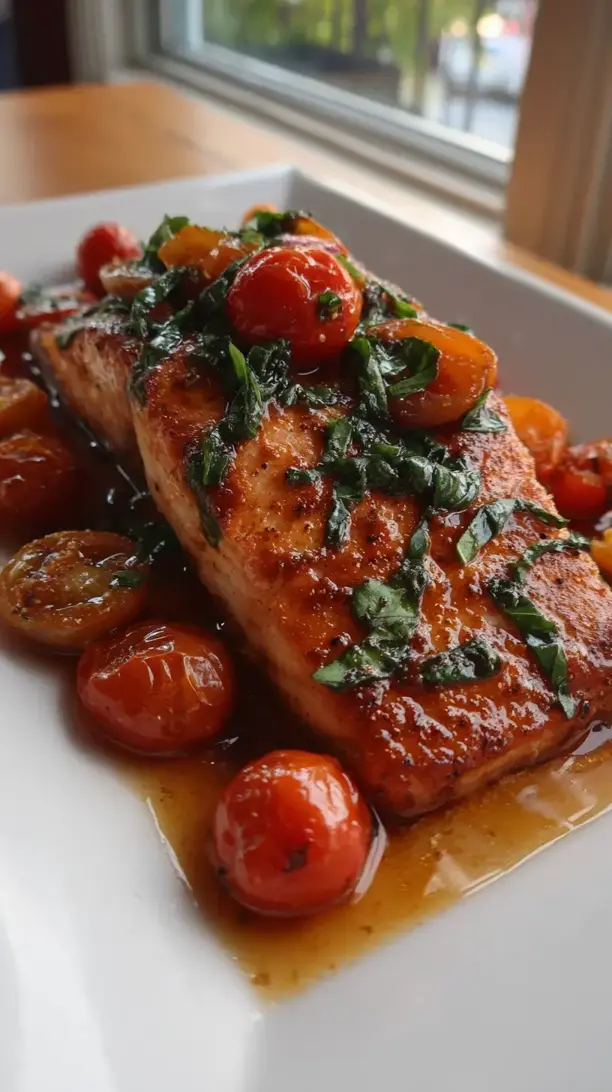
Tomato Basil Salmon
Make this easy Tomato Basil Salmon in under 30 minutes! Flaky salmon in a fresh, garlicky tomato basil sauce is the perfect healthy dinner. Get the recipe now!
Ingredients
For the Ingredients
-
4 skinless salmon fillets (150 g each)
-
2 tbsp olive oil (divided)
-
1 small yellow onion (finely diced)
-
4 cloves garlic (minced)
-
400 g cherry or grape tomatoes (halved)
-
120 ml dry white wine or vegetable broth (like Sauvignon Blanc)
-
1 tbsp tomato paste
-
1 tsp dried oregano
-
¼ tsp red pepper flakes (optional, for a little heat)
-
1 large handful fresh basil leaves (plus more for garnish)
-
Salt and freshly ground black pepper (to taste)
Instructions
-
Pat the salmon fillets completely dry with paper towels. Season both sides generously with salt and pepper. Place a large skillet over medium-high heat and add one tablespoon of the olive oil. Once the oil is shimmering, carefully place the salmon fillets in the pan, presentation-side down. Sear for 3-4 minutes, without moving them, until a golden-brown crust forms.01
-
Flip the salmon fillets and cook for just 1 minute on the other side. Carefully transfer the salmon to a clean plate; it will finish cooking later in the sauce.02
-
Reduce the heat to medium and add the remaining tablespoon of olive oil to the same skillet. Add the diced onion and cook, stirring occasionally, for about 3-4 minutes until it becomes soft and translucent. Now, add the minced garlic and cook for just 30-60 seconds until fragrant—be careful not to let it burn, or it will turn bitter.03
-
Add the halved cherry tomatoes, tomato paste, dried oregano, and red pepper flakes (if using) to the skillet. Stir everything together, scraping up any browned bits from the bottom of the pan. Cook for 2-3 minutes until the tomatoes just begin to soften and release their juices.04
-
Pour in the white wine or broth. Let it come to a simmer and cook for about 2 minutes, allowing the alcohol to cook off and the liquid to reduce slightly.05
-
Now, nestle the seared salmon fillets back into the skillet, spooning some of the sauce over the top. Reduce the heat to low, cover the skillet with a lid (or a piece of foil), and let it simmer gently for 5-7 minutes. The salmon is done when it flakes easily with a fork and is opaque all the way through.06
-
Turn off the heat. Tear the fresh basil leaves with your hands and stir most of them into the sauce around the salmon. Taste the sauce and adjust the seasoning with more salt or pepper if needed.07
-
To serve, spoon a generous amount of the tomato basil sauce onto each plate, place a salmon fillet on top, and garnish with the remaining fresh basil leaves. Serve immediately while it's hot!08