
Why You’ll Love This Thai Red Curry with Vegetables
- It’s a 30-minute wonder. Seriously, from chopping board to bowl in half an hour. It’s the ultimate weeknight savior when you’re craving something deeply flavorful but don’t have hours to spend in the kitchen.
- The flavor is complex, but the process is simple. You get that signature restaurant-quality depth of flavor by using a great curry paste and coconut milk. The trick is in the simmering—you let the ingredients get to know each other and work their magic.
- It’s incredibly versatile. Not a fan of bell peppers? Swap in green beans. Have some tofu in the fridge? Toss it in. This recipe is a fantastic template that welcomes your own creative twists.
- It’s a feast for the eyes and the soul. The bright red sauce, the vibrant green of the basil, the colorful veggies… it’s a bowl of pure joy that’s as beautiful to look at as it is delicious to eat.
Ingredients & Tools
- 1 tbsp coconut oil or neutral oil
- 3-4 tbsp Thai red curry paste (check the label for spice level!)
- 1 (400 ml) can full-fat coconut milk
- 1 cup vegetable broth
- 1 tbsp coconut sugar or brown sugar
- 1 tbsp fish sauce (or soy sauce/tamari for vegan)
- 1 tbsp fresh lime juice
- 1 medium red bell pepper, sliced
- 1 medium yellow bell pepper, sliced
- 1 cup broccoli florets
- 1 medium carrot, thinly sliced
- 1 small zucchini, halved and sliced
- ½ a small red onion, sliced
- ½ cup fresh Thai basil or regular basil leaves
Tools: A large wok or deep skillet, a wooden spoon, a sharp knife, and a cutting board.
Don’t be tempted to use light coconut milk here—the full-fat version is essential for that luxuriously creamy, rich texture that makes the sauce cling to the vegetables. And about the curry paste: a little goes a long way, so start with 3 tablespoons and add more at the end if you want more heat.
Serves: 4 | Prep Time: 15 minutes | Cook Time: 15 minutes | Total Time: 30 minutes
Before You Start: Tips & Ingredient Notes
- Choosing Your Curry Paste. This is the flavor foundation! Look for a brand with recognizable ingredients like lemongrass, galangal, and kaffir lime. The spice level varies wildly, so taste a tiny bit first. My go-to is Mae Ploy or Maesri, which you can find in Asian grocery stores.
- The Coconut Milk Shake Test. Always shake the can of coconut milk before opening. This helps redistribute the creamy solid fat that often separates from the water, giving you a more consistent base to start with.
- Veggie Prep is Key. Since this cooks so quickly, having all your vegetables washed, chopped, and within arm’s reach (this is called *mise en place*) makes the process seamless and stress-free. It’s a game-changer, honestly.
- Fish Sauce Nuances. If you’re using fish sauce, know that its funky, salty punch is what gives the curry an authentic savory depth (umami). Don’t add extra salt until after you’ve added the fish sauce and tasted.
How to Make Thai Red Curry with Vegetables
Step 1: Bloom the Curry Paste. This is the most important step—don’t rush it! Heat the coconut oil in your wok or skillet over medium heat. Add the red curry paste and fry it for 2-3 minutes, stirring constantly. You’ll notice the color deepen and the aroma become incredibly fragrant. This process, called “blooming,” wakes up the spices and releases their essential oils, building a deep flavor base for the entire dish.
Step 2: Create the Creamy Sauce Base. Scoop out the thick, creamy part from the top of the coconut milk can and add it to the pan. Stir and let it simmer for another 2-3 minutes. The oil might start to separate a little from the coconut cream—this is a good sign! It means you’re developing a rich, concentrated flavor. Then, pour in the remaining coconut milk and the vegetable broth, stirring to combine everything smoothly.
Step 3: Season and Simmer. Now, stir in the coconut sugar and fish sauce (or soy sauce). Bring the sauce to a gentle simmer. Let it bubble away for about 5 minutes to allow the flavors to meld together. Taste it now—this is your chance to adjust. Want it sweeter? A bit more sugar. Saltier? A dash more fish sauce. It should taste a little strong now, as the vegetables will release water and dilute it slightly.
Step 4: Cook the Harder Vegetables. Add the carrots and broccoli to the simmering sauce. These take the longest to cook. Let them simmer for about 4-5 minutes until they just start to become tender but are still crisp. You want a bit of bite to them!
Step 5: Add the Quick-Cooking Veggies. Now, stir in the bell peppers, zucchini, and red onion. Continue to simmer for another 3-4 minutes, just until these vegetables are tender-crisp. You’ll notice the colors become even more vibrant. The goal is to avoid mushy vegetables—we’re aiming for a wonderful texture contrast in every bite.
Step 6: The Final Flourish. Turn off the heat. Stir in the fresh lime juice and most of the basil leaves, reserving a few for garnish. The lime juice brightens everything up and balances the richness. Give it one final taste and adjust the seasoning if needed. And that’s it—you’re done!
Serving Suggestions
Complementary Dishes
- Jasmine Rice — The classic, fluffy, and slightly sticky rice is the perfect neutral canvas to soak up all that incredible curry sauce. It’s non-negotiable for me.
- Fresh Spring Rolls — A few light, refreshing spring rolls with peanut dipping sauce on the side make the meal feel like a complete feast without being too heavy.
Drinks
- A Crisp Lager or Pale Ale — The carbonation and slight bitterness of a cold beer cut through the richness of the coconut milk and cool the spice beautifully.
- Iced Lemongrass Tea — If you’re not drinking alcohol, this is the ultimate pairing. Its citrusy, herbal notes complement the curry’s flavors perfectly.
Something Sweet
- Mango with Sticky Rice — The quintessential Thai dessert. The sweet, creamy mango and slightly salty coconut sticky rice are a dreamy way to end the meal.
- Lychee Sorbet — A scoop of light, floral lychee sorbet is a refreshing and palate-cleansing finish that feels incredibly elegant.
Top Mistakes to Avoid
- Mistake: Not blooming the curry paste. If you just dump the paste into the liquid, you’ll miss out on layers of deep, toasty flavor. That initial fry in the oil is what transforms it from good to great.
- Mistake: Overcooking the vegetables. There’s nothing sadder than a mushy bell pepper in a curry. Add your veggies in stages according to their cooking time to ensure they all have the perfect tender-crisp texture.
- Mistake: Using light coconut milk. I know, I know… the calories. But trust me, light coconut milk will make your curry taste thin and watery. The fat in full-fat coconut milk is necessary for that luxurious, restaurant-style body.
- Mistake: Skipping the balance of flavors. Curry is all about the balance between salty (fish sauce), sweet (sugar), sour (lime), and spicy (curry paste). Taste as you go and don’t be afraid to adjust until it sings.
Expert Tips
- Tip: Make it ahead. Curries often taste even better the next day after the flavors have had more time to mingle. Simply cool it completely and store it in an airtight container in the fridge for up to 3 days. Reheat gently on the stove.
- Tip: Add protein easily. This is a fantastic base for tofu, chickpeas, or shrimp. For tofu, press and pan-fry it until crispy first, then add it at the very end to keep its texture. For shrimp, add them raw with the quick-cooking veggies.
- Tip: Freeze your leftover curry paste. If you only use part of a can or jar, spoon the leftover paste into an ice cube tray and freeze. Once solid, pop the cubes into a freezer bag. Now you have pre-portioned curry paste ready to go!
- Tip: Control the heat. Remember, you can always add more spice, but you can’t take it away. If you accidentally make it too spicy, a little extra coconut milk or a teaspoon of peanut butter can help tame the fire.
FAQs
Can I use a different protein instead of vegetables?
Absolutely! This curry is a fantastic template. For chicken, slice it thinly and add it right after blooming the curry paste, cooking it through before adding the liquids. For firm tofu or chickpeas, you can add them with the quick-cooking vegetables since they just need to be heated through. If using shrimp, add them in the last 3-4 minutes of cooking until they turn pink and opaque.
My curry is too watery. How can I thicken it?
The most common reason is adding too much broth or using vegetables with high water content (like zucchini). To fix it, simply let the curry simmer uncovered for a few extra minutes to allow some liquid to evaporate. If you need it thicker fast, mix a teaspoon of cornstarch with a tablespoon of cold water to make a slurry, then stir it into the simmering curry. It should thicken up in a minute or two.
Is there a substitute for fish sauce to make this vegan?
Yes! Soy sauce or tamari (for gluten-free) are the best substitutes. You might need a touch less than the recommended fish sauce amount, so start with 2 teaspoons and add more after tasting. For a more complex vegan umami boost, a half-teaspoon of miso paste stirred in at the end is magic.
How long will leftovers keep in the fridge?
Leftovers will keep beautifully in an airtight container in the refrigerator for 3-4 days. The flavors will continue to develop, making it even more delicious. Reheat gently on the stovetop over low heat, adding a splash of water or broth if it seems too thick.
Can I freeze this curry?
You can, but with a caveat. The coconut milk can sometimes separate a bit upon thawing, and the vegetables will become much softer. It will still taste good, but the texture won’t be as perfect. For best freezing results, freeze the sauce base only (before adding the vegetables). Then, when ready to eat, thaw, reheat, and add freshly chopped vegetables to simmer until tender.
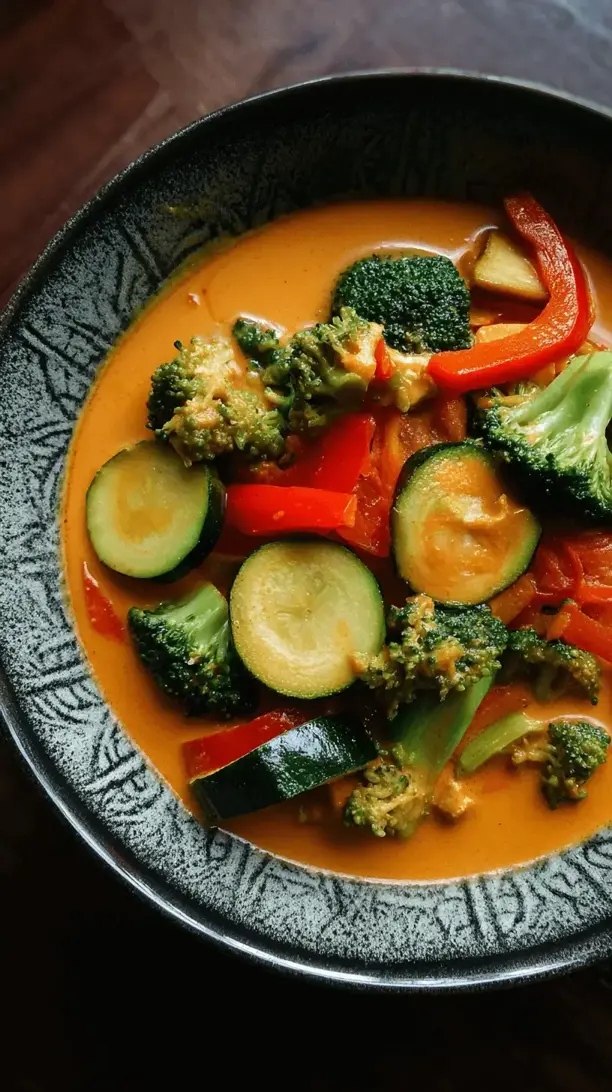
Thai Red Curry With Vegetables
Craving takeout? My easy 30-minute Thai red curry with vegetables is faster & healthier! Creamy coconut, spicy curry paste & crisp veggies. Restaurant flavor at home!
Ingredients
Ingredients
-
1 tbsp coconut oil or neutral oil
-
3-4 tbsp Thai red curry paste (check the label for spice level!)
-
1 can full-fat coconut milk (400 ml)
-
1 cup vegetable broth
-
1 tbsp coconut sugar or brown sugar
-
1 tbsp fish sauce (or soy sauce/tamari for vegan)
-
1 tbsp fresh lime juice
-
1 medium red bell pepper (sliced)
-
1 medium yellow bell pepper (sliced)
-
1 cup broccoli florets
-
1 medium carrot (thinly sliced)
-
1 small zucchini (halved and sliced)
-
½ small red onion (sliced)
-
½ cup fresh Thai basil or regular basil leaves
Instructions
-
Bloom the curry paste. Heat coconut oil in a wok or skillet over medium heat. Add red curry paste and fry 2–3 minutes, stirring constantly, until the color deepens and the aroma is very fragrant.01
-
Create the creamy sauce base. Scoop the thick cream from the top of the coconut milk can into the pan. Stir and simmer 2–3 minutes until a little oil separates. Add the remaining coconut milk and the vegetable broth; stir to combine.02
-
Season and simmer. Stir in coconut sugar and fish sauce (or soy sauce). Bring to a gentle simmer for about 5 minutes to meld flavors. Taste and adjust—slightly strong is OK because vegetables will dilute it.03
-
Cook the harder vegetables. Add carrots and broccoli. Simmer 4–5 minutes until just tender but still crisp.04
-
Add quick-cooking veggies. Stir in bell peppers, zucchini, and red onion. Simmer 3–4 minutes until tender-crisp and vibrant.05
-
Finish. Turn off heat. Stir in fresh lime juice and most of the basil (reserve some for garnish). Taste and adjust seasoning, then serve.06