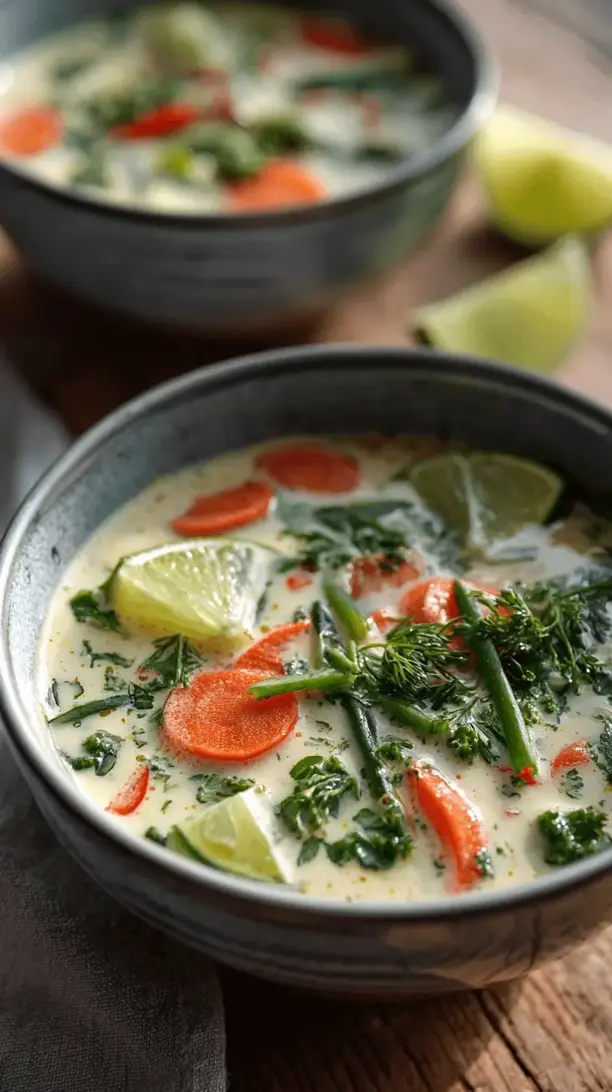

Why You’ll Love This Thai Coconut Vegetable Soup
- It’s a flavour explosion in a bowl. We’re not just talking about a simple broth here. The combination of creamy coconut milk, tangy lime, salty fish sauce (or soy sauce), and a hint of spice creates a complex and utterly addictive taste that’s far greater than the sum of its parts.
- It’s incredibly versatile and forgiving. Honestly, this soup is a fantastic way to clean out the vegetable drawer. Have some broccoli florets that need using? Toss them in. A lone zucchini? Perfect. The base recipe is a guide, but you can truly make it your own based on what you have on hand.
- It comes together in under 30 minutes. From chopping to serving, this is a weeknight warrior. The active cooking time is minimal, and most of it is just letting the soup simmer gently, allowing all those beautiful flavours to meld together while you set the table.
- It feels like a hug for your soul. There’s something almost therapeutic about sipping this soup. It’s warm, comforting, and packed with fresh ingredients that make you feel good from the inside out. It’s the kind of meal that resets your palate and leaves you feeling satisfied but not weighed down.
Ingredients & Tools
- 1 tbsp coconut oil or neutral oil
- 1 medium onion, finely chopped
- 3 cloves garlic, minced
- 1 tbsp fresh ginger, grated
- 1-2 red chillies, thinly sliced (seeds removed for less heat)
- 2 stalks lemongrass, bruised and cut into 3-inch pieces
- 4 tbsp Thai red curry paste
- 800 ml can coconut milk (full-fat for creaminess)
- 750 ml vegetable broth
- 2 tbsp fish sauce (or soy sauce/tamari for vegan)
- 1 tbsp coconut sugar or brown sugar
- 200 g shiitake or cremini mushrooms, sliced
- 1 red bell pepper, thinly sliced
- 2 medium carrots, julienned or thinly sliced
- 100 g snow peas or sugar snap peas, trimmed
- Juice of 1-2 limes
- To serve: fresh cilantro, Thai basil, extra lime wedges
Tools: A large pot or Dutch oven, a wooden spoon, a fine grater for the ginger, and a sharp knife.
The real stars here are the aromatics and the curry paste—they build the foundational flavour. Don’t skimp on the fresh lime juice at the end, either; that bright, acidic punch is what makes the soup truly sing.
Serves: 4 | Prep Time: 15 minutes | Cook Time: 20 minutes | Total Time: 35 minutes
Before You Start: Tips & Ingredient Notes
- Choosing your curry paste. The quality of your Thai red curry paste makes a huge difference. If you can find a brand from an Asian market, it often has a more authentic, vibrant flavour than standard supermarket versions. Just check the label if you need it to be vegan.
- To bruise lemongrass or not? This step is simple but key! Take the flat side of your knife and whack the lemongrass stalk a few times. This releases its incredible citrusy oils into the soup. We’ll fish the fibrous pieces out before serving, so don’t worry about eating them.
- Full-fat vs. light coconut milk. I really recommend full-fat coconut milk for this recipe. It provides a luxurious, creamy texture that balances the spice and acidity perfectly. Light coconut milk will work in a pinch, but the soup will be noticeably thinner and less rich.
- Prepping your veggies. Try to cut your vegetables into relatively uniform sizes so they cook evenly. The goal is for them to be tender-crisp, not mushy, which is why we add them in a specific order.
How to Make Thai Coconut Vegetable Soup
Step 1: Build the Aromatic Base. Place your large pot over medium heat and add the coconut oil. Once it’s shimmering, add the chopped onion and cook for about 4-5 minutes, until it’s softened and translucent. You’ll notice the sweet aroma starting to fill your kitchen. Now, add the minced garlic, grated ginger, and most of your sliced chilli (save a few slices for garnish). Stir constantly for just one minute—you want these to become fragrant but not burn.
Step 2: Bloom the Curry Paste. This is the secret step! Push the aromatics to one side and add the Thai red curry paste to the centre of the pot. Let it cook for 1-2 minutes, stirring it in that spot. You’ll see it darken slightly and smell incredibly fragrant. This “blooming” process wakes up the spices and toasts them, deepening the flavour of the entire soup.
Step 3: Create the Broth. Now, pour in about a quarter of the coconut milk (just the creamy top part from the can if it has separated) and stir it into the curry paste mixture. Let it bubble for a minute until it looks glossy and well-combined. Then, add the remaining coconut milk, vegetable broth, fish sauce, coconut sugar, and the bruised lemongrass stalks. Give everything a good stir and bring it up to a gentle simmer.
Step 4: Cook the Heartier Vegetables. Once the soup is simmering, add the sliced mushrooms and carrots. These need a bit more time to become tender. Let them cook in the simmering broth for about 5-7 minutes. You’ll notice the carrots will start to brighten in colour and the mushrooms will soften and absorb the lovely flavours.
Step 5: Add the Quick-Cooking Veggies. Now, stir in the sliced bell pepper and snow peas. These vegetables only need 3-4 minutes to become tender-crisp. We want them to retain a bit of bite and their vibrant colour, so don’t overcook them at this stage.
Step 6: The Final, Crucial Touches. Turn off the heat. Now, fish out the lemongrass stalks with a pair of tongs and discard them. Stir in the fresh lime juice—start with the juice of one lime, taste, and add more if you like it tangier. The lime juice is essential for balancing the richness. Finally, taste the soup and adjust the seasoning. You might want an extra splash of fish sauce for saltiness or a pinch more sugar to round it out.
Step 7: Serve Immediately. Ladle the hot soup into bowls and garnish generously with fresh cilantro, Thai basil, and the reserved sliced red chilli. Don’t forget a lime wedge on the side for an extra squeeze right before eating. The fresh herbs make all the difference, adding a final layer of fragrance and freshness.
Serving Suggestions
Complementary Dishes
- Steamed Jasmine Rice — A simple bowl of fluffy jasmine rice is perfect for spooning the fragrant broth over. It turns the soup into a more substantial meal and soaks up all the delicious flavours.
- Fresh Summer Rolls — The cool, crisp texture of rice paper rolls filled with shrimp, tofu, and herbs provides a wonderful contrast to the warm, spicy soup. It’s a classic Thai restaurant combo for a reason.
Drinks
- A Crisp Lager — The clean, effervescent quality of a light lager helps cut through the richness of the coconut milk and cools the palate from any chilli heat.
- Iced Lemongrass Tea — For a non-alcoholic option, a subtly sweet iced tea infused with lemongrass echoes the flavours in the soup and is incredibly refreshing.
Something Sweet
- Mango with Sticky Rice — You can’t go wrong with this iconic Thai dessert. The sweet, ripe mango and creamy coconut sticky rice are the perfect finale after a bowl of this savoury, tangy soup.
- Coconut Ice Cream — A simple scoop of high-quality coconut ice cream is a quick and easy way to end the meal on a cool, creamy note that complements the soup beautifully.
Top Mistakes to Avoid
- Mistake: Adding the lime juice too early. If you add the lime juice while the soup is still boiling or simmering, the high heat will cause it to lose its bright, fresh flavour. Always stir it in right at the end, after you’ve turned off the heat.
- Mistake: Overcooking the vegetables. We’re aiming for a lovely texture contrast here. If you throw all the veggies in at once, the snow peas and peppers will turn to mush. Adding them in stages ensures everything is perfectly cooked.
- Mistake: Not tasting and adjusting at the end. Soups are all about balance. The final taste is crucial. You might need more lime for acidity, more fish sauce for saltiness, or a pinch of sugar to tame the heat. Don’t skip this personal touch!
- Mistake: Skipping the step to bloom the curry paste. I know it’s tempting to just dump everything in, but taking that extra minute to cook the paste in the oil unlocks a depth of flavour you simply won’t get otherwise.
Expert Tips
- Tip: Make it ahead for even better flavour. Soups like this often taste even better the next day after the flavours have had more time to meld. Simply cool it completely and store it in the fridge. Reheat gently on the stove, and add a fresh squeeze of lime and the herbs just before serving.
- Tip: Freeze it for a rainy day. This soup freezes beautifully (just without the fresh herbs). Portion it into airtight containers and freeze for up to 3 months. It’s a lifesaver for a quick and healthy future meal.
- Tip: Customise your protein. While this is a vegetable soup, it’s fantastic with added protein. Stir in some cooked shredded chicken, prawns, or cubed tofu in the last few minutes of cooking to heat through.
- Tip: For an ultra-smooth broth, strain it. If you prefer a completely smooth soup, you can strain the broth after simmering with the lemongrass, before adding the vegetables. Then return the clear broth to the pot and proceed with adding your veggies.
FAQs
Can I make this soup vegan?
Absolutely! It’s very easy. Simply ensure your Thai red curry paste is vegan (some brands contain shrimp paste), and swap the fish sauce for an equal amount of soy sauce or tamari. The result is just as delicious and deeply savoury.
I can’t find fresh lemongrass. What can I use instead?
Don’t worry, it happens! Look for prepared lemongrass paste in a tube in the refrigerated herb section of your supermarket—use about one tablespoon. Alternatively, you can add the zest of one lemon, which will provide a different but still lovely citrus note. The flavour won’t be identical, but it will still be a tasty soup.
My soup is too spicy! How can I tone it down?
The easiest fix is to add more coconut milk or a bit more vegetable broth to dilute the heat. A teaspoon of sugar or a splash of lime juice can also help balance the spiciness. For next time, remember to remove the seeds and membranes from your chilli, as that’s where most of the heat resides.
Can I use light coconut milk?
You can, but the soup will be much thinner and less rich. The fat in full-fat coconut milk is what gives the soup its luxurious, creamy mouthfeel. If you use light, you might want to simmer it for a few extra minutes to reduce and thicken it slightly.
How long will leftovers keep in the fridge?
Stored in an airtight container, the soup will keep well for 3-4 days. The vegetables will soften a bit more upon reheating, but the flavours will still be wonderful. Reheat gently on the stove over medium-low heat.