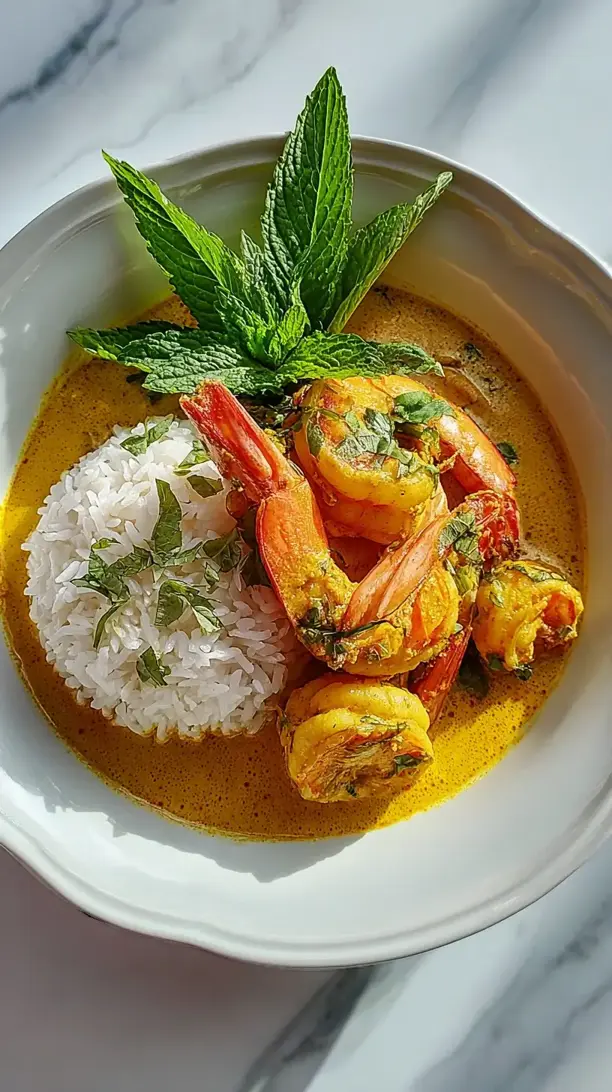

This Thai Coconut Curry Shrimp delivers restaurant-quality flavor in under 30 minutes. The creamy coconut milk, aromatic curry paste, and tender shrimp create a perfectly balanced, luxurious meal. It’s an easy, foolproof dish that feels both special and simple.
Why You’ll Love This Thai Coconut Curry Shrimp
- Fast & Weeknight-Friendly: Ready in about 25 minutes.
- Perfect Flavor Balance: Creamy, spicy, salty, and tangy in every bite.
- Super Adaptable: Swap veggies or protein to use what you have.
- Light Yet Satisfying: Comforting but not heavy or overly rich.
Ingredients & Tools
- 1 lb (450 g) large raw shrimp, peeled and deveined
- 1 tbsp vegetable or coconut oil
- 3 tbsp Thai red curry paste
- 1 (14 oz / 400 ml) can full-fat coconut milk
- 1 cup chicken or vegetable broth
- 1 tbsp fish sauce
- 1 tbsp brown sugar or palm sugar
- 1 red bell pepper, thinly sliced
- 1 small onion, sliced
- 2 garlic cloves, minced
- 1 tbsp fresh ginger, grated
- 1 stalk lemongrass, bruised (optional but recommended)
- Juice of 1 lime
- ¼ cup fresh cilantro, chopped
- 2 Thai bird’s eye chilies, sliced (optional, for extra heat)
Tools: Large skillet or wok, wooden spoon, measuring spoons, chef’s knife
Notes: Full-fat coconut milk gives a creamier texture. Bruise fresh lemongrass to release its citrusy aroma.
Nutrition (per serving)
| Calories: | 320 kcal |
| Protein: | 24 g |
| Fat: | 20 g |
| Carbs: | 12 g |
| Fiber: | 2 g |
Serves: 4 | Prep Time: 10 minutes | Cook Time: 15 minutes | Total Time: 25 minutes
Before You Start: Tips & Ingredient Notes
- Don’t skip toasting the curry paste. This step is crucial for developing depth of flavor. When you fry the paste in oil for a minute or two, you’ll notice the color darkens and the aroma becomes more complex—it really wakes up the spices.
- Use raw, not pre-cooked, shrimp. Pre-cooked shrimp can become rubbery when simmered in the sauce. Raw shrimp will cook perfectly in just 3–4 minutes, staying tender and juicy.
- Shake your coconut milk can well before opening. Sometimes the cream and liquid separate in the can, and you want a good mix for a smooth, emulsified sauce. If it’s particularly separated, you can stir it right in the can before measuring.
- Taste and adjust at the end. Curry is all about balance. After adding the lime juice, give it a taste. Need more salt? Add a pinch more fish sauce. Too spicy? A touch more sugar can help mellow it out. Trust your palate.
How to Make Thai Coconut Curry Shrimp
Step 1: Start by prepping all your ingredients—this recipe moves quickly once you begin cooking. Pat the shrimp dry with paper towels and season lightly with a pinch of salt. Thinly slice the bell pepper and onion, mince the garlic, and grate the ginger. If using fresh lemongrass, cut off the woody top and bottom, remove the tough outer layers, and bruise the stalk by gently crushing it with the back of your knife. This releases its incredible citrusy oils.
Step 2: Heat the oil in a large skillet or wok over medium heat. Add the Thai red curry paste and cook for 1–2 minutes, stirring constantly. You’ll notice the color deepen and a wonderfully fragrant aroma fill your kitchen—this toasting step is key for building flavor. Be careful not to burn it, though—just until it’s fragrant.
Step 3: Add the sliced onion, bell pepper, garlic, and ginger to the skillet. Sauté for about 3–4 minutes, until the vegetables have softened slightly but still have a bit of crunch. If you’re using lemongrass, add it now. The veggies should be vibrant and aromatic, picking up all those spiced notes from the curry paste.
Step 4: Pour in the coconut milk and broth, then stir in the fish sauce and brown sugar. Bring the mixture to a gentle simmer, stirring occasionally to help the sugar dissolve and everything combine. Let it simmer for about 5 minutes—this allows the flavors to meld and the sauce to reduce slightly. You’ll notice it thickening just a touch.
Step 5: Add the raw shrimp to the simmering sauce, making sure they’re submerged. Cook for 3–4 minutes, stirring once or twice, until the shrimp are pink, opaque, and curled. Be careful not to overcook them—they go from perfect to rubbery quickly. The sauce should be bubbling gently, not boiling aggressively.
Step 6: Turn off the heat and stir in the fresh lime juice and most of the chopped cilantro. Taste the curry and adjust seasoning if needed—maybe another dash of fish sauce for saltiness or a pinch more sugar to balance the heat. Remove the lemongrass stalk if you used it.
Step 7: Serve immediately over steamed jasmine rice or noodles, garnished with the remaining cilantro and optional sliced chilies. The curry is best enjoyed right away while the shrimp are tender and the sauce is hot and fragrant.
Storage & Freshness Guide
- Fridge: Store in an airtight container for up to 2 days.
- Freezer: Freeze sauce only (without shrimp) for up to 2 months.
- Reviving: Reheat gently on stove; add broth if thickened.
Serving Suggestions
Complementary Dishes
- Jasmine rice — its delicate floral aroma and slightly sticky texture are the perfect base for soaking up every bit of that creamy coconut curry sauce.
- Thai cucumber salad — the cool, crisp, and tangy slices provide a refreshing contrast to the rich, spicy curry, balancing each bite beautifully.
- Stir-fried morning glory — this classic Thai green vegetable dish, often prepared with garlic and chili, adds a lovely bitter note and vibrant color to your plate.
Drinks
- Thai iced tea — the sweet, creamy, and slightly spiced notes of this vibrant orange drink are a fantastic partner for cutting through the curry’s heat and richness.
- Cold lager or pale ale — the crisp, clean bubbles and mild bitterness help cleanse the palate between bites, making each spoonful of curry taste fresh and exciting.
- Lemongrass ginger sparkler — a non-alcoholic option with zesty, invigorating flavors that echo the aromatics in the curry without overpowering them.
Something Sweet
- Mango with sticky rice — this iconic Thai dessert brings sweet, ripe mango and creamy coconut-infused glutinous rice for a comforting, tropical finish.
- Coconut ice cream — its cool, creamy texture and mild sweetness provide a simple yet satisfying contrast to the warm, spicy main course.
- Pandan chiffon cake — the light, fluffy texture and unique, fragrant vanilla-like flavor offer a delicate, not-too-sweet ending that feels just right.
Top Mistakes to Avoid
- Overcooking the shrimp. Shrimp cook incredibly fast and become tough and rubbery if left in the heat too long. As soon as they turn pink and opaque, they’re done—pull them off the heat immediately.
- Using light coconut
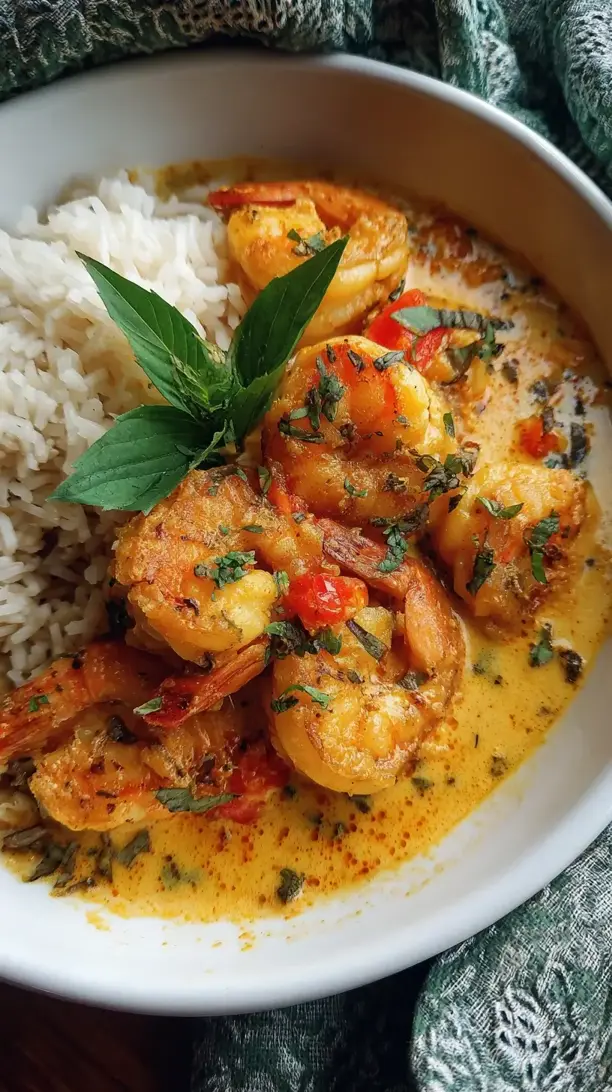
Thai Coconut Curry Shrimp
Make restaurant-style Thai Coconut Curry Shrimp at home in just 25 minutes! This creamy, flavorful dish is easy and delicious. Get the simple recipe here.
Ingredients
For the Main Ingredients
-
1 lb large raw shrimp (peeled and deveined)
-
1 tbsp vegetable or coconut oil
-
3 tbsp Thai red curry paste
-
1 can full-fat coconut milk (14 oz / 400 ml)
-
1 cup chicken or vegetable broth
-
1 tbsp fish sauce
-
1 tbsp brown sugar or palm sugar
-
1 red bell pepper (thinly sliced)
-
1 small onion (sliced)
-
2 garlic cloves (minced)
-
1 tbsp fresh ginger (grated)
-
1 stalk lemongrass (bruised (optional but recommended))
-
1 lime (juiced)
-
¼ cup fresh cilantro (chopped)
-
2 Thai bird’s eye chilies (sliced (optional, for extra heat))
Instructions
-
Start by prepping all your ingredients—this recipe moves quickly once you begin cooking. Pat the shrimp dry with paper towels and season lightly with a pinch of salt. Thinly slice the bell pepper and onion, mince the garlic, and grate the ginger. If using fresh lemongrass, cut off the woody top and bottom, remove the tough outer layers, and bruise the stalk by gently crushing it with the back of your knife. This releases its incredible citrusy oils.01
-
Heat the oil in a large skillet or wok over medium heat. Add the Thai red curry paste and cook for 1–2 minutes, stirring constantly. You’ll notice the color deepen and a wonderfully fragrant aroma fill your kitchen—this toasting step is key for building flavor. Be careful not to burn it, though—just until it’s fragrant.02
-
Add the sliced onion, bell pepper, garlic, and ginger to the skillet. Sauté for about 3–4 minutes, until the vegetables have softened slightly but still have a bit of crunch. If you’re using lemongrass, add it now. The veggies should be vibrant and aromatic, picking up all those spiced notes from the curry paste.03
-
Pour in the coconut milk and broth, then stir in the fish sauce and brown sugar. Bring the mixture to a gentle simmer, stirring occasionally to help the sugar dissolve and everything combine. Let it simmer for about 5 minutes—this allows the flavors to meld and the sauce to reduce slightly. You’ll notice it thickening just a touch.04
-
Add the raw shrimp to the simmering sauce, making sure they’re submerged. Cook for 3–4 minutes, stirring once or twice, until the shrimp are pink, opaque, and curled. Be careful not to overcook them—they go from perfect to rubbery quickly. The sauce should be bubbling gently, not boiling aggressively.05
-
Turn off the heat and stir in the fresh lime juice and most of the chopped cilantro. Taste the curry and adjust seasoning if needed—maybe another dash of fish sauce for saltiness or a pinch more sugar to balance the heat. Remove the lemongrass stalk if you used it.06
-
Serve immediately over steamed jasmine rice or noodles, garnished with the remaining cilantro and optional sliced chilies. The curry is best enjoyed right away while the shrimp are tender and the sauce is hot and fragrant.07