
Why You’ll Love This Thai Chicken and Vegetable Curry
- It’s a complete, balanced meal in one pot. You’ve got your lean protein from the chicken, a rainbow of vitamins from the veggies, and that luxurious, creamy sauce that ties it all together. Honestly, all you need is a bowl and a spoon—it’s dinner, sorted.
- The flavour is complex, but the process is simple. We’re leaning on a good-quality curry paste to do the heavy lifting. The trick is just to fry it off for a minute to unlock its full potential. You’ll be amazed at the depth of flavour you can achieve with such little effort.
- It’s incredibly adaptable. Not a fan of bell peppers? Swap in green beans. Want to make it vegetarian? Tofu works beautifully. This recipe is a wonderful template that encourages you to play with your food.
- It tastes even better the next day. Like many great stews and curries, the flavours have a chance to mingle and deepen overnight. Making a big batch means you’re gifting your future self an incredible lunch.
Ingredients & Tools
- 1 tbsp coconut oil or vegetable oil
- 1 large onion, thinly sliced
- 2 tbsp Thai red curry paste (see notes below!)
- 400 ml can of full-fat coconut milk
- 500 g boneless, skinless chicken thighs, cut into bite-sized pieces
- 1 tbsp fish sauce
- 1 tsp brown sugar or palm sugar
- 1 red bell pepper, sliced
- 1 small aubergine (eggplant), cubed
- 1 large carrot, julienned or thinly sliced
- A handful
- Juice of 1 lime
- To serve: fresh coriander, Thai basil, and sliced red chilli
Tools: A large, heavy-based pot or Dutch oven, a wooden spoon, and a sharp knife.
Don’t stress if you’re missing one of the vegetables—the real stars here are the curry paste and the coconut milk. Using full-fat coconut milk is key for that rich, creamy texture; lighter versions can sometimes make the curry a bit watery. And about that curry paste… a little really does go a long way in terms of flavour.
Serves: 4 | Prep Time: 15 minutes | Cook Time: 25 minutes | Total Time: 40 minutes
Before You Start: Tips & Ingredient Notes
- Chicken thighs over breasts? I highly recommend them for curry. Thighs have more fat, which means they stay incredibly juicy and tender during the simmering process. Breast meat can easily become dry and stringy.
- What if my curry paste is too spicy? Start with one tablespoon, taste, and then add more if you like the heat. You can always add, but you can’t take away! Also, the coconut milk will tame the spice significantly.
- Toasting the curry paste is non-negotiable. This quick step in the hot oil is what transforms the paste from raw and sharp to fragrant and deeply flavourful. You’ll know it’s ready when the kitchen smells amazing.
- Don’t skip the fresh lime juice at the end. It’s not just a garnish—that hit of acidity is crucial for balancing the richness of the coconut milk and the saltiness of the fish sauce. It makes all the flavours pop.
How to Make Thai Chicken and Vegetable Curry
Step 1: Start by prepping all your ingredients. This is a relatively fast-cooking curry, so having everything chopped and within reach—your mise en place—makes the process smooth and enjoyable. Slice the onion, cut the chicken, and chop all your vegetables. Trust me, you’ll thank yourself later.
Step 2: Place your large pot over medium heat and add the coconut oil. Once the oil is shimmering, add the sliced onion. Cook for about 4-5 minutes, stirring occasionally, until the onion has softened and turned translucent. You’re not looking for colour here, just tenderness.
Step 3: This is the magic step! Push the onions to one side and add the Thai red curry paste to the centre of the pot. Let it fry for 30-60 seconds, stirring constantly. You’ll notice the colour deepen and the most incredible aroma will be released. This toasting process is essential for a well-rounded flavour.
Step 4: Now, add the chicken pieces to the pot. Stir well to coat the chicken in the fragrant onion and curry paste mixture. Cook for 3-4 minutes, just until the outside of the chicken turns opaque. It doesn’t need to be cooked through at this stage.
Step 5: Pour in about three-quarters of the coconut milk (reserve the rest for later), along with the fish sauce and brown sugar. Give everything a good stir, scraping up any bits stuck to the bottom of the pot. Bring the mixture to a gentle simmer.
Step 6: Once simmering, add your harder vegetables first—the carrot and green beans. Let them cook for about 5 minutes before adding the softer vegetables like the bell pepper and aubergine. This ensures everything is perfectly tender but not mushy.
Step 7: Continue to simmer gently for another 8-10 minutes, or until the chicken is cooked through and the vegetables are tender to your liking. Now, stir in the reserved coconut milk—this last-minute addition gives the sauce a fresh, creamy lift.
Step 8: Take the pot off the heat. This is the final flourish! Stir in the fresh lime juice. Taste the curry and adjust the seasoning if needed—maybe a pinch more salt or another tiny squeeze of lime. Ladle into bowls and garnish generously with fresh coriander, Thai basil, and sliced red chilli.
Serving Suggestions
Complementary Dishes
- Jasmine Rice — The classic, fluffy, and fragrant choice. Its subtle perfume is the perfect neutral base to soak up all that delicious curry sauce.
- Quick-Pickled Cucumbers — A simple salad of thinly sliced cucumbers with a dash of rice vinegar, sugar, and salt provides a crisp, refreshing contrast to the rich curry.
Drinks
- A Crisp Lager — The cold, carbonated bubbles are fantastic for cutting through the richness and cooling the palate if the spice kicks in.
- Off-Dry Riesling — A slightly sweet white wine has the magic ability to complement the spice and harmonize with the sweet and sour notes in the curry.
Something Sweet
- Mango with Sticky Rice — It’s a classic Thai dessert for a reason. The sweet, creamy mango and coconut-infused sticky rice are a dreamy follow-up to the savoury curry.
- Lychee Sorbet — Light, floral, and refreshingly cold, a few scoops of lychee sorbet cleanse the palate beautifully and feel like a perfect, light ending.
Top Mistakes to Avoid
- Mistake: Adding all the coconut milk at once. Adding a portion at the end preserves its fresh flavour and creaminess, giving the sauce more dimension. Dumping it all in at the start can sometimes lead to a slightly duller taste.
- Mistake: Overcooking the vegetables. You want your veggies to have a bit of bite, not be a mushy, sad pile. Adding them in stages according to their cooking time is the key to perfect texture.
- Mistake: Skipping the taste test at the end. Curries need balancing. Before serving, always taste and adjust. It might need more salt (fish sauce), more acid (lime), or a pinch of sugar to round it out perfectly.
- Mistake: Using boiling water to thin the curry. If your sauce is too thick, use a splash of the leftover coconut milk or some warm (not boiling) chicken broth. Boiling water can shock the ingredients and dull the flavours.
Expert Tips
- Tip: Make a double batch of paste. When you open a can of curry paste, fry off the entire amount with onions, then freeze half of this base in an ice cube tray. Next time, you’re halfway to dinner!
- Tip: For a silkier sauce, use an immersion blender. If you prefer a smoother curry sauce, simply blend the initial onion and curry paste mixture with a bit of the coconut milk before adding the chicken. It creates a gorgeous, velvety texture.
- Tip: Let the curry rest. If you have the time, turn off the heat and let the curry sit for 10-15 minutes before serving. This allows the chicken to reabsorb some juices and the flavours to marry even more beautifully.
- Tip: Toast your own spices for next-level flavour. For an extra layer of depth, toast a teaspoon of coriander seeds and half a teaspoon of cumin seeds in a dry pan until fragrant, grind them, and add them when you fry the curry paste.
FAQs
Can I make this curry vegetarian or vegan?
Absolutely! It’s a very easy swap. For a vegan version, replace the chicken with firm tofu (pan-fry it first for a better texture) or chickpeas. Instead of fish sauce, use soy sauce or tamari, and be sure to check that your curry paste is vegan-friendly (some brands contain shrimp paste). The cooking method remains exactly the same, and it’s just as delicious.
How can I store and reheat leftovers?
Leftovers will keep beautifully in an airtight container in the fridge for up to 3 days. The flavours will continue to develop. To reheat, gently warm it in a saucepan over low heat, stirring occasionally. If it has thickened too much, add a tablespoon or two of water or coconut milk to loosen it up. I don’t recommend freezing this curry if it contains aubergine, as it can become watery and mushy upon thawing.
My curry is too spicy! How can I fix it?
Don’t panic! The easiest way to tame the heat is to add more coconut milk. You can also stir in a tablespoon of peanut butter or a splash of cream, which will help coat the palate and reduce the burning sensation. Adding a bit more brown sugar can also help balance the spice. Next time, remember to start with less paste!
What other vegetables can I use?
The possibilities are endless! Sweet potato, butternut squash, broccoli, courgette, mushrooms, or baby corn would all be fantastic. Just remember the golden rule: add harder, denser vegetables first so they have time to cook, and toss in quicker-cooking veggies (like spinach or courgette) towards the end.
Is there a substitute for fish sauce?
If you don’t have fish sauce or want a vegetarian option, light soy sauce or tamari is your best bet. It will provide the necessary salty, umami depth. You could also use a teaspoon of miso paste dissolved in a little water. The flavour profile will be slightly different, but still wonderfully savoury.
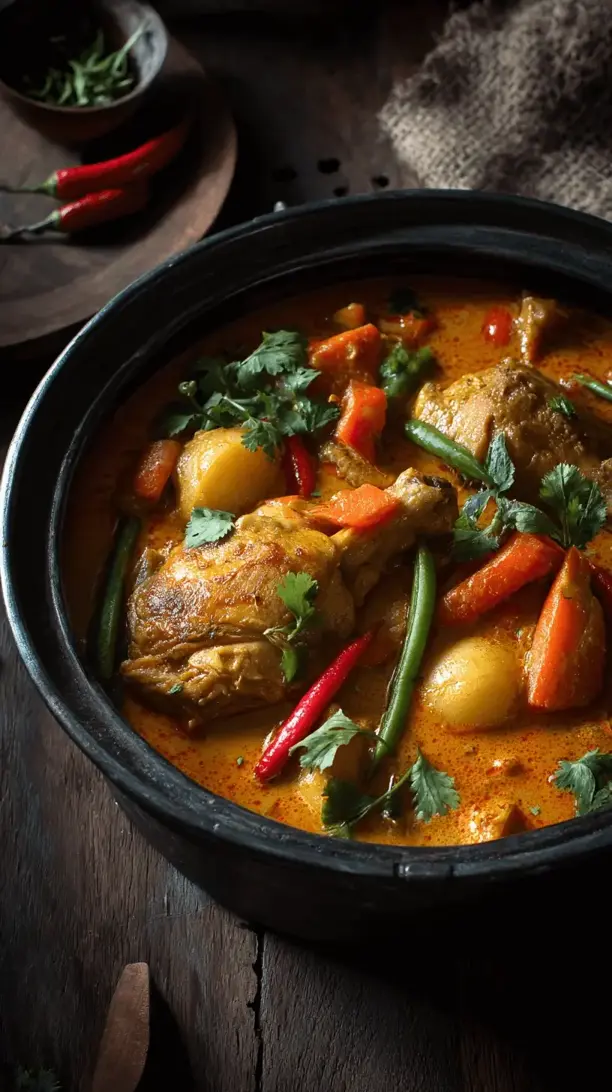
Thai Chicken And Vegetable Curry
My easy Thai chicken & veg curry is a flavor explosion! Creamy coconut milk, tender chicken, and fresh veggies come together in 40 minutes for a weeknight dinner that beats takeout.
Ingredients
Ingredients
-
1 tbsp coconut oil or vegetable oil
-
1 large onion (thinly sliced)
-
2 tbsp Thai red curry paste (see notes below!)
-
400 ml full-fat coconut milk (can)
-
500 g boneless, skinless chicken thighs (cut into bite-sized pieces)
-
1 tbsp fish sauce
-
1 tsp brown sugar or palm sugar
-
1 red bell pepper (sliced)
-
1 small aubergine (eggplant) (cubed)
-
1 large carrot (julienned or thinly sliced)
-
A handful green beans (trimmed and halved)
-
Juice of 1 lime
-
fresh coriander, Thai basil, and sliced red chilli (to serve)
Instructions
-
Start by prepping all your ingredients. This is a relatively fast-cooking curry, so having everything chopped and within reach—your mise en place—makes the process smooth and enjoyable. Slice the onion, cut the chicken, and chop all your vegetables. Trust me, you'll thank yourself later.01
-
Place your large pot over medium heat and add the coconut oil. Once the oil is shimmering, add the sliced onion. Cook for about 4-5 minutes, stirring occasionally, until the onion has softened and turned translucent. You're not looking for colour here, just tenderness.02
-
This is the magic step! Push the onions to one side and add the Thai red curry paste to the centre of the pot. Let it fry for 30-60 seconds, stirring constantly. You'll notice the colour deepen and the most incredible aroma will be released. This toasting process is essential for a well-rounded flavour.03
-
Now, add the chicken pieces to the pot. Stir well to coat the chicken in the fragrant onion and curry paste mixture. Cook for 3-4 minutes, just until the outside of the chicken turns opaque. It doesn't need to be cooked through at this stage.04
-
Pour in about three-quarters of the coconut milk (reserve the rest for later), along with the fish sauce and brown sugar. Give everything a good stir, scraping up any bits stuck to the bottom of the pot. Bring the mixture to a gentle simmer.05
-
Once simmering, add your harder vegetables first—the carrot and green beans. Let them cook for about 5 minutes before adding the softer vegetables like the bell pepper and aubergine. This ensures everything is perfectly tender but not mushy.06
-
Continue to simmer gently for another 8-10 minutes, or until the chicken is cooked through and the vegetables are tender to your liking. Now, stir in the reserved coconut milk—this last-minute addition gives the sauce a fresh, creamy lift.07
-
Take the pot off the heat. This is the final flourish! Stir in the fresh lime juice. Taste the curry and adjust the seasoning if needed—maybe a pinch more salt or another tiny squeeze of lime. Ladle into bowls and garnish generously with fresh coriander, Thai basil, and sliced red chilli.08