
Why You’ll Love This Spaghetti Squash with Pesto Chicken
- It’s a texture dream. You get the delightful, slightly al dente pull of the squash strands against the tender, shredded chicken, all coated in that wonderfully emulsified pesto. It’s a seriously satisfying mouthfeel that’s anything but boring.
- It feels indulgent but is packed with goodness. This dish has all the comforting vibes of a creamy pasta but is naturally lighter and full of vegetables. It’s a fantastic way to enjoy a “pasta” night without any guilt, just pure pleasure.
- The flavor balance is spot-on. The natural sweetness of the roasted squash is the perfect canvas for the bold, garlicky, and fresh pesto. The savory chicken brings it all together into a truly harmonious bite.
- It’s incredibly versatile. This is a fantastic base recipe. Don’t have chicken? Use chickpeas. Want more greens? Throw in some spinach. It’s a clean-out-the-fridge kind of meal that welcomes your own creative twists.
Ingredients & Tools
- 1 large spaghetti squash (about 3-4 lbs)
- 2 tbsp olive oil, divided
- 1 tsp kosher salt, plus more to taste
- 1/2 tsp black pepper
- 1 lb boneless, skinless chicken breasts
- 1 cup fresh basil leaves, packed
- 1/3 cup pine nuts, toasted
- 2 cloves garlic, roughly chopped
- 1/2 cup grated Parmesan cheese, plus more for serving
- 1/4 cup extra virgin olive oil
- 1 tbsp fresh lemon juice
- Optional: 1 cup cherry tomatoes, halved, for a burst of freshness.
Tools: A sharp chef’s knife, a sturdy baking sheet, parchment paper, a food processor or blender, and two forks for shredding.
A little note on the pesto: using fresh, high-quality basil is key here. If you can find it, Genovese basil has the most incredible aroma. And toasting the pine nuts—even for just a few minutes in a dry pan—unlocks a deep, nutty flavor that really elevates the entire sauce.
Serves: 4 | Prep Time: 20 minutes | Cook Time: 50 minutes | Total Time: 1 hour 10 minutes
Before You Start: Tips & Ingredient Notes
- Choosing your squash. Look for a squash that feels heavy for its size and has a firm, evenly colored rind without any soft spots. A larger squash is easier to work with and yields more of those beautiful “noodles.”
- The pesto principle. The trick to a vibrant green pesto that doesn’t brown is blanching the basil. Seriously—dip the leaves in boiling water for 10 seconds, then immediately into an ice bath. It locks in that gorgeous color. It’s an extra step, but it makes a world of difference if you’re making it ahead.
- Don’t rush the roasting. Giving the squash enough time in the oven is non-negotiable. You want the flesh to be tender enough to shred easily but not so mushy that it loses its noodle-like texture. A little caramelization on the edges is a very good thing.
- Chicken cooking methods. While we roast the chicken for simplicity alongside the squash, you could also poach it for supremely juicy results, or even use a store-bought rotisserie chicken to cut the time down significantly.
How to Make Spaghetti Squash with Pesto Chicken
Step 1: Preheat your oven to 400°F (200°C). Line a large baking sheet with parchment paper. Now, for the slightly tricky part—cutting the squash. Carefully use a sharp chef’s knife to slice the spaghetti squash in half lengthwise. A rubber mallet or the heel of your hand gently tapping the back of the knife can help you get through the tough skin. Scoop out the seeds and stringy pulp from the center with a spoon—it’s very similar to cleaning out a pumpkin.
Step 2: Drizzle the cut sides of the squash with about one tablespoon of the olive oil and rub it all over. Season generously with salt and pepper. Place the halves cut-side down on the prepared baking sheet. This method steams the squash as it roasts, making it incredibly tender. Pop the baking sheet into the preheated oven and roast for 40-50 minutes. You’ll know it’s done when the skin is easily pierced with a fork and the edges look a little browned.
Step 3: While the squash roasts, prepare the chicken. Place the chicken breasts on a separate small baking sheet or in an oven-safe dish. Drizzle with the remaining tablespoon of olive oil and season with a pinch of salt and pepper. After the squash has been in the oven for about 15 minutes, add the chicken to the oven. The chicken will need about 20-25 minutes to cook through (to an internal temperature of 165°F). Once cooked, remove the chicken and let it rest for 5-10 minutes before shredding it with two forks.
Step 4: Time for the star of the show: the pesto. In the bowl of a food processor, combine the fresh basil, toasted pine nuts, garlic, and Parmesan cheese. Pulse a few times until everything is finely chopped. With the processor running, slowly stream in the extra virgin olive oil until a smooth, vibrant sauce forms. Stop, scrape down the sides, add the lemon juice and a pinch of salt, and pulse once more to combine. Taste it! This is your chance to adjust—maybe it needs more cheese, salt, or a squeeze of lemon.
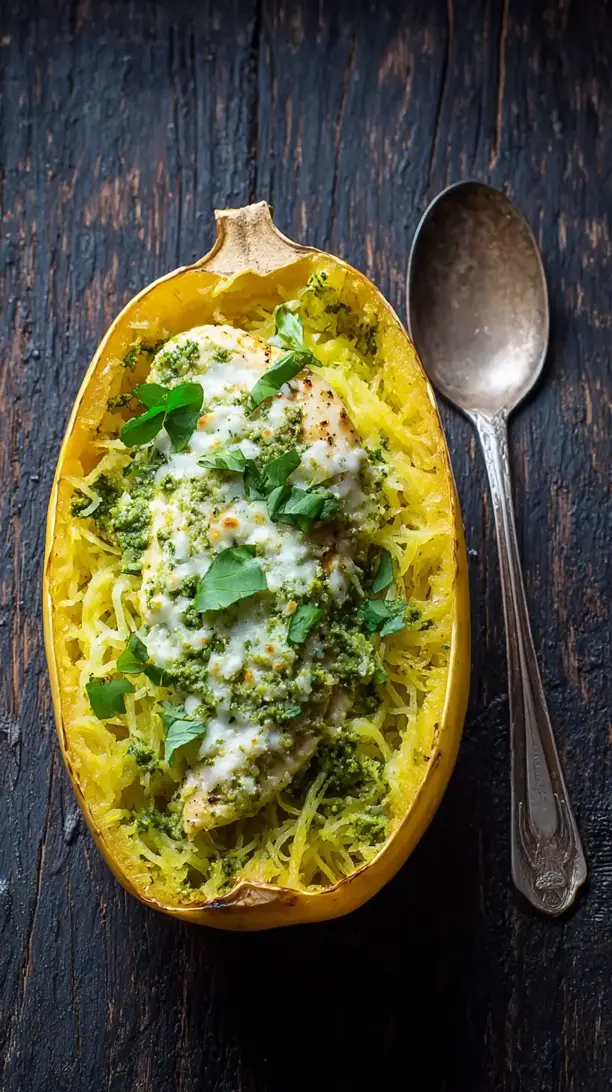
Step 5: Once the squash is cool enough to handle, use a fork to scrape the flesh from the skin. You’ll see it magically separate into long, spaghetti-like strands. Transfer all the squash “noodles” to a large mixing bowl. Add the shredded chicken and the pesto sauce. Gently toss everything together until the squash and chicken are evenly coated in that glorious green sauce. The warmth from the squash and chicken will make the pesto aromatic and help it cling to every strand.
Step 6: Give the final dish one last taste and adjust the seasoning if necessary. Sometimes a final pinch of salt or a crack of black pepper is all it needs. If you’re using the cherry tomatoes, fold them in now for a fresh, juicy pop. Serve immediately, topped with an extra sprinkle of Parmesan cheese. Honestly, it’s best enjoyed right away while it’s still warm and the textures are perfect.
Serving Suggestions
Complementary Dishes
- A simple arugula salad with lemon vinaigrette — The peppery arugula and sharp lemon cut through the richness of the pesto beautifully, adding a fresh, crisp element to the meal.
- Garlic sautéed green beans or broccolini — A warm, garlicky vegetable side feels cohesive and adds another layer of texture and green goodness to your plate.
- Crusty, warmed bread — Because you’ll absolutely want something to sop up every last bit of pesto left on your plate. It’s non-negotiable.
Drinks
- A crisp Sauvignon Blanc or Pinot Grigio — The high acidity and citrus notes in these white wines complement the herbal notes of the basil and cut through the oil in the pesto perfectly.
- A light, citrusy pale ale — If you prefer beer, the hoppy, grapefruit-like flavors in a good pale ale work surprisingly well with the dish’s vibrant profile.
- Sparkling water with lemon — For a non-alcoholic option, the bubbles and citrus are always a refreshing palate cleanser between bites.
Something Sweet
- Lemon sorbet — The ultimate clean, bright finish. It’s light, refreshing, and the sharp lemon flavor is a perfect contrast after the savory, herby main course.
- Almond biscotti for dipping — The nuttiness of the biscotti echoes the pine nuts in the pesto, making for a lovely, subtle connection between courses.
- Fresh berries with a dollop of whipped cream — Simple, seasonal, and not too heavy. It provides a sweet ending without undoing the light feeling of the meal.
Top Mistakes to Avoid
- Mistake: Underseasoning the squash. The squash itself is quite mild, so seasoning the flesh before roasting is crucial. If you forget this step, the final dish can taste bland, no matter how flavorful your pesto is.
- Mistake: Overcooking the chicken. Since the chicken breasts are roasting without much liquid, they can dry out quickly. Using a meat thermometer to pull them at 165°F is the best way to guarantee juicy, shreddable chicken.
- Mistake: Adding the pesto to a piping hot pan. While you want everything warm when combining, if the squash and chicken are scalding hot, the basil in the pesto can wilt and lose its bright green color and fresh flavor. Let them cool for a few minutes first.
- Mistake: Not toasting the pine nuts. It’s a small step, but toasting raw nuts unlocks their oils and gives the pesto a much deeper, richer, nuttier flavor profile. Don’t skip it!
Expert Tips
- Tip: Make the pesto your own. Out of pine nuts? Try walnuts or almonds. Not a Parmesan fan? Pecorino Romano adds a sharper bite. Want it creamier? Add a tablespoon of Greek yogurt when blending. Pesto is a formula, not a rigid recipe.
- Tip: Get ahead on prep. You can roast the squash and cook the chicken up to 3 days in advance. Store them separately in the fridge and simply reheat gently before tossing with freshly made pesto for a quick weeknight dinner.
- Tip: For extra flavor, roast the seeds! Clean the squash seeds, toss them with a little oil and salt, and roast at 350°F for 10-15 minutes until crispy. They make a fantastic, zero-waste garnish for the finished dish.
- Tip: Use a kitchen towel to remove moisture. If your squash seems a bit watery after scraping, place the strands in a clean kitchen towel and gently squeeze out the excess liquid. This helps the pesto stick better and prevents a soggy final dish.
FAQs
Can I make this dish vegan?
Absolutely! The beauty of this recipe is its adaptability. For a vegan version, skip the chicken or use canned chickpeas (drained and rinsed) for protein. For the pesto, substitute the Parmesan with 2-3 tablespoons of nutritional yeast, which gives a wonderfully cheesy flavor. Just make sure your pesto is whirred up nice and smooth with the extra virgin olive oil.
How do I store and reheat leftovers?
Store any leftovers in an airtight container in the refrigerator for up to 3 days. The pesto may darken a bit, but it will still taste great. To reheat, I recommend gently warming it in a skillet over medium-low heat with a tiny splash of water or broth to keep it from drying out. Avoid the microwave if you can, as it can make the squash mushy.
My squash is really hard to cut. Any tricks?
This is the most common hurdle! Here are two pro moves: 1) Poke a few holes in the whole squash with a knife and microwave it for 3-5 minutes. This softens the skin just enough to make cutting safer and easier. 2) If you have a very stable cutting board, you can carefully use a cleaver or heavy knife and a mallet to “chop” through it, like you would a butternut squash.
Can I use store-bought pesto to save time?
You sure can! There are some really great fresh pestos available in the refrigerated section of grocery stores. I’d recommend using about 3/4 of a 7-ounce jar for this recipe. Taste it first—you might want to brighten it up with an extra squeeze of fresh lemon juice before tossing it with the squash and chicken.
Why is my pesto bitter?
Bitterness usually comes from one of two places. First, the garlic—if you’re not using a food processor and are chopping by hand, you can easily bruise the garlic, releasing bitter compounds. The processor is better. Second, the basil stems can be bitter. Make sure you’re only using the leaves and the most tender parts of the stems for the smoothest, sweetest pesto.