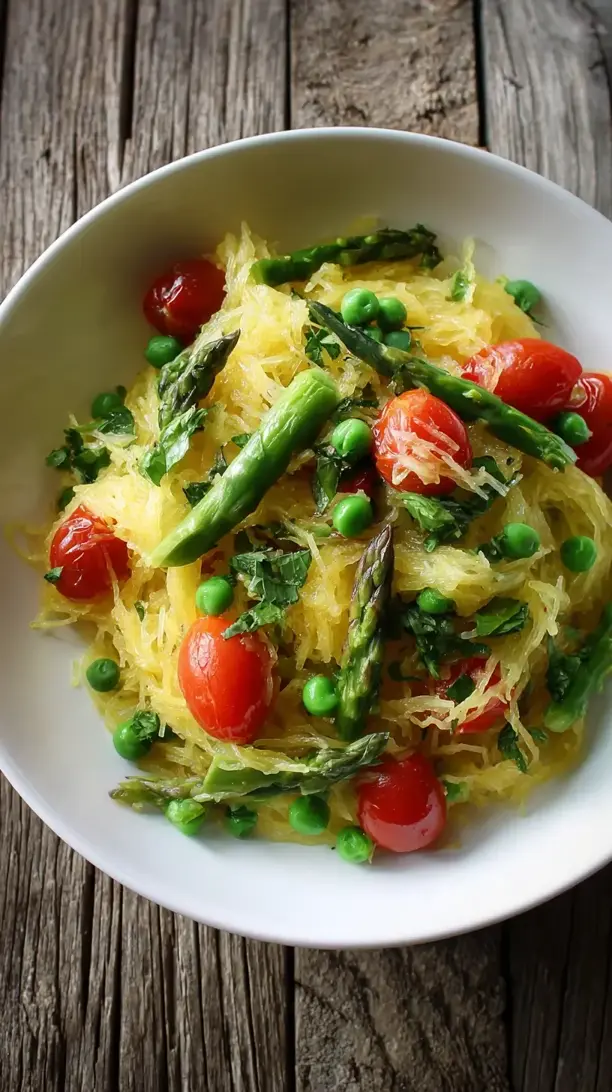

Why You’ll Love This Spaghetti Squash Primavera
- It’s a textural dream. You get the tender-yet-slightly-crunchy strands of squash, the snap of fresh asparagus, the pop of peas, and the juicy burst of tomatoes all in one forkful. It’s never, ever mushy.
- It’s incredibly versatile. Honestly, treat this recipe as a template. Got some zucchini? Toss it in. Bell peppers looking lonely in the fridge? They’d be perfect here. It’s a fantastic way to clean out the vegetable drawer.
- It feels light yet completely satisfying. Unlike a heavy pasta dish, this primavera leaves you feeling energized and happy, not stuffed. The natural sweetness of the roasted squash and vegetables is so fulfilling.
- The colors are just beautiful. We eat with our eyes first, and this dish is a true showstopper with its bright greens, reds, and yellows. It’s perfect for a casual weeknight but special enough for a dinner party.
Ingredients & Tools
- 1 large spaghetti squash (about 3-4 pounds)
- 2 tablespoons olive oil, divided
- 1 teaspoon kosher salt, plus more to taste
- 1/2 teaspoon black pepper
- 1 medium yellow onion, thinly sliced
- 3 cloves garlic, minced
- 1 cup cherry or grape tomatoes, halved
- 1 bunch asparagus, tough ends trimmed, cut into 1-inch pieces
- 1 cup frozen peas, thawed
- 1/4 cup vegetable broth or water
- 1/4 cup freshly grated Parmesan cheese, plus more for serving
- 2 tablespoons fresh lemon juice
- 1/4 cup fresh basil or parsley, chopped
Tools: A sharp chef’s knife, a large baking sheet, a large skillet, a fork, and a sturdy spoon for scooping.
The quality of your vegetables really shines here, so try to get them as fresh as possible. And that Parmesan? Freshly grating it yourself makes a world of difference—it melts into the sauce so much better than the pre-shredded kind.
Serves: 4 | Prep Time: 20 minutes | Cook Time: 45 minutes | Total Time: 1 hour 5 minutes
Before You Start: Tips & Ingredient Notes
- Choosing your squash. Look for a spaghetti squash that feels heavy for its size and has a firm, pale yellow rind without any soft spots. A heavier squash usually means more moisture and better strands.
- Don’t skip the roasting. Roasting is absolutely key to developing the squash’s natural sweetness and getting those perfect, separate strands. Microwaving can make it watery, so if you have the time, the oven is your best friend here.
- Prep your veggies while the squash roasts. This is the ultimate time-saver. Chop your onion, mince the garlic, and get all your other vegetables ready to go. The final cook in the skillet is super fast, so having everything prepped makes it seamless.
- Why vegetable broth? That splash of broth (or even water) helps to create a light, glossy sauce that coats every strand and vegetable without needing a ton of oil or cream. It’s the secret to a cohesive, not-dry dish.
How to Make Spaghetti Squash Primavera
Step 1: Roast the Squash. First, preheat your oven to 400°F (200°C). This is the most important step, so let’s get it right. Carefully slice the spaghetti squash in half lengthwise—this can be a bit of a workout, so use a sharp, sturdy knife and be patient. Scoop out the seeds and stringy pulp with a spoon, just like you would a pumpkin. Drizzle the cut sides with about 1 tablespoon of the olive oil and sprinkle generously with salt and pepper. Place the halves cut-side down on a baking sheet lined with parchment paper. Roast for 35-45 minutes, or until the flesh is very tender and easily pierced with a fork.
Step 2: Create the “Spaghetti.” Once the squash is cool enough to handle, use a fork to scrape the flesh. You’ll notice those beautiful, long strands just pull away from the skin effortlessly. Transfer all the spaghetti strands to a bowl and set them aside. Try not to nibble on too many strands straight from the shell—it’s a real test of willpower!
Step 3: Sauté the Aromatics. While the squash is roasting or after you’ve scraped it, heat the remaining 1 tablespoon of olive oil in a large skillet over medium heat. Add the sliced onion and cook for about 5-7 minutes, until it becomes soft and translucent. Stir in the minced garlic and cook for just another minute until it’s fragrant—be careful not to let it burn, or it will turn bitter.
Step 4: Cook the Spring Vegetables. Now, add the asparagus pieces to the skillet. Sauté for 3-4 minutes until they turn bright green and are just starting to become tender-crisp. Then, stir in the halved cherry tomatoes and the thawed peas. Cook for another 2-3 minutes, just until the tomatoes begin to soften and wrinkle slightly. You want everything to still have a bit of a bite.
Step 5: Bring It All Together. Add the reserved spaghetti squash strands to the skillet with the vegetables. Pour in the vegetable broth and the fresh lemon juice. Gently toss everything together, allowing the squash to heat through and absorb the flavors. The broth will create a light sauce that brings everything together.
Step 6: The Final Flourish. Remove the skillet from the heat. Stir in the freshly grated Parmesan cheese and most of the chopped fresh herbs. Give it one final, gentle toss. Taste it—this is your moment! Adjust the seasoning with more salt and pepper if it needs it. The lemon juice should be bright but not overpowering.
Step 7: Serve Immediately. Divide the primavera among bowls and top with the remaining fresh herbs and an extra sprinkle of Parmesan cheese. The dish is best enjoyed right away while the vegetables are still vibrant and the squash is perfectly tender.
Serving Suggestions
Complementary Dishes
- Garlic Herb Grilled Chicken — A simple, juicy grilled chicken breast seasoned with garlic and herbs adds a lean protein that makes the meal feel more substantial without overshadowing the delicate veggies.
- A Crisp Green Salad with Lemon Vinaigrette — The fresh, acidic notes of a simple salad mirror the flavors in the primavera and provide a refreshing, crunchy contrast.
- Crusty Whole-Grain Bread — Perfect for sopping up every last bit of the light, savory sauce left in the bowl. A little goes a long way for that satisfying carb element.
Drinks
- A Crisp Sauvignon Blanc — The herbaceous and citrusy notes in this wine are a fantastic match for the lemon and fresh vegetables in the dish.
- Sparkling Water with Lemon — For a non-alcoholic option, the bubbles and citrus cleanse the palate between bites, making each forkful taste bright and new.
- Light-bodied Pinot Noir — If you prefer red, a lighter red like Pinot Noir has enough acidity to complement the tomatoes without overwhelming the other flavors.
Something Sweet
- Lemon Sorbet — A scoop of tart, refreshing lemon sorbet continues the citrus theme and provides a clean, light finish to the meal.
- Fresh Berry Parfait — Layers of mixed berries, a little Greek yogurt, and a drizzle of honey feel indulgent but are still wonderfully light after a vegetable-forward main.
- Dark Chocolate Almond Clusters — Just a few pieces of dark chocolate with almonds satisfy a sweet tooth with a hint of richness that contrasts nicely with the primavera.
Top Mistakes to Avoid
- Mistake: Undercooking the squash. If the squash isn’t tender enough, the strands will be crunchy and difficult to scrape, and they won’t absorb the sauce properly. The fork should glide through the flesh easily.
- Mistake: Overcooking the vegetables in the skillet. The asparagus and peas should be tender-crisp, not mushy. They continue to cook a little from residual heat after you take the skillet off the stove, so err on the side of slightly underdone.
- Mistake: Adding the squash to a cold skillet. Make sure your vegetable mixture is hot before you add the squash strands. This ensures everything heats through evenly and the flavors meld together properly.
- Mistake: Skipping the fresh herbs and lemon juice. These are not just garnishes! They provide crucial brightness and freshness that lift the entire dish. Bottled lemon juice just doesn’t have the same vibrant punch.
Expert Tips
- Tip: Get creative with your veg. This recipe is a canvas. In the summer, add thin slices of zucchini or yellow squash. In the fall, try roasted broccoli or cauliflower florets. The method stays the same.
- Tip: Add a protein boost. For a more filling meal, stir in a can of rinsed chickpeas with the vegetables, or top each serving with a soft-boiled or poached egg. The runny yolk creates a luxurious sauce.
- Tip: Make it ahead. You can roast the squash and scrape the strands up to 3 days in advance. Store them in an airtight container in the fridge. When ready to eat, just sauté the fresh veggies and stir in the pre-cooked squash to heat through.
- Tip: For extra flavor, toast the squash seeds. Don’t throw away the seeds! Rinse them, toss with a little oil and salt, and roast at 350°F (175°C) for 10-15 minutes until golden. They make a fantastic crunchy topping.
FAQs
Can I make this recipe vegan?
Absolutely! This dish is very easy to veganize. Simply omit the Parmesan cheese or use your favorite vegan Parmesan alternative. The dish has so much flavor from the roasted squash and fresh vegetables that you honestly won’t miss it. You could also add a sprinkle of nutritional yeast for a cheesy, umami flavor.
How do I store and reheat leftovers?
Store any leftovers in an airtight container in the refrigerator for up to 3 days. To reheat, I recommend using a skillet over medium heat with a tiny splash of water or broth to revive the sauce. The microwave can make the squash a bit watery, so the stovetop is best for maintaining texture.
My squash strands are watery. What did I do wrong?
This usually happens if the squash is microwaved instead of roasted, or if it’s a particularly watery squash. After scraping the strands, you can place them in a clean kitchen towel or a few layers of paper towels and gently squeeze out the excess moisture before adding them to the skillet.
Can I use frozen vegetables instead of fresh?
You can, but the texture will be different. For the asparagus, fresh is definitely best. For peas, frozen are perfect. If using a frozen vegetable mix, add them straight from the freezer to the hot skillet, but be aware they will release more water as they cook, which can make the final dish less vibrant.
Is there an easier way to cut the spaghetti squash?
It can be tough! A great trick is to poke the whole squash several times with a sharp knife or fork and microwave it for 3-5 minutes first. This softens the skin just enough to make slicing it in half much, much easier. Just be careful, as it will be hot.