
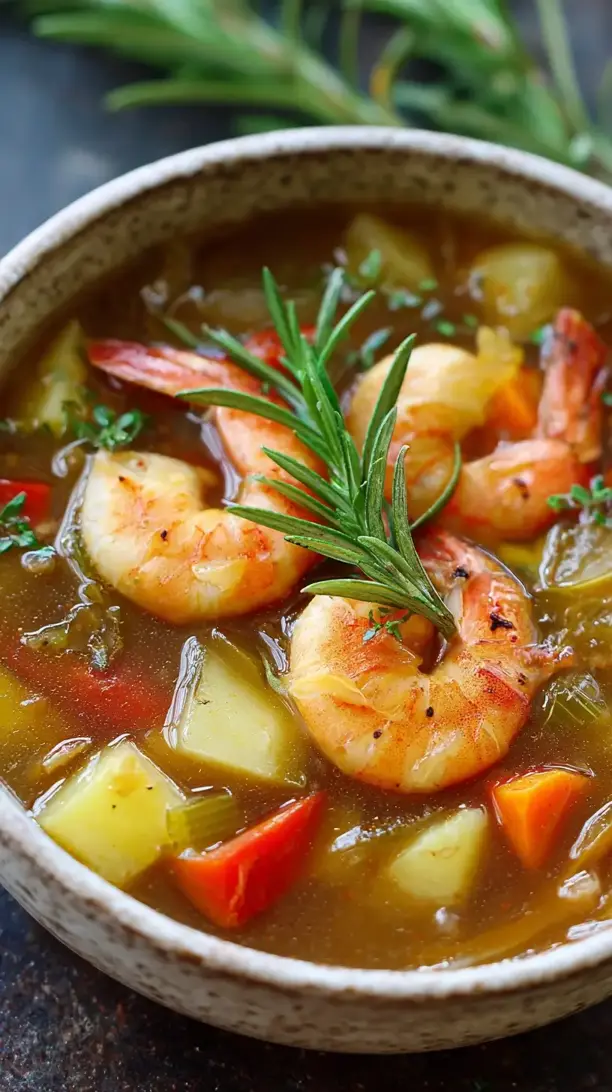

Why You’ll Love This Shrimp and Vegetable Soup
- It’s incredibly fast and fuss-free. From chopping board to bowl, you’re looking at about 30 minutes. The shrimp cook in a flash, which means you can have a restaurant-quality meal on the table with minimal effort.
- The flavor is clean, bright, and deeply satisfying. We’re building a quick but flavorful broth from scratch, infused with aromatics like garlic and ginger. It’s light enough not to weigh you down but packed with so much umami goodness.
- It’s a fantastic way to clean out the veggie drawer. This recipe is a guideline, not a strict rulebook. Got some zucchini hanging around? Toss it in! A lonely bell pepper? Perfect. It’s a wonderfully adaptable soup that welcomes improvisation.
- It feels like a hug in a bowl. There’s a certain therapeutic quality to sipping this delicate, warm broth. It’s the kind of meal that just makes you feel good, inside and out—comfort food that’s actually good for you.
Ingredients & Tools
- 1 tbsp olive oil or avocado oil
- 1 medium yellow onion, diced
- 2 carrots, peeled and sliced into thin rounds
- 2 celery stalks, diced
- 3 cloves garlic, minced
- 1 tbsp fresh ginger, grated
- 6 cups low-sodium chicken or vegetable broth
- 1 (14.5 oz) can diced tomatoes, with their juices
- 1 tsp dried oregano
- 1 bay leaf
- 1 lb large raw shrimp, peeled and deveined (tails on or off)
- 2 cups chopped kale or spinach
- 1 medium zucchini, diced
- 1 lemon, juiced
- ¼ cup fresh parsley, chopped
- To taste: salt and freshly ground black pepper
Tools: A large soup pot or Dutch oven, a sharp knife, and a cutting board.
The quality of your broth is key here—it’s the foundation of the entire soup. And don’t skip the fresh lemon juice at the end; it’s not just a garnish, it’s what wakes up all the other flavors and makes everything pop.
Serves: 4 | Prep Time: 15 minutes | Cook Time: 20 minutes | Total Time: 35 minutes
Before You Start: Tips & Ingredient Notes
- Get your mise en place. This soup cooks quickly, so having all your vegetables chopped and your shrimp ready to go will make the process smooth and enjoyable. A little organization goes a long way.
- What kind of shrimp should I use? I recommend large (26/30 count) raw shrimp, either fresh or thawed from frozen. Avoid pre-cooked shrimp, as they’ll become tough and rubbery when simmered in the soup. Pat them dry with a paper towel before adding for a better sear.
- Don’t rush the aromatics. Taking a few extra minutes to sauté the onion, carrot, and celery until they’re softened is crucial. This step, called sweating the vegetables, builds a deep, sweet flavor base for your broth.
- Fresh herbs make a difference. While dried oregano works fine in the broth, the fresh parsley and lemon juice added at the end are non-negotiable for that final burst of freshness. If you have fresh thyme, a sprig added with the bay leaf would be lovely too.
How to Make Shrimp and Vegetable Soup
Step 1: Heat the olive oil in your large soup pot over medium heat. Once the oil shimmers, add the diced onion, carrots, and celery. You’ll hear a gentle sizzle—that’s what you want. Sauté for about 5-7 minutes, stirring occasionally, until the vegetables have softened and the onion turns translucent. They shouldn’t take on much color; we’re just softening them to release their sweetness.
Step 2: Add the minced garlic and grated ginger to the pot. Stir constantly for about 60 seconds—just until they become incredibly fragrant. Be careful not to burn them! That toasty, aromatic smell is the signal that they’re ready. This quick bloom in the oil unlocks their essential flavors and infuses the entire base of the soup.
Step 3: Now, pour in the broth and the canned diced tomatoes with all their juices. Add the dried oregano and the bay leaf. Give everything a good stir, scraping the bottom of the pot to lift any tasty browned bits. Bring the liquid to a lively boil, then immediately reduce the heat to low, cover the pot, and let it simmer gently for about 10 minutes. This allows the flavors to meld together beautifully.
Step 4: Uncover the pot and increase the heat to medium. Add the diced zucchini and simmer for 3 minutes. Zucchini cooks quickly, and we want it to be tender but still have a slight bite. Then, stir in the chopped kale or spinach and cook for another 2 minutes, just until the greens have wilted and turned bright green.
Step 5: This is the moment for the shrimp! Add them to the simmering soup, making sure they’re submerged. Cook for 2-3 minutes, stirring occasionally. You’ll know they’re done when they curl into a tight “C” shape and turn opaque pink. Do not overcook them, or they’ll become tough.
Step 6: Turn off the heat. This is crucial. Remove the pot from the burner. Fish out and discard the bay leaf. Now, stir in the fresh lemon juice and chopped parsley. The acid from the lemon brightens everything up magically. Finally, taste the soup and season generously with salt and black pepper until it’s just right for you.
Serving Suggestions
Complementary Dishes
- Crusty, warm bread — There’s nothing better than a thick slice of sourdough or a crusty baguette for dipping into that flavorful broth. It’s a simple, textural contrast that feels utterly essential.
- A simple arugula salad — Toss some peppery arugula with a light lemon vinaigrette. The sharp, fresh salad provides a lovely counterpoint to the warm, savory soup without competing with it.
- Garlic herb crostini — For a little more decadence, toast some baguette slices rubbed with garlic and sprinkled with parsley. They add a fantastic crunch and a punch of garlicky flavor.
Drinks
- A crisp Sauvignon Blanc — The citrus notes in the wine will mirror the lemon in the soup beautifully, cutting through the richness and cleansing the palate between bites.
- A light, citrusy lager — A beer with bright, hoppy notes can be incredibly refreshing with the shrimp and vegetables. Think of a pilsner or a pale ale—nothing too heavy.
- Sparkling water with lemon — For a non-alcoholic option, the bubbles and citrus are the perfect palate cleanser, enhancing the soup’s fresh character.
Something Sweet
- Lemon sorbet — Continuing the citrus theme, a small scoop of tangy, clean lemon sorbet is the perfect, light way to end the meal. It feels refreshing and sophisticated.
- Almond biscotti — A few crunchy, not-too-sweet biscotti for dipping into a cup of espresso or tea… it’s a classic, simple finish that just works.
- Fresh berry salad — A bowl of mixed berries (raspberries, blueberries, blackberries) with a tiny drizzle of honey and a sprinkle of mint. It’s sweet, juicy, and wonderfully light.
Top Mistakes to Avoid
- Mistake: Overcooking the shrimp. This is the number one error. Shrimp cook in mere minutes. The second they turn pink and opaque, they’re done. Leaving them in the hot broth will continue to cook them, leading to a rubbery, tough texture. I’ve messed this up before too, and it’s a real shame.
- Mistake: Skipping the acid at the end. That squeeze of lemon juice is not just a suggestion—it’s a vital ingredient that balances the soup’s flavor profile. Without it, the soup can taste a bit flat. Acid is the secret weapon that makes all the other ingredients sing.
- Mistake: Adding all the vegetables at once. Vegetables have different cooking times. If you throw the delicate zucchini in with the hardy carrots at the beginning, you’ll end up with mushy zucchini. Staggering their addition ensures every vegetable has the perfect texture.
- Mistake: Not tasting and seasoning at the end. Broths vary in saltiness, so always, always taste your soup after you’ve added the final ingredients. Seasoning in layers is good, but that final adjustment with salt and pepper is what makes it truly restaurant-quality.
Expert Tips
- Tip: Make a quick shrimp stock. If you’re using shrimp with shells on, don’t toss them! Sauté the shells in a bit of oil for a minute, then add a cup of water and simmer for 10 minutes. Strain this quick stock and use it to replace a cup of the regular broth for an incredible depth of seafood flavor.
- Tip: Add a Parmesan rind. Got an old rind of Parmesan cheese sitting in your fridge? Toss it into the pot when you add the broth. As it simmers, it will melt into the soup, adding a subtle, savory umami richness that is absolutely divine.
- Tip: Brown the shrimp lightly first. For an extra layer of flavor, you can quickly sear the shrimp in the hot pot for about 30-45 seconds per side before setting them aside. Then, proceed with the recipe and add them back at the end. This adds a lovely caramelized note.
- Tip: Let it rest. If you have the time, turn off the heat and let the finished soup sit for 5-10 minutes before serving. This allows the flavors to settle and marry together even more, resulting in a more harmonious bowl.
FAQs
Can I make this soup ahead of time?
Absolutely, but with one important caveat: wait to add the shrimp until you’re ready to serve. You can prepare the vegetable broth base completely, let it cool, and store it in the fridge for up to 2 days. When you’re ready to eat, gently reheat the broth, then add the raw shrimp and leafy greens and cook as directed. This prevents the shrimp from becoming overcooked and rubbery upon reheating. The soup base actually tastes even better the next day as the flavors have more time to develop!
Can I use frozen shrimp?
Yes, frozen shrimp are a fantastic and often more economical option. The key is to thaw them properly. The best method is to place them in a colander in the sink and run cold water over them for a few minutes, or transfer them to the refrigerator the night before. Never thaw shrimp in warm water or at room temperature, as this can lead to a mushy texture. Just make sure they are fully thawed and patted dry before adding them to the soup.
What other vegetables can I add?
This soup is incredibly versatile! Think about cooking times. For quicker-cooking veggies, add them with the zucchini: think sliced mushrooms, chopped bell peppers, or even frozen corn. For harder vegetables, add them with the initial carrots and celery—diced potatoes or sweet potatoes would need that extra time to become tender. Even cauliflower or broccoli florets would work well added after the broth has simmered for a few minutes.
Is this soup freezer-friendly?
I don’t recommend freezing this soup once the shrimp and delicate vegetables are added. Shrimp tend to become watery and lose their pleasant texture after freezing and thawing. However, you can freeze the base broth (the part with the onions, carrots, celery, and tomatoes) very successfully. Freeze it for up to 3 months, then thaw overnight in the fridge and proceed with adding the zucchini, greens, and fresh shrimp when you reheat it.
My soup tastes a bit bland. How can I fix it?
This usually comes down to seasoning. First, make sure you’ve added enough salt—salt enhances all the other flavors. If it’s still lacking, try adding another squeeze of fresh lemon juice to brighten it up. A dash of fish sauce (sounds weird, I know) is a secret umami bomb that will deepen the savory flavor without making it taste fishy. Finally, a pinch of red pepper flakes can add a welcome kick and complexity.


