
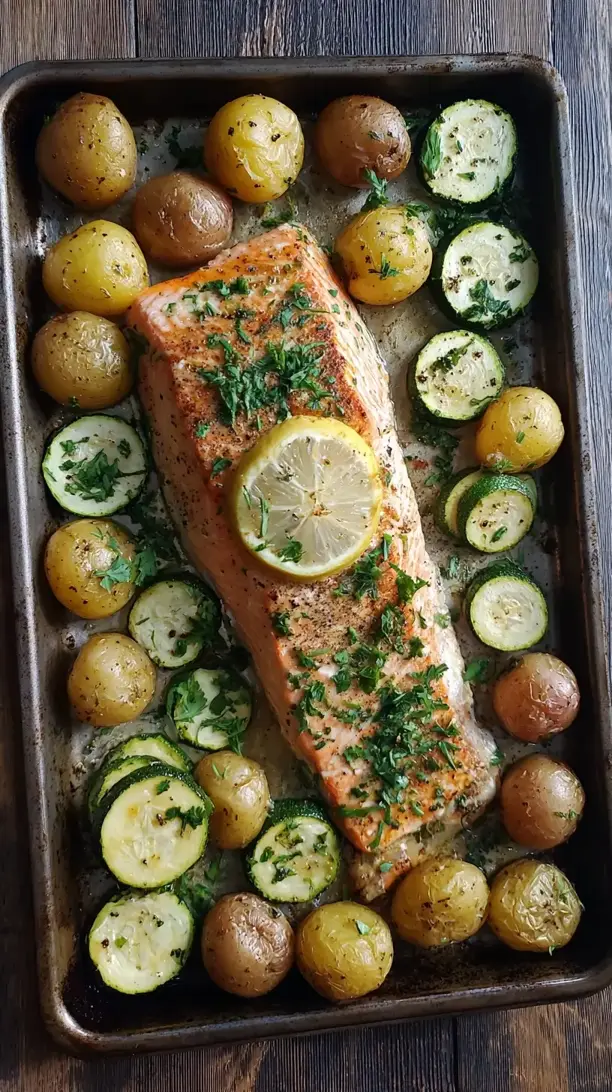
This Sheet Pan Salmon and Vegetables is a complete, healthy meal that roasts together on one pan for minimal cleanup. High heat gives the salmon a flaky interior and crisp top while caramelizing the vegetables. It’s a simple yet impressive weeknight dinner that feels both effortless and special.
Why You’ll Love This Sheet Pan Salmon and Vegetables
- Effortless cleanup: One pan means less time washing and more time enjoying.
- Perfectly cooked everything: Salmon stays moist and flaky, vegetables tender and caramelized.
- Endlessly adaptable: Swap vegetables or seasonings based on what you have.
- Seriously impressive: Vibrant colors and beautiful presentation wow guests easily.
Ingredients & Tools
- 4 (6-ounce / 170 g) salmon fillets, skin-on or skinless
- 1 lb baby potatoes, halved or quartered if large
- 2 medium zucchini, cut into 1-inch chunks
- 1 large red bell pepper, sliced
- 1 small red onion, cut into wedges
- 3 tbsp olive oil, divided
- 2 tbsp fresh lemon juice
- 2 cloves garlic, minced
- 1 tsp dried oregano
- 1/2 tsp smoked paprika
- 1/4 tsp red pepper flakes (optional)
- Kosher salt and freshly ground black pepper
- 2 tbsp fresh chopped parsley or dill, for serving
- Lemon wedges, for serving
Tools: 1 large rimmed baking sheet, parchment paper or aluminum foil
Notes: Don’t be shy with the seasoning here — a little goes a long way in building layers of flavor. Using fresh lemon juice and herbs at the end really brightens everything up, making the dish taste fresh and vibrant.
Nutrition (per serving)
| Calories: | 420 kcal |
| Protein: | 35 g |
| Fat: | 18 g |
| Carbs: | 28 g |
| Fiber: | 5 g |
Serves: 4 | Prep Time: 15 minutes | Cook Time: 20 minutes | Total Time: 35 minutes
Before You Start: Tips & Ingredient Notes
- Salmon selection is key. Try to get fillets that are similar in thickness so they cook at the same rate. If one end is much thinner, you can tuck it under slightly to create a more even piece.
- Don’t overcrowd the pan. This is the golden rule for roasting! If the vegetables are piled on top of each other, they’ll steam instead of roast. You want a single, even layer for the best caramelization.
- Cut your veggies uniformly. Cutting the potatoes, zucchini, and peppers into similar-sized pieces ensures they all finish cooking at the same time. Nobody wants a burnt zucchini next to a raw potato.
- Pat that salmon dry. Before seasoning, use a paper towel to gently pat the salmon fillets dry. This helps the seasoning stick and promotes a much nicer sear on the surface.
- Room temperature is your friend. Let the salmon sit out for about 10-15 minutes before cooking. A cold fillet straight from the fridge can cook unevenly.
How to Make Sheet Pan Salmon and Vegetables
Step 1: Preheat your oven to 425°F (220°C). This high heat is crucial for getting a good roast on the vegetables and cooking the salmon quickly without drying it out. Line your large rimmed baking sheet with parchment paper or foil for the world’s easiest cleanup.
Step 2: In a large bowl, toss the halved baby potatoes with 1 tablespoon of the olive oil, and a generous pinch of salt and pepper. You’ll notice we’re starting the potatoes first because they take the longest to cook. Spread them out on one half of the prepared baking sheet. This gives them a head start.
Step 3: Roast the potatoes for 10 minutes. This initial blast of heat will start to soften them and give them a jump start, ensuring they’re perfectly tender by the time everything else is done.
Step 4: While the potatoes are par-cooking, prepare the marinade and remaining vegetables. In a small bowl or jug, whisk together the remaining 2 tablespoons of olive oil, lemon juice, minced garlic, dried oregano, smoked paprika, and red pepper flakes (if using). This mixture is going to be the flavor powerhouse for the entire dish.
Step 5: Place the zucchini, bell pepper, and red onion in the same large bowl you used for the potatoes (fewer dishes!). Drizzle with about half of the olive oil marinade and toss to coat everything evenly. The vegetables should have a nice, glossy sheen.
Step 6: Carefully remove the hot baking sheet from the oven. Push the par-cooked potatoes to the outer edges of the pan. Arrange the marinated zucchini, peppers, and onions in the center of the pan in a single layer. You’re creating a vegetable nest for the salmon.
Step 7: Pat the salmon fillets dry with a paper towel and place them skin-side down (if they have skin) right on top of the bed of vegetables in the center of the pan. This elevates the salmon slightly and allows hot air to circulate around the veggies underneath.
Step 8: Brush the remaining half of the marinade generously over the top and sides of each salmon fillet. Season the salmon and all the vegetables with another pinch of salt and pepper. Be thorough here — this is your last chance to add flavor directly.
Step 9: Return the sheet pan to the oven and roast for 12-15 minutes. The exact time will depend on the thickness of your salmon. You’re looking for the salmon to be opaque and flake easily with a fork, and the vegetables to be tender and lightly charred at the edges.
Step 10: For a beautiful finish, you can switch the oven to broil for the last 1-2 minutes. Watch it closely! This will give the top of the salmon and the tips of the vegetables a lovely, golden-brown color.
Step 11: Remove the pan from the oven. Let it rest for a couple of minutes—this allows the salmon juices to redistribute. Then, sprinkle everything with the fresh chopped parsley or dill and serve immediately with lemon wedges for squeezing over the top.
Storage & Freshness Guide
- Fridge: Store leftovers in an airtight container for up to 2 days.
- Freezer: Freezing not recommended; salmon and vegetables become watery upon thawing.
- Reviving: Reheat gently in a 300°F oven until warm to preserve texture.
Serving Suggestions
Complementary Dishes
- Fluffy quinoa or couscous — These light grains are perfect for soaking up the delicious juices and marinade from the pan, making every last bite count.
- Crusty bread or garlic bread — Honestly, is there anything better than a piece of bread to mop up that flavorful, lemony oil left on the plate? It’s a must.
- A simple arugula salad — The peppery bite of arugula with a light lemon vinaigrette provides a fresh, crisp contrast to the rich, roasted main course.
Drinks
- A crisp Sauvignon Blanc — The bright acidity and citrus notes in this wine mirror the lemon in the dish and cut through the richness of the salmon beautifully.
- Sparkling water with lemon — A non-alcoholic option that keeps things light and refreshing, cleansing the palate between each flavorful forkful.
- A light-bodied Pinot Noir — If you prefer red, a Pinot Noir has enough acidity and fruitiness to complement the salmon without overpowering it.
Something Sweet
- Lemon sorbet — It’s a classic for a reason. The clean, sharp citrus flavor is a perfect, palate-cleansing finish after a savory meal.
- Almond biscotti — These crunchy, not-too-sweet cookies are wonderful for dipping into a cup of coffee or tea, ending the meal on a cozy note.
- Fresh berries with whipped cream — Simple, elegant, and requires zero baking. The natural sweetness and slight tartness are the perfect epilogue.
Top Mistakes to Avoid
- Mistake: Skipping the potato pre-roast. If you add the potatoes at the same time as the other vegetables and salmon, they’ll still be hard and undercooked when everything else is ready. That 10-minute head start is non-negotiable for tender spuds.
- Mistake: Using a wet marinade directly on the pan. We brush the marinade onto the salmon and toss the veggies in it, but pouring excess liquid onto the sheet pan will cause the food to steam instead of roast, leading to soggy vegetables.
- Mistake: Overcooking the salmon. Salmon continues to cook from residual heat after it leaves the oven. Take it out when it’s still slightly translucent in the very center—it will perfect itself as it rests. Overcooked salmon becomes dry and chalky.
- Mistake: Not seasoning in layers. Season the potatoes before their first roast, then season the other veggies, and finally season the salmon and the entire pan again before the final roast. This builds a much deeper, more complex flavor profile.
Expert Tips
- Tip: Use the skin to your advantage. If your salmon has skin, roasting it skin-side down on the vegetables creates a protective barrier. The skin gets crispy, and it’s easy to leave on the plate if you don’t want to eat it.
- Tip: Customize your veggie mix. This recipe is a template! Try asparagus (add it for the last 8 minutes only), broccoli florets, cherry tomatoes, or sliced carrots (thinly slice or par-cook them first).
- Tip: Check for doneness with a thermometer. For foolproof salmon, insert an instant-read thermometer into the thickest part of a fillet. You’re aiming for 125-130°F (52-54°C) for medium-rare, which will carry over to a perfect medium after resting.
- Tip: Add a finishing salt. Just before serving, sprinkle a tiny bit of flaky sea salt, like Maldon, over the salmon and vegetables. The crunchy flakes provide an amazing textural contrast and a burst of salinity.
- Tip: Make it zesty. Add a teaspoon of lemon zest to the marinade for an extra punch of bright, sunny citrus aroma that will make the whole dish sing.
FAQs
Can I use frozen salmon for this recipe?
You can, but you need to thaw it completely first. The best method is to move it from the freezer to the fridge the night before. If you cook salmon from frozen, it will release a ton of water onto the pan, steaming the vegetables and preventing that lovely caramelization. Plus, the outside will be overcooked before the inside is done. Pat it very dry with paper towels after thawing.
What other vegetables work well on a sheet pan with salmon?
Oh, so many! The trick is to consider cooking times. Harder vegetables like carrots, sweet potatoes, or Brussels sprouts should be cut small or given a head start like the potatoes. Softer veggies like asparagus, cherry tomatoes, or green beans can be added for the last 8-10 minutes of cooking. Broccoli and cauliflower are great contenders that roast beautifully in the same timeframe as the other veggies listed.
How do I know when the salmon is perfectly cooked?
Look for the salmon to be opaque and to flake easily when you gently press it with a fork. A little translucency in the very very center is okay—it will finish cooking as it rests. If you want to be precise, an instant-read thermometer inserted into the thickest part should read between 125°F and 130°F (52-54°C) for a medium result that is still incredibly moist.
Can I prepare this meal ahead of time?
You can do some of the prep! You can chop all the vegetables and make the marinade a day in advance, storing them separately in airtight containers in the fridge. But for the best texture, assemble and roast the whole thing just before you plan to eat. Pre-assembling it on the pan will cause the vegetables to get watery and the marinade to break down the salmon’s surface.
My vegetables are soggy. What happened?
This usually boils down to two things: overcrowding or excess moisture. If the pan is too crowded, the vegetables steam each other. Make sure they’re in a single layer with a little space between them. Also, ensure your veggies are dry before tossing them in oil, and pat that salmon dry, too. A hot oven (425°F) is your best friend for achieving crisp-tender, caramelized results.
Sheet Pan Salmon And Vegetables
Make this easy Sheet Pan Salmon and Vegetables for a healthy, delicious dinner with minimal cleanup. Ready in 35 minutes! Get the simple recipe now.
Ingredients
For the main ingredients
-
4 6-ounce salmon fillets (skin-on or skinless)
-
1 lb baby potatoes (halved or quartered if large)
-
2 medium zucchini (cut into 1-inch chunks)
-
1 large red bell pepper (sliced)
-
1 small red onion (cut into wedges)
-
3 tbsp olive oil (divided)
-
2 tbsp fresh lemon juice
-
2 cloves garlic (minced)
-
1 tsp dried oregano
-
0.5 tsp smoked paprika
-
0.25 tsp red pepper flakes (optional)
-
Kosher salt and freshly ground black pepper
-
2 tbsp fresh chopped parsley or dill (for serving)
-
Lemon wedges (for serving)
Instructions
-
Preheat your oven to 425°F (220°C). Line your large rimmed baking sheet with parchment paper or foil for the world's easiest cleanup.01
-
In a large bowl, toss the halved baby potatoes with 1 tablespoon of the olive oil, and a generous pinch of salt and pepper. Spread them out on one half of the prepared baking sheet.02
-
Roast the potatoes for 10 minutes.03
-
While the potatoes are par-cooking, prepare the marinade and remaining vegetables. In a small bowl or jug, whisk together the remaining 2 tablespoons of olive oil, lemon juice, minced garlic, dried oregano, smoked paprika, and red pepper flakes (if using).04
-
Place the zucchini, bell pepper, and red onion in the same large bowl you used for the potatoes. Drizzle with about half of the olive oil marinade and toss to coat everything evenly.05
-
Carefully remove the hot baking sheet from the oven. Push the par-cooked potatoes to the outer edges of the pan. Arrange the marinated zucchini, peppers, and onions in the center of the pan in a single layer.06
-
Pat the salmon fillets dry with a paper towel and place them skin-side down (if they have skin) right on top of the bed of vegetables in the center of the pan.07
-
Brush the remaining half of the marinade generously over the top and sides of each salmon fillet. Season the salmon and all the vegetables with another pinch of salt and pepper.08
-
Return the sheet pan to the oven and roast for 12-15 minutes. You're looking for the salmon to be opaque and flake easily with a fork, and the vegetables to be tender and lightly charred at the edges.09
-
For a beautiful finish, you can switch the oven to broil for the last 1-2 minutes. Watch it closely! This will give the top of the salmon and the tips of the vegetables a lovely, golden-brown color.10
-
Remove the pan from the oven. Let it rest for a couple of minutes—this allows the salmon juices to redistribute. Then, sprinkle everything with the fresh chopped parsley or dill and serve immediately with lemon wedges for squeezing over the top.11