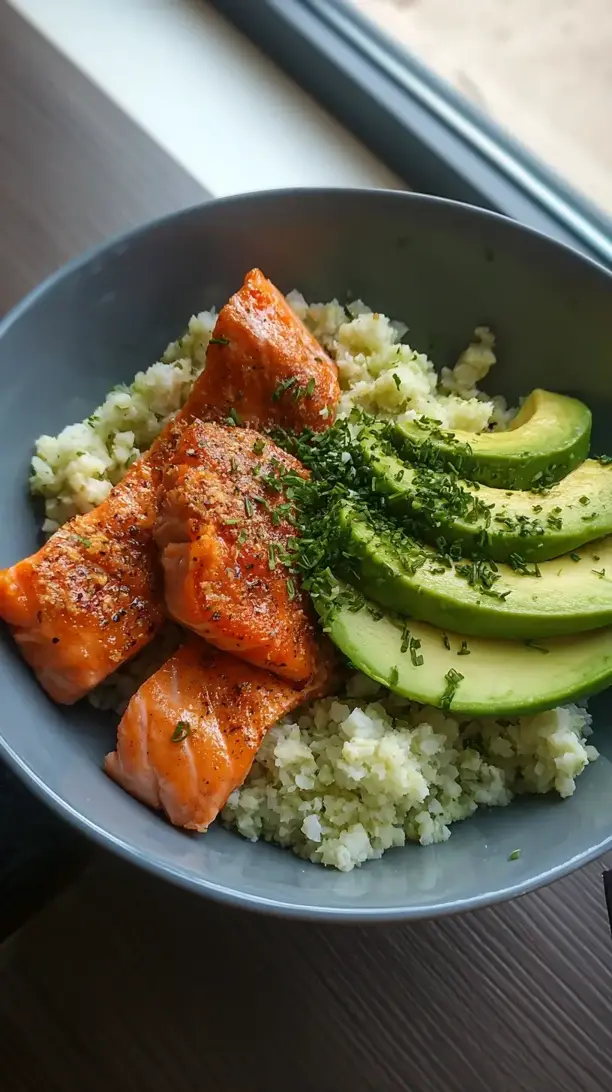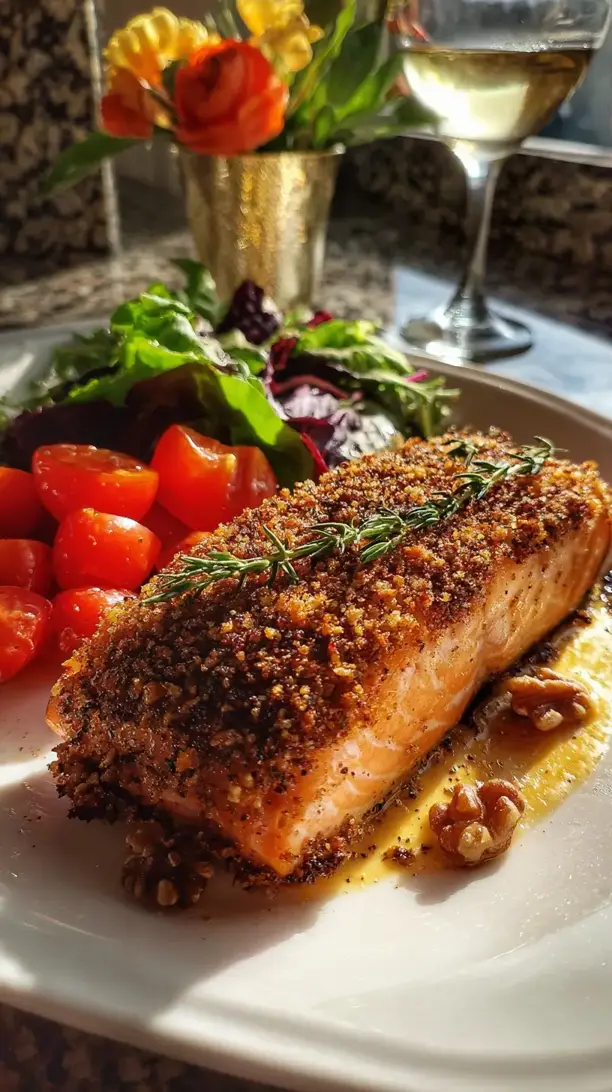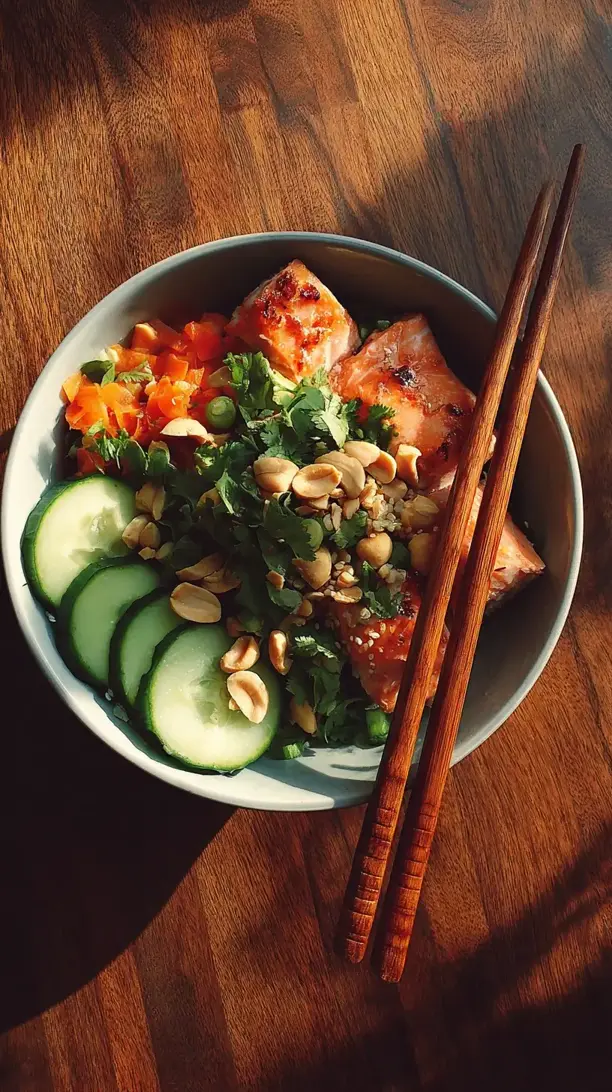

Sesame crusted salmon delivers a fragrant, nutty crust with tender, flaky fish inside. This recipe feels fancy but comes together quickly for any night of the week. You’ll love the beautiful texture contrast and restaurant-worthy results from simple ingredients.
Why You’ll Love This Sesame Crusted Salmon
- Quick & Foolproof: Ready in about 20 minutes with a simple press, sear, and finish method.
- Amazing Texture: Crisp sesame crust gives way to a tender, flaky interior.
- Impressive Presentation: Golden-brown crust looks professional with minimal effort.
- Versatile Pairing: Nutty flavor complements Asian, Mediterranean, or simple vegetable sides.
Ingredients & Tools
- 4 salmon fillets (about 150-180g each), skin on or off
- 60 ml soy sauce (or tamari for gluten-free)
- 2 tbsp honey or maple syrup
- 1 tbsp rice vinegar
- 2 garlic cloves, minced
- 1 tsp freshly grated ginger
- 100 g mixed sesame seeds (white and black)
- 1 tbsp neutral oil (avocado or grapeseed work well)
- 2 spring onions, thinly sliced
- 1 lime or lemon, for serving
Tools: Large non-stick or cast-iron skillet, small bowl, brush or spoon for glazing, plate for sesame seeds
Notes: Use fresh sesame seeds for best nutty flavor; stale seeds can taste bitter. Don’t skip the ginger and garlic—they add essential warmth and depth.
Nutrition (per serving)
| Calories: | 380 kcal |
| Protein: | 35 g |
| Fat: | 22 g |
| Carbs: | 12 g |
| Fiber: | 3 g |
Serves: 4 | Prep Time: 10 minutes | Cook Time: 12 minutes | Total Time: 22 minutes
Before You Start: Tips & Ingredient Notes
- Pat your salmon completely dry. Any surface moisture will steam the fish instead of letting that beautiful crust form. Use paper towels and really press gently to absorb all the moisture—this is crucial for maximum crispiness.
- Mix your sesame seeds on a flat plate. This gives you a nice even surface for pressing the salmon, ensuring every bit gets coated. I like using a mix of white and black seeds—not just for looks, but because black sesame seeds have a slightly stronger, earthier flavor.
- Have all your ingredients measured and ready. This recipe moves quickly once you start cooking, so having your glaze mixed and your tools handy makes the process smooth and stress-free. The trick is organization.
- Let the salmon come to room temperature for 10-15 minutes. Cooking cold fish straight from the fridge can result in uneven cooking—the outside might be done while the center remains undercooked. A brief rest on the counter makes a noticeable difference.
How to Make Sesame Crusted Salmon
Step 1: Start by preparing your glaze and coating station. In a small bowl, whisk together the soy sauce, honey, rice vinegar, minced garlic, and grated ginger until well combined. You’ll notice the mixture will be quite thin—that’s perfect, as it will reduce slightly and cling to the salmon beautifully. On a separate flat plate, spread out your mixed sesame seeds in an even layer, ready for coating.
Step 2: Pat your salmon fillets completely dry with paper towels—this is non-negotiable for achieving that crisp crust. Brush or spoon a generous amount of the glaze onto the top side of each fillet (the presentation side), making sure to cover the entire surface. You want a good layer, but not so much that it pools and makes the seeds soggy.
Step 3: Now for the fun part—pressing the sesame seeds onto the glazed side of each fillet. Gently place each salmon fillet, glaze-side down, onto the bed of sesame seeds. Apply light pressure with your hand to help the seeds adhere. Lift carefully—you should have a beautiful, even coating that sticks nicely to the glaze. Don’t worry if a few seeds fall off; you can patch any bare spots with extra seeds.
Step 4: Heat your oil in a large skillet over medium-high heat. You’ll know the pan is ready when a few sesame seeds sizzle immediately upon contact. Carefully place the salmon fillets in the hot pan, sesame-side down. You should hear a satisfying sizzle—this is what creates that wonderful crust. Resist the urge to move them around! Let them cook undisturbed for 3-4 minutes.
Step 5: While the first side cooks, brush the top (non-crusted side) of each fillet with more of your glaze. This adds another layer of flavor and helps keep the fish moist. After 3-4 minutes, peek underneath—the sesame crust should be golden brown and fragrant. If it’s sticking, give it another 30-60 seconds—it will release naturally when ready.
Step 6: Carefully flip each fillet using a thin, flexible spatula. The crust should be firm enough to handle flipping without falling apart. Reduce the heat to medium and cook for another 4-6 minutes, depending on the thickness of your fillets and how done you like your salmon. For medium, aim for about 5 minutes total after flipping.
Step 7: During the final 2 minutes of cooking, you can brush any remaining glaze over the crusted side for extra shine and flavor. The salmon is done when it flakes easily with a fork but still looks slightly translucent in the very center—remember, it will continue cooking slightly after removed from heat.
Step 8: Transfer the salmon to a serving platter and let it rest for 2-3 minutes—this allows the juices to redistribute throughout the fish. Right before serving, sprinkle with sliced spring onions and a generous squeeze of fresh lime or lemon juice. The acidity really brightens up all the rich, nutty flavors.
Storage & Freshness Guide
- Fridge: Store leftovers in an airtight container for up to 2 days.
- Freezer: Not recommended as the crust will become soggy upon thawing.
- Reviving: Reheat gently in a skillet over medium-low heat to restore crispness.
Serving Suggestions
Complementary Dishes
- Jasmine rice with edamame — The subtle floral notes of jasmine rice complement the nutty salmon beautifully, while edamame adds a pop of color and protein.
- Sesame-soy roasted broccoli — Continuing the sesame theme creates a cohesive meal, and the crispy roasted broccoli stands up well to the rich fish.
- Quick-pickled cucumber salad — The bright, acidic crunch provides the perfect contrast to the rich, oily salmon and helps cleanse the palate between bites.
Drinks
- Cold sake or dry Riesling — The slight sweetness of Riesling balances the soy glaze beautifully, while sake’s clean finish enhances the sesame notes.
- Ginger-spiked iced green tea — The gentle bitterness of green tea and warmth of fresh ginger create a refreshing counterpoint to the rich fish.
- Sparkling water with lime — Sometimes simplicity is best—the bubbles and citrus cut through the richness without competing with the delicate flavors.
Something Sweet
- Mango sorbet with black sesame cookies — The tropical sweetness of mango plays wonderfully with the sesame theme, creating a light yet satisfying dessert.
- Green tea ice cream — The slightly bitter, earthy notes of matcha provide a sophisticated ending that doesn’t overwhelm the palate after the salmon.
- Lychee and raspberry fruit salad — The floral lychee and tart raspberries offer a refreshing, light finish that feels appropriately Asian-inspired.
Top Mistakes to Avoid
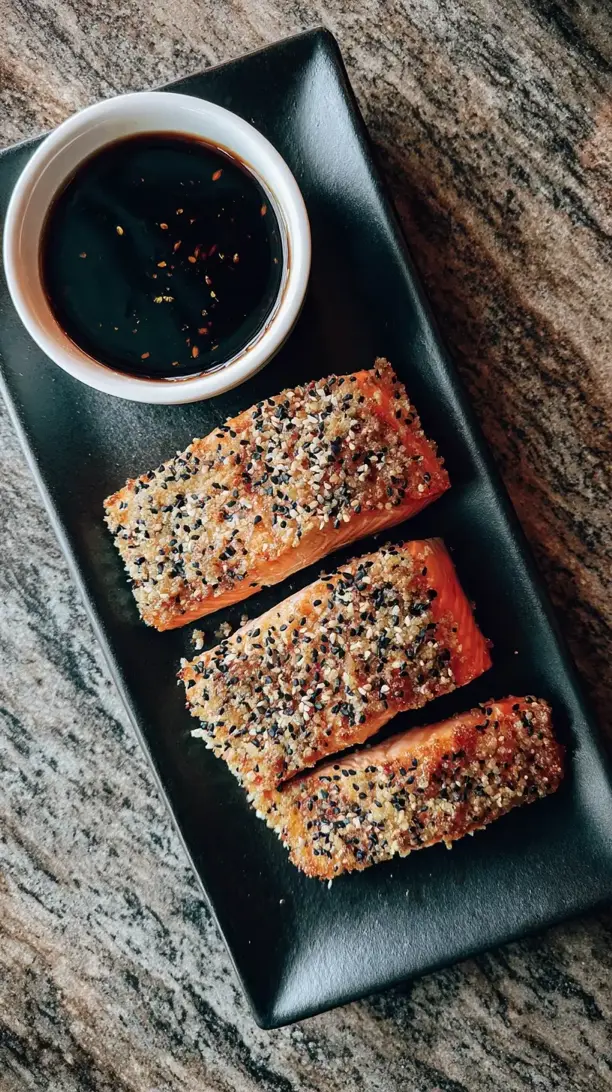
Sesame Crusted Salmon
Make perfect Sesame Crusted Salmon with a crispy, nutty crust and tender fish inside. This easy 20-minute recipe delivers restaurant-quality results. Get the recipe!
Ingredients
For the Ingredients
-
4 salmon fillets (about 150-180g each, skin on or off)
-
60 ml soy sauce (or tamari for gluten-free)
-
2 tbsp honey or maple syrup
-
1 tbsp rice vinegar
-
2 garlic cloves (minced)
-
1 tsp freshly grated ginger
-
100 g mixed sesame seeds (white and black)
-
1 tbsp neutral oil (avocado or grapeseed work well)
-
2 spring onions (thinly sliced)
-
1 lime or lemon (for serving)
Instructions
-
Start by preparing your glaze and coating station. In a small bowl, whisk together the soy sauce, honey, rice vinegar, minced garlic, and grated ginger until well combined. You’ll notice the mixture will be quite thin—that’s perfect, as it will reduce slightly and cling to the salmon beautifully. On a separate flat plate, spread out your mixed sesame seeds in an even layer, ready for coating.01
-
Pat your salmon fillets completely dry with paper towels—this is non-negotiable for achieving that crisp crust. Brush or spoon a generous amount of the glaze onto the top side of each fillet (the presentation side), making sure to cover the entire surface. You want a good layer, but not so much that it pools and makes the seeds soggy.02
-
Now for the fun part—pressing the sesame seeds onto the glazed side of each fillet. Gently place each salmon fillet, glaze-side down, onto the bed of sesame seeds. Apply light pressure with your hand to help the seeds adhere. Lift carefully—you should have a beautiful, even coating that sticks nicely to the glaze. Don’t worry if a few seeds fall off; you can patch any bare spots with extra seeds.03
-
Heat your oil in a large skillet over medium-high heat. You’ll know the pan is ready when a few sesame seeds sizzle immediately upon contact. Carefully place the salmon fillets in the hot pan, sesame-side down. You should hear a satisfying sizzle—this is what creates that wonderful crust. Resist the urge to move them around! Let them cook undisturbed for 3-4 minutes.04
-
While the first side cooks, brush the top (non-crusted side) of each fillet with more of your glaze. This adds another layer of flavor and helps keep the fish moist. After 3-4 minutes, peek underneath—the sesame crust should be golden brown and fragrant. If it’s sticking, give it another 30-60 seconds—it will release naturally when ready.05
-
Carefully flip each fillet using a thin, flexible spatula. The crust should be firm enough to handle flipping without falling apart. Reduce the heat to medium and cook for another 4-6 minutes, depending on the thickness of your fillets and how done you like your salmon. For medium, aim for about 5 minutes total after flipping.06
-
During the final 2 minutes of cooking, you can brush any remaining glaze over the crusted side for extra shine and flavor. The salmon is done when it flakes easily with a fork but still looks slightly translucent in the very center—remember, it will continue cooking slightly after removed from heat.07
-
Transfer the salmon to a serving platter and let it rest for 2-3 minutes—this allows the juices to redistribute throughout the fish. Right before serving, sprinkle with sliced spring onions and a generous squeeze of fresh lime or lemon juice. The acidity really brightens up all the rich, nutty flavors.08