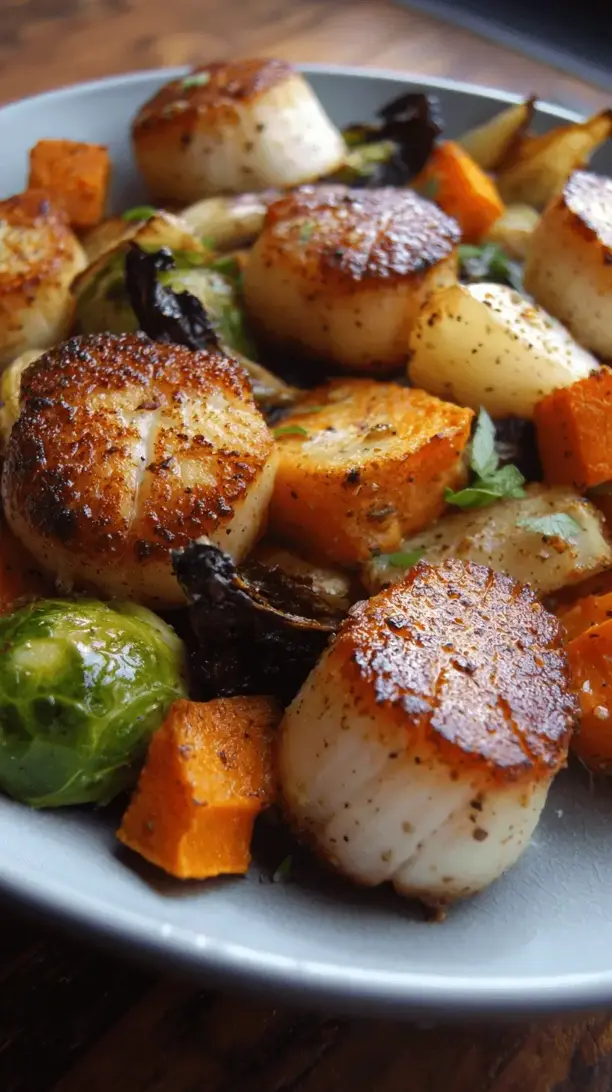

Why You’ll Love This Seared Scallops with Roasted Vegetables
- Restaurant-Quality at Home. Achieving that perfect, crispy sear on a scallop is one of the most satisfying kitchen skills. It instantly elevates a simple weeknight meal into something truly special, and you’ll feel like a pro chef when you pull it off.
- A Symphony of Textures. You get the most wonderful contrast in every single bite. The delicate, melt-in-your-mouth scallop, the crisp-seared exterior, and the tender, slightly charred roasted vegetables create an experience that’s far from boring.
- Surprisingly Quick and Simple. While it looks impressive, the active cooking time is minimal. The vegetables roast mostly unattended, and the scallops cook in a matter of minutes. It’s the perfect solution for when you want a fantastic meal without a lot of fuss.
- Endlessly Customizable. The vegetable base is a fantastic canvas. Don’t have parsnips? Use sweet potato. Not a fan of Brussels sprouts? Broccoli florets work beautifully. You can adapt this recipe to whatever is in season or sitting in your crisper drawer.
Ingredients & Tools
- 1 lb large sea scallops (sometimes called “dry-packed” or “diver scallops”)
- 1 large sweet potato, peeled and cut into ½-inch cubes
- 2 medium parsnips, peeled and cut into ½-inch pieces
- 1 cup Brussels sprouts, trimmed and halved
- 1 medium red onion, cut into 1-inch chunks
- 3 tbsp olive oil, divided
- 2 cloves garlic, minced
- 1 tsp fresh thyme leaves (or ½ tsp dried)
- 1 tbsp unsalted butter
- 1 lemon, cut into wedges
- To taste kosher salt and freshly ground black pepper
- Optional garnish: Fresh parsley, chopped
Tools: A large sheet pan, a large cast-iron or heavy-bottomed stainless steel skillet, tongs, paper towels.
The quality of your scallops is key here—look for “dry-packed” which haven’t been treated with preservatives, so they sear beautifully instead of steaming. And that heavy skillet? It’s non-negotiable for getting that incredible crust.
Serves: 3 | Prep Time: 20 minutes | Cook Time: 30 minutes | Total Time: 50 minutes
Before You Start: Tips & Ingredient Notes
- Dry-Packed is the Way to Go. This is the single most important tip. Scallops treated with a solution (often called “wet-packed”) will release too much water and simply won’t brown properly. Ask your fishmonger for dry-packed or diver scallops.
- Patience with the Pan. For a perfect sear, your skillet needs to be screaming hot before the scallops even think about touching it. Wait until you see a light wisp of smoke rising from the oil—that’s your signal.
- Cut Veggies Uniformly. Taking the extra minute to cut your vegetables into similarly sized pieces ensures they all cook at the same rate. Nobody wants a burnt parsnip next to a crunchy sweet potato.
- The Power of a Dry Scallop. Right before cooking, you must pat your scallops completely dry with paper towels. Any surface moisture will instantly turn to steam, preventing that gorgeous golden crust from forming.
How to Make Seared Scallops with Roasted Vegetables
Step 1: First, preheat your oven to 425°F (220°C). This high heat is crucial for getting those lovely caramelized edges on the vegetables. While the oven heats, toss your prepared sweet potato, parsnips, Brussels sprouts, and red onion on the sheet pan. Drizzle with 2 tablespoons of the olive oil, add the minced garlic and thyme, and season generously with salt and pepper. Use your hands to toss everything until the vegetables are evenly coated. You’ll notice the aroma of the garlic and thyme already starting to come alive.
Step 2: Spread the vegetables out in a single layer. This is important—if they’re piled on top of each other, they’ll steam instead of roast. Pop the sheet pan into the preheated oven and roast for 25-30 minutes, giving them a good stir halfway through. You’re looking for tender veggies with some crispy, browned bits. While they roast, you can focus on the star of the show.
Step 3: About 10 minutes before the vegetables are done, prepare your scallops. Place them on a plate lined with a few layers of paper towels. Pat them thoroughly dry on all sides—top, bottom, and the little side muscle if it’s still attached. This might feel fussy, but it’s the secret to the sear. Season both sides of the scallops liberally with salt and pepper.
Step 4: Now, heat your heavy skillet over medium-high heat. Let it get properly hot for a good 2-3 minutes. Add the remaining 1 tablespoon of olive oil. When the oil is shimmering and just starting to smoke, it’s go-time. Carefully add the scallops to the pan, making sure not to overcrowd them. Leave plenty of space between each one so they sear, not steam. You should hear an immediate, confident sizzle.
Step 5: Here’s where patience is a virtue. Do not touch them! Let them cook undisturbed for about 2-3 minutes. You’ll know they’re ready to flip when you can see a deep golden-brown crust creeping about halfway up the sides. Use tongs to gently flip each scallop. They should release from the pan easily if a good crust has formed.
Step 6: Cook for another 1-2 minutes on the second side. In the last 30 seconds of cooking, add the tablespoon of butter to the pan. As it melts, tilt the pan slightly and use a spoon to baste the scallops with the foaming butter. This adds an incredible richness. The scallops are done when they are just firm to the touch but still have a slight translucency in the very center—they’ll continue to cook a bit after you take them off the heat.
Step 7: Immediately remove the scallops from the hot pan to prevent overcooking. By now, your vegetables should be perfectly roasted. Divide the vegetables among plates, top with the beautiful seared scallops, and squeeze a fresh wedge of lemon over everything. The bright acidity cuts through the richness perfectly. Garnish with chopped parsley if you like, and serve right away.
Serving Suggestions
Complementary Dishes
- A Simple Arugula Salad — The peppery bite of arugula dressed with just lemon juice and olive oil provides a fresh, crisp counterpoint to the rich scallops and sweet vegetables.
- Creamy Polenta or Mashed Cauliflower — A soft, creamy base underneath the vegetables and scallops soaks up all the delicious juices and adds another layer of comforting texture.
- Crusty Artisan Bread — Absolutely essential for mopping up every last bit of buttery sauce and those crispy bits left on the plate. It’s a non-negotiable for me.
Drinks
- A Crisp Sauvignon Blanc — The classic pairing. Its bright acidity and citrus notes mirror the lemon in the dish and cleanse the palate beautifully between bites.
- A Light-Bodied Pinot Noir — If you prefer red wine, a Pinot with low tannins and notes of cherry and earth won’t overpower the delicate flavor of the scallops.
- Sparkling Water with Lemon — For a non-alcoholic option, the bubbles and citrus are incredibly refreshing and highlight the clean, fresh flavors of the meal.
Something Sweet
- Lemon Sorbet — A light, palate-cleansing dessert that continues the citrus theme. It’s the perfect, refreshing end to a relatively rich meal.
- Dark Chocolate Truffles — Just one or two pieces of high-quality dark chocolate provide a rich, bittersweet finish without feeling too heavy.
- Poached Pears — Gently poached in a little wine with a cinnamon stick, they feel elegant and sophisticated, matching the vibe of the main course.
Top Mistakes to Avoid
- Mistake: Using wet-packed scallops. This is the number one reason scallops fail to sear. The added moisture guarantees a steamed, rubbery result instead of a caramelized crust. Always seek out dry-packed.
- Mistake: Not drying the scallops thoroughly. Even dry-packed scallops have surface moisture. Skipping the pat-dry step is like inviting steam to ruin your sear. I’ve messed this up before too, and the difference is night and day.
- Mistake: Moving the scallops too soon. The instinct to poke and prod is strong, but you have to resist! Let them form a crust before you even think about flipping. If they stick, they’re not ready.
- Mistake: Overcrowding the pan. If the scallops are touching, the pan temperature will drop, and they’ll steam. Cook in batches if necessary to give them the space they need to sear properly.
Expert Tips
- Tip: Remove the side muscle. Check the side of each scallop for a small, tough tab of tissue—that’s the abductor muscle. Just pinch it and pull it off; it’s chewy and not pleasant to eat.
- Tip: Let the scallops come to room temperature. Taking them out of the fridge 10-15 minutes before cooking helps them cook more evenly, preventing a overcooked exterior and cold center.
- Tip: Use a timer. Scallops cook so quickly that guessing can lead to overcooking. Set a timer for 2 minutes on the first side—it takes the guesswork out and builds confidence.
- Tip: Finish with flaky salt. After plating, a light sprinkle of a good flaky sea salt (like Maldon) on top of the scallops adds a delightful crunch and burst of salinity.
FAQs
Can I use frozen scallops?
Absolutely! Frozen scallops can be a great, more affordable option. The key is to thaw them properly. Move them from the freezer to the refrigerator the night before you plan to cook. Never thaw them in warm water or the microwave, as this can affect their texture. Once thawed, pat them dry even more diligently than fresh ones, as they tend to release more liquid.
How do I know when the scallops are cooked perfectly?
The best indicator is touch and sight. A perfectly cooked scallop will be opaque and will feel firm but still slightly yielding when pressed gently—like pressing the fleshy part of your palm below your thumb. If it’s rubbery, it’s overdone. You can also use a small paring knife to peek inside; it should be just opaque all the way through with no raw, glossy center.
My scallops are sticking to the pan! What do I do?
If they’re sticking, they likely need more time to form a crust. The crust itself is what releases them from the pan. Try gently nudging one with your tongs. If it doesn’t release easily, give it another 30-60 seconds. A properly heated pan and adequate oil are your best defenses against sticking.
Can I prepare the vegetables ahead of time?
You can definitely chop the vegetables a few hours in advance and keep them stored in an airtight container in the fridge. This cuts down on prep time right before cooking. However, I don’t recommend roasting them ahead, as they can become soggy when reheated. The beauty of this dish is the fresh-from-the-oven crispness.
What other vegetables can I use?
This recipe is wonderfully adaptable! Think about vegetables that roast well and offer a mix of sweetness and earthiness. Broccoli or cauliflower florets, cubed butternut squash, bell peppers, or even carrots would all be fantastic. Just keep an eye on the cooking time, as softer veggies like peppers might cook faster than dense sweet potatoes.