
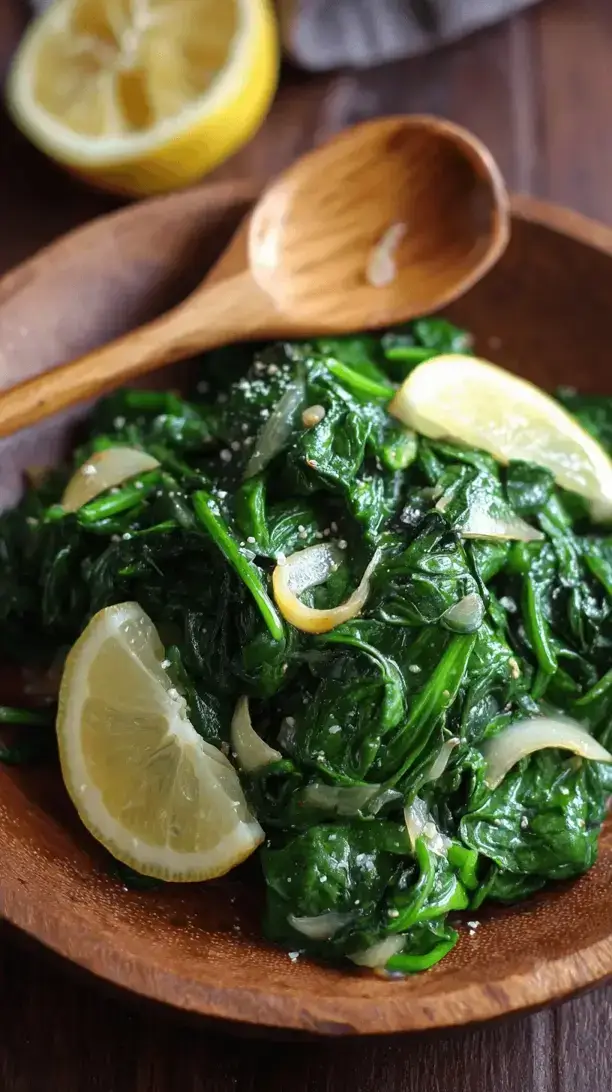

Why You’ll Love This Sautéed Spinach with Garlic and Lemon
- It’s unbelievably fast. From fridge to table, you’re looking at about 10 minutes tops. It’s the perfect last-minute side dish that looks and tastes like you put in way more effort than you actually did.
- The flavor is bright and balanced. The combination of savory, slightly nutty garlic with the fresh, acidic punch of lemon is a classic for a reason. It cuts through the richness of other dishes and wakes up your whole palate.
- It’s incredibly versatile. You can serve this alongside almost any protein, toss it into pasta, fold it into omelets, or even use it as a bed for grilled chicken or fish. It’s a culinary chameleon.
- It feels like a little bit of kitchen magic. Watching that huge volume of spinach wilt down into a tender, concentrated pile is genuinely satisfying. It’s a simple pleasure that never gets old.
Ingredients & Tools
- 450 g (1 lb) fresh spinach
- 3 cloves garlic, thinly sliced
- 2 tbsp extra virgin olive oil
- 1 tbsp fresh lemon juice (about ½ a lemon)
- ¼ tsp red pepper flakes (optional, but recommended)
- To taste kosher salt and freshly ground black pepper
Tools: A large skillet or sauté pan (12-inch is ideal), a wooden spoon or tongs, a microplane or zester (optional, for lemon zest).
The ingredient list is short and sweet for a reason—each one plays a crucial role. Using fresh lemon juice instead of bottled makes a world of difference in brightness, and thinly slicing the garlic ensures it infuses the oil perfectly without burning. A little goes a long way with each component.
Serves: 4 | Prep Time: 5 minutes | Cook Time: 5 minutes | Total Time: 10 minutes
Before You Start: Tips & Ingredient Notes
- Don’t skip the spinach wash. Even if your spinach is labeled “pre-washed,” I always give it a quick rinse and spin. Gritty spinach is the one thing that can ruin this dish, and it only takes a minute to prevent.
- Slice, don’t mince, the garlic. Thin slices will caramelize slightly and mellow in flavor, infusing the oil beautifully. Minced garlic has a tendency to burn quickly in the hot pan, which can introduce a bitter taste.
- Have your lemon ready to go. Squeeze the lemon juice before you even heat the pan. This is a fast-paced recipe, and you don’t want to be fumbling with a lemon juicer while your perfectly cooked spinach is waiting.
- Embrace the volume. It will look like an impossible amount of spinach for your pan. Trust the process—it wilts down dramatically and quickly. You might need to add it in two batches, stirring until the first batch collapses to make room for the rest.
How to Make Sautéed Spinach with Garlic and Lemon
Step 1: Prep is everything. Start by thoroughly washing your spinach and shaking off as much excess water as possible. A salad spinner is great here, but you can also pat it dry with a clean kitchen towel. Remember, water clinging to the leaves will steam the spinach more than sauté it. Next, thinly slice your garlic cloves and have your lemon juice measured and ready. This “mise en place” is the key to a stress-free, quick cook.
Step 2: Gently toast the garlic. Place your large skillet over medium heat and add the olive oil. Once the oil is shimmering—you can test it by adding a single slice of garlic; it should sizzle gently—add all the garlic and the optional red pepper flakes. Swirl the pan constantly for about 60-90 seconds. You’re looking for the garlic to become fragrant and turn a very light golden color. The trick is to pull it off the heat just before you think it’s done, as it will continue to cook in the residual heat. Burnt garlic is bitter, so be vigilant!
Step 3: Wilt the spinach in batches. Increase the heat to medium-high. Add a large handful of spinach to the hot garlic oil. It will sizzle and start to wilt almost immediately. Use tongs or a wooden spoon to toss and turn the spinach, encouraging it to cook evenly. As soon as there’s room in the pan, add another large handful. You’ll notice the volume reducing dramatically with each addition. Continue this process until all the spinach is in the pan.
Step 4: Season and finish with lemon. Once all the spinach is wilted and tender—this should only take 2-3 minutes total—season generously with kosher salt and a few grinds of black pepper. Drizzle the fresh lemon juice over the top and give everything one final, gentle toss. The acid will make the green color absolutely pop. Taste and adjust the seasoning if needed. You’re aiming for a harmonious balance where no single flavor dominates.
Step 5: Serve immediately. This dish is best enjoyed right out of the pan while it’s still warm and vibrant. Transfer it to a serving bowl, making sure to scrape all the delicious garlicky, lemony oil from the bottom of the pan over the top. That liquid gold is packed with flavor.
Serving Suggestions
Complementary Dishes
- Grilled or Pan-Seared Salmon — The richness of the salmon is beautifully cut by the bright, acidic spinach. It’s a classic, healthy pairing that feels elegant yet simple.
- Simple Roasted Chicken — The savory juices from a roast chicken mingle perfectly with the lemony spinach on the plate, creating a comforting and complete meal.
- Creamy Polenta or Risotto — Spoon the spinach and its juices over a bed of creamy polenta or a simple Parmesan risotto for a fantastic vegetarian main course.
Drinks
- A Crisp Sauvignon Blanc — The citrus notes in the wine will mirror the lemon in the dish, while its acidity can stand up to the garlicky flavors beautifully.
- Sparkling Water with Lemon — For a non-alcoholic option, the bubbles and citrus cleanse the palate between bites, making each mouthful taste fresh and new.
Something Sweet
- Lemon Sorbet — Continuing the lemon theme with a light, refreshing dessert that doesn’t weigh you down after a satisfying meal.
- Simple Almond Biscotti — The nutty, crunchy biscotti provides a lovely textural contrast and isn’t too sweet, making it a perfect gentle finish.
Top Mistakes to Avoid
- Mistake: Crowding the pan with cold, wet spinach. Adding all the spinach at once, especially if it’s damp, will cause it to steam and become mushy rather than achieving a nice sautéed texture. Work in batches for the best results.
- Mistake: Burning the garlic. This is the most common error. Garlic burns in a heartbeat. Keep the heat at medium and watch it like a hawk, pulling it off the heat as soon as it’s fragrant and pale gold.
- Mistake: Overcooking the spinach. You want it wilted and tender, not a dark, sad, overcooked mess. It continues to cook a bit after you turn off the heat, so err on the side of slightly underdone.
- Mistake: Adding the lemon juice too early. If you add it during the cooking process, the bright flavor will cook out. Always add the lemon juice at the very end, off the heat, to preserve its fresh, zesty punch.
Expert Tips
- Tip: Add a pat of butter at the end. Once the heat is off, stir in a tablespoon of cold, unsalted butter along with the lemon juice. This creates a silky, emulsified sauce that clings to the spinach beautifully.
- Tip: Try a splash of white wine. After toasting the garlic, add a splash of dry white wine (like Sauvignon Blanc) to the pan. Let it reduce by half before adding the spinach. It adds a wonderful layer of complexity.
- Tip: Finish with lemon zest. For an extra burst of citrus aroma, use a microplane to grate a little lemon zest over the finished dish right before serving. The oils in the zest are incredibly fragrant.
- Tip: Experiment with other greens. This method works wonderfully with Swiss chard or kale. Just remember that tougher greens like kale will need a slightly longer cooking time and maybe a splash of water to help them tenderize.
FAQs
Can I use frozen spinach?
You can, but the texture and result will be quite different. Thaw the frozen spinach completely and then squeeze out every last drop of water using your hands or a clean kitchen towel. If you skip this step, you’ll end up with a watery, soggy dish. Sauté it with the garlic just to heat it through and then season. It’s a convenient option, but fresh spinach really is superior for this particular recipe because it retains a better texture.
How do I store and reheat leftovers?
Store any leftovers in an airtight container in the refrigerator for up to 2 days. Reheating is tricky, as it can easily become overcooked. The best method is to gently warm it in a skillet over low heat, or even for a few seconds in the microwave. Be aware that it will release more liquid upon reheating. Honestly, it’s best enjoyed fresh.
Can I make this vegan?
It’s already vegan as written! Just double-check that your specific ingredients are vegan-friendly. The olive oil provides all the richness you need. If you want to make it even more substantial, a sprinkle of toasted pine nuts or slivered almonds at the end adds a lovely crunch and protein.
My spinach is watery. What did I do wrong?
This usually happens for one of two reasons: either the spinach wasn’t dried well enough before cooking, or it was overcooked, causing it to release too much liquid. Next time, be extra diligent about drying the leaves and remember that the cooking process is very quick—just until wilted.
What can I use instead of lemon juice?
Fresh lime juice would be a great alternative, offering a slightly different but equally bright acidity. In a real pinch, a tiny splash of white wine vinegar could work, but use it sparingly as it’s much sharper. I really don’t recommend bottled lemon juice, as it often has a flat, preservative-like taste that doesn’t do the dish justice.


