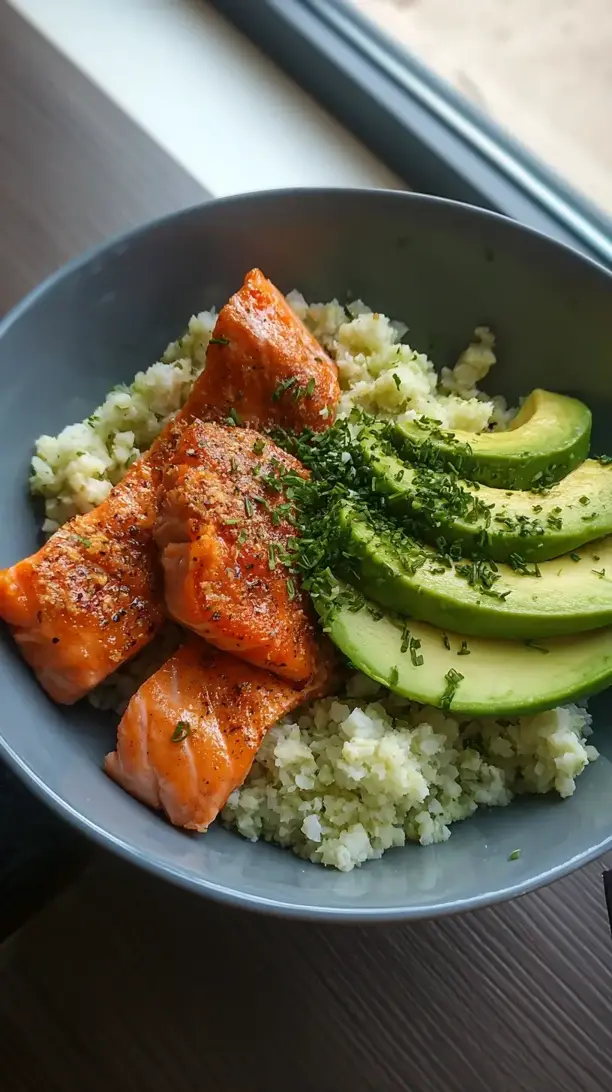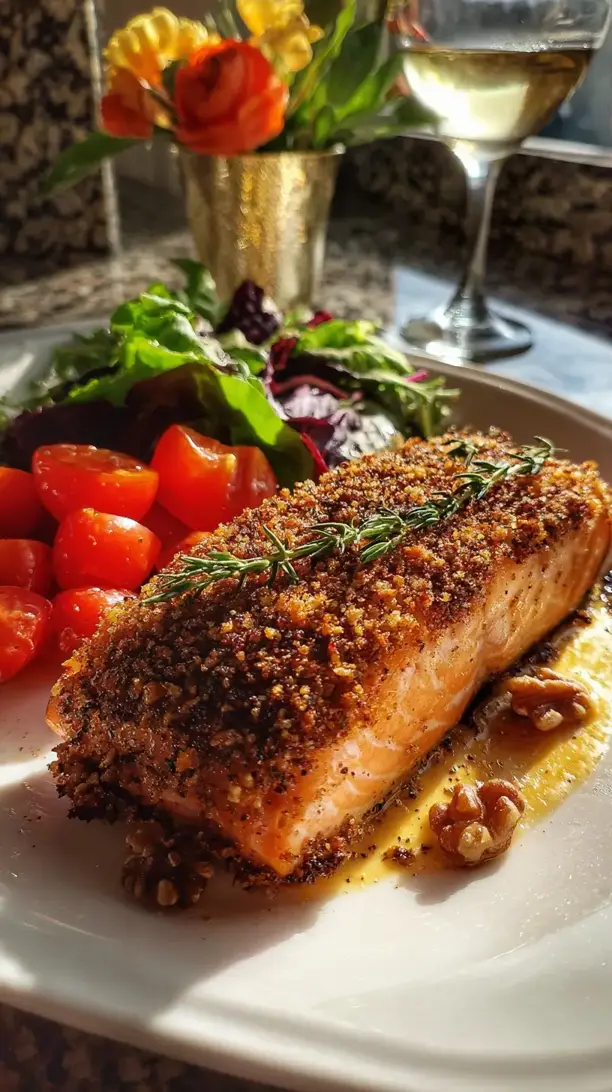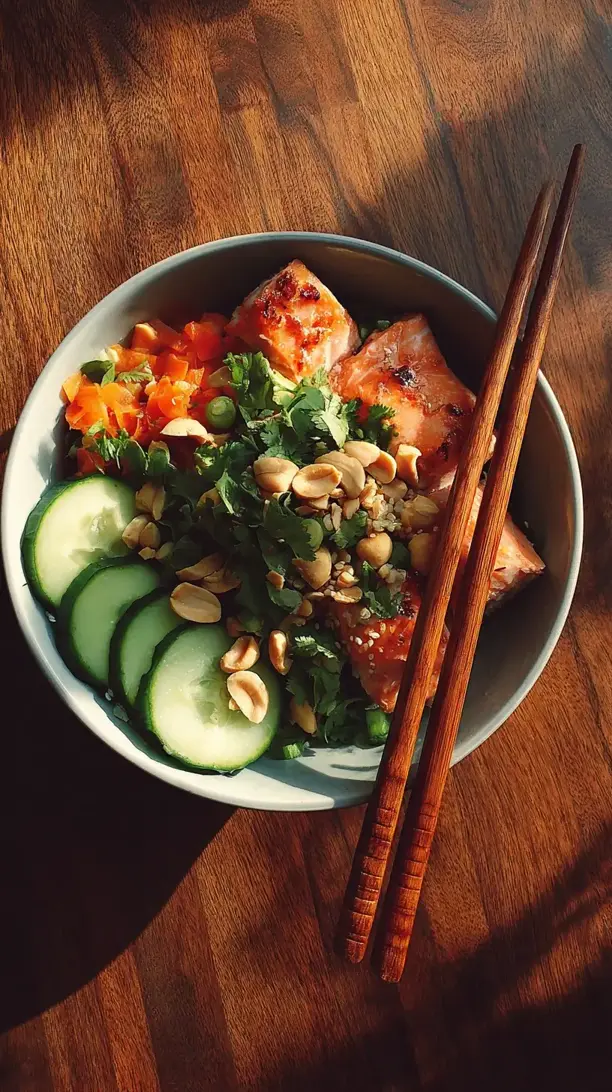

This Salmon Veggie Stir Fry is a vibrant, one-pan meal that comes together in minutes. The salmon becomes beautifully flaky in a savory-sweet sauce, while the veggies stay crisp-tender for a wonderful texture contrast. It’s a nourishing, restaurant-quality dish perfect for any busy weeknight.
Why You’ll Love This Salmon Veggie Stir Fry
- Complete one-pan meal: Features lean protein and colorful veggies in a delicious sauce.
- Fantastic texture contrast: Tender, buttery salmon meets crisp, crunchy vegetables.
- Incredibly versatile: Easily adapt with whatever veggies or sauces you have on hand.
- Ridiculously good sauce: A savory-sweet gingery glaze that clings perfectly to every bite.
Ingredients & Tools
- 450 g salmon fillet, skin removed, cut into 1-inch cubes
- 1 tbsp cornstarch
- 2 tbsp vegetable oil, divided
- 1 red bell pepper, thinly sliced
- 1 yellow bell pepper, thinly sliced
- 150 g sugar snap peas, trimmed
- 1 medium carrot, julienned
- 3 cloves garlic, minced
- 1 tbsp fresh ginger, grated
- 3 spring onions, sliced (whites and greens separated)
- 60 ml soy sauce (or tamari)
- 2 tbsp honey or maple syrup
- 1 tbsp rice vinegar
- 1 tsp sesame oil
- Toasted sesame seeds for garnish
Tools: A large wok or a large, heavy-bottomed skillet, a set of measuring spoons, a sharp knife, and a cutting board.
Notes: Use fresh, bright-colored salmon fillets for best results. Fresh ginger and garlic are essential for the aromatic backbone.
Nutrition (per serving)
| Calories: | 385 kcal |
| Protein: | 28 g |
| Fat: | 18 g |
| Carbs: | 25 g |
| Fiber: | 4 g |
Serves: 4 | Prep Time: 15 minutes | Cook Time: 10 minutes | Total Time: 25 minutes
Before You Start: Tips & Ingredient Notes
- Get your mise en place ready. Stir-frying is a fast process, so having all your ingredients chopped, measured, and within arm’s reach is crucial. Once you start cooking, it’ll be over before you know it!
- What’s the best cut of salmon to use? I prefer the thicker center-cut portions of a fillet, as they hold their shape better when cubed. Try to get pieces that are similar in size so they cook evenly in the pan.
- Why coat the salmon in cornstarch? This little trick is a game-changer. It creates a delicate, slightly crispy exterior on the salmon cubes and helps the sauce cling to them beautifully, preventing them from becoming mushy.
- Can I use frozen vegetables? You can, but honestly, fresh is best for texture. If you must use frozen, make sure to thaw and pat them completely dry to avoid steaming your stir-fry instead of frying it.
- How can I make this gluten-free? Easily! Just ensure you’re using tamari or a certified gluten-free soy sauce. The rest of the ingredients are naturally gluten-free, so it’s a simple swap.
How to Make Salmon Veggie Stir Fry
Step 1: Start by prepping your salmon. Pat the cubed salmon completely dry with paper towels—this is key for getting a nice sear. Place the cubes in a medium bowl, sprinkle with the cornstarch, and toss gently until each piece is lightly coated. This thin layer will work wonders for the texture.
Step 2: Now, let’s make the sauce. In a small bowl or a measuring jug, whisk together the soy sauce, honey, rice vinegar, and sesame oil until the honey is fully dissolved. You’ll notice the sauce will look dark and glossy. Set this flavor bomb aside for now.
Step 3: Time to fire up the wok. Heat one tablespoon of the vegetable oil in your wok or large skillet over medium-high heat. Once the oil is shimmering hot, add the salmon cubes in a single layer. Let them cook undisturbed for about 1-2 minutes to get a golden-brown sear on one side, then flip and cook for another minute. The salmon should be just cooked through but still very tender. Remove it to a clean plate.
Step 4: Don’t wipe out the wok! Add the remaining tablespoon of oil. Toss in the white parts of your spring onions, the garlic, and the ginger. Stir-fry for just 30-60 seconds until incredibly fragrant—be careful not to let the garlic burn, or it’ll turn bitter.
Step 5: Now, add all your hard vegetables. That’s the bell peppers, snap peas, and julienned carrot. Stir-fry them for 2-3 minutes, tossing constantly. You want them to be vibrant and crisp-tender, still with a bit of a bite. They’ll continue to cook a little later, so don’t overdo it now.
Step 6: Return the seared salmon and any accumulated juices back to the wok. Give your sauce another quick whisk (the cornstarch from the salmon might have settled it) and pour it over everything. Bring it to a simmer, stirring gently to coat every piece. The sauce will thicken almost immediately into a lovely glaze.
Step 7: Finally, turn off the heat and stir in the green parts of your spring onions. Give everything one last gentle toss. Your stir-fry is ready! Serve it immediately over your favorite base, garnished generously with toasted sesame seeds for that nutty, finishing crunch.
Storage & Freshness Guide
- Fridge: Store in an airtight container for up to 2 days.
- Freezer: Not recommended; vegetables and salmon texture will suffer.
- Reviving: Reheat gently in a skillet over medium-low heat to restore texture.
Serving Suggestions
Complementary Dishes
- Steamed jasmine rice — The fluffy, slightly sticky grains are the perfect canvas to soak up every last drop of that incredible stir-fry sauce.
- Simple cucumber salad — A quick mix of sliced cucumbers with a splash of rice vinegar provides a cool, refreshing contrast to the warm, savory stir-fry.
- Vegetable spring rolls — Their crispy exterior and fresh, veggie-packed interior make for a delightful starter that complements the main event without overpowering it.
Drinks
- Iced green tea — Its clean, slightly grassy notes help cleanse the palate between bites and balance the richness of the salmon and sauce.
- A crisp Pinot Gris — This white wine has enough acidity to cut through the dish’s flavors and enough body to stand up to the salmon without competing.
- Ginger beer — The spicy-sweet fizz echoes the ginger in the stir-fry and adds a fun, non-alcoholic bubbly element to the meal.
Something Sweet
- Mango sorbet — Its bright, tropical sweetness and icy texture are a fantastic, light way to finish the meal and refresh your taste buds.
- Fortune cookies — It’s a classic, fun ending that keeps the theme going. Plus, who doesn’t love a little prophecy with their dessert?
- Lychee fruits — Chilled, canned lychees are incredibly easy and offer a juicy, floral sweetness that feels elegant and simple.
Top Mistakes to Avoid
- Overcrowding the pan. If you add too much salmon or too many veggies at once, you’ll steam them instead of searing them. Cook in batches if necessary to get that beautiful, caramelized color and texture.
- Overcooking the salmon. Salmon cooks quickly and continues to cook from residual heat after it’s off the stove. Take it out just before it’s perfectly done to your liking, as it will finish in the sauce later. Dry, rubbery salmon is a real tragedy.
- Using low-heat. Stir-frying is a high-heat cooking method. If your pan isn’t hot enough, your ingredients will release their liquid and boil rather than fry, leading to a soggy final dish.
- Adding the sauce too early. If you pour the sauce in with the raw vegetables, they’ll release too much water and you’ll end up with a soupy stir-fry. The sauce should be one of the last things to go in, just to coat and glaze.
Expert Tips
- Tip: For an extra flavor boost, marinate your salmon cubes in a tablespoon of the sauce for 10-15 minutes before coating them in cornstarch. This adds another layer of savory-sweetness right into the fish.
- Tip: If you like a bit of heat, add a teaspoon of sriracha or a pinch of red pepper flakes to your sauce mixture. It gives the dish a lovely, warm background spice that isn’t overpowering.
- Tip: To get picture-perfect, crisp-tender veggies, you can blanch harder vegetables like carrots and snap peas in boiling water for 60 seconds, then shock them in ice water before adding them to the stir-fry. This locks in their color and crunch.
- Tip: A splash of fresh lime juice squeezed over the finished stir-fry just before serving can really make the flavors pop. The acidity brightens everything up in the most delightful way.
FAQs
Can I use a different type of fish?
Absolutely! Firm-fleshed white fish like cod or halibut work wonderfully, as they hold their shape when cubed and stir-fried. Just be extra gentle when tossing, as they can be a bit more delicate than salmon. You could also use large, raw shrimp—they cook very quickly and are a fantastic alternative. The cooking principle remains the same: a quick sear to cook through without drying out.
How do I store and reheat leftovers?
Store any leftovers in an airtight container in the fridge for up to 2 days. To reheat, I strongly recommend using a skillet over medium-low heat rather than a microwave. The microwave can make the salmon rubbery and the veggies soggy. Gently warming it in a pan helps revive the texture and keeps the dish tasting fresh.
My sauce didn’t thicken. What happened?
This usually happens if the cornstarch wasn’t properly distributed or if there was too much liquid in the pan. The cornstarch on the salmon should be enough to thicken the sauce, but if it’s still too thin, make a quick slurry by mixing 1 teaspoon of cornstarch with 1 tablespoon of cold water and stir it into the simmering stir-fry. It should thicken up in seconds.
Can I make this dish ahead of time?
You can do all the prep ahead of time—chop the veggies, make the sauce, and cube the salmon (keep it separate in the fridge). But I wouldn’t recommend cooking it fully in advance. Stir-fries are truly at their best when served immediately after cooking, when the textures are at their peak.
Is it okay to keep the skin on the salmon?
You can, but I find it’s easier to eat and the sauce coats the cubes more evenly with the skin removed. If you love crispy salmon skin, you could cook the skin separately in the pan until super crispy, chop it up, and use it as a garnish on top of the finished stir-fry for an extra textural element.
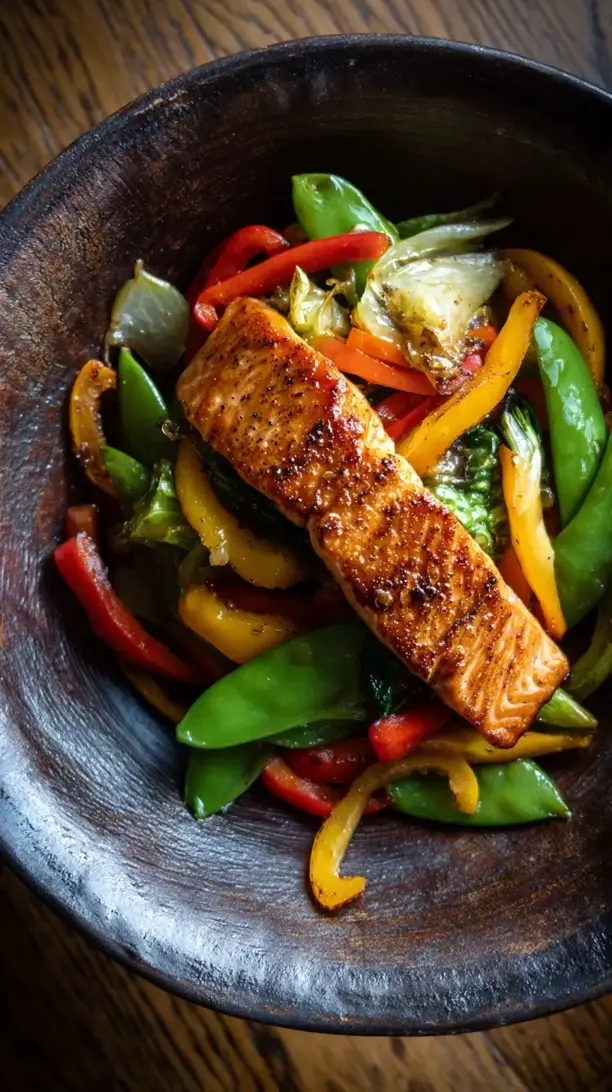
Salmon Veggie Stir Fry
Make a quick and healthy Salmon Veggie Stir Fry in just 25 minutes! This one-pan meal features flaky salmon and crisp veggies in a savory sauce. Get the easy recipe now!
Ingredients
For the Ingredients
-
450 g salmon fillet (skin removed, cut into 1-inch cubes)
-
1 tbsp cornstarch
-
2 tbsp vegetable oil (divided)
-
1 red bell pepper (thinly sliced)
-
1 yellow bell pepper (thinly sliced)
-
150 g sugar snap peas (trimmed)
-
1 medium carrot (julienned)
-
3 cloves garlic (minced)
-
1 tbsp fresh ginger (grated)
-
3 spring onions (sliced (whites and greens separated))
-
60 ml soy sauce (or tamari)
-
2 tbsp honey or maple syrup
-
1 tbsp rice vinegar
-
1 tsp sesame oil
-
Toasted sesame seeds (for garnish)
Instructions
-
Start by prepping your salmon. Pat the cubed salmon completely dry with paper towels—this is key for getting a nice sear. Place the cubes in a medium bowl, sprinkle with the cornstarch, and toss gently until each piece is lightly coated. This thin layer will work wonders for the texture.01
-
Now, let’s make the sauce. In a small bowl or a measuring jug, whisk together the soy sauce, honey, rice vinegar, and sesame oil until the honey is fully dissolved. You’ll notice the sauce will look dark and glossy. Set this flavor bomb aside for now.02
-
Time to fire up the wok. Heat one tablespoon of the vegetable oil in your wok or large skillet over medium-high heat. Once the oil is shimmering hot, add the salmon cubes in a single layer. Let them cook undisturbed for about 1-2 minutes to get a golden-brown sear on one side, then flip and cook for another minute. The salmon should be just cooked through but still very tender. Remove it to a clean plate.03
-
Don’t wipe out the wok! Add the remaining tablespoon of oil. Toss in the white parts of your spring onions, the garlic, and the ginger. Stir-fry for just 30-60 seconds until incredibly fragrant—be careful not to let the garlic burn, or it’ll turn bitter.04
-
Now, add all your hard vegetables. That’s the bell peppers, snap peas, and julienned carrot. Stir-fry them for 2-3 minutes, tossing constantly. You want them to be vibrant and crisp-tender, still with a bit of a bite. They’ll continue to cook a little later, so don’t overdo it now.05
-
Return the seared salmon and any accumulated juices back to the wok. Give your sauce another quick whisk (the cornstarch from the salmon might have settled it) and pour it over everything. Bring it to a simmer, stirring gently to coat every piece. The sauce will thicken almost immediately into a lovely glaze.06
-
Finally, turn off the heat and stir in the green parts of your spring onions. Give everything one last gentle toss. Your stir-fry is ready! Serve it immediately over your favorite base, garnished generously with toasted sesame seeds for that nutty, finishing crunch.07