
This Salmon Vegetable Soup is a nourishing one-pot meal that comes together quickly. Tender salmon and colorful vegetables simmer in a light, savory broth enriched by the fish’s natural oils. It’s a comforting, complete dinner perfect for busy nights.
Why You’ll Love This Salmon Vegetable Soup
- Nourishing & balanced: A complete meal with lean protein, veggies, and light broth.
- Wonderful texture contrast: Tender salmon, crisp-tender vegetables, and savory broth.
- Quick & flexible: Ready in 30-40 minutes with easy veggie swaps.
- Light yet satisfying: Silky, herby broth without heavy cream.
Ingredients & Tools
- 450 g fresh salmon fillet, skin removed, cut into 1-inch chunks
- 1 tbsp olive oil
- 1 medium onion, finely chopped
- 2 carrots, peeled and diced
- 2 celery stalks, diced
- 3 cloves garlic, minced
- 1.5 liters fish or vegetable broth
- 400 g canned diced tomatoes (with their juices)
- 1 medium zucchini, diced
- 1 tsp dried dill (or 1 tbsp fresh)
- 1/2 tsp smoked paprika
- Salt and black pepper to taste
- Fresh parsley for garnish
- Lemon wedges for serving
Tools: A large soup pot or Dutch oven, wooden spoon, sharp knife, and cutting board.
Notes: Using fresh salmon really makes a difference—its natural oils enrich the broth beautifully. Don’t skip the lemon wedges; a squeeze brightens all the flavors.
Nutrition (per serving)
| Calories: | 320 kcal |
| Protein: | 28 g |
| Fat: | 14 g |
| Carbs: | 18 g |
| Fiber: | 4 g |
Serves: 4 | Prep Time: 15 minutes | Cook Time: 25 minutes | Total Time: 40 minutes
Before You Start: Tips & Ingredient Notes
- Choosing your salmon. I prefer fresh, skinless salmon fillets for this recipe. Look for firm, bright pink flesh without any grayish tones. You can use either Atlantic or Sockeye—both work wonderfully, though Sockeye has a slightly firmer texture.
- Don’t skip the aromatics. Sautéing the onion, carrots, and celery until they’re softened is crucial for building a flavorful base. This step, called “sweating,” helps release their natural sugars and creates a deeper, more complex broth.
- Broth matters more than you think. Since the broth is the backbone of this soup, using a good-quality fish or vegetable broth will elevate the final result. If you have homemade, that’s fantastic! Otherwise, a low-sodium store-bought version works well too.
- Timing is everything with the salmon. The trick is to add the salmon chunks towards the very end of cooking. They only need a few minutes to cook through—overcooking will make them dry and tough, so keep a close eye.
- Fresh herbs make a difference. While dried dill is perfectly fine, if you have access to fresh dill or parsley, I highly recommend using them. Their bright, grassy notes complement the salmon beautifully and add a lovely freshness to the finished soup.
How to Make Salmon Vegetable Soup
Step 1: Start by prepping all your vegetables. Chop the onion, dice the carrots and celery, mince the garlic, and dice the zucchini. Having everything ready to go (mise en place) makes the cooking process smooth and enjoyable. Pat the salmon chunks dry with a paper towel and season them lightly with a pinch of salt and pepper.
Step 2: Heat the olive oil in your large soup pot or Dutch oven over medium heat. Add the chopped onion, carrots, and celery. Sauté for about 6-8 minutes, stirring occasionally, until the vegetables have softened and the onion becomes translucent. You’ll notice a wonderful, savory aroma starting to fill your kitchen.
Step 3: Add the minced garlic to the pot and cook for another minute, stirring constantly, until it becomes fragrant. Be careful not to burn the garlic—it can turn bitter. Then, stir in the dried dill and smoked paprika, toasting the spices for just 30 seconds to unlock their full flavor.
Step 4: Pour in the broth and add the canned diced tomatoes with their juices. Bring the mixture to a gentle boil, then reduce the heat to a simmer. Let it cook for about 10 minutes, which allows the flavors to start melding together and the carrots to become tender.
Step 5: Now, add the diced zucchini to the pot. Simmer for another 5-7 minutes, until the zucchini is just tender but still has a slight bite. You want it to retain some texture rather than becoming mushy.
Step 6: This is the crucial part! Gently place the seasoned salmon chunks into the simmering broth. Let them cook for about 4-5 minutes. The salmon is done when it turns opaque and flakes easily with a fork. Be gentle when stirring from this point on to keep the salmon pieces intact.
Step 7: Turn off the heat. Taste the broth and adjust the seasoning with more salt and pepper if needed. Ladle the soup into bowls, garnish generously with fresh parsley, and serve immediately with lemon wedges on the side. The squeeze of lemon juice at the table is non-negotiable—it really brings all the flavors to life!
Storage & Freshness Guide
- Fridge: Store in an airtight container for up to 2 days.
- Freezer: Not recommended; salmon and zucchini become mushy.
- Reviving: Reheat gently on the stovetop; avoid boiling.
Serving Suggestions
Complementary Dishes
- Crusty sourdough bread — Perfect for dipping into the savory broth and soaking up every last drop. The chewy texture and slight tang contrast beautifully with the soup.
- Simple green salad with a lemon vinaigrette — A light, crisp salad provides a refreshing counterpoint to the warm, hearty soup without overpowering it.
- Garlic herb couscous — Fluffy couscous cooked with a bit of garlic and herbs makes a wonderful base if you want to turn the soup into a more substantial, bowl-based meal.
Drinks
- Crisp Sauvignon Blanc — Its bright acidity and citrus notes mirror the lemon in the soup and cut through the richness of the salmon beautifully.
- Sparkling water with lemon — A non-alcoholic option that keeps things light and refreshing, enhancing the citrus elements in the dish.
- Earl Grey tea — The bergamot in the tea has a lovely floral-citrus quality that pairs surprisingly well with the herbal notes in the soup, especially for a cozy lunch.
Something Sweet
- Lemon sorbet — A clean, palate-cleansing dessert that continues the citrus theme and feels light and refreshing after the savory soup.
- Almond biscotti — Their crunchy texture and subtle nuttiness are a lovely, not-too-sweet ending that complements the meal without overwhelming it.
- Fresh berry salad with mint — A mix of seasonal berries with a hint of mint and a drizzle of honey is simple, vibrant, and the perfect finish.
Top Mistakes to Avoid
- Overcooking the salmon. This is the most common pitfall. Salmon cooks very quickly and will continue to cook from residual heat even after you turn off the stove. Add it last and just let it poach gently until opaque—you’ll be rewarded with tender, moist flakes.
- Using a weak broth. The broth is the foundation of your soup, so a bland or watery broth will result in a bland soup. Taste your broth before adding it—if it’s a bit flat, don’t hesitate to add a splash of white wine or a bit more seasoning.
- Skipping the vegetable sauté. It might be tempting to just throw everything into the pot with the broth, but taking the time to sauté the aromatics first builds a depth of flavor that you simply can’t get otherwise. This step is non-negotiable for a truly delicious soup.
- Stirring too vigorously after adding the salmon. Once the salmon is in the pot, be gentle! Use a wooden spoon and stir slowly to avoid breaking up those beautiful, flaky chunks. You want distinct pieces of fish in your bowl, not a shredded mess.
Expert Tips
- Tip: For an even richer broth, add the salmon skin. When you’re prepping your salmon, don’t throw the skin away! Sauté it in the pot with the initial vegetables to render out some of the flavorful oils, then remove and discard it before adding the liquid. It adds a wonderful, silky depth.
- Tip: Make it ahead for even better flavor. You can sauté the vegetables and prepare the broth base a day in advance. Store it in the fridge, then gently reheat and add the fresh salmon just before serving. The flavors have more time to meld, and you get a perfect, quick finish.
- Tip: Use frozen salmon directly. If you’re using frozen salmon fillets, you don’t necessarily need to thaw them completely. Just run them under cool water to remove any ice glaze, pat dry, and cut. You may need to add an extra minute of cooking time, but it works like a charm.
- Tip: Add a splash of white wine for complexity. After sautéing the vegetables, deglaze the pot with about 1/4 cup of dry white wine. Let it reduce by half before adding the broth. This simple step adds a lovely layer of acidity and flavor that brightens the entire soup.
FAQs
Can I use frozen salmon for this soup?
Absolutely! Frozen salmon works perfectly well. Just make sure to thaw it completely in the refrigerator overnight first, and pat it very dry with paper towels before cutting and seasoning. If you add frozen or partially frozen salmon directly to the soup, it will release too much water and cool down the broth, affecting the cooking time and final texture.
How can I store and reheat leftovers?
Store any leftovers in an airtight container in the refrigerator for up to 2 days. To reheat, gently warm it on the stovetop over low heat. Avoid bringing it to a rolling boil, as this will overcook the salmon. The salmon will be a bit more fragile upon reheating, but the flavor will still be wonderful. I don’t recommend freezing this soup, as the salmon and zucchini can become mushy and watery upon thawing.
What other vegetables can I add?
This soup is very flexible! Leafy greens like spinach or kale are fantastic—just stir them in during the last 2 minutes of cooking. Other great additions include diced bell peppers, corn kernels, or green beans. Just consider the cooking time of each vegetable; add harder veggies (like potatoes) with the carrots, and softer ones (like spinach) at the very end.
Can I make this soup creamy?
You can, though it changes the character of the soup. For a creamy version, stir in 1/4 to 1/2 cup of heavy cream or full-fat coconut milk at the very end, after you’ve turned off the heat. Be careful not to let it boil after adding the dairy, as it could curdle. It becomes a richer, chowder-like dish, which is lovely on a colder day.
My soup tastes a bit flat. How can I fix it?
This usually means it needs more seasoning or acidity. First, check the salt and pepper. If that doesn’t do it, a generous squeeze of fresh lemon juice is your best friend—it will brighten everything up instantly. A dash of fish sauce (sounds weird, I know) can also add a wonderful umami depth without making it taste fishy. Sometimes, a pinch of sugar can help balance the acidity from the tomatoes.
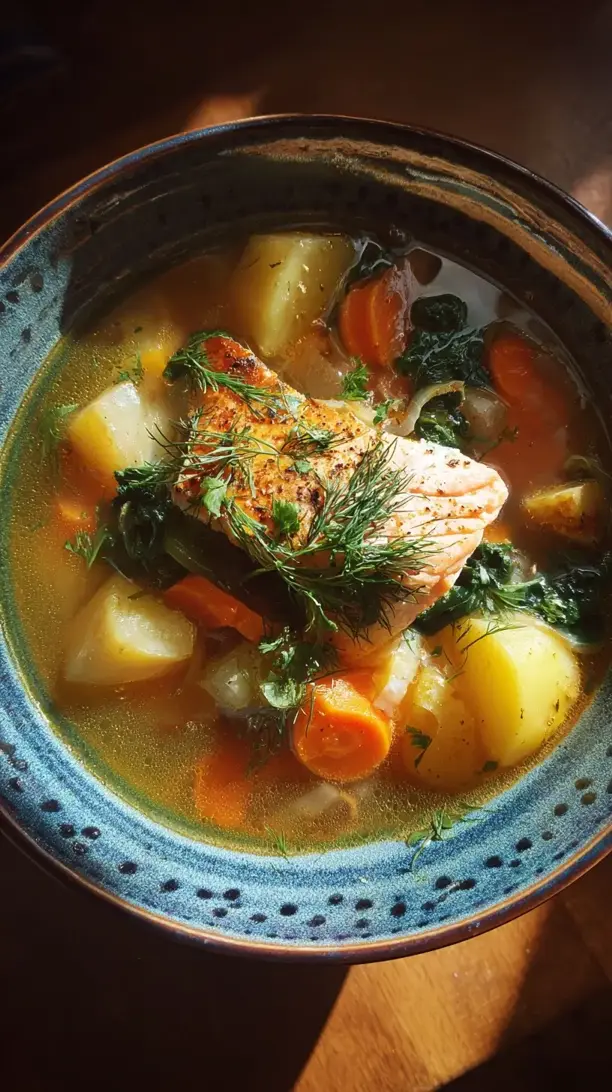
Salmon Vegetable Soup
Make this easy Salmon Vegetable Soup for a healthy, one-pot dinner ready in 40 minutes. Get the recipe for tender salmon in a savory broth now!
Ingredients
For the Ingredients
-
450 g fresh salmon fillet (skin removed, cut into 1-inch chunks)
-
1 tbsp olive oil
-
1 medium onion (finely chopped)
-
2 carrots (peeled and diced)
-
2 celery stalks (diced)
-
3 cloves garlic (minced)
-
1.5 liters fish or vegetable broth
-
400 g canned diced tomatoes (with their juices)
-
1 medium zucchini (diced)
-
1 tsp dried dill (or 1 tbsp fresh)
-
0.5 tsp smoked paprika
-
Salt and black pepper (to taste)
-
Fresh parsley (for garnish)
-
Lemon wedges (for serving)
Instructions
-
Start by prepping all your vegetables. Chop the onion, dice the carrots and celery, mince the garlic, and dice the zucchini. Having everything ready to go (mise en place) makes the cooking process smooth and enjoyable. Pat the salmon chunks dry with a paper towel and season them lightly with a pinch of salt and pepper.01
-
Heat the olive oil in your large soup pot or Dutch oven over medium heat. Add the chopped onion, carrots, and celery. Sauté for about 6-8 minutes, stirring occasionally, until the vegetables have softened and the onion becomes translucent. You'll notice a wonderful, savory aroma starting to fill your kitchen.02
-
Add the minced garlic to the pot and cook for another minute, stirring constantly, until it becomes fragrant. Be careful not to burn the garlic—it can turn bitter. Then, stir in the dried dill and smoked paprika, toasting the spices for just 30 seconds to unlock their full flavor.03
-
Pour in the broth and add the canned diced tomatoes with their juices. Bring the mixture to a gentle boil, then reduce the heat to a simmer. Let it cook for about 10 minutes, which allows the flavors to start melding together and the carrots to become tender.04
-
Now, add the diced zucchini to the pot. Simmer for another 5-7 minutes, until the zucchini is just tender but still has a slight bite. You want it to retain some texture rather than becoming mushy.05
-
This is the crucial part! Gently place the seasoned salmon chunks into the simmering broth. Let them cook for about 4-5 minutes. The salmon is done when it turns opaque and flakes easily with a fork. Be gentle when stirring from this point on to keep the salmon pieces intact.06
-
Turn off the heat. Taste the broth and adjust the seasoning with more salt and pepper if needed. Ladle the soup into bowls, garnish generously with fresh parsley, and serve immediately with lemon wedges on the side. The squeeze of lemon juice at the table is non-negotiable—it really brings all the flavors to life!07