
Craving sushi but dreading the rolling? These Salmon Sushi Bowls deliver all the fresh, vibrant flavor in a casual, no-fuss format. You get cool seasoned rice, rich buttery salmon, and satisfying crunch without any technical pressure—a deconstructed sushi roll that’s incredibly easy to throw together.
Why You’ll Love This Salmon Sushi Bowls
- Effortless Sushi Night: All the authentic flavor with a fraction of the effort.
- Endlessly Customizable: Swap in your favorite toppings to make it your own.
- Meal-Prep Champion: Prep components ahead for lightning-fast assembly.
- Textural Symphony: Enjoy cool rice, silky salmon, crisp cucumber, and creamy avocado in every bite.
Ingredients & Tools
- 400 g sushi-grade salmon fillet, skin removed
- 300 g sushi rice
- 100 ml rice vinegar
- 2 tbsp granulated sugar
- 1 tsp salt
- 1 large ripe avocado
- 1 cucumber
- 2 sheets nori (seaweed), sliced into thin strips
- 2 tbsp soy sauce (or tamari)
- 1 tbsp toasted sesame oil
- 1 tsp fresh ginger, grated
- To serve: pickled ginger, wasabi, sesame seeds
Tools: A sharp chef’s knife, a medium saucepan, a fine-mesh sieve, a wooden spoon or rice paddle, a small bowl for mixing.
Notes: Use sushi-grade salmon for safety and texture. Toasting sesame seeds unlocks a deep, nutty aroma.
Nutrition (per serving)
| Calories: | 580 kcal |
| Protein: | 32 g |
| Fat: | 22 g |
| Carbs: | 62 g |
| Fiber: | 6 g |
Serves: 4 | Prep Time: 25 minutes | Cook Time: 20 minutes | Total Time: 45 minutes
Before You Start: Tips & Ingredient Notes
- What does “sushi-grade” actually mean? This term isn’t regulated, but it generally indicates the fish has been frozen to a specific temperature to kill parasites. Always buy from a reputable fishmonger you trust. When in doubt, ask! The salmon should look vibrant, smell clean and oceanic, and have a firm texture.
- Can I use another type of rice? You can, but the texture won’t be the same. Sushi rice is a short-grain variety that gets wonderfully sticky when cooked, which is essential for holding the bowl together. Jasmine or basmati rice will be too fluffy and separate.
- Why do we season the rice? The sushi su (the mix of rice vinegar, sugar, and salt) isn’t just for flavor—it also gives the rice its signature glossy look and helps to slightly halt the cooking process, so it stays perfect at room temperature.
- My avocado is rock-hard. Help! Speed up ripening by placing it in a brown paper bag with a banana. The ethylene gas the banana emits will work its magic. For a real emergency, you can gently microwave it for 15-second bursts, but the texture can become a little mushy.
How to Make Salmon Sushi Bowls
Step 1: First, let’s tackle the rice. Place your sushi rice in a fine-mesh sieve and rinse it under cold running water. You’ll want to agitate it with your hand until the water runs almost completely clear. This step is crucial—it washes away the excess starch so your rice isn’t gummy. Then, cook the rice according to the package directions, usually with a 1:1.25 rice-to-water ratio.
Step 2: While the rice is cooking, make the sushi su. In a small saucepan, gently heat the rice vinegar, sugar, and salt. You don’t want it to boil, just warm enough so the sugar and salt dissolve completely. Give it a stir with a wooden spoon—it should only take a minute or two. Once dissolved, take it off the heat and set it aside to cool.
Step 3: When the rice is finished cooking, transfer it to a large, wide, non-metallic bowl (wood or glass is ideal). Slowly drizzle the cooled sushi su over the hot rice. Now, using a cutting and folding motion with a rice paddle or wooden spoon, gently mix the seasoning into the rice. Be careful not to smash the grains! As you mix, you can fan the rice to help it cool down quickly and develop a beautiful shine.
Step 4: Time for the star of the show: the salmon. With your very sharp knife, slice the sushi-grade salmon against the grain into bite-sized cubes, about 2 cm thick. Place them in a small bowl and toss gently with the soy sauce, toasted sesame oil, and grated ginger. Let it marinate while you prep the veggies—this brief soak infuses it with so much savory, umami flavor.
Step 5: Prep your vegetables. Slice the cucumber into thin half-moons or small cubes, whatever you prefer. Halve the avocado, remove the pit, and scoop the flesh out before dicing it. Try to do the avocado last to prevent it from browning too much. Slice your nori sheets into thin strips—a pair of kitchen scissors makes this incredibly easy.
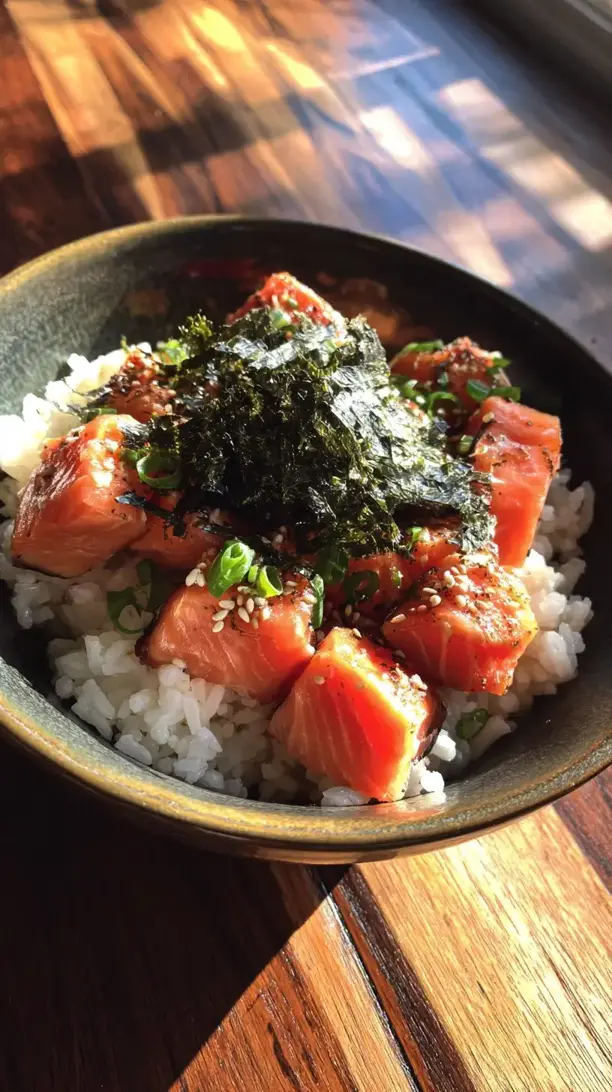
Step 6: Now for the fun part: assembly! Divide the seasoned sushi rice evenly among four bowls. Artfully arrange the marinated salmon, diced avocado, and cucumber over the rice. The goal is a little bit of everything in each bite. Scatter the nori strips and a generous sprinkle of toasted sesame seeds over the top.
Step 7: Serve immediately! Place small dishes of pickled ginger, wasabi, and extra soy sauce on the table so everyone can customize their bowl to their heart’s content. The combination of cool rice, rich salmon, and crisp veggies is an absolute delight.
Storage & Freshness Guide
- Fridge: Store components separately in airtight containers for up to 1 day.
- Freezer: Not recommended; texture of raw fish and rice deteriorates.
- Reviving: Let rice come to room temperature; add fresh nori when serving.
Serving Suggestions
Complementary Dishes
- A simple Miso Soup — It’s the classic sushi restaurant starter. The warm, savory broth is the perfect comforting companion to the cool, fresh flavors of the bowl.
- Seaweed Salad — This adds another layer of oceanic flavor and a wonderfully slippery, crunchy texture that plays so well with the other components.
- Edamame with Sea Salt — A no-fuss, fun-to-eat side that everyone loves. The slight pop of the beans and the sprinkle of salt are a simple, satisfying addition.
Drinks
- Iced Green Tea — Its clean, slightly bitter notes cut through the richness of the salmon beautifully, cleansing the palate between bites.
- A Crisp Lager or Pilsner — The carbonation and mild hop bitterness are a fantastic foil for the fatty fish and creamy avocado.
- Junmai Ginjo Sake — If you’re feeling fancy, a slightly chilled, aromatic sake elevates the meal into a true dining experience.
Something Sweet
- Green Tea Ice Cream (Matcha) — The bittersweet, earthy flavor of matcha is the traditional and perfect way to end a sushi-based meal.
- Mochi Ice Cream — These chewy, sweet pockets with an ice cream center are playful, light, and offer a delightful contrast in texture.
- Fresh Orange Slices — Sometimes simple is best. The bright, citrusy burst is a refreshing and healthy way to finish.
Top Mistakes to Avoid
- Mistake: Using the wrong rice and skipping the rinse. This is the foundation of your bowl! Using long-grain rice or forgetting to rinse will result in a separated, dry, or overly sticky mess instead of the perfect, clingy grains you’re after.
- Mistake: Over-marinating the salmon. The acid in the soy sauce and the salt will start to “cook” the salmon (like in a ceviche) if left for too long. You want just 10-15 minutes to infuse flavor while keeping that beautiful raw texture.
- Mistake: Smashing the rice when seasoning. Be gentle! You want to fold and slice the seasoning in to coat each grain, not stir aggressively. Aggressive stirring releases more starch and turns your rice into a gummy paste.
- Mistake: Letting the assembled bowl sit too long. The nori will get soggy, the avocado will brown, and the rice will lose its perfect temperature. Aim to assemble and serve right away for the best textural experience.
Expert Tips
- Tip: Use a wet knife and hands for the salmon. A lightly dampened knife and hands will prevent the delicate salmon from sticking to you and your tools, giving you much cleaner, prettier cuts.
- Tip: Add a secret ingredient to your rice. A tiny, almost imperceptible splash of mirin (sweet rice wine) added to your sushi su can add a lovely depth of flavor and an extra-glassy sheen to your rice.
- Tip: Make a quick “spicy mayo” for drizzling. Just mix a tablespoon of sriracha with three tablespoons of Japanese Kewpie mayonnaise. It adds a creamy, spicy kick that is absolutely addictive.
- Tip: Warm your serving bowls. For a truly restaurant-quality touch, fill your serving bowls with hot water while you assemble the ingredients. Dump the water and dry the bowls right before adding the rice. It keeps everything at the perfect temperature just a little bit longer.
FAQs
Can I make this with cooked salmon?
Absolutely! If you’re not comfortable with raw fish, you can easily swap in cooked salmon. Flake some pan-seared, baked, or even leftover grilled salmon over the rice. The flavor profile will be different—more savory and less buttery—but it will still be utterly delicious. Just be sure not to overcook it, so it stays moist and tender in the bowl.
How long do the leftovers keep?
This is a best-fresh situation, but you can store components separately for up to a day. Keep the seasoned rice, marinated salmon, and chopped veggies in airtight containers in the fridge. The rice will harden when cold, so let it come to room temperature before reassembling. The nori should always be added fresh to maintain its crispness.
Is there a substitute for nori?
If you’re not a fan of the seaweed flavor, you can leave it out, but you’ll miss that classic sushi taste. For a similar texture, try sprinkling on some furikake (a Japanese seasoning mix) or even some crushed, plain roasted seaweed snacks. They provide a similar salty, oceanic note without the full-on sheet-of-nori experience.
My rice is too sticky. What did I do wrong?
This almost always comes down to the rinse. If you don’t rinse the rice thoroughly enough, the excess surface starch will cause it to become gluey. Also, be sure you’re using the correct water-to-rice ratio and that you let the rice steam, covered, for about 10 minutes after cooking before you fluff and season it.
Can I use frozen salmon?
You can, but it must be properly thawed. The key is to thaw it slowly in the refrigerator overnight. Never thaw fish at room temperature, as this can encourage bacterial growth. Once fully thawed, pat it very dry with paper towels before cubing and marinating to ensure the best texture and flavor.
Salmon Sushi Bowls
Craving sushi without the rolling? These easy Salmon Sushi Bowls deliver all the fresh flavor in minutes. Get the simple, no-fuss recipe and enjoy tonight!
Ingredients
For the main ingredients:
-
400 g sushi-grade salmon fillet (skin removed)
-
300 g sushi rice
-
100 ml rice vinegar
-
2 tbsp granulated sugar
-
1 tsp salt
-
1 large ripe avocado
-
1 cucumber
-
2 sheets nori (seaweed, sliced into thin strips)
-
2 tbsp soy sauce (or tamari)
-
1 tbsp toasted sesame oil
-
1 tsp fresh ginger (grated)
For the serving:
-
pickled ginger
-
wasabi
-
sesame seeds
Instructions
-
First, let's tackle the rice. Place your sushi rice in a fine-mesh sieve and rinse it under cold running water. You'll want to agitate it with your hand until the water runs almost completely clear. This step is crucial—it washes away the excess starch so your rice isn't gummy. Then, cook the rice according to the package directions, usually with a 1:1.25 rice-to-water ratio.01
-
While the rice is cooking, make the sushi su. In a small saucepan, gently heat the rice vinegar, sugar, and salt. You don't want it to boil, just warm enough so the sugar and salt dissolve completely. Give it a stir with a wooden spoon—it should only take a minute or two. Once dissolved, take it off the heat and set it aside to cool.02
-
When the rice is finished cooking, transfer it to a large, wide, non-metallic bowl (wood or glass is ideal). Slowly drizzle the cooled sushi su over the hot rice. Now, using a cutting and folding motion with a rice paddle or wooden spoon, gently mix the seasoning into the rice. Be careful not to smash the grains! As you mix, you can fan the rice to help it cool down quickly and develop a beautiful shine.03
-
Time for the star of the show: the salmon. With your very sharp knife, slice the sushi-grade salmon against the grain into bite-sized cubes, about 2 cm thick. Place them in a small bowl and toss gently with the soy sauce, toasted sesame oil, and grated ginger. Let it marinate while you prep the veggies—this brief soak infuses it with so much savory, umami flavor.04
-
Prep your vegetables. Slice the cucumber into thin half-moons or small cubes, whatever you prefer. Halve the avocado, remove the pit, and scoop the flesh out before dicing it. Try to do the avocado last to prevent it from browning too much. Slice your nori sheets into thin strips—a pair of kitchen scissors makes this incredibly easy.05
-
Now for the fun part: assembly! Divide the seasoned sushi rice evenly among four bowls. Artfully arrange the marinated salmon, diced avocado, and cucumber over the rice. The goal is a little bit of everything in each bite. Scatter the nori strips and a generous sprinkle of toasted sesame seeds over the top.06
-
Serve immediately! Place small dishes of pickled ginger, wasabi, and extra soy sauce on the table so everyone can customize their bowl to their heart's content. The combination of cool rice, rich salmon, and crisp veggies is an absolute delight.07