
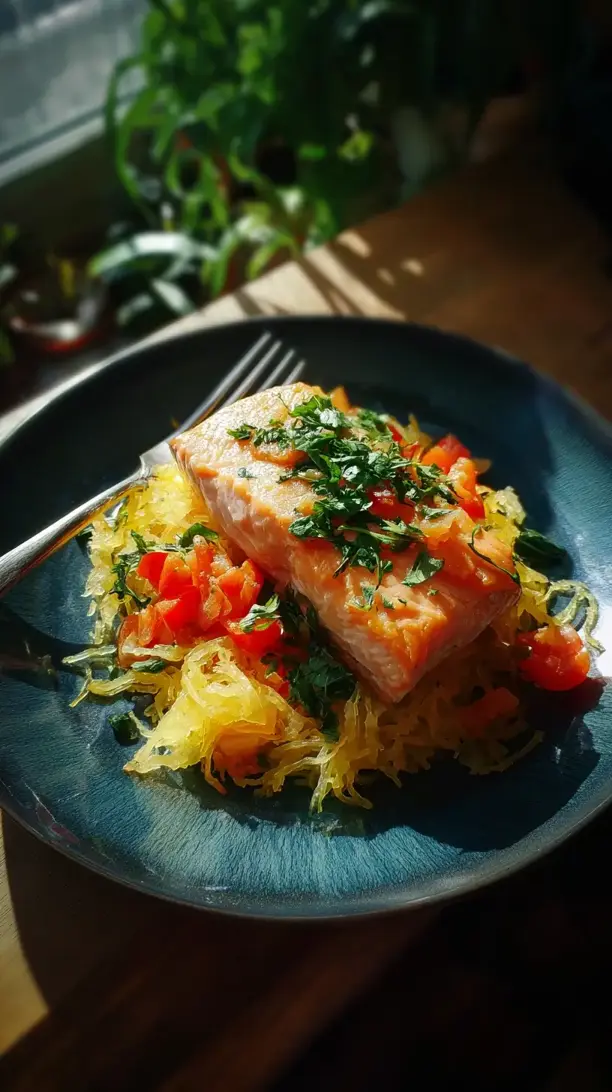
This Salmon Spaghetti Squash is an elegant yet effortless one-pan dinner. The squash roasts into tender strands, while the salmon gets flaky with a golden, herb-kissed crust. It’s a gluten-free, nutrient-packed meal that feels like a warm hug on a plate.
Why You’ll Love This Salmon Spaghetti Squash
One-pan wonder: Protein, veggies, and healthy fats roast together for easy cleanup.
Fresh & vibrant: Lemon, garlic, and herbs keep it light yet satisfying.
Versatile & forgiving: Swap herbs or add Parmesan for easy customization.
Beautiful presentation: Golden salmon and sunny squash strands impress every time.
Ingredients & Tools
- 1 medium spaghetti squash (about 2–2.5 lbs)
- 2 salmon fillets (6 oz each), skin-on or skinless
- 3 tbsp olive oil, divided
- 4 garlic cloves, minced
- 1 lemon (zest and juice)
- 1 tsp dried oregano or Italian seasoning
- ½ tsp red pepper flakes (optional)
- 2 tbsp fresh parsley, chopped
- Salt and freshly ground black pepper
Tools: Large baking sheet, parchment paper, sharp knife, spoon, small bowl, fork
Notes: Fresh lemon and garlic bring brightness; don’t skip the olive oil—it helps caramelize the squash and keeps the salmon moist.
Nutrition (per serving)
| Calories: | 420 kcal |
| Protein: | 28 g |
| Fat: | 24 g |
| Carbs: | 22 g |
| Fiber: | 5 g |
Serves: 2 | Prep Time: 15 minutes | Cook Time: 40 minutes | Total Time: 55 minutes
Before You Start: Tips & Ingredient Notes
- Choosing your squash. Look for one that feels heavy for its size with a firm, matte yellow skin. A heavier squash usually means more moisture and better “noodle” texture once cooked.
- Salmon selection matters. I prefer skin-on fillets because the skin gets wonderfully crispy and helps protect the flesh from drying out. But skinless works perfectly fine too—just keep an eye on the cooking time.
- Don’t rush the squash roasting. It needs that full time in the oven to become tender enough to shred. If you try to scrape it too early, you’ll end up with short, broken strands instead of long, spaghetti-like ones.
- Fresh herbs vs. dried. While dried oregano is great for the marinade, using fresh parsley at the end gives a pop of color and fresh flavor. If you have fresh dill or chives, those would be lovely here too.
How to Make Salmon Spaghetti Squash
Step 1: First, preheat your oven to 400°F (200°C) and line a large baking sheet with parchment paper. Carefully slice the spaghetti squash in half lengthwise—this is the trickiest part, so use a sharp, sturdy knife and maybe a steady hand! Scoop out the seeds and stringy bits from the center with a spoon, just like you would a pumpkin. Drizzle the cut sides with about 1 tablespoon of the olive oil and sprinkle generously with salt and pepper.
Step 2: Place the squash halves cut-side down on the prepared baking sheet. Roast for about 25–30 minutes, until the flesh is tender when pierced with a fork. You’ll know it’s ready when the edges look a little caramelized and the skin gives slightly under pressure. While the squash is roasting, prepare the salmon. In a small bowl, mix the remaining 2 tablespoons of olive oil, minced garlic, lemon zest, lemon juice, dried oregano, red pepper flakes (if using), and a good pinch of salt and pepper.
Step 3: Pat the salmon fillets dry with a paper towel—this helps the seasoning stick and promotes a nice sear. Brush the garlic-lemon mixture evenly over the top of each fillet. Once the squash has roasted for 25–30 minutes, remove the baking sheet from the oven. Flip the squash halves over so they’re cut-side up, and move them to one side of the pan to make room for the salmon.
Step 4: Place the seasoned salmon fillets on the empty side of the baking sheet. Return the pan to the oven and roast for another 12–15 minutes, depending on the thickness of your salmon. The salmon is done when it flakes easily with a fork and has an internal temperature of 145°F (63°C). The squash should be very tender by now.
Step 5: Carefully remove the baking sheet from the oven. Let the salmon rest for a couple of minutes. Meanwhile, use a fork to scrape the spaghetti squash flesh—it will pull away in long, beautiful strands that really do look like pasta. Transfer the squash strands to a serving bowl or divide between plates.
Step 6: Flake the salmon into large chunks and arrange it over the spaghetti squash. Drizzle any pan juices and the remaining garlic-lemon sauce from the bowl over the top. Finish with a generous sprinkle of fresh parsley and an extra squeeze of lemon juice if you like. Toss everything gently together right before serving so the flavors meld beautifully.
Storage & Freshness Guide
- Fridge: Store leftovers in an airtight container for up to 2 days.
- Freezer: Not recommended; squash becomes watery upon thawing.
- Reviving: Reheat gently in a skillet to restore texture.
Serving Suggestions
Complementary Dishes
- A simple arugula salad — The peppery greens with a light lemon vinaigrette cut through the richness of the salmon and add a fresh, crisp element.
- Garlic sautéed spinach or kale — Another dose of greens that wilts quickly and soaks up the lovely lemony sauce from the main dish.
- Crusty bread or garlic bread — Perfect for sopping up every last bit of the delicious juices left on your plate.
Drinks
- A crisp Sauvignon Blanc — Its citrusy notes complement the lemon in the dish and refresh your palate between bites.
- Sparkling water with lemon — A non-alcoholic option that mirrors the bright, zesty flavors and keeps the meal feeling light.
- Iced herbal tea — Something like mint or lemon balm tea served over ice enhances the herbal notes without overpowering the salmon.
Something Sweet
- Lemon sorbet — A clean, refreshing finish that continues the citrus theme and cleanses the palate beautifully.
- Almond biscotti — Their subtle nuttiness and crunchy texture are a lovely contrast to the soft, savory main course.
- Fresh berries with a dollop of Greek yogurt — Simple, light, and just sweet enough to end the meal on a satisfying note.
Top Mistakes to Avoid
- Overcooking the salmon. Salmon continues to cook a bit after it comes out of the oven, so take it out when it’s just slightly translucent in the very center. Overcooked salmon becomes dry and chalky—I’ve messed this up before too, and it’s a sad sight.
- Not seasoning the squash enough. The inside of the squash needs a good amount of salt and oil to develop flavor. If you just roast it plain, the strands can taste bland and watery.
- Skipping the step of patting the salmon dry. Moisture on the surface of the fish will steam it rather than let it roast properly, and the seasoning won’t adhere as well.
- Scraping the squash too vigorously. Be gentle when pulling the strands—if you scrape too hard, you might dig into the skin, which can make the “noodles” bitter.
Expert Tips
- Tip: For extra crispy salmon skin, start the fillets skin-side down in a hot oven-safe skillet on the stovetop for 2–3 minutes before transferring the skillet to the oven to finish cooking. This initial sear makes the skin irresistibly crunchy.
- Tip: If your squash halves are wobbling on the baking sheet, slice a thin strip off the bottom to create a flat surface. This keeps them stable and ensures even roasting without any rolling around.
- Tip: Mix a tablespoon of capers or chopped sun-dried tomatoes into the squash strands after scraping—they add a briny, umami punch that takes the flavor to another level.
- Tip: Let the roasted squash sit for 5 minutes after taking it out of the oven before you start shredding. This allows the starches to set a bit, which can help the strands separate more cleanly.
FAQs
Can I make this recipe ahead of time?
You can roast the spaghetti squash up to 2 days in advance. Let it cool, shred the strands, and store them in an airtight container in the fridge. When ready to eat, reheat the squash gently in a skillet while you cook the salmon fresh. The salmon is best cooked just before serving to maintain its texture.
What can I use instead of spaghetti squash?
If spaghetti squash isn’t available, zucchini noodles (zoodles) are a great alternative—just sauté them briefly since they cook much faster. You could also use roasted sweet potato noodles or even regular whole-wheat spaghetti for a more traditional pasta base.
How do I know when the spaghetti squash is fully cooked?
The squash is done when the skin is easily pierced with a fork and the flesh feels tender. You should be able to scrape long, separate strands without much resistance. If the strands are short and break easily, it needs a few more minutes in the oven.
Can I use frozen salmon?
Yes, but make sure it’s fully thawed and patted dry before seasoning and roasting. If you put frozen salmon in the oven, it will release a lot of water and won’t brown properly, resulting in a steamed texture.
Is it okay to eat the skin of the spaghetti squash?
The skin of spaghetti squash is tough and not really meant for eating—it’s there to hold the shape while roasting. Once you’ve scraped out the noodle-like flesh, you can compost the skin or discard it.
Salmon Spaghetti Squash
Make this easy, one-pan Salmon Spaghetti Squash for a healthy, gluten-free dinner. Ready in under an hour! Get the simple, elegant recipe now.
Ingredients
For the Ingredients
-
1 medium spaghetti squash (about 2–2.5 lbs)
-
2 salmon fillets (6 oz each, skin-on or skinless)
-
3 tbsp olive oil (divided)
-
4 cloves garlic (minced)
-
1 lemon (zest and juice)
-
1 tsp dried oregano or Italian seasoning
-
½ tsp red pepper flakes (optional)
-
2 tbsp fresh parsley (chopped)
-
Salt and freshly ground black pepper
Instructions
-
First, preheat your oven to 400°F (200°C) and line a large baking sheet with parchment paper. Carefully slice the spaghetti squash in half lengthwise—this is the trickiest part, so use a sharp, sturdy knife and maybe a steady hand! Scoop out the seeds and stringy bits from the center with a spoon, just like you would a pumpkin. Drizzle the cut sides with about 1 tablespoon of the olive oil and sprinkle generously with salt and pepper.01
-
Place the squash halves cut-side down on the prepared baking sheet. Roast for about 25–30 minutes, until the flesh is tender when pierced with a fork. You’ll know it’s ready when the edges look a little caramelized and the skin gives slightly under pressure. While the squash is roasting, prepare the salmon. In a small bowl, mix the remaining 2 tablespoons of olive oil, minced garlic, lemon zest, lemon juice, dried oregano, red pepper flakes (if using), and a good pinch of salt and pepper.02
-
Pat the salmon fillets dry with a paper towel—this helps the seasoning stick and promotes a nice sear. Brush the garlic-lemon mixture evenly over the top of each fillet. Once the squash has roasted for 25–30 minutes, remove the baking sheet from the oven. Flip the squash halves over so they’re cut-side up, and move them to one side of the pan to make room for the salmon.03
-
Place the seasoned salmon fillets on the empty side of the baking sheet. Return the pan to the oven and roast for another 12–15 minutes, depending on the thickness of your salmon. The salmon is done when it flakes easily with a fork and has an internal temperature of 145°F (63°C). The squash should be very tender by now.04
-
Carefully remove the baking sheet from the oven. Let the salmon rest for a couple of minutes. Meanwhile, use a fork to scrape the spaghetti squash flesh—it will pull away in long, beautiful strands that really do look like pasta. Transfer the squash strands to a serving bowl or divide between plates.05
-
Flake the salmon into large chunks and arrange it over the spaghetti squash. Drizzle any pan juices and the remaining garlic-lemon sauce from the bowl over the top. Finish with a generous sprinkle of fresh parsley and an extra squeeze of lemon juice if you like. Toss everything gently together right before serving so the flavors meld beautifully.06