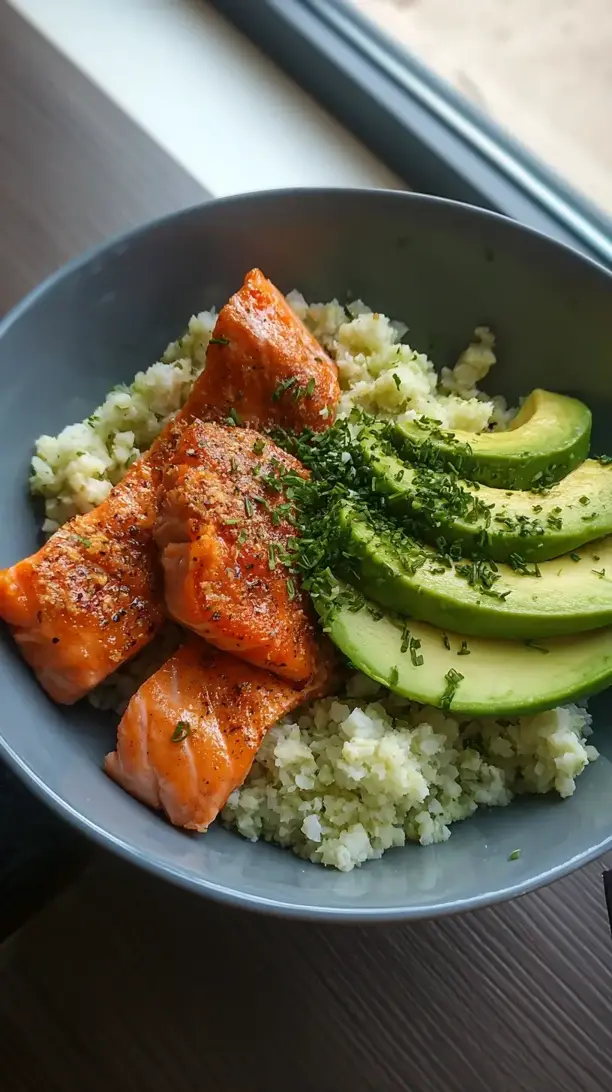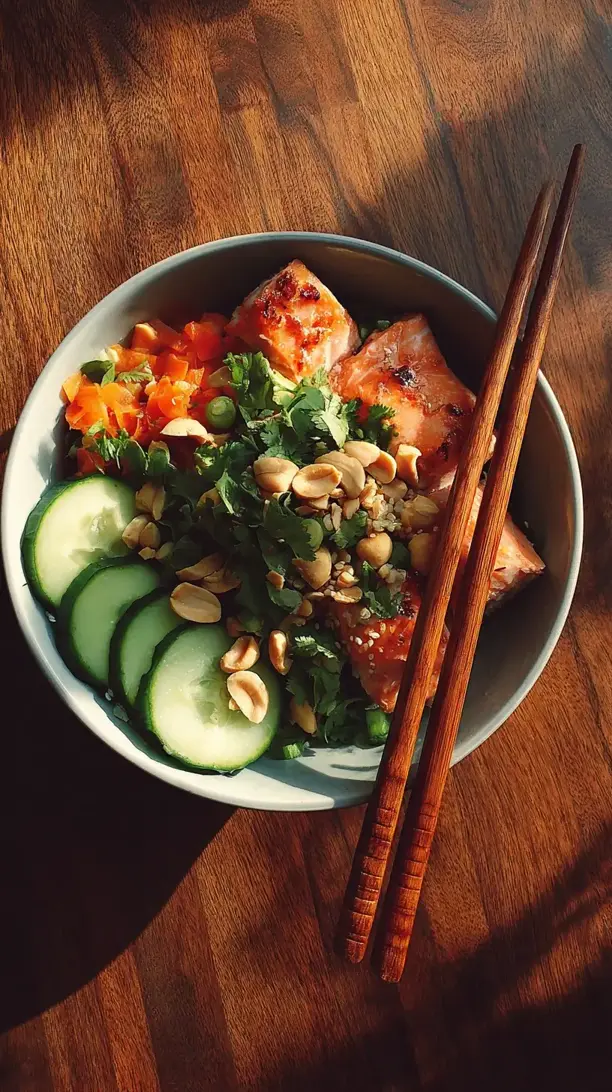

This vibrant salmon poke bowl is a refreshing, restaurant-quality meal you can make at home in minutes. The key is using sushi-grade salmon and balancing bright, savory flavors. It’s light yet deeply satisfying—perfect for a quick lunch or casual dinner.
Why You’ll Love This Salmon Poke
- Fresh & vibrant: Bright, clean flavors from rich salmon, soy, sesame, and a hint of spice.
- 15-minute meal: No cooking required—just cube, mix, and assemble.
- Endlessly customizable: Easily adjust heat, crunch, or toppings to your taste.
- Fancy without effort: Impressive, colorful bowls that look professionally made.
Ingredients & Tools
- 450 g fresh, sushi-grade salmon fillet, skin removed
- 60 ml soy sauce (or tamari for gluten-free)
- 2 tbsp toasted sesame oil
- 1 tbsp rice vinegar
- 1 tsp fresh ginger, finely grated
- 1 small garlic clove, finely minced
- 1-2 spring onions, thinly sliced
- 1 tbsp sesame seeds, plus more for garnish
- 1/2 – 1 tsp Sriracha or chili crisp (optional, for heat)
- 1 ripe avocado, sliced
- 100 g edamame beans, shelled and thawed if frozen
- 1 small cucumber, thinly sliced or diced
- 300 g cooked sushi rice or quinoa, for serving
- 1 sheet nori, sliced into thin strips
Tools: A sharp chef’s knife, a large mixing bowl, a small bowl for the sauce, and a cutting board.
Notes: The quality of your salmon is non-negotiable here—it’s the star of the show. And that toasted sesame oil? It really makes a difference, adding a deep, nutty aroma that you just don’t get from the plain stuff.
Nutrition (per serving)
| Calories: | 485 kcal |
| Protein: | 32 g |
| Fat: | 24 g |
| Carbs: | 35 g |
| Fiber: | 6 g |
Serves: 3 | Prep Time: 20 minutes | Cook Time: 0 minutes | Total Time: 20 minutes
Before You Start: Tips & Ingredient Notes
- Your salmon must be sushi-grade. This is the most important rule. “Sushi-grade” means the fish has been frozen to a specific temperature to kill parasites, making it safe to eat raw. Always buy from a trusted fishmonger.
- Don’t skip the toasting for the sesame seeds. If you have raw sesame seeds, toast them in a dry pan for a few minutes until golden. It unlocks an incredible flavor and aroma that elevates the entire dish.
- Keep everything cold. I like to pop my mixing bowl in the freezer for 10 minutes before I start. A cold bowl helps keep the salmon beautifully chilled and firm while you’re working with it.
- Prep your add-ins first. Have your cucumber sliced, avocado ready to go, and rice cooked and slightly cooled before you even touch the salmon. This makes the assembly quick and seamless.
How to Make Salmon Poke
Step 1: Prepare the Salmon. Take your salmon fillet and pat it completely dry with paper towels. This helps the marinade stick better. Using a very sharp knife, slice the salmon into neat, 2 cm cubes. A sharp knife is key here — it gives you clean cuts without shredding the delicate flesh. Place all the cubed salmon into your large, chilled mixing bowl.
Step 2: Make the Flavor Base. In your small bowl, combine the soy sauce, toasted sesame oil, rice vinegar, grated ginger, and minced garlic. If you’re using Sriracha or chili crisp for heat, whisk that in now. You’ll notice the sauce will look glossy and smell amazing — that’s the ginger and sesame oil working their magic.
Step 3: Marinate the Salmon. Pour about three-quarters of the sauce over the cubed salmon. Add most of your sliced spring onions (save some for garnish) and the tablespoon of sesame seeds. Now, gently fold everything together with a spatula or large spoon. Be tender — you’re not making a smoothie. You just want to coat every piece of salmon without breaking it down.
Step 4: Let it Rest. Cover the bowl and pop it into the refrigerator for at least 10 minutes. This short marinating time allows the flavors to penetrate the salmon without “cooking” it in the acid, which can change the texture. You’ll see the sauce darken slightly as it mingles with the fish.
Step 5: Prepare Your Bowls. While the salmon is chilling, divide your cooked rice or quinoa among your serving bowls. Flatten it slightly to create a nice base. Artfully arrange your avocado slices, cucumber, and edamame around the edges of the bowl. This is where you make it look pretty!
Step 6: Assemble and Serve. Take the marinated salmon out of the fridge. Give it one last gentle stir, then spoon it generously over the center of your rice. Drizzle the remaining sauce over everything for an extra flavor boost. Finish with a sprinkle of the reserved spring onions, more sesame seeds, and those lovely nori strips for a hit of umami. Serve immediately and enjoy the freshness.
Storage & Freshness Guide
- Fridge: Store marinated salmon in an airtight container up to 1 day; texture softens over time.
- Freezer: Not recommended—freezing raw marinated salmon ruins its delicate texture.
- Reviving: If too watery, drain excess liquid and add a fresh splash of sesame oil before serving.
Serving Suggestions
Complementary Dishes
- A simple seaweed salad — Its briny, slightly sweet flavor and slippery texture are the perfect contrast to the rich salmon and fluffy rice.
- Miso soup with tofu and wakame — A warm, savory sip alongside the cool poke just feels right, creating a more complete and comforting meal.
- Quick-pickled vegetables — Thinly slice some radishes or carrots and quick-pickle them in rice vinegar and a pinch of sugar for 30 minutes. The sharp acidity cuts through the fat of the salmon beautifully.
Drinks
- A crisp, dry sake or a junmai ginjo — The clean, slightly fruity notes of a good sake complement the delicate fish without overpowering it, enhancing the overall umami experience.
- Iced green tea (sencha or genmaicha) — The grassy, slightly astringent quality of green tea acts as a palate cleanser between bites, making each mouthful taste as vibrant as the first.
- A light lager or Japanese beer — The effervescence and mild bitterness are classic pairings for poke, refreshing your palate and balancing the soy sauce’s saltiness.
Something Sweet
- Matcha (green tea) ice cream — The subtle bitterness of the matcha is a fantastic follow-up to the savory, salty poke, and its creamy texture provides a lovely, cooling finish.
- Mochi ice cream balls — These little chewy, icy treats are fun to eat and come in flavors like red bean or mango that offer a sweet, fruity end to the meal.
- A plate of fresh, sliced mango — Sometimes simplicity is best. The sweet, juicy tropical fruit feels like a natural extension of the Hawaiian-inspired dish and is incredibly refreshing.
Top Mistakes to Avoid
- Mistake: Using the wrong grade of salmon. Regular supermarket salmon is not safe for raw consumption. This is a food safety issue, not just a quality one. Always confirm it’s sushi-grade.
- Mistake: Over-marinating the fish. If you leave the salmon in the soy-based marinade for too long (think over an hour), the acid and salt will start to denature the proteins, giving it a tough, grainy, cooked texture. 10-20 minutes is the sweet spot.
- Mistake: Cutting the salmon with a dull knife. A dull knife will mash and tear the delicate flesh instead of slicing cleanly through it. You’ll end up with a mushy, unattractive poke. I’ve messed this up before too — it’s worth sharpening your blade.
- Mistake: Adding the avocado too early. If you mix the avocado into the poke itself, it will break down and make the whole mixture mushy. Always keep it as a separate topping you add during assembly.
Expert Tips
- Tip: Freeze the salmon for 15 minutes before cutting. Slightly firming up the fish makes it infinitely easier to cut into clean, perfect cubes. It’s a little pro-hack that makes a big difference in presentation.
- Tip: Use a microplane for the ginger and garlic. This creates a super-fine paste that distributes flavor evenly throughout the marinade without leaving any large, overpowering chunks in your final dish.
- Tip: Toast your own sesame seeds. As mentioned before, the flavor is incomparable. Just toss them in a dry pan over medium heat for 2-3 minutes, shaking the pan frequently, until they’re fragrant and lightly golden.
- Tip: Make a double batch of the sauce. This marinade is so good you’ll want extra. Keep it in a jar in the fridge and use it for salad dressings, drizzling over grilled chicken, or as a dip for dumplings.
FAQs
Can I make salmon poke ahead of time?
You can, but with a major caveat. You can prep all the components — cut the veggies, make the sauce, cook the rice — and keep them separate in the fridge. However, only marinate the salmon for a maximum of 20 minutes before you plan to serve it. If you marinate it hours in advance, the texture will suffer. For the best results, assemble your bowls just before eating.
What can I use instead of soy sauce?
Absolutely. For a gluten-free option, tamari is a perfect one-to-one substitute with a very similar flavor profile. You could also use coconut aminos, which will give a slightly sweeter, less salty result. If you’re watching your sodium, use a low-sodium soy sauce and maybe add a tiny squeeze of lime to brighten it up.
Is it safe for pregnant women to eat?
This is a question for a healthcare professional, as guidelines can vary. Generally, if the salmon is confirmed sushi-grade from a reputable source, the risk is very low. However, many doctors recommend that pregnant women avoid all raw fish to eliminate any risk of foodborne illness. When in doubt, cook the salmon or choose a different recipe.
Can I use frozen salmon?
Yes, but it must be properly handled. If the salmon was frozen to sushi-grade standards (flash-frozen at -35°C or below), it’s safe. You must thaw it slowly in the refrigerator overnight—never at room temperature. Once thawed, pat it very dry before cubing and using. The texture might be a little softer than fresh, but it will still work.
My poke turned out too salty. How can I fix it?
It happens! First, you can add a squeeze of fresh lime or lemon juice to balance the saltiness with acidity. If it’s still too strong, gently fold in a few more neutral ingredients like diced avocado or cucumber directly into the poke mixture to dilute the sauce. For next time, consider using low-sodium soy sauce or reducing the amount slightly.

Salmon Poke
Learn how to make a fresh, restaurant-quality Salmon Poke bowl at home in just 20 minutes. Get the easy recipe and expert tips for perfect results every time!
Ingredients
For the Poke:
-
450 g sushi-grade salmon fillet (skin removed)
-
60 ml soy sauce (or tamari for gluten-free)
-
2 tbsp toasted sesame oil
-
1 tbsp rice vinegar
-
1 tsp fresh ginger (finely grated)
-
1 small garlic clove garlic (finely minced)
-
1-2 spring onions (thinly sliced)
-
1 tbsp sesame seeds (plus more for garnish)
-
1/2 - 1 tsp Sriracha or chili crisp (optional, for heat)
For the Bowls:
-
1 ripe avocado (sliced)
-
100 g edamame beans (shelled and thawed if frozen)
-
1 small cucumber cucumber (thinly sliced or diced)
-
300 g cooked sushi rice or quinoa (for serving)
-
1 sheet nori (sliced into thin strips)
Instructions
-
Take your salmon fillet and pat it completely dry with paper towels. Using a very sharp knife, slice the salmon into neat, 2 cm cubes. Place all the cubed salmon into your large, chilled mixing bowl.01
-
In your small bowl, combine the soy sauce, toasted sesame oil, rice vinegar, grated ginger, and minced garlic. If you’re using Sriracha or chili crisp for heat, whisk that in now.02
-
Pour about three-quarters of the sauce over the cubed salmon. Add most of your sliced spring onions (save some for garnish) and the tablespoon of sesame seeds. Gently fold everything together with a spatula or large spoon.03
-
Cover the bowl and pop it into the refrigerator for at least 10 minutes.04
-
While the salmon is chilling, divide your cooked rice or quinoa among your serving bowls. Flatten it slightly to create a nice base. Artfully arrange your avocado slices, cucumber, and edamame around the edges of the bowl.05
-
Take the marinated salmon out of the fridge. Give it one last gentle stir, then spoon it generously over the center of your rice. Drizzle the remaining sauce over everything for an extra flavor boost. Finish with a sprinkle of the reserved spring onions, more sesame seeds, and those lovely nori strips.06