
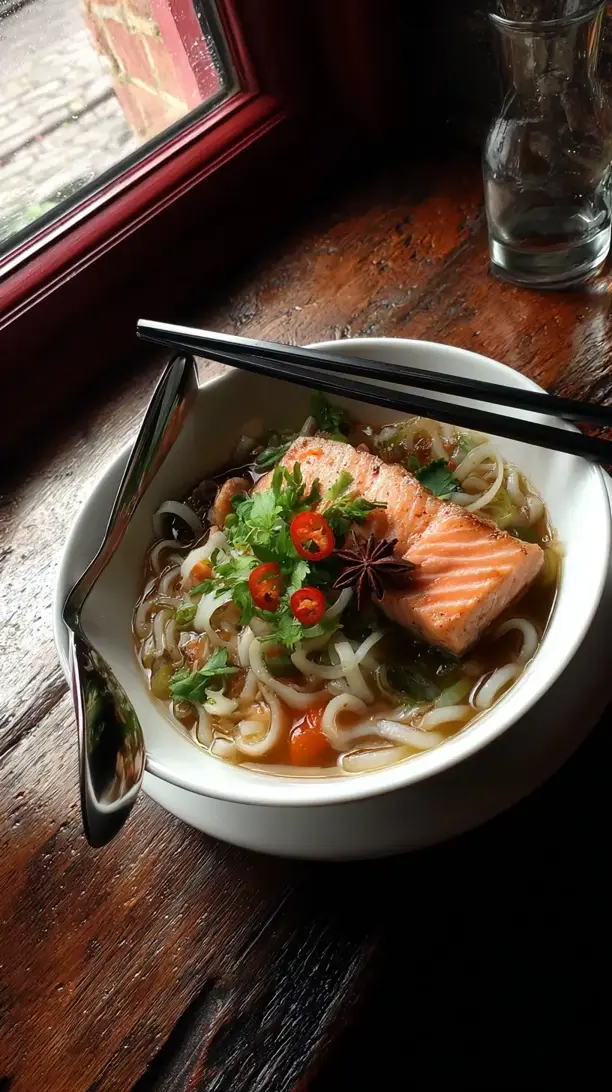
This salmon pho offers a coastal twist on the classic Vietnamese noodle soup. A quick, aromatic broth infused with charred ginger, onion, and warm spices gently poaches rich, flaky salmon. It’s a cozy, elegant, and deeply satisfying weeknight meal.
Why You’ll Love This Salmon Pho
- Quick to make: A flavorful broth ready in under 30 minutes.
- Tender salmon: Gently poached in the hot broth for perfect flakiness.
- Customizable meal: Load up with fresh herbs and toppings to your taste.
- Light yet satisfying: A comforting bowl that feels hearty but not heavy.
Ingredients & Tools
- 4 salmon fillets (about 150 g each), skin removed
- 8 cups good-quality chicken or vegetable broth
- 1 large onion, peeled and halved
- 1 3-inch piece of ginger, halved lengthwise
- 3 star anise pods
- 1 cinnamon stick
- 3 cloves
- 1 tbsp fish sauce (plus more for serving)
- 1 tbsp soy sauce or tamari
- 1 tsp coconut sugar or brown sugar
- 200 g dried rice noodles (pho noodles)
- To serve: fresh basil, mint, and/or cilantro, bean sprouts, lime wedges, sliced chili, sriracha or hoisin sauce
Tools: A large stockpot, a skillet or grill pan for charring, and a fine-mesh strainer.
Notes: Don’t skip charring the onion and ginger—it’s the secret to that deep, smoky-sweet base flavor. And using a good-quality broth really makes a difference here, as it’s the foundation of your soup.
Nutrition (per serving)
| Calories: | 485 kcal |
| Protein: | 35 g |
| Fat: | 18 g |
| Carbs: | 45 g |
| Fiber: | 3 g |
Serves: 4 | Prep Time: 15 minutes | Cook Time: 25 minutes | Total Time: 40 minutes
Before You Start: Tips & Ingredient Notes
- Char your aromatics well. Don’t be shy here—you want a good, dark char on the onion and ginger. This isn’t just for looks; it adds a incredible smoky depth that forms the backbone of your broth.
- Use skinless salmon fillets. While salmon skin can be deliciously crispy, for this recipe you’ll want skinless fillets. They poach more evenly and integrate better into the final bowl, giving you pure, flaky bites.
- Don’t overcook the salmon in the broth. The salmon will continue to cook from residual heat even after you turn off the stove. So, when you add it to the simmering broth, just let it sit for a few minutes until it’s opaque and flakes easily.
- Prepare your toppings in advance. Have all your herbs washed, your lime wedges cut, and your sauces ready to go before you even start cooking the broth. Pho is best assembled and eaten immediately, so having everything prepped makes the final step a breeze.
How to Make Salmon Pho
Step 1: First, let’s char the onion and ginger. Place the halved onion and ginger pieces cut-side down in a dry skillet over medium-high heat. Let them cook for about 5-7 minutes, until they’re deeply blackened and fragrant. You’ll notice a wonderful smoky aroma filling your kitchen—that’s exactly what you’re after. This step is non-negotiable for building that classic pho flavor.
Step 2: While the aromatics are charring, pour your broth into a large stockpot. Add the star anise, cinnamon stick, and cloves. Once the onion and ginger are nicely charred, add them to the pot as well. Bring everything to a boil, then reduce the heat and let it simmer gently for 15 minutes. This allows the spices to fully infuse the broth.
Step 3: While the broth simmers, prepare your rice noodles according to the package instructions. Usually, this involves soaking them in hot water for about 8-10 minutes until they’re soft and pliable. Drain them well and set aside. You don’t want to overcook them here, as they’ll soften further in the hot broth later.
Step 4: After 15 minutes, your broth should be wonderfully fragrant. Strain it through a fine-mesh strainer into a clean pot to remove the solids—you’ll be left with a clear, beautifully spiced liquid. Discard the onion, ginger, and spices. Stir in the fish sauce, soy sauce, and sugar. Taste and adjust the seasoning if needed; it should be savory, a little sweet, and deeply aromatic.
Step 5: Bring the strained broth back to a very gentle simmer. Carefully add the salmon fillets to the hot broth. The trick is to not let it boil vigorously—you’re poaching the salmon, not boiling it. Let the fillets cook in the hot broth for about 5-7 minutes, depending on their thickness. They’re done when they’re opaque and flake easily with a fork.
Step 6: Now, it’s assembly time! Divide the prepared rice noodles among four large bowls. Carefully place a salmon fillet on top of the noodles in each bowl. Ladle the hot broth over the salmon and noodles, ensuring everything is well-covered. The hot broth will warm the noodles and finish cooking the salmon perfectly.
Step 7: Serve immediately, encouraging everyone to top their bowls generously with fresh herbs, bean sprouts, a squeeze of lime juice, and a dash of their favorite sauce. The combination of the hot, savory broth with the cool, crisp toppings is what makes pho such a delightful experience.
Storage & Freshness Guide
- Fridge: Store broth, noodles, and salmon separately for up to 2 days.
- Freezer: Broth freezes well for up to 3 months.
- Reviving: Gently reheat broth and salmon separately to prevent overcooking.
Serving Suggestions
Complementary Dishes
- Fresh Summer Rolls — Their cool, refreshing crunch and light rice paper wrapper are the perfect textural contrast to the warm, savory soup.
- Vietnamese Green Papaya Salad — The bright, tangy, and slightly spicy flavors of this salad cut through the richness of the salmon beautifully.
- Stir-Fried Morning Glory — A classic garlicky greens dish that adds a wonderful savory element and makes the meal feel even more complete.
Drinks
- Iced Jasmine Tea — Its delicate floral notes are incredibly refreshing and help cleanse the palate between bites of the aromatic broth.
- Vietnamese Iced Coffee — The strong, sweet, and robust coffee is a classic pairing that stands up wonderfully to the complex spices in the pho.
- Gewürztraminer (White Wine) — A slightly off-dry white wine with lychee and spice notes that mirrors the aromatic profile of the broth perfectly.
Something Sweet
- Mango Sticky Rice — The sweet, creamy coconut rice and fresh mango are a beloved Southeast Asian dessert that feels like a natural, comforting end to the meal.
- Lychee Sorbet — Light, floral, and icy-cold, this sorbet is the perfect palate cleanser and feels incredibly elegant after a savory soup.
- Banana Fritters — Warm, crispy, and dusted with powdered sugar, these fritters offer a simple, homestyle sweetness that’s utterly satisfying.
Top Mistakes to Avoid
- Mistake: Boiling the broth after adding the salmon. A rolling boil will toughen the fish and make it rubbery. You want a gentle simmer—just enough heat to cook the salmon through while keeping it tender and moist.
- Mistake: Skipping the charring step for the onion and ginger. I’ve tried shortcuts here before and the broth always falls flat. That deep, smoky flavor is essential and can’t be replicated by just simmering them.
- Mistake: Overcooking the rice noodles before assembling. If your noodles are too soft before they hit the hot broth, they’ll turn to mush. They should be al dente after soaking, as they’ll continue to soften in the bowl.
- Mistake: Not seasoning the broth adequately. The fish sauce and sugar aren’t just optional—they’re crucial for balancing the savory, sweet, and salty notes. Taste your broth before adding the salmon and don’t be afraid to adjust.
Expert Tips
- Tip: Make a spice sachet. If you have cheesecloth or a muslin bag, tie your star anise, cinnamon, and cloves into a little pouch before adding them to the broth. It makes straining later a total breeze—you just lift the bag out.
- Tip: Partially freeze your salmon. For super clean, neat slices, pop your salmon fillets in the freezer for 15-20 minutes before slicing. It firms up the flesh just enough to make slicing much easier.
- Tip: Customize your spice level. Add a sliced Thai bird’s eye chili to the broth while it simmers if you like heat. Alternatively, let people add their own chili sauce at the table for personalized control.
- Tip: Double the broth and freeze it. The broth freezes beautifully for up to 3 months. Having a container of this flavorful base in your freezer means you can have salmon pho on the table in under 15 minutes on a busy night.
FAQs
Can I use a different type of fish?
Absolutely! While salmon is fantastic for its richness, firm white fish like cod or halibut work wonderfully too. Just adjust the poaching time accordingly—thinner fillets will cook much faster. The key is to use a fish that won’t fall apart easily in the broth. I’d avoid super delicate fish like tilapia for this application, as they can disintegrate.
My broth isn’t as flavorful as I’d like. How can I fix it?
Don’t worry, this is an easy fix! Let the broth simmer for an extra 10-15 minutes to concentrate the flavors. You can also add an extra star anise pod or a splash more fish sauce. Sometimes, a pinch of salt or a teaspoon of sugar is all it needs to balance everything out. Taste as you go!
Can I make this recipe gluten-free?
Easily! Just ensure you’re using tamari instead of regular soy sauce (which contains wheat), and double-check that your fish sauce is gluten-free, as most reputable brands are. The rice noodles are naturally gluten-free, so you’re all set for a cozy, safe meal.
Is it possible to make the broth ahead of time?
Yes, and it’s a great time-saver! You can make the broth up to 3 days in advance and store it in the fridge. When you’re ready to eat, simply reheat it to a simmer, cook your noodles, and poach your fresh salmon. The flavors often meld and improve overnight.
What’s the best way to reheat leftovers?
Gently is the key word here. Reheat the broth and salmon separately if possible to prevent the fish from overcooking. Warm the broth on the stove and the salmon in a steamer or a low oven. Recombine them when serving. The noodles will be very soft, but still delicious!
Salmon Pho
Learn how to make the best Salmon Pho with this easy 40-minute recipe. Aromatic broth and tender salmon create a cozy, elegant meal. Get the full recipe now!
Ingredients
For the soup:
-
4 fillets salmon fillets (about 150 g each, skin removed)
-
8 cups good-quality chicken or vegetable broth
-
1 large onion (peeled and halved)
-
1 3-inch piece ginger (halved lengthwise)
-
3 star anise pods
-
1 cinnamon stick
-
3 cloves
-
1 tbsp fish sauce (plus more for serving)
-
1 tbsp soy sauce or tamari
-
1 tsp coconut sugar or brown sugar
-
200 g dried rice noodles (pho noodles)
For the to serve:
-
fresh basil, mint, and/or cilantro
-
bean sprouts
-
lime wedges
-
sliced chili
-
sriracha or hoisin sauce
Instructions
-
First, let’s char the onion and ginger. Place the halved onion and ginger pieces cut-side down in a dry skillet over medium-high heat. Let them cook for about 5-7 minutes, until they’re deeply blackened and fragrant. You’ll notice a wonderful smoky aroma filling your kitchen—that’s exactly what you’re after. This step is non-negotiable for building that classic pho flavor.01
-
While the aromatics are charring, pour your broth into a large stockpot. Add the star anise, cinnamon stick, and cloves. Once the onion and ginger are nicely charred, add them to the pot as well. Bring everything to a boil, then reduce the heat and let it simmer gently for 15 minutes. This allows the spices to fully infuse the broth.02
-
While the broth simmers, prepare your rice noodles according to the package instructions. Usually, this involves soaking them in hot water for about 8-10 minutes until they’re soft and pliable. Drain them well and set aside. You don’t want to overcook them here, as they’ll soften further in the hot broth later.03
-
After 15 minutes, your broth should be wonderfully fragrant. Strain it through a fine-mesh strainer into a clean pot to remove the solids—you’ll be left with a clear, beautifully spiced liquid. Discard the onion, ginger, and spices. Stir in the fish sauce, soy sauce, and sugar. Taste and adjust the seasoning if needed; it should be savory, a little sweet, and deeply aromatic.04
-
Bring the strained broth back to a very gentle simmer. Carefully add the salmon fillets to the hot broth. The trick is to not let it boil vigorously—you’re poaching the salmon, not boiling it. Let the fillets cook in the hot broth for about 5-7 minutes, depending on their thickness. They’re done when they’re opaque and flake easily with a fork.05
-
Now, it’s assembly time! Divide the prepared rice noodles among four large bowls. Carefully place a salmon fillet on top of the noodles in each bowl. Ladle the hot broth over the salmon and noodles, ensuring everything is well-covered. The hot broth will warm the noodles and finish cooking the salmon perfectly.06
-
Serve immediately, encouraging everyone to top their bowls generously with fresh herbs, bean sprouts, a squeeze of lime juice, and a dash of their favorite sauce. The combination of the hot, savory broth with the cool, crisp toppings is what makes pho such a delightful experience.07