
Salmon Francese gives a beautiful piece of fish the classic Italian-American treatment: a light egg coating, quick pan-fry, and a glorious lemon-butter-wine sauce. The rich, flaky salmon holds up beautifully to the bright, tangy sauce for an elegant yet approachable meal. It’s a showstopper that’s surprisingly straightforward to make at home.
Why You’ll Love This Salmon Francese
- Restaurant elegance: Looks impressive but uses simple techniques.
- Rich & bright balance: Buttery sauce is cut with fresh lemon and wine.
- Quick & versatile: Ready in 30 minutes, pairs with pasta or veggies.
- Foolproof method: Egg coating keeps salmon moist with a delicate crisp exterior.
Ingredients & Tools
- 4 salmon fillets (about 150-180 g each), skinless
- 2 large eggs
- 60 ml whole milk or light cream
- 60 g all-purpose flour
- 1 tsp salt, plus more to taste
- 1/2 tsp freshly ground black pepper
- 120 ml dry white wine (like Sauvignon Blanc or Pinot Grigio)
- 240 ml chicken or vegetable broth
- Juice of 2 large lemons (about 80-100 ml)
- 115 g unsalted butter, cut into tablespoons
- 2 tbsp fresh parsley, finely chopped
- 1 tbsp olive oil or neutral oil for frying
Tools: A large skillet (non-stick or well-seasoned cast iron is ideal), two shallow dishes for dredging, a whisk, and tongs.
Notes: Fresh lemon juice is non-negotiable for vibrant zing. Use a good dry white wine you’d drink for the best sauce.
Nutrition (per serving)
| Calories: | 520 kcal |
| Protein: | 38 g |
| Fat: | 32 g |
| Carbs: | 12 g |
| Fiber: | 1 g |
Serves: 4 | Prep Time: 15 minutes | Cook Time: 15 minutes | Total Time: 30 minutes
Before You Start: Tips & Ingredient Notes
- Pat your salmon completely dry. This is the secret to a beautiful, crisp sear. Any moisture on the surface will steam the fish and prevent that golden crust from forming. Use paper towels and press gently.
- Use a wine you enjoy drinking. Since the wine reduces and concentrates in the sauce, a harsh or “cooking wine” will give you a harsh sauce. A crisp, dry white like Sauvignon Blanc adds the perfect acidity.
- Have all your sauce ingredients measured and ready. The sauce comes together very quickly after you cook the salmon. Having your broth, lemon juice, and butter prepped and within arm’s reach (this is your *mise en place*) prevents scrambling and ensures a smooth process.
- Don’t skip the fresh herbs. The parsley isn’t just for color. That fresh, grassy note at the very end brightens the entire dish and cuts through the richness of the butter sauce beautifully.
- Room temperature eggs are your friend. If you have a minute, let your eggs sit out before you start. They’ll combine more smoothly with the milk for a more even, velvety coating on the salmon.
How to Make Salmon Francese
Step 1: Prepare Your Dredging Stations. In one shallow dish, whisk together the flour, salt, and pepper. In a second shallow dish, whisk the eggs and milk (or cream) until they are completely smooth and uniform. This is your egg wash. Setting these up in an assembly line makes the process fast and keeps your workspace clean.
Step 2: Dredge and Coat the Salmon. Take one salmon fillet and dredge it lightly in the flour mixture, shaking off any excess. The goal is a very thin, even dusting—this helps the egg wash adhere. Next, dip the floured fillet into the egg wash, letting the excess drip back into the dish. You want it fully coated but not dripping wet. Place the coated fillet on a clean plate and repeat with the remaining fillets.
Step 3: Pan-Fry to Golden Perfection. Heat the olive oil in your large skillet over medium-high heat. Once the oil is shimmering hot, carefully add the salmon fillets. You should hear a gentle sizzle. Cook for about 3-4 minutes per side, until the coating is a deep golden brown and the salmon is cooked through. The fish should flake easily with a fork. Don’t crowd the pan—cook in batches if necessary. Transfer the cooked salmon to a clean plate and tent loosely with foil to keep warm.
Step 4: Create the Luscious Lemon Sauce. Reduce the heat to medium. Pour the white wine into the same skillet you used for the salmon. Use a whisk to scrape up all those delicious browned bits from the bottom of the pan—that’s pure flavor! Let the wine simmer and reduce by about half, which will take 1-2 minutes. You’ll notice the sharp alcohol smell will fade, leaving a concentrated wine flavor.
Step 5: Build and Finish the Sauce. Pour in the chicken broth and lemon juice. Let this mixture simmer for another 2-3 minutes so it reduces slightly and the flavors meld. Now, turn the heat down to low. Start adding the butter, one tablespoon at a time, whisking constantly. The sauce will begin to thicken and become glossy and emulsified. This is called *monter au beurre* and it’s the key to a luxurious, non-greasy sauce. Once all the butter is incorporated, turn off the heat and stir in the chopped parsley. Taste the sauce and adjust seasoning with more salt or pepper if needed.
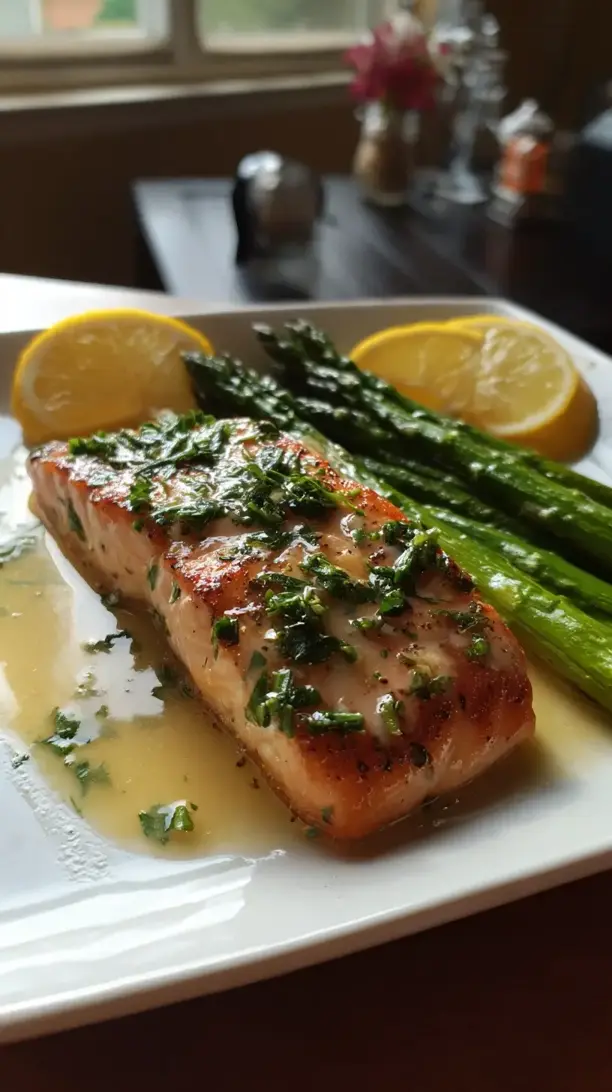
Step 6: Serve Immediately. Place a warm salmon fillet on each plate and spoon the hot lemon-butter sauce generously over the top. The contrast between the crisp, eggy coating, the tender salmon, and the vibrant sauce is what makes this dish so unforgettable. Serve right away while everything is hot and the sauce is at its glossiest.
Storage & Freshness Guide
- Fridge: Store leftover salmon and sauce separately in airtight containers for up to 2 days.
- Freezer: Freezing is not recommended; the sauce may break upon thawing.
- Reviving: Reheat salmon gently in a low oven. For best results, make a fresh batch of sauce.
Serving Suggestions
Complementary Dishes
- Angel Hair Pasta or Orzo — These fine pastas are perfect for soaking up every last drop of that incredible lemon-butter sauce. Toss them with a little sauce before plating for the ultimate experience.
- Garlic Mashed Potatoes — Creamy, savory potatoes create a wonderful base for the salmon and provide a lovely textural contrast to the silky sauce and flaky fish.
- Simple Steamed Asparagus or Green Beans — The bright, fresh flavor and slight crunch of green vegetables balance the richness of the dish beautifully and add a pop of color to the plate.
Drinks
- A Crisp Sauvignon Blanc — The wine’s citrusy and herbal notes mirror the flavors in the sauce, creating a harmonious pairing that cleanses the palate between bites.
- Sparkling Water with Lemon — For a non-alcoholic option, the bubbles and citrus are refreshing and help cut through the richness without competing with the dish’s delicate flavors.
Something Sweet
- Lemon Sorbet — A light, palate-cleansing sorbet continues the citrus theme in a refreshing way, providing a clean and bright finish to the meal.
- Panna Cotta with a Berry Compote — The smooth, creamy, and subtly sweet panna cotta offers a simple, elegant contrast to the tangy and savory main course.
Top Mistakes to Avoid
- Mistake: Overcrowding the pan. If you put too many fillets in the pan at once, the temperature drops dramatically. This causes the salmon to steam and stew in its own juices instead of searing, resulting in a pale, soggy coating instead of a crisp, golden one.
- Mistake: Using bottled lemon juice. The flavor is flat, often bitter, and lacks the bright, fresh acidity that is the star of the sauce. Freshly squeezed lemon juice is absolutely essential for the vibrant flavor profile that defines this dish.
- Mistake: Adding the butter over high heat. If the pan is too hot when you add the butter, the sauce can “break,” meaning the fat will separate from the liquid. You’ll end up with a greasy, oily pool instead of a creamy, emulsified sauce. Low and slow is the way to go.
- Mistake: Overcooking the salmon. Salmon continues to cook from residual heat even after it’s out of the pan. If you cook it until it’s completely opaque all the way through in the pan, it will be dry by the time you serve it. Aim for it to be just cooked through.
Expert Tips
- Tip: Add a splash of cream to your egg wash. A little bit of milk or light cream in the egg mixture creates a richer, more tender coating that browns beautifully and adds a lovely flavor dimension.
- Tip: Use a thermometer for perfect salmon. For foolproof results, cook your salmon until an instant-read thermometer inserted into the thickest part reads 52-54°C (125-130°F). It will carry over to a perfect medium (around 57°C / 135°F) as it rests.
- Tip: Finish with a sprinkle of capers. If you love a briny, salty punch, stir a tablespoon of rinsed capers into the sauce right at the end with the parsley. They add a fantastic complexity that cuts through the butter.
- Tip: Make a double batch of sauce. Honestly, you’re going to want more sauce. It’s that good. Doubling the sauce ingredients (wine, broth, lemon, butter) is a pro-move, especially if you’re serving it with pasta or potatoes on the side.
FAQs
Can I make Salmon Francese ahead of time?
You can prep the components, but it’s best served fresh. You can dredge the salmon and keep it covered in the fridge for an hour or two before cooking. The sauce, however, doesn’t reheat well as the butter can separate. I highly recommend cooking and serving it all immediately for the best texture and flavor. If you must, gently reheat the salmon in a low oven and make a fresh batch of the quick sauce.
What can I use instead of white wine?
No problem! You can replace the white wine with an equal amount of additional chicken broth. To make up for the lost acidity, add an extra tablespoon of fresh lemon juice. It won’t be exactly the same, but it will still be delicious. A splash of vermouth is another great substitute if you have it.
My sauce broke and looks oily. Can I fix it?
Don’t panic! This usually happens if the heat was too high when adding the butter. Remove the pan from the heat entirely. Add an ice cube and whisk vigorously—the shock of the cold can sometimes bring the emulsion back. If that fails, transfer a few tablespoons of the broken sauce to a bowl, whisk in a teaspoon of cold water until it emulsifies, then slowly whisk this mixture back into the main sauce.
Can I use a different type of fish?
Absolutely. The Francese method works wonderfully with other mild, firm-fleshed white fish like cod, haddock, tilapia, or sole. Just adjust the cooking time depending on the thickness of the fillets. Thinner fillets like sole will cook in just a minute or two per side.
Is the egg coating supposed to be like a batter?
Not quite. It’s much thinner than a batter. It’s a simple egg wash that creates a delicate, almost crepe-like coating around the salmon. It shouldn’t be thick or doughy. The goal is a light, golden, slightly crisp layer that protects the fish and adds richness, without overwhelming it.
Salmon Francese
Learn how to make classic Salmon Francese with a light egg coating and a vibrant lemon-butter sauce. This elegant 30-minute meal is surprisingly easy. Get the recipe!
Ingredients
For the salmon and coating:
-
4 salmon fillets (about 150-180 g each, skinless)
-
2 large eggs
-
60 ml whole milk or light cream
-
60 g all-purpose flour
-
1 tsp salt (plus more to taste)
-
1/2 tsp freshly ground black pepper
-
1 tbsp olive oil or neutral oil (for frying)
For the sauce:
-
120 ml dry white wine (like Sauvignon Blanc or Pinot Grigio)
-
240 ml chicken or vegetable broth
-
2 large lemons (juice only, about 80-100 ml)
-
115 g unsalted butter (cut into tablespoons)
-
2 tbsp fresh parsley (finely chopped)
Instructions
-
Prepare Your Dredging Stations. In one shallow dish, whisk together the flour, salt, and pepper. In a second shallow dish, whisk the eggs and milk (or cream) until they are completely smooth and uniform. This is your egg wash. Setting these up in an assembly line makes the process fast and keeps your workspace clean.01
-
Dredge and Coat the Salmon. Take one salmon fillet and dredge it lightly in the flour mixture, shaking off any excess. The goal is a very thin, even dusting—this helps the egg wash adhere. Next, dip the floured fillet into the egg wash, letting the excess drip back into the dish. You want it fully coated but not dripping wet. Place the coated fillet on a clean plate and repeat with the remaining fillets.02
-
Pan-Fry to Golden Perfection. Heat the olive oil in your large skillet over medium-high heat. Once the oil is shimmering hot, carefully add the salmon fillets. You should hear a gentle sizzle. Cook for about 3-4 minutes per side, until the coating is a deep golden brown and the salmon is cooked through. The fish should flake easily with a fork. Don't crowd the pan—cook in batches if necessary. Transfer the cooked salmon to a clean plate and tent loosely with foil to keep warm.03
-
Create the Luscious Lemon Sauce. Reduce the heat to medium. Pour the white wine into the same skillet you used for the salmon. Use a whisk to scrape up all those delicious browned bits from the bottom of the pan—that’s pure flavor! Let the wine simmer and reduce by about half, which will take 1-2 minutes. You’ll notice the sharp alcohol smell will fade, leaving a concentrated wine flavor.04
-
Build and Finish the Sauce. Pour in the chicken broth and lemon juice. Let this mixture simmer for another 2-3 minutes so it reduces slightly and the flavors meld. Now, turn the heat down to low. Start adding the butter, one tablespoon at a time, whisking constantly. The sauce will begin to thicken and become glossy and emulsified. This is called *monter au beurre* and it’s the key to a luxurious, non-greasy sauce. Once all the butter is incorporated, turn off the heat and stir in the chopped parsley. Taste the sauce and adjust seasoning with more salt or pepper if needed.05
-
Serve Immediately. Place a warm salmon fillet on each plate and spoon the hot lemon-butter sauce generously over the top. The contrast between the crisp, eggy coating, the tender salmon, and the vibrant sauce is what makes this dish so unforgettable. Serve right away while everything is hot and the sauce is at its glossiest.06