
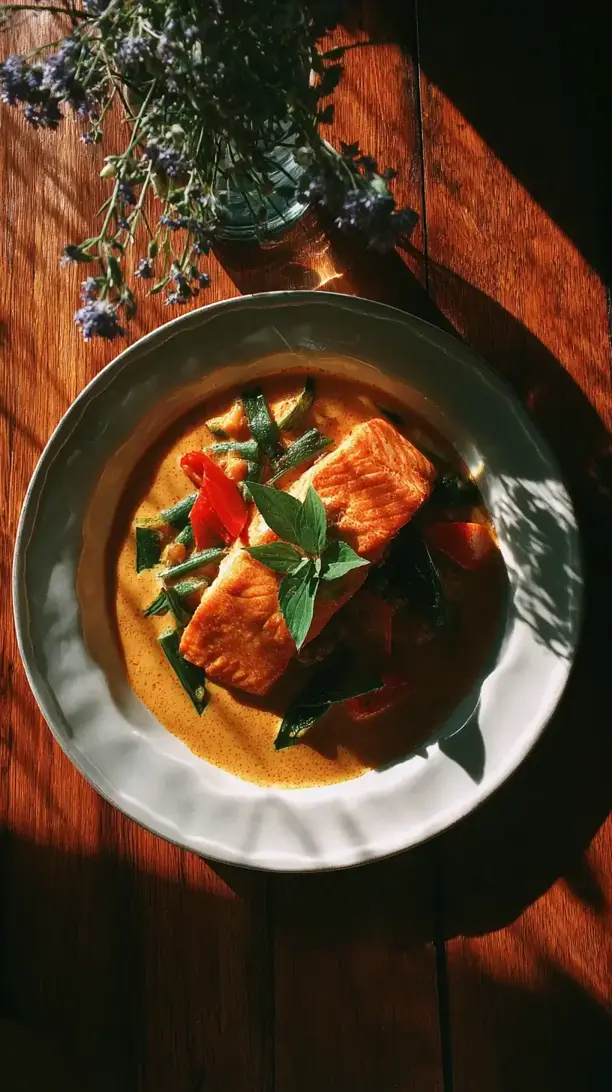
This comforting salmon curry delivers rich, aromatic flavor in just 30 minutes. The tender fish simmers in a creamy coconut sauce with toasted spices and fresh herbs. It’s a simple yet impressive meal perfect for any night.
Why You’ll Love This Salmon Curry
- Fast & forgiving: Ready in 30 minutes with minimal fuss.
- Perfect texture contrast: Flaky salmon meets creamy sauce and fresh herbs.
- Great for fish lovers: Robust curry sauce enhances salmon without overpowering.
- Easily customizable: Adjust heat and add vegetables to your taste.
Ingredients & Tools
- 500 g salmon fillet, skin removed, cut into large chunks
- 1 tbsp coconut or vegetable oil
- 1 large onion, finely chopped
- 3 cloves garlic, minced
- 1 tbsp fresh ginger, grated
- 1-2 green chilies, finely sliced (adjust to taste)
- 2 tbsp red curry paste
- 1 tsp ground turmeric
- 1 tsp ground coriander
- 400 ml can full-fat coconut milk
- 1 tbsp fish sauce
- 1 tbsp lime juice
- 1 tsp brown sugar or palm sugar
- Large handful fresh cilantro, chopped
- Salt, to taste
Tools: A large skillet or wide saucepan with a lid, a wooden spoon, and a microplane or fine grater for the ginger.
Notes: The quality of your curry paste and coconut milk really matters here. A good, aromatic curry paste forms the flavor base, and full-fat coconut milk gives you that luxurious, creamy texture without any separation. Don’t be tempted by the light version for this one—a little richness goes a long way.
Nutrition (per serving)
| Calories: | 485 kcal |
| Protein: | 32 g |
| Fat: | 36 g |
| Carbs: | 10 g |
| Fiber: | 2 g |
Serves: 3-4 | Prep Time: 15 minutes | Cook Time: 15 minutes | Total Time: 30 minutes
Before You Start: Tips & Ingredient Notes
- What kind of salmon is best? I prefer using skinless, boneless salmon fillets for ease. Look for a firm, bright pink fillet with a fresh, ocean-like smell. You can use either Atlantic or Sockeye salmon, but just be mindful that thinner fillets will cook even faster.
- Can I make my own curry paste? Absolutely! While a good store-bought paste works wonderfully, if you have the time, blending fresh lemongrass, galangal, and chilies will give you an incredibly vibrant flavor. It’s a game-changer, but honestly, don’t let it stop you from making this on a weeknight.
- Why full-fat coconut milk? The high fat content is what creates a stable, creamy emulsion for the sauce. Light coconut milk can sometimes make the curry taste a bit watery and might separate more easily when you add the acidic lime juice at the end.
- Don’t skip the fresh aromatics. The fresh ginger, garlic, and chilies are not just for show—they build the foundational layer of flavor. Taking an extra minute to finely chop or grate them makes a noticeable difference in the final dish.
How to Make Salmon Curry
Step 1: Start by prepping all your ingredients. Chop the onion, mince the garlic, grate the ginger, and slice the chilies. Cut the salmon into large, bite-sized chunks, roughly 2-inch pieces. Having everything ready to go makes the cooking process smooth and fast, which is key since the salmon cooks so quickly.
Step 2: Heat the coconut oil in your large skillet or saucepan over medium heat. Add the chopped onion and cook for about 4-5 minutes, until it’s softened and turning translucent. You’ll notice the sweet aroma starting to come through. Now, add the garlic, ginger, and sliced chilies, and cook for another minute until fragrant—be careful not to let the garlic burn.
Step 3: Push the aromatics to one side of the pan and add the red curry paste, turmeric, and coriander to the empty space. Let the spices toast for 30-60 seconds, stirring them in that spot. This little trick wakes up the oils in the spices and deepens their flavor immensely, which is the secret to a really great curry base.
Step 4: Now, pour in about a quarter of the coconut milk—just the thick, creamy part from the top of the can if it has separated. Stir it into the spice paste and let it sizzle and fry for a minute. You should see the oil start to glisten on the surface, and the paste will become very aromatic. This is where you build your flavor foundation.
Step 5: Add the rest of the coconut milk, along with the fish sauce, lime juice, and brown sugar. Give it a good stir and bring the sauce to a gentle simmer. Let it bubble away for 3-4 minutes to let the flavors meld. Taste the sauce at this point and adjust the seasoning with a little salt if needed.
Step 6: Carefully place the salmon chunks into the simmering sauce. Gently spoon some of the sauce over the top of the salmon pieces. Reduce the heat to low, cover the pan with a lid, and let it cook for 5-7 minutes. The salmon is done when it’s opaque and flakes easily with a fork. Do not stir vigorously—you want to keep those beautiful chunks intact.
Step 7: Once the salmon is cooked, turn off the heat. Stir in most of the chopped cilantro, saving a little for garnish. The residual heat will wilt the herbs perfectly. Your curry is now ready to serve! Ladle it into bowls over steamed rice, garnish with the remaining cilantro, and maybe an extra lime wedge on the side.
Storage & Freshness Guide
- Fridge: Store in an airtight container for up to 2 days.
- Freezer: Not recommended—salmon becomes mushy and sauce may separate.
- Reviving: Reheat gently on the stovetop over low heat to avoid overcooking.
Serving Suggestions
Complementary Dishes
- Steamed jasmine rice — The fluffy, slightly sticky grains are the perfect vehicle for soaking up all that delicious, creamy curry sauce.
- Simple cucumber salad — Thinly sliced cucumbers with a splash of rice vinegar and a pinch of salt provide a crisp, refreshing contrast to the rich curry.
- Garlic naan or roti — There’s nothing better than using a piece of warm, buttery bread to scoop up every last bit of sauce from your bowl.
Drinks
- A crisp, dry Riesling — The slight sweetness and high acidity of the wine cut through the richness of the coconut milk and cleanse the palate beautifully.
- A cold, light lager — The effervescence and mild bitterness of a lager are a classic pairing for curry, making each bite taste fresh and new.
- Sparkling water with lime — For a non-alcoholic option, the bubbles and citrus are incredibly refreshing and help balance the spices.
Something Sweet
- Mango sorbet — The bright, fruity, and cold sorbet is a fantastic way to finish the meal, offering a clean and light sweetness.
- Coconut rice pudding — Continuing the coconut theme, a creamy, cool rice pudding feels like a natural and comforting progression.
- Fresh pineapple slices — The natural enzymes in pineapple are great for digestion, and its tropical sweetness is a perfect match for the curry’s flavors.
Top Mistakes to Avoid
- Overcooking the salmon. Salmon continues to cook from residual heat even after you turn off the stove. If you cook it until it’s completely firm in the pan, it will be dry by the time it reaches the table. You want it just opaque and flaky.
- Adding the salmon to boiling sauce. A gentle simmer is what you’re after. A rolling boil will cause the delicate salmon flesh to break apart and become tough. A low, covered simmer is the key to tender fish.
- Stirring the curry after adding the salmon. I’ve messed this up before too… once the salmon is in the pan, avoid stirring. Instead, gently spoon the sauce over the top. Stirring will break the chunks into unattractive, flaky bits throughout the sauce.
- Using light coconut milk. It seems like a healthy swap, but it often leads to a thin, watery sauce that lacks the luxurious mouthfeel this curry is known for. The fat is essential for the texture and for carrying the flavors.
Expert Tips
- Tip: For an extra layer of flavor, marinate the salmon chunks in a tablespoon of the curry paste and a squeeze of lime juice for 15-20 minutes before you start cooking. It gives the fish itself a deeper, more penetrating flavor.
- Tip: If your sauce seems a bit thin after cooking, you can thicken it by simmering it uncovered for a few more minutes after removing the salmon. Alternatively, mix a teaspoon of cornstarch with a tablespoon of cold water and stir it in, letting it simmer for a minute until thickened.
- Tip: To make this ahead, prepare the curry base (the sauce with all aromatics) completely, but stop before adding the salmon. Let it cool and store it. When ready to eat, reheat the base to a simmer and then add the fresh salmon to cook. This prevents the fish from being reheated and becoming rubbery.
- Tip: Don’t have fish sauce? You can substitute with soy sauce or even a light tamari for a similar salty, umami kick. The flavor profile will shift slightly, but it will still be delicious.
FAQs
Can I use a different type of fish?
Absolutely! Firm white fish like cod, halibut, or sea bass work wonderfully. Just adjust the cooking time accordingly, as some white fish may cook even faster than salmon. Shellfish like large prawns are also a fantastic addition—add them in the last 3-4 minutes of cooking until they turn pink and opaque. The key is to choose seafood that won’t fall apart easily in the simmering sauce.
How do I store and reheat leftovers?
Store any leftovers in an airtight container in the refrigerator for up to 2 days. To reheat, do so very gently. The best method is to place it in a saucepan over low heat, stirring occasionally, until just warmed through. Avoid the microwave if you can, as it will aggressively cook the salmon again and make it tough. If you must use one, use a low power setting.
My curry is too spicy! How can I fix it?
Don’t worry, this is an easy fix! The fastest way to tame the heat is to stir in a bit more coconut milk or even a splash of regular cream. A teaspoon of sugar or a squeeze of lime juice can also help balance the spiciness. Serving it with a generous dollop of plain yogurt or sour cream on the side is another great way to cool things down.
Can I freeze salmon curry?
I don’t recommend freezing this particular curry. Salmon has a high fat and water content, and freezing then thawing it will drastically change its texture, making it mushy and watery. The coconut sauce can also sometimes separate upon thawing. This is truly a “cook and eat” dish for the best experience.
What can I add to make it more substantial with vegetables?
You can easily bulk it out! Sturdy vegetables like bell peppers, green beans, or cauliflower florets can be added with the onions to soften. For quick-cooking greens like spinach or kale, simply stir them in during the last 2 minutes of cooking until they wilt. Even some cherry tomatoes, halved and added with the salmon, would be lovely.
Salmon Curry
Make this easy 30-minute Salmon Curry with creamy coconut sauce and aromatic spices. A simple, impressive meal perfect for any night. Get the recipe now!
Ingredients
For the Ingredients
-
500 g salmon fillet (skin removed, cut into large chunks)
-
1 tbsp coconut or vegetable oil
-
1 large onion (finely chopped)
-
3 cloves garlic (minced)
-
1 tbsp fresh ginger (grated)
-
1-2 green chilies (finely sliced (adjust to taste))
-
2 tbsp red curry paste
-
1 tsp ground turmeric
-
1 tsp ground coriander
-
400 ml full-fat coconut milk (can)
-
1 tbsp fish sauce
-
1 tbsp lime juice
-
1 tsp brown sugar or palm sugar
-
1 large handful fresh cilantro (chopped)
-
salt (to taste)
Instructions
-
Start by prepping all your ingredients. Chop the onion, mince the garlic, grate the ginger, and slice the chilies. Cut the salmon into large, bite-sized chunks, roughly 2-inch pieces. Having everything ready to go makes the cooking process smooth and fast, which is key since the salmon cooks so quickly.01
-
Heat the coconut oil in your large skillet or saucepan over medium heat. Add the chopped onion and cook for about 4-5 minutes, until it’s softened and turning translucent. You’ll notice the sweet aroma starting to come through. Now, add the garlic, ginger, and sliced chilies, and cook for another minute until fragrant—be careful not to let the garlic burn.02
-
Push the aromatics to one side of the pan and add the red curry paste, turmeric, and coriander to the empty space. Let the spices toast for 30-60 seconds, stirring them in that spot. This little trick wakes up the oils in the spices and deepens their flavor immensely, which is the secret to a really great curry base.03
-
Now, pour in about a quarter of the coconut milk—just the thick, creamy part from the top of the can if it has separated. Stir it into the spice paste and let it sizzle and fry for a minute. You should see the oil start to glisten on the surface, and the paste will become very aromatic. This is where you build your flavor foundation.04
-
Add the rest of the coconut milk, along with the fish sauce, lime juice, and brown sugar. Give it a good stir and bring the sauce to a gentle simmer. Let it bubble away for 3-4 minutes to let the flavors meld. Taste the sauce at this point and adjust the seasoning with a little salt if needed.05
-
Carefully place the salmon chunks into the simmering sauce. Gently spoon some of the sauce over the top of the salmon pieces. Reduce the heat to low, cover the pan with a lid, and let it cook for 5-7 minutes. The salmon is done when it’s opaque and flakes easily with a fork. Do not stir vigorously—you want to keep those beautiful chunks intact.06
-
Once the salmon is cooked, turn off the heat. Stir in most of the chopped cilantro, saving a little for garnish. The residual heat will wilt the herbs perfectly. Your curry is now ready to serve! Ladle it into bowls over steamed rice, garnish with the remaining cilantro, and maybe an extra lime wedge on the side.07