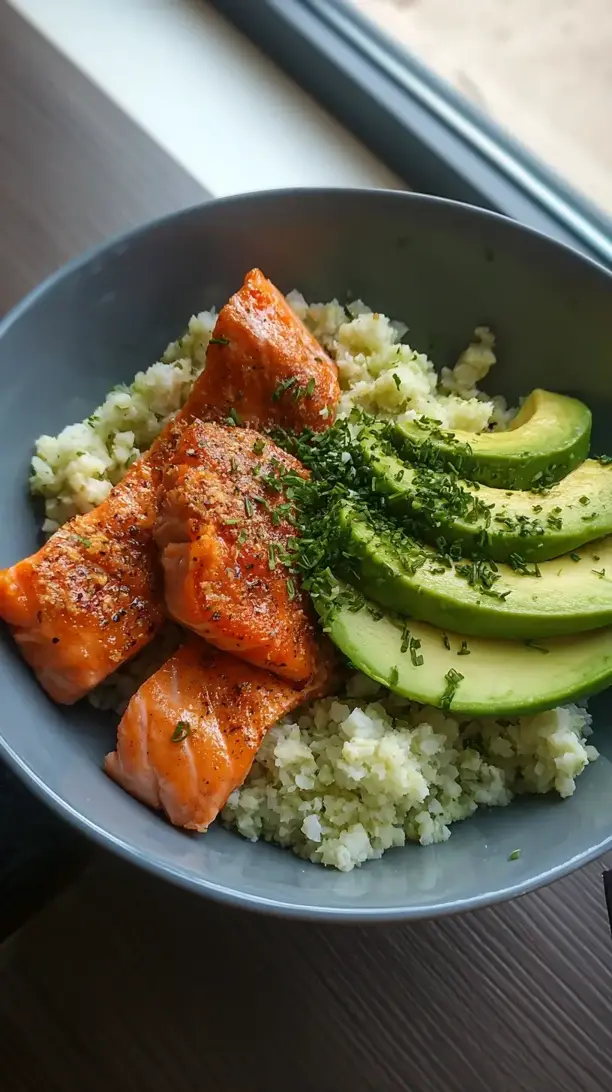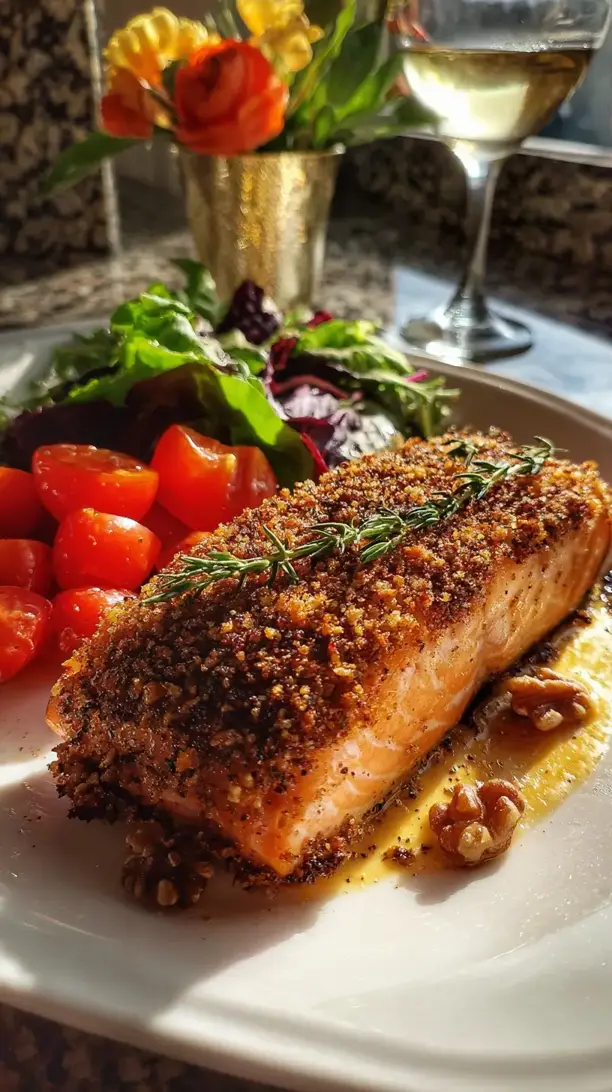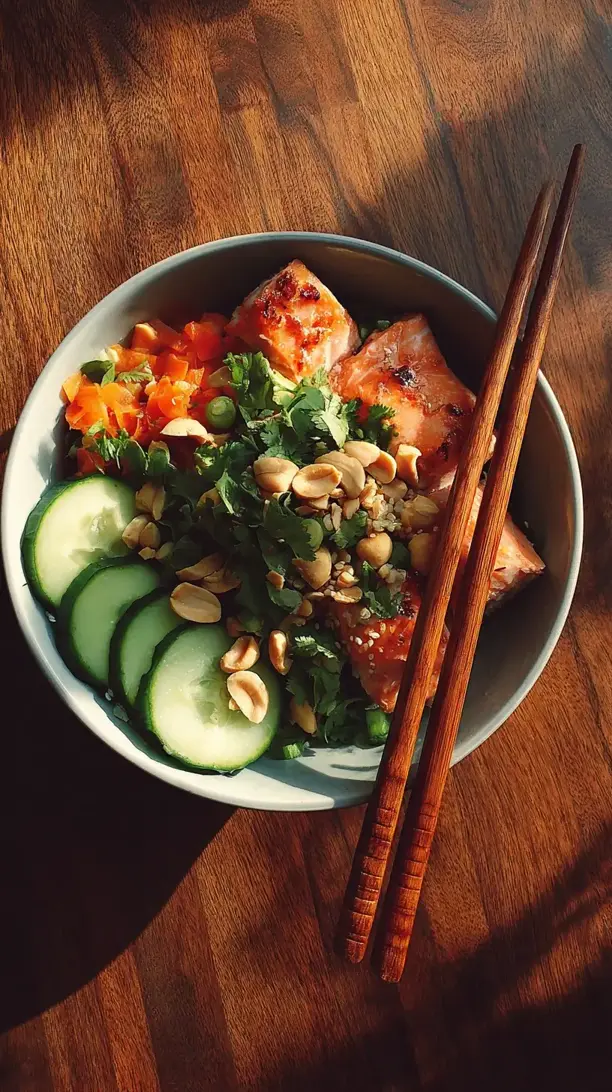

This Salmon Couscous Salad is a nourishing, effortless meal that comes together quickly. Flaky salmon, fluffy couscous, crisp vegetables, and a zesty lemon vinaigrette create a symphony of textures and flavors. It’s perfect for weeknights or casual entertaining.
Why You’ll Love This Salmon Couscous Salad
- Complete meal: Protein, grains, and veggies in one bowl.
- Addictive textures: Tender salmon, fluffy couscous, and crunchy vegetables.
- Versatile & forgiving: Easy ingredient swaps make it your own.
- Meal prep friendly: Flavors improve overnight for great leftovers.
Ingredients & Tools
- 2 salmon fillets (about 150g each), skin on or off
- 1 cup couscous
- 1 ¼ cups vegetable or chicken broth
- 1 large cucumber, diced
- ½ cup pomegranate seeds
- ¼ cup toasted pine nuts
- ½ cup fresh parsley, chopped
- ¼ cup fresh dill, chopped
- 3 tbsp extra virgin olive oil, divided
- 1 lemon, juiced and zested
- 1 tsp honey or maple syrup
- 1 small garlic clove, minced
- Salt and black pepper to taste
Tools: A medium saucepan with a lid, a large mixing bowl, a small bowl for the dressing, a baking sheet, and a sharp knife.
Notes: Using broth for the couscous adds depth; toasting pine nuts enhances their nutty aroma.
Nutrition (per serving)
| Calories: | 485 kcal |
| Protein: | 25 g |
| Fat: | 22 g |
| Carbs: | 45 g |
| Fiber: | 5 g |
Serves: 2 | Prep Time: 15 minutes | Cook Time: 15 minutes | Total Time: 30 minutes
Before You Start: Tips & Ingredient Notes
- What kind of salmon is best? I prefer using skin-on, center-cut fillets for this recipe. The skin gets wonderfully crispy in the oven and adds great texture, but you can easily remove it after cooking if you prefer. Just make sure your fillets are of similar thickness so they cook evenly.
- Can I use a different grain? Absolutely! While couscous is wonderfully quick, you can substitute it with quinoa, bulgur wheat, or even farro. Just adjust the cooking liquid and time according to the package directions for your chosen grain.
- Don’t skip the fresh herbs. I know it can be tempting to use dried, but in a fresh salad like this, the parsley and dill are non-negotiable stars. They provide a vibrant, grassy note that dried herbs simply can’t replicate.
- Zest your lemon before you juice it. This is one of my favorite little kitchen hacks. It’s infinitely easier to zest a whole, firm lemon than a floppy, juiced one. The zest packs a powerful, aromatic citrus punch that really brightens up the dressing.
How to Make Salmon Couscous Salad
Step 1: First, let’s get the salmon ready. Preheat your oven to 200°C (400°F). Pat the salmon fillets completely dry with a paper towel—this is the secret to getting a nice sear and not a steam. Place them on a baking sheet lined with parchment paper. Drizzle with about half a tablespoon of the olive oil and season generously with salt and pepper on both sides. You’ll notice the seasoning will cling better to the dry surface.
Step 2: While the oven heats up, prepare the couscous. Pour the broth into your saucepan and bring it to a boil. Once it’s bubbling, take it off the heat, stir in the couscous, and immediately cover it with a tight-fitting lid. Let it sit for about 10 minutes. The trick is to not peek! Let the steam do its work. After 10 minutes, you’ll uncover it to find perfectly fluffy grains.
Step 3: Now, pop the salmon into the preheated oven. It should take about 12-15 minutes to cook through, depending on the thickness. You’re looking for the flesh to be opaque and flake easily with a fork. If you have a thermometer, the internal temperature should read about 63°C (145°F). Once it’s done, remove it from the oven and let it rest for a few minutes.
Step 4: While the salmon and couscous are doing their thing, it’s dressing time! In your small bowl, combine the remaining olive oil, the juice and zest of your lemon, the minced garlic, and the honey. Whisk it all together until it’s emulsified and looks glossy. Taste it and adjust the seasoning—you might want a pinch more salt or a squeeze more lemon. This is your chance to make it perfect.
Step 5: Time to bring it all together. In your large mixing bowl, fluff the cooked couscous with a fork to separate the grains. Add the diced cucumber, pomegranate seeds, toasted pine nuts, parsley, and dill. Pour about two-thirds of the dressing over everything and toss gently to combine. You want every grain to get a little love.
Step 6: Finally, flake the rested salmon into large, beautiful chunks over the couscous mixture. Drizzle the remaining dressing over the top. Give it one last, very gentle toss—you want to keep those salmon pieces distinct, not mash them into the salad. The final texture should be a wonderful mix of soft, crunchy, and tender.
Storage & Freshness Guide
- Fridge: Store in an airtight container for up to 2 days.
- Freezer: Not recommended; textures become watery.
- Reviving: Refresh with a squeeze of lemon juice before serving.
Serving Suggestions
Complementary Dishes
- A simple arugula salad with a lemon vinaigrette — The peppery arugula provides a sharp, clean contrast that cuts through the richness of the salmon beautifully.
- Grilled asparagus or zucchini — A few smoky, charred vegetables on the side add another layer of flavor and make the meal feel a bit more substantial.
- Warm, crusty bread with olive oil for dipping — Because you’ll definitely want something to sop up every last bit of that delicious lemony dressing left at the bottom of the bowl.
Drinks
- A crisp Sauvignon Blanc — Its citrusy and herbal notes are a perfect match for the lemon and dill in the salad, creating a really harmonious pairing.
- Sparkling water with a slice of lemon and a sprig of mint — A refreshing, non-alcoholic option that cleanses the palate and highlights the fresh ingredients.
- A light, citrusy pale ale — The hoppy bitterness and citrus undertones can stand up to the salmon without overpowering the delicate flavors of the salad.
Something Sweet
- Lemon sorbet — It’s a classic for a reason. The intense, clean lemon flavor is a wonderfully refreshing and light way to end the meal.
- Almond biscotti for dipping — The nutty, crunchy cookies are fantastic with a cup of coffee and provide a satisfying, not-too-sweet finish.
- Fresh berries with a dollop of Greek yogurt — Simple, healthy, and the tart yogurt complements the sweet berries, continuing the theme of bright, fresh flavors.
Top Mistakes to Avoid
- Overcooking the salmon. There’s nothing sadder than dry, chalky fish. Remember, it continues to cook a little after it comes out of the oven, so take it out when it’s just slightly under your desired doneness. I’ve messed this up before too, and it’s a real heartbreaker.
- Not fluffing the couscous. If you just leave it in the pot, it can turn into a dense, gummy block. Taking a fork to it as soon as you take the lid off is crucial for getting those light, separate grains.
- Adding the dressing to hot couscous. If you pour the dressing on while the couscous is piping hot, it can absorb it all and become a bit soggy. Let it cool down for a few minutes first so it stays fluffy.
- Skipping the toasting step for the nuts. Raw pine nuts are fine, but toasted ones are a flavor revelation. That nutty, warm aroma adds a whole new dimension to the salad that you really don’t want to miss.
Expert Tips
- Tip: Let the salmon come to room temperature for 10-15 minutes before cooking. This simple step helps it cook more evenly from edge to center, preventing that unpleasant raw-in-the-middle, overcooked-on-the-outside situation.
- Tip: Make the dressing directly in the bottom of your large serving bowl before you add the other ingredients. This saves you washing an extra dish, and when you toss the salad, the dressing gets distributed from the bottom up, ensuring every bite is perfectly coated.
- Tip: For an extra flavor boost, cook your couscous in the same pan you used for the dressing. After you’ve whisked the dressing, pour the hot broth into that pan. It will deglaze all those lovely, flavorful bits of garlic and lemon, infusing the couscous with even more taste.
- Tip: If you’re making this ahead, keep the components separate. Store the dressed couscous base, the flaked salmon, and any extra dressing in their own containers in the fridge. Combine them just before serving to keep the textures perfect.
FAQs
Can I use canned salmon for this recipe?
You absolutely can, and it’s a great shortcut! Just make sure to get good-quality, boneless and skinless canned salmon. Drain it well and flake it with a fork. The texture will be a bit different—softer and more integrated into the salad—but the flavor will still be fantastic. It’s a brilliant option for a super-quick, pantry-friendly version of this dish.
How long will leftovers keep in the fridge?
Stored in an airtight container, this salad will keep beautifully for up to 2 days. The couscous might absorb a bit more of the dressing and soften slightly, but it’s still delicious. I wouldn’t recommend freezing it, as the texture of the cucumber and the salmon will become quite watery and unappealing upon thawing.
My couscous is clumpy. What did I do wrong?
This usually happens for one of two reasons: either you used too little liquid, or you didn’t fluff it immediately after the resting time. The grains need that initial fluffing with a fork to separate. If it’s already clumped, you can try placing a clean, damp paper towel over the top of the bowl and microwaving it for 30 seconds—the steam can sometimes help loosen it up.
Is there a good substitute for pomegranate seeds?
Of course! The goal is a little sweet, juicy pop. Dried cranberries or cherries, chopped up, would work wonderfully. Fresh orange segments or even some diced apple (tossed in a little lemon juice to prevent browning) can also provide that sweet and juicy contrast you’re looking for.
Can I make this dish vegan?
Definitely! For the salmon, you could substitute pan-fried, seasoned tofu cubes or even some roasted chickpeas for protein. Use maple syrup instead of honey in the dressing, and make sure to use vegetable broth for the couscous. You’ll end up with a vibrant, plant-powered bowl that’s just as satisfying.
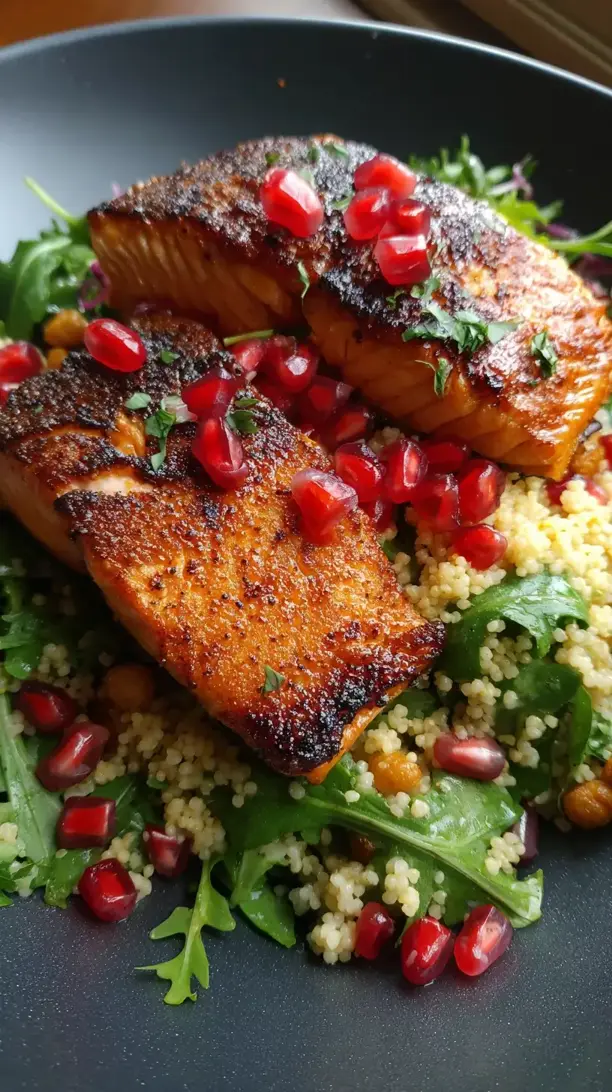
Salmon Couscous Salad
Make this easy Salmon Couscous Salad for a quick, healthy meal. Packed with protein, fresh veggies, and a zesty dressing. Get the simple recipe now!
Ingredients
For the Salad
-
2 salmon fillets (about 150g each, skin on or off)
-
1 cup couscous
-
1 1/4 cups vegetable or chicken broth
-
1 large cucumber (diced)
-
1/2 cup pomegranate seeds
-
1/4 cup toasted pine nuts
-
1/2 cup fresh parsley (chopped)
-
1/4 cup fresh dill (chopped)
For the Dressing
-
3 tbsp extra virgin olive oil (divided)
-
1 lemon (juiced and zested)
-
1 tsp honey or maple syrup
-
1 small garlic clove (minced)
-
Salt and black pepper (to taste)
Instructions
-
First, let's get the salmon ready. Preheat your oven to 200°C (400°F). Pat the salmon fillets completely dry with a paper towel—this is the secret to getting a nice sear and not a steam. Place them on a baking sheet lined with parchment paper. Drizzle with about half a tablespoon of the olive oil and season generously with salt and pepper on both sides. You’ll notice the seasoning will cling better to the dry surface.01
-
While the oven heats up, prepare the couscous. Pour the broth into your saucepan and bring it to a boil. Once it’s bubbling, take it off the heat, stir in the couscous, and immediately cover it with a tight-fitting lid. Let it sit for about 10 minutes. The trick is to not peek! Let the steam do its work. After 10 minutes, you’ll uncover it to find perfectly fluffy grains.02
-
Now, pop the salmon into the preheated oven. It should take about 12-15 minutes to cook through, depending on the thickness. You’re looking for the flesh to be opaque and flake easily with a fork. If you have a thermometer, the internal temperature should read about 63°C (145°F). Once it's done, remove it from the oven and let it rest for a few minutes.03
-
While the salmon and couscous are doing their thing, it’s dressing time! In your small bowl, combine the remaining olive oil, the juice and zest of your lemon, the minced garlic, and the honey. Whisk it all together until it’s emulsified and looks glossy. Taste it and adjust the seasoning—you might want a pinch more salt or a squeeze more lemon. This is your chance to make it perfect.04
-
Time to bring it all together. In your large mixing bowl, fluff the cooked couscous with a fork to separate the grains. Add the diced cucumber, pomegranate seeds, toasted pine nuts, parsley, and dill. Pour about two-thirds of the dressing over everything and toss gently to combine. You want every grain to get a little love.05
-
Finally, flake the rested salmon into large, beautiful chunks over the couscous mixture. Drizzle the remaining dressing over the top. Give it one last, very gentle toss—you want to keep those salmon pieces distinct, not mash them into the salad. The final texture should be a wonderful mix of soft, crunchy, and tender.06