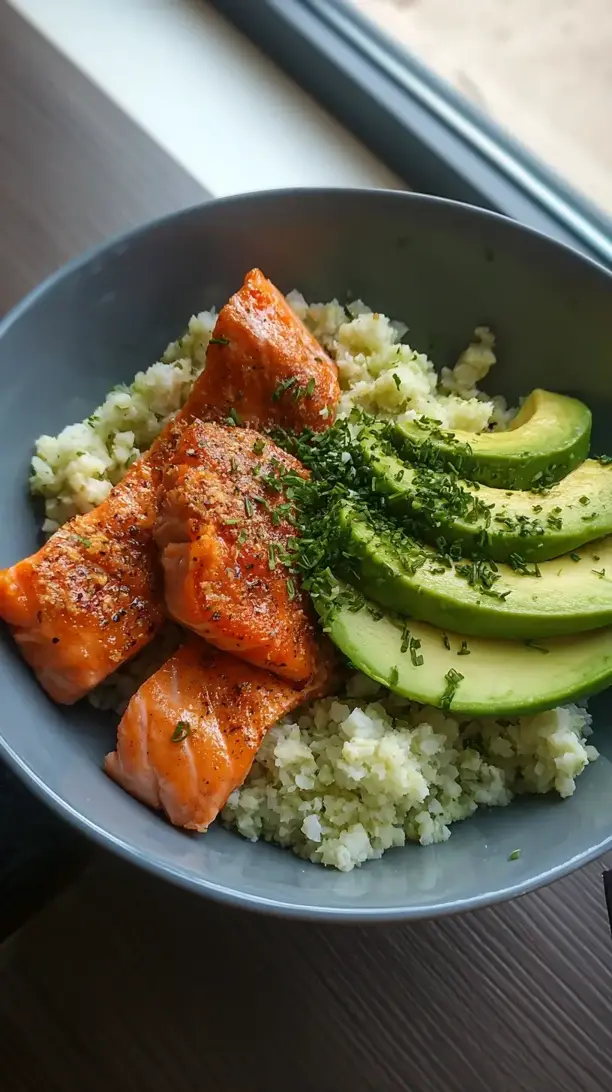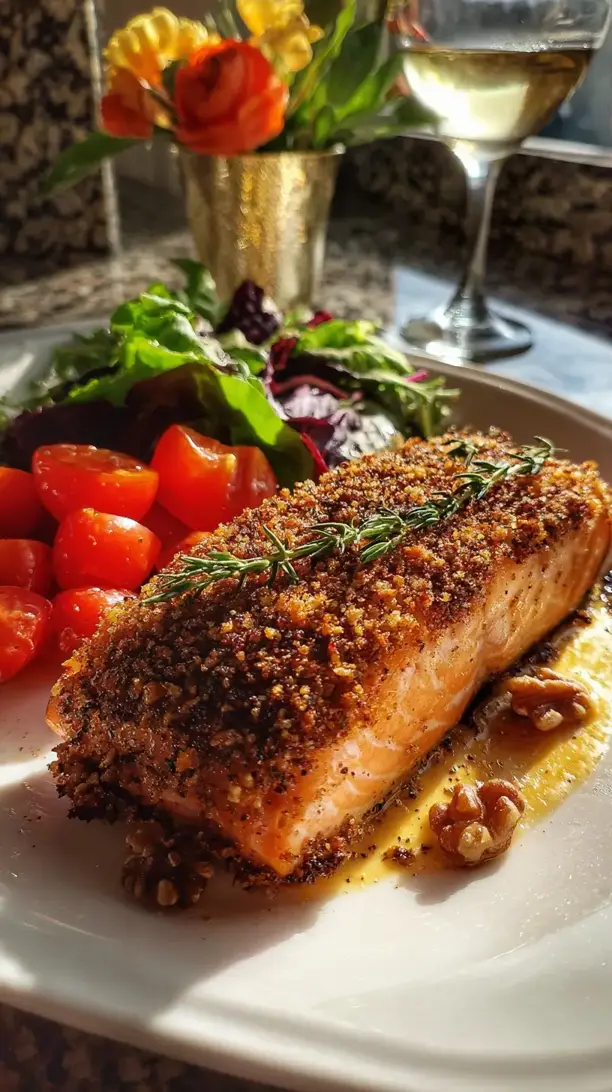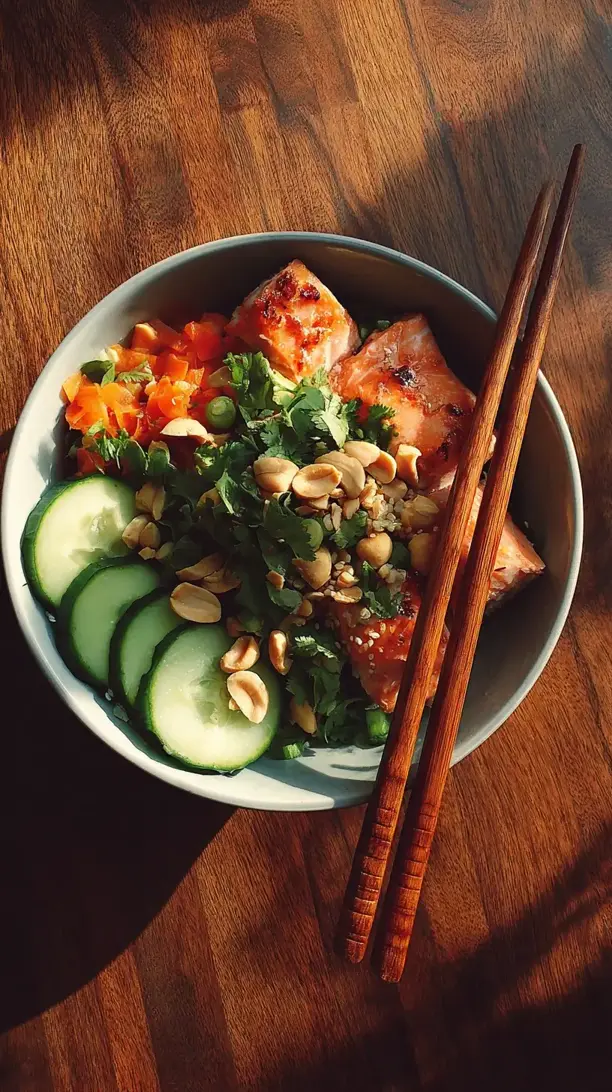

This Salmon Buddha Bowl is a vibrant, complete meal featuring tender salmon, fluffy quinoa, crisp vegetables, and a zesty lemon-tahini dressing. It’s a nourishing and flexible dish perfect for a quick lunch or dinner. You’ll love how easy it is to customize this beautiful bowl.
Why You’ll Love This Salmon Buddha Bowl
- Complete meal: Lean protein, complex carbs, healthy fats, and veggies in one bowl.
- Incredible textures: Crisp veggies, creamy avocado, fluffy quinoa, and seared salmon.
- Weeknight hero: Ready in about 30 minutes with make-ahead components.
- Game-changer dressing: Creamy, tangy lemon-tahini sauce ties everything together.
Ingredients & Tools
- 2 salmon fillets (about 150 g each), skin on or off
- 1 tbsp olive oil
- 1 tsp smoked paprika
- 1/2 tsp garlic powder
- 1 cup uncooked quinoa
- 2 cups mixed greens
- 1 large avocado, sliced
- 1 cucumber, chopped
- 1 cup cherry tomatoes, halved
- 1/2 cup shredded red cabbage
- 1/4 cup chopped fresh cilantro or parsley
- For the Lemon-Tahini Dressing:
- 1/4 cup tahini
- 3 tbsp fresh lemon juice
- 2 tbsp water
- 1 small garlic clove, minced
- 1/2 tsp maple syrup
- Salt and black pepper to taste
Tools: Medium saucepan, small mixing bowl or jar, baking sheet, non-stick skillet
Notes: Don’t stress if you’re missing an ingredient—this recipe is wonderfully adaptable. Use the freshest vegetables and a good quality tahini.
Nutrition (per serving)
| Calories: | 620 kcal |
| Protein: | 32 g |
| Fat: | 32 g |
| Carbs: | 52 g |
| Fiber: | 12 g |
Serves: 2 | Prep Time: 20 minutes | Cook Time: 20 minutes | Total Time: 40 minutes
Before You Start: Tips & Ingredient Notes
- Pat that salmon dry. This is the single most important step for getting a beautiful, crispy sear on your salmon. Use a paper towel to thoroughly dry the fillets before you season them. Any surface moisture will steam the fish instead of searing it.
- Don’t skip toasting the quinoa. Before adding water to your saucepan, toast the dry quinoa for a few minutes until it becomes fragrant. This simple trick deepens its flavor significantly, taking it from bland to wonderfully nutty.
- Your tahini might be stubborn. If you find your tahini dressing is too thick, don’t panic. Just add more water, one tablespoon at a time, whisking vigorously until it reaches a smooth, pourable consistency. It will happen!
- Embrace the veggie swap. No red cabbage? Use shredded carrots. Not a fan of cucumber? Try roasted sweet potato cubes. This bowl is a canvas for your favorite vegetables, so feel free to get creative with what you have on hand.
How to Make Salmon Buddha Bowl
Step 1: Cook the Quinoa. Start by rinsing one cup of quinoa under cold water in a fine-mesh strainer—this removes its natural bitter coating. Add it to a medium saucepan over medium heat and toast it for 2-3 minutes, stirring often, until it smells nutty. Then, add two cups of water and a pinch of salt. Bring to a boil, then reduce the heat to low, cover, and simmer for about 15 minutes. You’ll know it’s done when the grains are tender and the little white tails (the germ) have spiraled out. Remove from the heat and let it sit, covered, for 5-10 minutes before fluffing with a fork.
Step 2: Prepare the Salmon. While the quinoa cooks, pat your salmon fillets completely dry with paper towels. In a small bowl, mix the olive oil, smoked paprika, garlic powder, and a generous pinch of salt and pepper. Rub this mixture evenly over all sides of the salmon fillets. Let them sit for a few minutes to marinate while you prep your vegetables.
Step 3: Whisk the Dressing. In a small bowl or a jar with a lid, combine the tahini, fresh lemon juice, minced garlic, maple syrup, and a pinch of salt and pepper. Whisk or shake vigorously. The mixture will initially look thick and almost separated—that’s normal! Slowly add the water, continuing to whisk, until the dressing becomes smooth and creamy. Taste and adjust seasoning, adding more lemon for tang or more maple syrup for balance. Set aside.
Step 4: Cook the Salmon. Heat a non-stick skillet over medium-high heat. You don’t need extra oil if your salmon was well-coated. Once the pan is hot, place the salmon fillets in, presentation-side down. Cook for 4-6 minutes, without moving them, until a golden-brown crust forms. Carefully flip and cook for another 2-4 minutes, depending on the thickness of your fillets, until the salmon is cooked through and flakes easily with a fork.
Step 5: Chop the Vegetables. As the salmon cooks, this is your moment to assemble your veggie lineup. Chop the cucumber, halve the cherry tomatoes, shred the cabbage if you haven’t bought it pre-shredded, and slice the avocado. Having everything prepped and ready makes the final assembly feel like a fun, fast-paced cooking show.
Step 6: Assemble Your Bowls. Now for the artistic part! Divide the fluffy quinoa between two bowls as your base. Top with a handful of mixed greens. Then, artfully arrange your vegetables and avocado around the bowl. Place the beautifully seared salmon fillet right in the center. Drizzle generously with that creamy lemon-tahini dressing and finish with a sprinkle of fresh cilantro or parsley.
Storage & Freshness Guide
- Fridge: Store components separately in airtight containers for up to 3 days (except avocado).
- Freezer: Cooked salmon and quinoa freeze well for up to 1 month; thaw in fridge before using.
- Reviving: Gently reheat salmon in a skillet; refresh quinoa with a splash of water when reheating.
Serving Suggestions
Complementary Dishes
- A simple miso soup — Its savory, umami depth provides a lovely warm contrast to the fresh, cool elements in the bowl, making the meal feel more complete and comforting.
- Garlic sautéed greens — A side of kale or spinach quickly wilted with garlic adds another layer of warm, savory flavor and boosts the nutrient profile even further.
- Crispy roasted chickpeas — Sprinkling a handful on top adds a wonderful crunch and a boost of plant-based protein that plays beautifully with the other textures.
Drinks
- Iced green tea with mint — The clean, slightly bitter notes of green tea are incredibly refreshing and help cleanse the palate between bites of the rich salmon and creamy dressing.
- A crisp Sauvignon Blanc — Its bright acidity and citrus notes mirror the lemon in the dressing, creating a harmonious pairing that elevates the entire dining experience.
- Sparkling water with lemon — Sometimes simplicity is best. The bubbles and citrus cut through the richness of the meal without adding any extra calories or complexity.
Something Sweet
- Dark chocolate and orange segments — A few squares of high-quality dark chocolate paired with sweet, juicy orange segments offer a light, elegant, and antioxidant-rich finish.
- A small bowl of mixed berries — Their natural sweetness and slight tartness are the perfect palate-cleanser after a savory meal, and they require zero extra preparation.
- Lemon sorbet — It continues the citrus theme from the dressing in a frozen, refreshing form, providing a clean and zesty end to your meal.
Top Mistakes to Avoid
- Mistake: Overcooking the salmon. This is the quickest way to end up with dry, chalky fish. Salmon continues to cook after you remove it from the pan, so it’s best to take it off the heat when it’s still slightly translucent in the very center. I’ve messed this up before too, and it’s a sad sight.
- Mistake: Underseasoning the components. Each layer of the bowl—the quinoa, the salmon, and even the vegetables—needs a little love in the form of salt and pepper. Seasoning as you go ensures every single bite is packed with flavor.
- Mistake: Dressing the bowl too early. If you pour the dressing on and then let the bowl sit, your crisp greens will wilt and the entire texture will become soggy. Always add the dressing right before you’re ready to eat for the best texture.
- Mistake: Cutting the avocado ahead of time. Avocado browns quickly once exposed to air. Slice it at the very last possible moment to keep that beautiful, vibrant green color in your bowl.
Expert Tips
- Tip: Let the salmon come to room temperature. Taking the salmon out of the fridge 15-20 minutes before cooking helps it cook more evenly, preventing an overcooked outside and a cold, undercooked center.
- Tip: Massage your kale. If you’re using kale instead of mixed greens, chop it and give it a minute-long massage with a tiny bit of olive oil and lemon juice. This breaks down the tough fibers, making it tender and much more enjoyable to eat.
- Tip: Make a double batch of dressing. This lemon-tahini sauce is so good you’ll want to have extra. It keeps well in the fridge for up to a week and is fantastic on salads, grain bowls, or as a veggie dip.
- Tip: Use the quinoa cooking time wisely. The 15 minutes the quinoa simmers is the perfect window to mix the dressing, chop all your veggies, and get the salmon ready. This kind of parallel prep is the secret to a quick and stress-free cooking process.
FAQs
Can I use a different grain instead of quinoa?
Absolutely! Quinoa is great for its protein content, but this bowl is wonderfully versatile. You can easily swap it for an equal amount of cooked brown rice, farro, or even couscous. The key is to use a grain that you enjoy and that will provide a fluffy base to soak up the delicious dressing. Just adjust the cooking time and liquid according to the grain’s package instructions.
How do I store leftovers?
It’s best to store the components separately to maintain texture. Keep the cooked salmon, quinoa, and chopped veggies (except avocado) in airtight containers in the fridge for up to 3 days. The dressing can be stored in a jar for up to a week. Assemble your bowl fresh when you’re ready to eat, adding a fresh slice of avocado each time. The salmon can be eaten cold or gently reheated in a skillet.
My tahini dressing is bitter. What did I do wrong?
This is a common issue and is usually due to the tahini itself, not your technique. Some brands of tahini can be naturally more bitter than others. To balance it out, try adding a touch more maple syrup or a pinch of salt. The creaminess of the avocado in the bowl will also help mellow out any sharpness when you eat it.
Can I make this bowl vegan?
Of course! For a vegan version, simply replace the salmon with a plant-based protein. Crispy baked tofu, seasoned chickpeas, or even a large portobello mushroom cap would be fantastic substitutes. The rest of the bowl is already plant-based, and the lemon-tahini dressing is naturally vegan, so it’s a very easy swap.
Is it necessary to use smoked paprika on the salmon?
It’s not strictly necessary, but it’s highly recommended! Smoked paprika adds a subtle, smoky depth that complements the richness of the salmon beautifully. If you don’t have it, you can use regular sweet paprika, but you’ll miss that smoky note. A little smoked paprika really goes a long way in elevating the flavor profile of the entire dish.

Salmon Buddha Bowl
Make a delicious and healthy Salmon Buddha Bowl with quinoa, fresh veggies, and zesty lemon-tahini dressing. Ready in 30 minutes! Get the easy recipe now.
Ingredients
For the main ingredients:
-
2 salmon fillets (about 150 g each, skin on or off)
-
1 tbsp olive oil
-
1 tsp smoked paprika
-
1/2 tsp garlic powder
-
1 cup uncooked quinoa
-
2 cups mixed greens
-
1 large avocado (sliced)
-
1 cucumber (chopped)
-
1 cup cherry tomatoes (halved)
-
1/2 cup shredded red cabbage
-
1/4 cup chopped fresh cilantro or parsley
For the Lemon-Tahini Dressing:
-
1/4 cup tahini
-
3 tbsp fresh lemon juice
-
2 tbsp water
-
1 small garlic clove (minced)
-
1/2 tsp maple syrup
-
Salt and black pepper (to taste)
Instructions
-
Start by rinsing one cup of quinoa under cold water in a fine-mesh strainer—this removes its natural bitter coating. Add it to a medium saucepan over medium heat and toast it for 2-3 minutes, stirring often, until it smells nutty. Then, add two cups of water and a pinch of salt. Bring to a boil, then reduce the heat to low, cover, and simmer for about 15 minutes. You'll know it's done when the grains are tender and the little white tails (the germ) have spiraled out. Remove from the heat and let it sit, covered, for 5-10 minutes before fluffing with a fork.01
-
While the quinoa cooks, pat your salmon fillets completely dry with paper towels. In a small bowl, mix the olive oil, smoked paprika, garlic powder, and a generous pinch of salt and pepper. Rub this mixture evenly over all sides of the salmon fillets. Let them sit for a few minutes to marinate while you prep your vegetables.02
-
In a small bowl or a jar with a lid, combine the tahini, fresh lemon juice, minced garlic, maple syrup, and a pinch of salt and pepper. Whisk or shake vigorously. The mixture will initially look thick and almost separated—that's normal! Slowly add the water, continuing to whisk, until the dressing becomes smooth and creamy. Taste and adjust seasoning, adding more lemon for tang or more maple syrup for balance. Set aside.03
-
Heat a non-stick skillet over medium-high heat. You don't need extra oil if your salmon was well-coated. Once the pan is hot, place the salmon fillets in, presentation-side down. Cook for 4-6 minutes, without moving them, until a golden-brown crust forms. Carefully flip and cook for another 2-4 minutes, depending on the thickness of your fillets, until the salmon is cooked through and flakes easily with a fork.04
-
As the salmon cooks, this is your moment to assemble your veggie lineup. Chop the cucumber, halve the cherry tomatoes, shred the cabbage if you haven't bought it pre-shredded, and slice the avocado. Having everything prepped and ready makes the final assembly feel like a fun, fast-paced cooking show.05
-
Now for the artistic part! Divide the fluffy quinoa between two bowls as your base. Top with a handful of mixed greens. Then, artfully arrange your vegetables and avocado around the bowl. Place the beautifully seared salmon fillet right in the center. Drizzle generously with that creamy lemon-tahini dressing and finish with a sprinkle of fresh cilantro or parsley.06