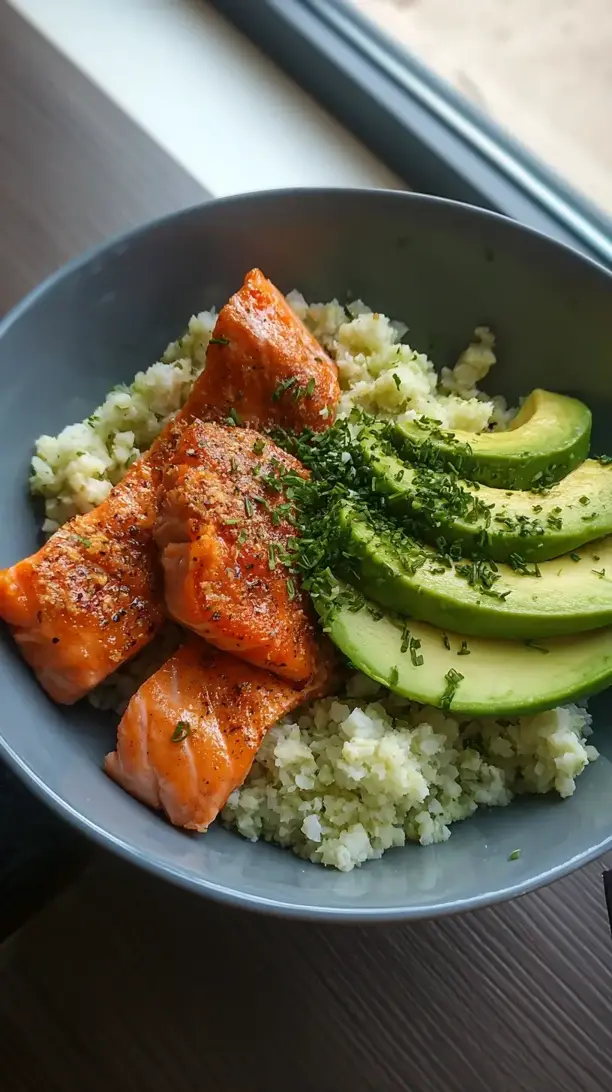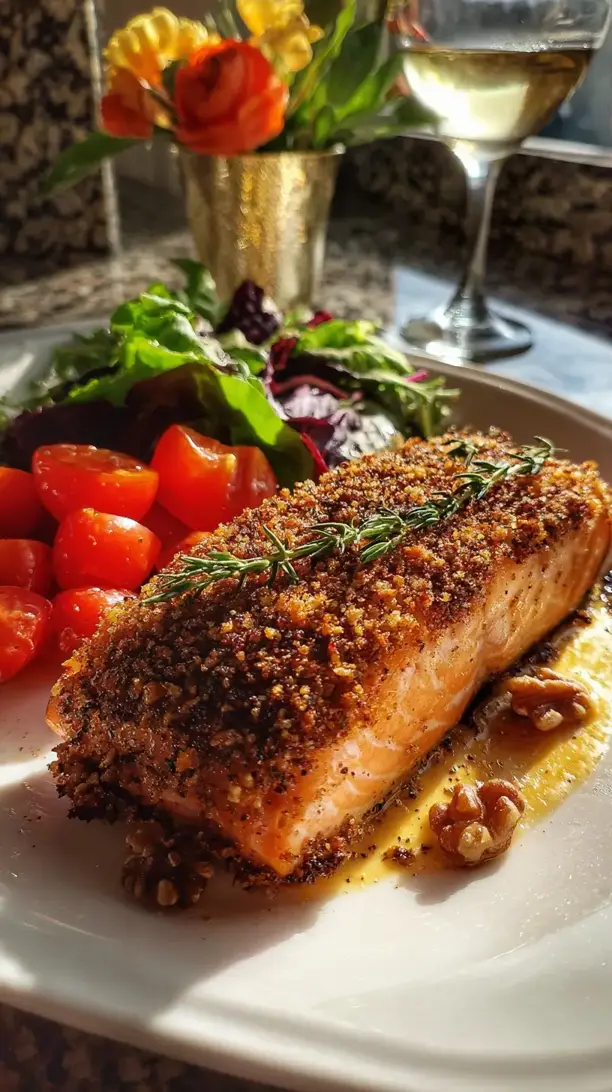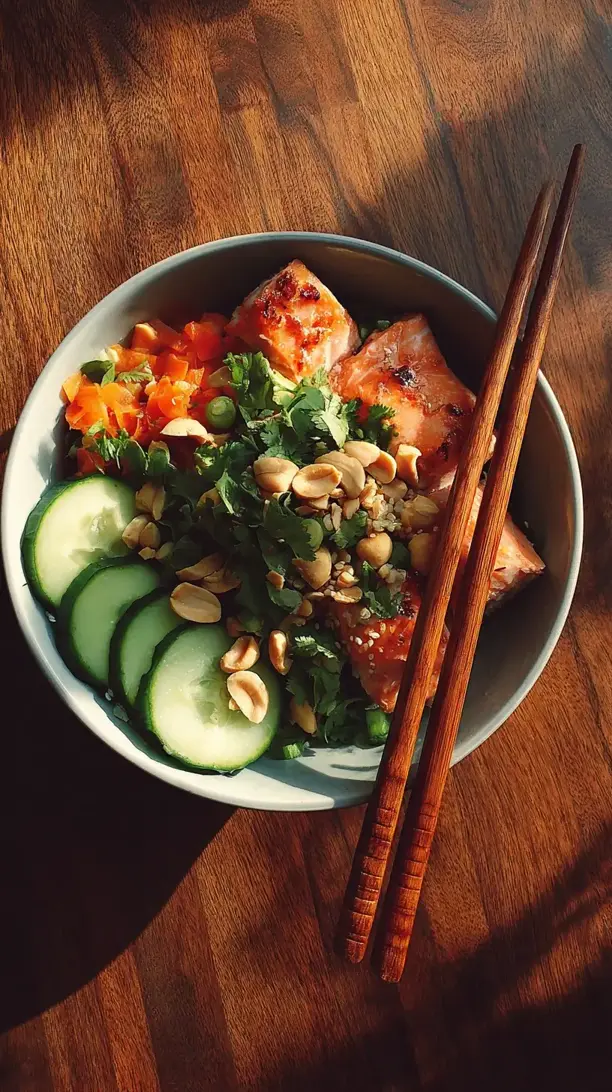

This Salmon and Edamame Bowl is a vibrant, balanced meal that feels fancy but comes together easily. It combines tender salmon, sweet edamame, and a zesty sesame-ginger dressing for a nourishing and delicious lunch or dinner. You can prep components ahead for busy weeks, making this salmon and edamame bowl endlessly adaptable.
Why You’ll Love This Salmon and Edamame Bowl
- Complete meal: Lean protein, healthy fats, carbs, and veggies in one bowl.
- Satisfying textures: Flaky salmon, popping edamame, crunchy veggies, and chewy rice.
- Game-changer dressing: Tangy, sweet, umami sesame-ginger ties everything together.
- Wonderfully versatile: Swap grains or veggies to make it your own.
Ingredients & Tools
- 2 salmon fillets (about 150 g each), skin-on or skinless
- 1 cup cooked brown rice or quinoa, cooled
- 1 cup shelled edamame, thawed if frozen
- 1 small cucumber, thinly sliced or spiralized
- 1 large carrot, julienned or grated
- 2 tbsp toasted sesame oil, divided
- 1 tbsp soy sauce or tamari
- 1 tsp fresh ginger, grated
- 1 small clove garlic, minced
- 1 tbsp rice vinegar
- 1 tsp maple syrup or honey
- 1 tbsp sesame seeds, for garnish
- 2 spring onions, thinly sliced, for garnish
Tools: A medium skillet or non-stick pan, a small bowl for whisking the dressing, a sharp knife, and a cutting board.
Notes: Using fresh ginger and garlic makes a difference. Don’t skip the toasted sesame oil—its nutty aroma is signature.
Nutrition (per serving)
| Calories: | 520 kcal |
| Protein: | 35 g |
| Fat: | 22 g |
| Carbs: | 45 g |
| Fiber: | 8 g |
Serves: 2 | Prep Time: 15 minutes | Cook Time: 12 minutes | Total Time: 27 minutes
Before You Start: Tips & Ingredient Notes
- Pat your salmon dry. This is the secret to getting a beautifully crisp exterior instead of a steamed, pale fillet. Use a paper towel to thoroughly dry the surface before it hits the pan.
- Don’t skip toasting the sesame seeds. If you have raw sesame seeds, give them a quick toast in a dry pan for a minute or two until fragrant. It amplifies their nutty flavor so much and adds a wonderful depth.
- Let your rice cool completely. If you’re using freshly cooked rice, spread it out on a tray to cool down before building your bowls. This prevents it from getting mushy and steaming the other fresh veggies.
- Taste your dressing and adjust. Everyone’s palate is different! Dip a piece of cucumber in the dressing and see if you’d like it a little tangier (add more vinegar), sweeter (a touch more maple syrup), or saltier (another dash of soy sauce).
How to Make Salmon and Edamame Bowl
Step 1: First, let’s make our superstar dressing. In a small bowl, combine 1 tablespoon of the toasted sesame oil, soy sauce, grated ginger, minced garlic, rice vinegar, and maple syrup. Whisk it all together until it’s emulsified and well-combined. You’ll notice the aroma is instantly bright and inviting. Set this aside while you prepare the other components.
Step 2: Now, prepare your salmon. Pat the fillets completely dry with paper towels—this is crucial for that perfect sear. Season both sides generously with a pinch of salt and pepper. Heat the remaining tablespoon of toasted sesame oil in a skillet over medium-high heat. Once the oil is shimmering, carefully place the salmon in the pan, skin-side down if it has skin.
Step 3: Cook the salmon for about 4-6 minutes on the first side, without moving it, until the skin is super crispy and the flesh is cooked about two-thirds of the way up the side. You should see a beautiful golden-brown color. Then, gently flip the fillets and cook for another 2-4 minutes, until the salmon is cooked to your liking and flakes easily with a fork.
Step 4: While the salmon is cooking, assemble your bowls. Divide the cooled brown rice between two bowls. Arrange the edamame, sliced cucumber, and julienned carrot over the rice in little piles—it makes for a really pretty presentation. You can get creative here and add any other quick-pickled veggies or avocado slices you like.
Step 5: Once the salmon is done, transfer it to a clean plate and let it rest for a minute. Then, use a fork to flake it into large, beautiful chunks. You can remove the skin if you prefer, but I often leave it on for that extra crispy texture. Place the flaked salmon on top of your assembled veggie and rice base.
Step 6: The final touches! Drizzle that incredible sesame-ginger dressing generously over everything in the bowl. Then, garnish with the sliced spring onions and a hearty sprinkle of toasted sesame seeds. The trick is to make sure every component gets a little love from the dressing.
Storage & Freshness Guide
- Fridge: Store components separately in airtight containers for up to 2 days.
- Freezer: Freeze cooked salmon and rice for up to 1 month; thaw in fridge before reheating.
- Reviving: Briefly reheat salmon in a skillet; assemble bowls fresh with cool ingredients.
Serving Suggestions
Complementary Dishes
- A simple miso soup — its savory, umami warmth is the perfect starter to complement the fresh, bright flavors of the bowl without overshadowing them.
- Quick-pickled radishes or red onions — their sharp, acidic bite cuts through the richness of the salmon and adds another layer of vibrant color and crunch.
- Seaweed salad — it brings a briny, oceanic flavor that pairs naturally with the salmon and adds a wonderfully slippery, interesting texture to the mix.
Drinks
- Iced green tea with lemon — the clean, slightly bitter notes of the tea are incredibly refreshing and help cleanse the palate between bites of the rich salmon.
- A crisp, dry Riesling — its slight sweetness and high acidity balance the savory and gingery notes in the dressing beautifully, making for a really elegant pairing.
- Sparkling water with a lime wedge — sometimes, you just need the simple bubbles to lift all the flavors and make the meal feel even more refreshing and light.
Something Sweet
- Matcha ice cream — the earthy, slightly bitter notes of matcha are a fantastic follow-up to the savory, umami-forward bowl, and it feels like a real treat.
- A few pieces of dark chocolate-covered ginger — this continues the ginger theme in the most delightful way, offering a little spicy-sweet bite to end the meal.
- Fresh mango slices — their juicy, tropical sweetness is a simple, healthy, and incredibly vibrant way to finish, cleansing the palate perfectly.
Top Mistakes to Avoid
- Overcooking the salmon. Salmon continues to cook after you take it off the heat, so it’s better to pull it out when it’s still a touch translucent in the very center. I’ve messed this up before too, and dry salmon is such a disappointment.
- Using warm rice. This will wilt your fresh, crunchy vegetables and make the whole bowl steam, resulting in a soggy, less-appealing texture. Always let your grain base cool to room temperature first.
- Not tasting the dressing as you go. The balance of salty, sweet, and sour is personal. If you just follow the recipe without adjusting, you might miss out on your perfect flavor profile.
- Adding the dressing too early. If you dress the entire bowl and then let it sit, the rice will absorb all the liquid and the veggies can lose their crunch. It’s best to dress it right before you eat.
Expert Tips
- Tip: For an extra flavor boost, marinate the salmon. Let the fillets sit in a tablespoon of the dressing for 15-20 minutes before cooking. It infuses the fish with the ginger and garlic notes from the inside out.
- Tip: Make a big batch of the dressing and keep it in a jar in the fridge for up to a week. It’s fantastic on salads, noodle dishes, or even as a marinade for chicken or tofu.
- Tip: If you want a creamier dressing, add a tablespoon of tahini. It will make the sauce richer and help it cling to every ingredient in the bowl more effectively.
- Tip: To get perfect, restaurant-style flakes, let the cooked salmon rest for a few minutes before breaking it apart. This allows the juices to redistribute, so they stay in the fish and not on your cutting board.
FAQs
Can I use frozen salmon?
Absolutely! Just make sure to thaw it completely in the refrigerator overnight first. Pat it extra dry with paper towels, as frozen fish tends to release more water. Cooking it from frozen isn’t recommended for this recipe, as the exterior will burn before the inside is cooked through.
How can I make this bowl ahead of time?
You can prep all the components separately! Cook the rice, mix the dressing, and chop the veggies. Store them in airtight containers in the fridge. Keep the dressing separate and only cook the salmon right before you’re ready to eat and assemble. This keeps everything fresh and prevents sogginess.
What’s a good substitute for edamame?
Shelled peas are a great substitute—they have a similar sweet flavor and pop of color. You could also use blanched green beans cut into small pieces, or even chickpeas for a different texture and protein source. It’s a very forgiving recipe.
Is the salmon skin edible?
Yes, and it’s delicious when cooked until crispy! It’s full of healthy fats and has a wonderful texture. If you’re not a fan, you can easily remove it after cooking or buy skinless fillets to begin with. The choice is entirely yours.
Can I use a different grain?
Of course! Quinoa, farro, or even cauliflower rice would work wonderfully. Just adjust the cooking times for whatever grain you choose. The goal is to have a neutral, fluffy base that soaks up the dressing and supports all the other ingredients.

Salmon And Edamame Bowl
Make a healthy and delicious Salmon and Edamame Bowl with our easy recipe. Ready in under 30 minutes for a perfect weeknight meal. Get the full recipe here!
Ingredients
For the Bowl
-
2 salmon fillets (about 150 g each, skin-on or skinless)
-
1 cup cooked brown rice or quinoa (cooled)
-
1 cup shelled edamame (thawed if frozen)
-
1 small cucumber (thinly sliced or spiralized)
-
1 large carrot (julienned or grated)
-
2 tbsp toasted sesame oil (divided)
-
1 tbsp soy sauce or tamari
-
1 tsp fresh ginger (grated)
-
1 small clove garlic (minced)
-
1 tbsp rice vinegar
-
1 tsp maple syrup or honey
-
1 tbsp sesame seeds (for garnish)
-
2 spring onions (thinly sliced, for garnish)
Instructions
-
First, let’s make our superstar dressing. In a small bowl, combine 1 tablespoon of the toasted sesame oil, soy sauce, grated ginger, minced garlic, rice vinegar, and maple syrup. Whisk it all together until it’s emulsified and well-combined. You’ll notice the aroma is instantly bright and inviting. Set this aside while you prepare the other components.01
-
Now, prepare your salmon. Pat the fillets completely dry with paper towels—this is crucial for that perfect sear. Season both sides generously with a pinch of salt and pepper. Heat the remaining tablespoon of toasted sesame oil in a skillet over medium-high heat. Once the oil is shimmering, carefully place the salmon in the pan, skin-side down if it has skin.02
-
Cook the salmon for about 4-6 minutes on the first side, without moving it, until the skin is super crispy and the flesh is cooked about two-thirds of the way up the side. You should see a beautiful golden-brown color. Then, gently flip the fillets and cook for another 2-4 minutes, until the salmon is cooked to your liking and flakes easily with a fork.03
-
While the salmon is cooking, assemble your bowls. Divide the cooled brown rice between two bowls. Arrange the edamame, sliced cucumber, and julienned carrot over the rice in little piles—it makes for a really pretty presentation. You can get creative here and add any other quick-pickled veggies or avocado slices you like.04
-
Once the salmon is done, transfer it to a clean plate and let it rest for a minute. Then, use a fork to flake it into large, beautiful chunks. You can remove the skin if you prefer, but I often leave it on for that extra crispy texture. Place the flaked salmon on top of your assembled veggie and rice base.05
-
The final touches! Drizzle that incredible sesame-ginger dressing generously over everything in the bowl. Then, garnish with the sliced spring onions and a hearty sprinkle of toasted sesame seeds. The trick is to make sure every component gets a little love from the dressing.06