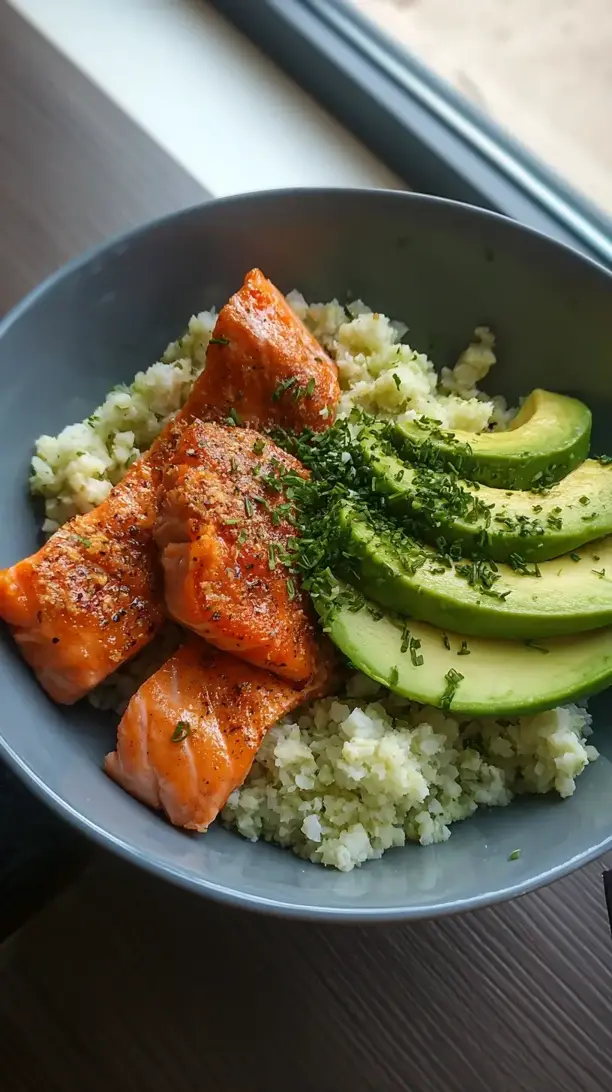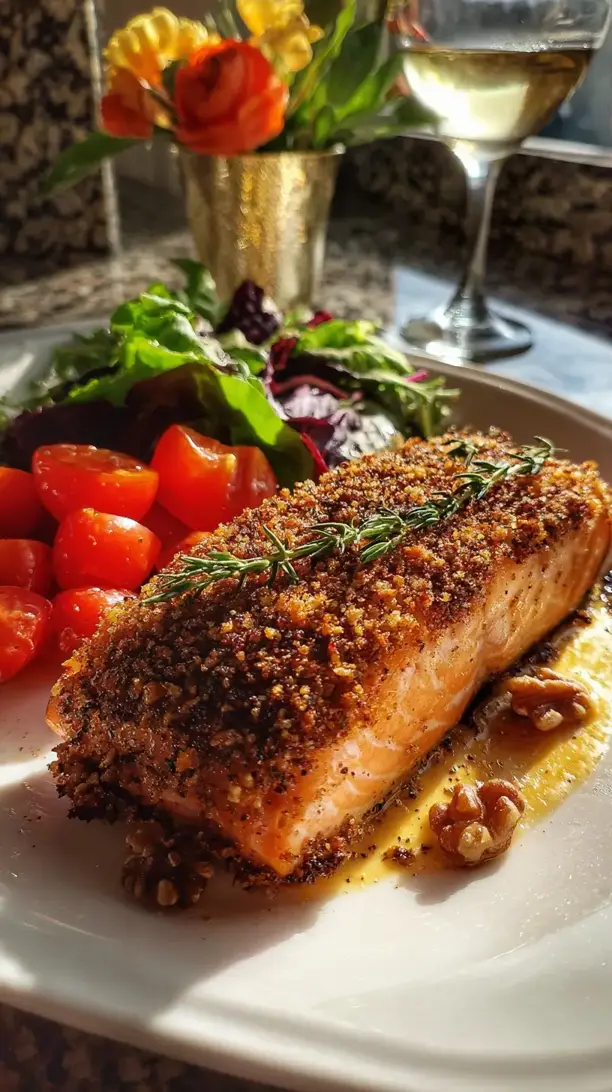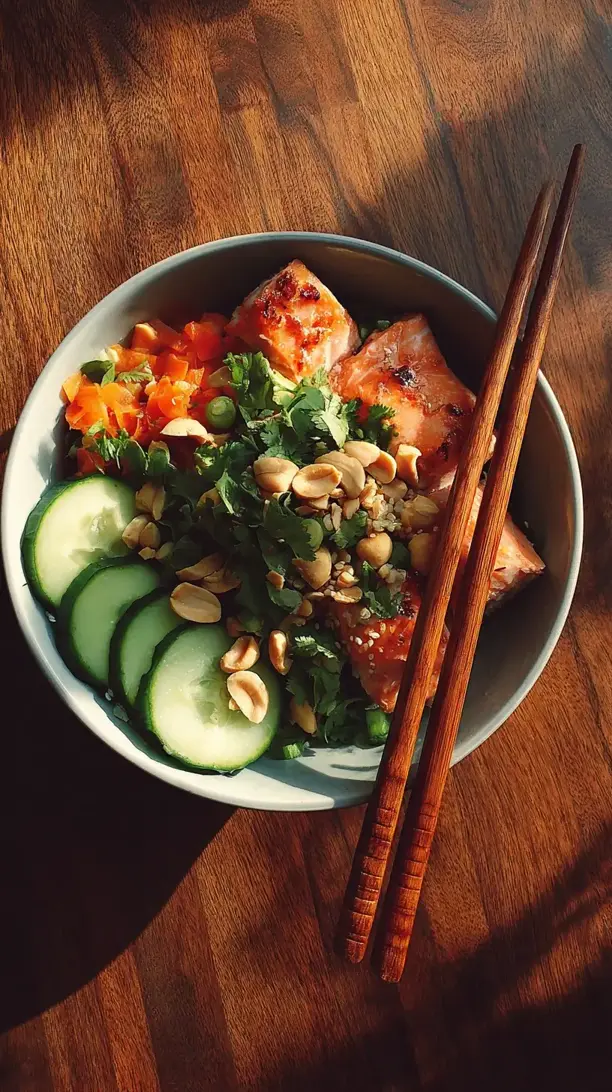

This Salmon and Avocado Bowl is a nourishing and indulgent meal that comes together in about 30 minutes. Perfectly seared salmon, creamy avocado, fluffy quinoa, and a vibrant sesame-ginger dressing create a complete, restaurant-quality experience. It’s endlessly customizable and deeply satisfying.
Why You’ll Love This Salmon and Avocado Bowl
- Complete & Balanced: Lean protein, healthy fats, and complex carbs in one bowl.
- Dreamy Textures: Crispy salmon, creamy avocado, fluffy quinoa, and crunchy veggies.
- Easy to Customize: Swap grains, add greens, or adjust the dressing to your taste.
- Fancy & Simple: Impressive meal made with basic ingredients in 30 minutes.
Ingredients & Tools
- 2 salmon fillets (about 150g each), skin on
- 1 ripe avocado, sliced
- 100 g quinoa, rinsed
- 1 small cucumber, thinly sliced
- 4–5 radishes, thinly sliced
- 2 tbsp soy sauce (or tamari for gluten-free)
- 1 tbsp rice vinegar
- 1 tsp sesame oil
- 1 tsp fresh ginger, grated
- 1 small garlic clove, minced
- 1 tbsp maple syrup or honey
- 1 tbsp olive oil
- 1 tsp black sesame seeds (for garnish)
- Salt and black pepper to taste
Tools: Medium saucepan, small mixing bowl, non-stick skillet, sharp knife, cutting board
Notes: Using skin-on salmon gives a crispy texture; rinsing quinoa removes bitterness.
Nutrition (per serving)
| Calories: | 580 kcal |
| Protein: | 35 g |
| Fat: | 28 g |
| Carbs: | 45 g |
| Fiber: | 10 g |
Serves: 2 | Prep Time: 15 minutes | Cook Time: 15 minutes | Total Time: 30 minutes
Before You Start: Tips & Ingredient Notes
- Choose the right salmon. Look for fillets that are bright pink, firm to the touch, and have a fresh, ocean-like smell. If possible, opt for wild-caught salmon—it tends to have a richer flavor and firmer texture.
- Don’t skip rinsing the quinoa. Quinoa has a natural coating called saponin that can make it taste bitter. Giving it a good rinse under cold water in a fine-mesh strainer ensures a clean, nutty flavor.
- Avocado timing is everything. You want your avocado to be perfectly ripe—yielding slightly to gentle pressure but not mushy. If it’s too firm, it won’t be creamy; if it’s too soft, it’ll turn to mush when sliced.
- Pat the salmon dry. Before seasoning and cooking, use a paper towel to thoroughly dry the salmon skin and flesh. This is the secret to getting that beautifully crispy, non-sticky skin.
How to Make Salmon and Avocado Bowl
Step 1: Start by cooking the quinoa. Add the rinsed quinoa to a medium saucepan with 200ml of water and a pinch of salt. Bring it to a boil, then reduce the heat to low, cover, and simmer for about 12–15 minutes. You’ll know it’s done when the grains are tender and have little “tails” unfurled. Remove from heat, fluff with a fork, and let it sit covered for 5 minutes to steam.
Step 2: While the quinoa cooks, prepare the sesame-ginger dressing. In a small bowl, whisk together the soy sauce, rice vinegar, sesame oil, grated ginger, minced garlic, and maple syrup. Taste it—you should get a nice balance of salty, tangy, and slightly sweet. If you like a bit of heat, feel free to add a pinch of red pepper flakes or a dash of sriracha.
Step 3: Now, let’s cook the salmon. Pat the fillets completely dry with paper towels and season both sides with salt and pepper. Heat the olive oil in a non-stick skillet over medium-high heat. Once the oil is shimmering, place the salmon skin-side down and press gently with a spatula for about 10 seconds to ensure even contact.
Step 4: Cook the salmon skin-side down for 4–5 minutes, without moving it. You’ll notice the flesh turning opaque about halfway up the sides. The skin should become golden and super crispy. If it’s sticking, it’s not ready to flip—give it another minute.
Step 5: Carefully flip the salmon and cook for another 2–3 minutes on the flesh side, until it’s cooked to your liking. For medium, the inside should still be slightly translucent; for well-done, it should be opaque throughout. Remove from the pan and let it rest for a couple of minutes before flaking or serving whole.
Step 6: While the salmon rests, assemble your bowls. Divide the fluffy quinoa between two bowls. Arrange the sliced cucumber, radishes, and avocado around the edges. The vibrant colors make it look so inviting already!
Step 7: Place the cooked salmon fillet (or flaked salmon) in the center of each bowl. Drizzle generously with the sesame-ginger dressing—don’t be shy, it’s the flavor powerhouse here. Finish with a sprinkle of black sesame seeds for a little visual pop and extra nuttiness.
Storage & Freshness Guide
- Fridge: Store components separately in airtight containers for up to 2 days.
- Freezer: Freeze cooked salmon and quinoa for up to 1 month; thaw in fridge overnight.
- Reviving: Reheat quinoa and salmon gently; add fresh avocado and dressing just before serving.
Serving Suggestions
Complementary Dishes
- Miso-glazed roasted broccoli — The savory-sweet umami from the miso pairs wonderfully with the salmon and adds another layer of roasted depth.
- Quick-pickled red onions — Their bright acidity and crunch cut through the richness of the avocado and salmon beautifully.
- Seaweed salad — It brings a briny, oceanic flavor that complements the salmon and adds a fun, slippery texture contrast.
Drinks
- Iced green tea with mint — Its clean, slightly bitter notes cleanse the palate between bites and enhance the fresh ingredients.
- Crisp Sauvignon Blanc — The wine’s citrusy acidity and herbal notes mirror the dressing’s flavors and balance the dish’s richness.
- Sparkling water with lime — The bubbles and citrus act as a palate cleanser, making each bite of the bowl taste fresh and new.
Something Sweet
- Matcha white chocolate cookies — Their subtle bitterness and sweetness provide a lovely, gentle finish without overpowering the meal.
- Fresh mango slices with lime zest — The tropical sweetness and zingy citrus are a light, refreshing way to end this vibrant meal.
- Ginger-molasses snaps — The warm spice in these cookies echoes the ginger in the dressing, creating a harmonious flavor transition.
Top Mistakes to Avoid
- Overcooking the salmon. Salmon continues to cook after you take it off the heat, so it’s better to pull it a minute early. Overcooked salmon becomes dry and chalky, losing its lovely silky texture.
- Not drying the salmon skin thoroughly. Any moisture on the skin will steam instead of crisp up, leaving you with rubbery, chewy skin instead of that delightful crackle.
- Skipping the quinoa rinse. That bitter saponin coating can really throw off the flavor of your whole bowl. A quick rinse makes all the difference.
- Adding the avocado too early. If you slice the avocado long before serving, it’ll start to brown and lose its vibrant green color. Prep it just before assembling the bowls.
Expert Tips
- Tip: Let the salmon come to room temperature for 10–15 minutes before cooking. This helps it cook more evenly, preventing an overcooked exterior and cold center.
- Tip: Make a double batch of the sesame-ginger dressing and store it in a jar in the fridge. It keeps well for up to a week and is fantastic on salads, grain bowls, or even as a marinade.
- Tip: For extra crispy salmon skin, sprinkle a tiny pinch of salt on the skin side right before it hits the pan. This draws out a bit of moisture and enhances crisping.
- Tip: If your avocado isn’t quite ripe, speed up the process by placing it in a paper bag with a banana or apple for a day. The ethylene gas they release works wonders.
FAQs
Can I use a different grain instead of quinoa?
Absolutely! Brown rice, couscous, farro, or even cauliflower rice work beautifully. Just adjust the cooking time according to the grain you choose. The key is to have a neutral, fluffy base that soaks up the dressing and complements the other textures.
How do I know when the salmon is cooked perfectly?
The best method is the touch test: press the top of the salmon gently. If it feels soft and squishy, it’s rare. With a little resistance, it’s medium. Firm means well-done. For this bowl, I recommend medium—flaky but still moist inside. You can also use a thermometer: 125°F for medium-rare, 135°F for medium.
Can I make this bowl ahead for meal prep?
Yes, but keep components separate. Cook the quinoa and salmon, and store them in airtight containers. Slice the veggies (except avocado) and keep the dressing separate. Assemble the day you eat it, adding fresh avocado and dressing just before serving to maintain textures.
What if I don’t have fresh ginger?
You can use ¼ teaspoon of ground ginger instead, though the flavor will be slightly different—more earthy and less bright. If possible, I’d recommend grabbing fresh ginger; it makes a noticeable difference in the dressing’s zing.
Is there a substitute for sesame oil?
Sesame oil provides a distinct nutty flavor, but if you’re out, you can use a neutral oil like grapeseed and add a tablespoon of tahini to the dressing for that nutty note. Alternatively, a dash of toasted sesame seeds blended into the dressing can help mimic the flavor.
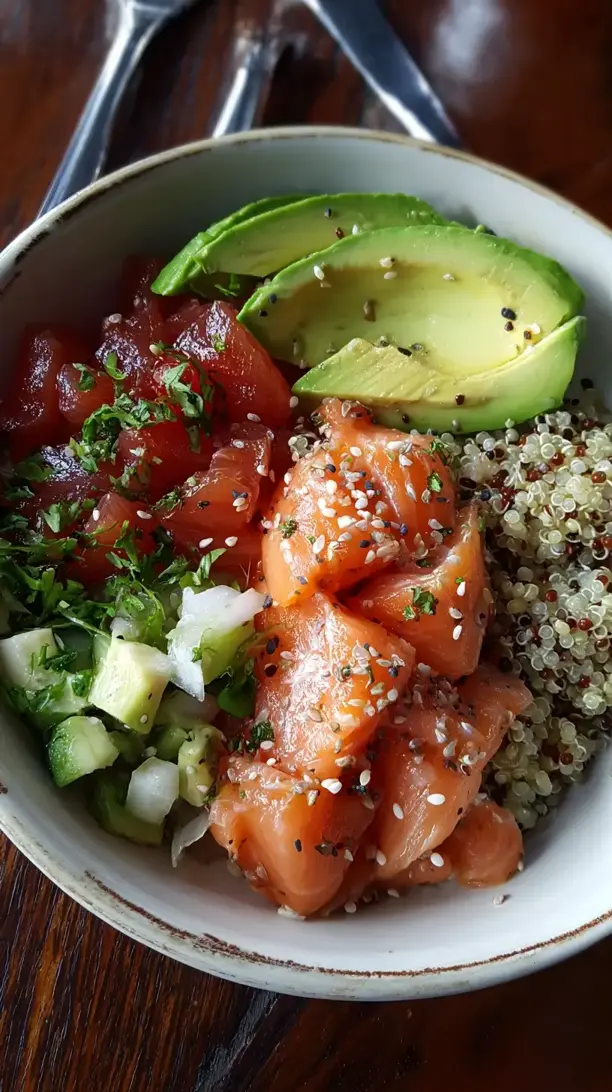
Salmon And Avocado Bowl
Make a delicious and healthy Salmon and Avocado Bowl with crispy salmon and a sesame-ginger dressing in 30 minutes. Get the easy recipe and enjoy!
Ingredients
For the Bowl:
-
2 salmon fillets (about 150g each, skin on)
-
1 ripe avocado (sliced)
-
100 g quinoa (rinsed)
-
1 small cucumber (thinly sliced)
-
4–5 radishes (thinly sliced)
For the Dressing:
-
2 tbsp soy sauce (or tamari for gluten-free)
-
1 tbsp rice vinegar
-
1 tsp sesame oil
-
1 tsp fresh ginger (grated)
-
1 small garlic clove (minced)
-
1 tbsp maple syrup or honey
For Cooking and Garnish:
-
1 tbsp olive oil
-
1 tsp black sesame seeds (for garnish)
-
Salt and black pepper (to taste)
Instructions
-
Start by cooking the quinoa. Add the rinsed quinoa to a medium saucepan with 200ml of water and a pinch of salt. Bring it to a boil, then reduce the heat to low, cover, and simmer for about 12–15 minutes. You’ll know it’s done when the grains are tender and have little “tails” unfurled. Remove from heat, fluff with a fork, and let it sit covered for 5 minutes to steam.01
-
While the quinoa cooks, prepare the sesame-ginger dressing. In a small bowl, whisk together the soy sauce, rice vinegar, sesame oil, grated ginger, minced garlic, and maple syrup. Taste it—you should get a nice balance of salty, tangy, and slightly sweet. If you like a bit of heat, feel free to add a pinch of red pepper flakes or a dash of sriracha.02
-
Now, let’s cook the salmon. Pat the fillets completely dry with paper towels and season both sides with salt and pepper. Heat the olive oil in a non-stick skillet over medium-high heat. Once the oil is shimmering, place the salmon skin-side down and press gently with a spatula for about 10 seconds to ensure even contact.03
-
Cook the salmon skin-side down for 4–5 minutes, without moving it. You’ll notice the flesh turning opaque about halfway up the sides. The skin should become golden and super crispy. If it’s sticking, it’s not ready to flip—give it another minute.04
-
Carefully flip the salmon and cook for another 2–3 minutes on the flesh side, until it’s cooked to your liking. For medium, the inside should still be slightly translucent; for well-done, it should be opaque throughout. Remove from the pan and let it rest for a couple of minutes before flaking or serving whole.05
-
While the salmon rests, assemble your bowls. Divide the fluffy quinoa between two bowls. Arrange the sliced cucumber, radishes, and avocado around the edges. The vibrant colors make it look so inviting already!06
-
Place the cooked salmon fillet (or flaked salmon) in the center of each bowl. Drizzle generously with the sesame-ginger dressing—don’t be shy, it’s the flavor powerhouse here. Finish with a sprinkle of black sesame seeds for a little visual pop and extra nuttiness.07