

Why You’ll Love This Roasted Tomato Carrot Soup
- It’s a flavor explosion. Roasting the vegetables isn’t just a step; it’s the entire secret. It deepens the sweetness of the carrots and tomatoes in a way that boiling simply can’t achieve, giving the soup a rich, almost smoky undertone.
- It’s incredibly versatile. This soup is a fantastic canvas. You can keep it smooth and elegant, or add a can of chickpeas to the roasting pan for extra heartiness. It’s also naturally vegan and gluten-free, making it a crowd-pleaser for almost any diet.
- It makes your kitchen smell amazing. The aroma of tomatoes, carrots, and garlic roasting with herbs is honestly one of the best parts of making this recipe. It’s the kind of cozy, inviting scent that makes a house feel like a home.
- It’s meal-prep magic. This soup freezes beautifully. Make a double batch and stash portions in the freezer for those days when you need a healthy, comforting meal in minutes. It reheats like a dream.
Ingredients & Tools
- 1.5 lbs ripe Roma tomatoes, halved
- 1 lb carrots, peeled and cut into 1-inch chunks
- 1 large yellow onion, roughly chopped
- 4 cloves garlic, peeled
- 3 tbsp olive oil, divided
- 1 tsp dried thyme (or 3-4 fresh sprigs)
- 4 cups vegetable broth
- 1 tbsp balsamic vinegar
- to taste salt and freshly ground black pepper
- for serving fresh basil or a swirl of coconut milk (optional)
Tools: A large baking sheet, a large soup pot or Dutch oven, and a blender (immersion or countertop).
The quality of your vegetables really shines here, so try to get the ripest tomatoes you can find. The balsamic vinegar might seem like a small addition, but it’s crucial—it adds a lovely tang that balances the sweetness perfectly.
Serves: 4 | Prep Time: 15 minutes | Cook Time: 45 minutes | Total Time: 1 hour
Before You Start: Tips & Ingredient Notes
- Don’t skimp on the oil. The olive oil isn’t just to prevent sticking; it helps the vegetables caramelize and brown properly. This is where a lot of the flavor comes from, so make sure everything is nicely coated.
- Size matters for even roasting. Try to cut your carrots and onion into similarly sized pieces. This ensures they all cook at the same rate, so you don’t end up with some bits burnt and others undercooked.
- What if my tomatoes aren’t super ripe? No worries! A pinch of sugar sprinkled over the tomatoes before roasting can help enhance their natural sweetness if they’re a bit lackluster. It’s a handy little trick.
- To peel or not to peel the tomatoes? Honestly, after roasting and blending, the tomato skins practically disappear. I rarely bother peeling them—it saves time and adds fiber. But if you have a very sensitive blender, you can slip the skins off after roasting.
How to Make Roasted Tomato Carrot Soup
Step 1: Preheat your oven to 400°F (200°C). This high heat is key for getting that beautiful, caramelized color on the vegetables. While it’s heating, get all your veggies prepped. Place the halved tomatoes, carrot chunks, chopped onion, and whole garlic cloves on a large baking sheet. Drizzle with 2 tablespoons of the olive oil and sprinkle with the thyme, a good pinch of salt, and several grinds of black pepper. Toss everything with your hands until every piece is glistening. You’ll notice the aroma of the thyme already starting to release—so good.
Step 2: Spread the vegetables out in a single layer. This is important! If the pan is too crowded, the veggies will steam instead of roast. We want that concentrated, roasted flavor. Pop the tray into the preheated oven and roast for 30-35 minutes. You’re looking for the carrots to be tender when pierced with a fork and the tomatoes to be soft, slightly shriveled, and maybe even a little charred around the edges. Your kitchen will smell absolutely incredible.
Step 3: Carefully transfer the roasted vegetables from the baking sheet into a large soup pot or Dutch oven. Scrape in all those delicious, sticky browned bits from the pan—that’s pure flavor gold. Add the vegetable broth and the remaining 1 tablespoon of olive oil. Bring the mixture to a gentle boil over medium-high heat, then reduce the heat and let it simmer for about 10 minutes. This allows the flavors to meld together beautifully.
Step 4: Now for the magic! Stir in the balsamic vinegar. This is the moment that really brightens everything up. Then, it’s blending time. If you’re using an immersion blender, carefully blend the soup right in the pot until it’s completely smooth. If using a countertop blender, work in batches, filling the blender no more than halfway each time, and hold the lid down with a towel—hot soup expands! Blend until velvety smooth.
Step 5: Once blended, taste the soup. This is the most important step. Does it need more salt? A bit more pepper? Adjust the seasoning until it’s just right for you. If the soup is thicker than you’d like, you can thin it out with a splash more broth or even a little water. Let it heat through for another minute, and then it’s ready to serve.
Serving Suggestions
Complementary Dishes
- A thick slice of crusty sourdough — There’s nothing better for dunking and soaking up every last bit of this flavorful soup. A little drizzle of olive oil on top is heaven.
- A simple arugula salad with lemon vinaigrette — The peppery, sharp salad provides a fantastic fresh contrast to the sweet, creamy soup.
- A gourmet grilled cheese sandwich — Take it to the next level with a sharp cheddar and a little apple or onion chutney. The ultimate comfort food pairing.
Drinks
- A crisp Sauvignon Blanc — The herbaceous and citrusy notes in the wine complement the sweetness of the roasted vegetables without overpowering them.
- A sparkling water with lemon — For a non-alcoholic option, the bubbles and acidity cleanse the palate beautifully between spoonfuls.
- A light-bodied pale ale — The slight bitterness of the beer cuts through the richness of the soup in a really satisfying way.
Something Sweet
- Lemon shortbread cookies — Their buttery, zesty flavor is a lovely, light way to finish the meal without feeling too heavy.
- Dark chocolate with sea salt — Just a square or two of high-quality dark chocolate provides a rich, bittersweet endnote that contrasts wonderfully with the soup.
- A simple fruit sorbet — A scoop of raspberry or mango sorbet is refreshing and palate-cleansing, making for a perfect finale.
Top Mistakes to Avoid
- Mistake: Overcrowding the baking sheet. If the vegetables are piled on top of each other, they’ll steam and become soggy instead of developing that essential roasted, caramelized flavor. Use two sheets if necessary!
- Mistake: Blending the soup while it’s piping hot without caution. Hot liquid expands rapidly in a blender and can cause the lid to blow off, creating a dangerous mess. Always blend in batches and hold the lid down firmly with a kitchen towel.
- Mistake: Skipping the taste-and-adjust step. Soups need seasoning, and the amount of salt needed can vary based on your broth. Always taste at the end and adjust the salt, pepper, or even a touch more vinegar until it sings.
- Mistake: Using watery, out-of-season tomatoes. While roasting helps, starting with flavorless tomatoes will result in a less vibrant soup. Roma/plum tomatoes are your best bet for consistent flavor year-round.
Expert Tips
- Tip: Add a Parmesan rind. If you’re not strictly vegan, toss a leftover Parmesan rind into the pot while the soup simmers. It adds an incredible umami depth that’s just magical. Remember to fish it out before blending!
- Tip: Roast with a red bell pepper. For a slightly different flavor profile, add a halved and seeded red bell pepper to the roasting pan. It adds a sweet, smoky note that’s absolutely delicious.
- Tip: Make it creamy without cream. For extra creaminess without dairy, add a quarter cup of raw cashews to the blender with the soup. They blend up into an incredibly smooth and rich texture.
- Tip: Garnish with texture. Don’t just stop at a swirl of cream. Toasted pumpkin seeds, homemade croutons, or a drizzle of chili oil add wonderful contrasting textures and flavors that elevate the whole bowl.
FAQs
Can I make this soup ahead of time?
Absolutely! In fact, it might even taste better the next day as the flavors have more time to meld. Let the soup cool completely before storing it in an airtight container in the refrigerator for up to 4 days. Reheat gently on the stove, adding a splash of broth or water if it has thickened up.
Can I freeze this Roasted Tomato Carrot Soup?
Yes, it freezes exceptionally well. Cool the soup completely, then transfer it to freezer-safe containers or bags, leaving a little space for expansion. It will keep well for up to 3 months. Thaw overnight in the refrigerator before reheating. Give it a good stir when reheating, as separation can sometimes occur.
My soup turned out a bit acidic. How can I fix it?
This can happen, especially with certain tomatoes. The easiest fix is a pinch of baking soda—start with 1/8 teaspoon, stir it in, and taste. It will neutralize the acid without adding flavor. Alternatively, a teaspoon of sugar or a splash of coconut milk can also help balance the acidity beautifully.
What’s the best way to get a super smooth texture?
If you want an ultra-silky, restaurant-quality texture, pass the blended soup through a fine-mesh sieve. This will catch any tiny bits of tomato skin or fiber that the blender might have missed. It’s an extra step, but it makes a noticeable difference for a special occasion.
Can I use an air fryer to roast the vegetables?
You can! It works really well. Toss the veggies with oil and seasonings as directed, then air fry at 375°F (190°C) for about 20-25 minutes, shaking the basket halfway through. Just make sure not to overcrowd the basket so they roast properly. The cooking time might be a bit faster, so keep an eye on them.
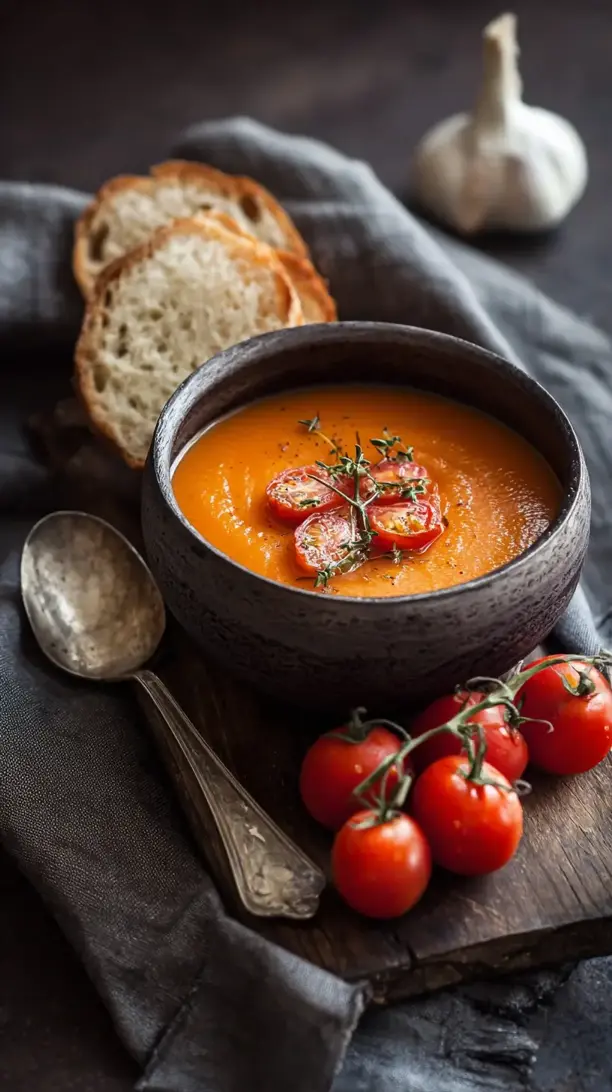
Roasted Tomato Carrot Soup
My ultimate Roasted Tomato Carrot Soup recipe! Roasting unlocks deep, sweet flavors for a velvety, vibrant soup that's surprisingly easy. Vegan, gluten-free comfort food perfect for weeknights or meal prep.
Ingredients
Ingredients
-
1.5 lbs ripe Roma tomatoes (halved)
-
1 lb carrots (peeled and cut into 1-inch chunks)
-
1 large yellow onion (roughly chopped)
-
4 cloves garlic (peeled)
-
3 tbsp olive oil (divided)
-
1 tsp dried thyme (or 3-4 fresh sprigs)
-
4 cups vegetable broth
-
1 tbsp balsamic vinegar
-
salt and freshly ground black pepper (to taste)
-
fresh basil or a swirl of coconut milk (optional, for serving)
Instructions
-
Preheat your oven to 400°F (200°C). This high heat is key for getting that beautiful, caramelized color on the vegetables. While it's heating, get all your veggies prepped. Place the halved tomatoes, carrot chunks, chopped onion, and whole garlic cloves on a large baking sheet. Drizzle with 2 tablespoons of the olive oil and sprinkle with the thyme, a good pinch of salt, and several grinds of black pepper. Toss everything with your hands until every piece is glistening. You'll notice the aroma of the thyme already starting to release—so good.01
-
Spread the vegetables out in a single layer. This is important! If the pan is too crowded, the veggies will steam instead of roast. We want that concentrated, roasted flavor. Pop the tray into the preheated oven and roast for 30-35 minutes. You're looking for the carrots to be tender when pierced with a fork and the tomatoes to be soft, slightly shriveled, and maybe even a little charred around the edges. Your kitchen will smell absolutely incredible.02
-
Carefully transfer the roasted vegetables from the baking sheet into a large soup pot or Dutch oven. Scrape in all those delicious, sticky browned bits from the pan—that's pure flavor gold. Add the vegetable broth and the remaining 1 tablespoon of olive oil. Bring the mixture to a gentle boil over medium-high heat, then reduce the heat and let it simmer for about 10 minutes. This allows the flavors to meld together beautifully.03
-
Now for the magic! Stir in the balsamic vinegar. This is the moment that really brightens everything up. Then, it's blending time. If you're using an immersion blender, carefully blend the soup right in the pot until it's completely smooth. If using a countertop blender, work in batches, filling the blender no more than halfway each time, and hold the lid down with a towel—hot soup expands! Blend until velvety smooth.04
-
Once blended, taste the soup. This is the most important step. Does it need more salt? A bit more pepper? Adjust the seasoning until it's just right for you. If the soup is thicker than you'd like, you can thin it out with a splash more broth or even a little water. Let it heat through for another minute, and then it's ready to serve.05


