

Why You’ll Love This Roasted Cauliflower with Turmeric
- It’s a total flavour bomb. The combination of earthy turmeric, pungent garlic, and a hint of warmth from the paprika creates a complex taste profile that’s far from boring. Each bite is a little adventure.
- The texture is absolutely perfect. We roast it hot and fast to get those beautifully caramelised, slightly crisp edges while keeping the inside tender—but not mushy. It’s the textural dream team.
- It’s incredibly versatile. This isn’t just a side dish; it’s a meal-building block. Toss it with pasta, pile it on top of creamy polenta, or stuff it into a wrap. It plays well with so many other ingredients.
- It makes vegetables the star of the show. Honestly, this is the recipe you make for someone who thinks they don’t like cauliflower. It’s a real game-changer that celebrates how delicious simple, whole foods can be.
Ingredients & Tools
- 1 large head of cauliflower (about 800g-1kg)
- 3 tablespoons olive oil (or avocado oil)
- 1 tablespoon ground turmeric
- 3 cloves garlic, minced
- 1 teaspoon smoked paprika
- 1/2 teaspoon ground cumin
- 1/2 teaspoon fine sea salt, plus more to taste
- 1/4 teaspoon freshly ground black pepper
- 1 tablespoon fresh lemon juice
- 2 tablespoons fresh parsley or coriander, chopped (for serving)
Tools: A large baking sheet, parchment paper (highly recommended!), a large mixing bowl, a small bowl or jar, a sharp knife, and a cutting board.
The quality of your spices really makes a difference here—fresh turmeric powder has a much brighter, more potent flavour than a jar that’s been sitting in the cupboard for a year. And don’t skip the fresh lemon juice at the end; that hit of acidity is the secret weapon that makes all the other flavours pop.
Serves: 4 as a side | Prep Time: 10 minutes | Cook Time: 25-30 minutes | Total Time: 35-40 minutes
Before You Start: Tips & Ingredient Notes
- Turmeric stains. Seriously. It’s a powerful natural dye. You might want to wear an apron, and consider using a glass or stainless-steel bowl for mixing. It will wash off your hands, but it can temporarily stain wooden spoons and plastic containers.
- Don’t crowd the pan! This is the golden rule of roasting any vegetable. If the florets are too close together, they’ll steam instead of roast, and you’ll miss out on that gorgeous caramelisation. Use a big enough baking sheet or even two if needed.
- What kind of cauliflower is best? Look for a head that feels heavy for its size with tightly packed, creamy-white florets and fresh, green leaves attached at the base. Avoid any with significant brown spots or a loose, spreading appearance.
- To rinse or not to rinse? I always give my cauliflower a quick rinse and a thorough pat dry with a clean kitchen towel or paper towels. Excess water can prevent proper browning, so drying is a key step you don’t want to skip.
How to Make Roasted Cauliflower with Turmeric
Step 1: First, preheat your oven to 220°C (425°F). This high heat is crucial for getting that beautiful browning and crisp texture. While the oven heats up, line your large baking sheet with parchment paper. This isn’t just for easy cleanup—it also helps prevent the turmeric paste from sticking and burning onto the pan.
Step 2: Now, prepare the cauliflower. Remove the outer leaves and slice the head in half through the core. Cut out the tough core, then break or cut the florets into even-sized pieces, about 3-4 cm (1.5 inches) big. The trick is to get them as uniform as possible so they all cook at the same rate. Place all the florets in your large mixing bowl.
Step 3: In a small bowl or jar, whisk together the olive oil, ground turmeric, minced garlic, smoked paprika, cumin, salt, and black pepper. You’ll get this wonderfully fragrant, vibrant yellow paste. Honestly, just smell it—it’s incredible. This is where all the flavour magic happens.
Step 4: Pour the turmeric paste over the cauliflower florets in the large bowl. Now, get your hands in there! Toss and massage the paste onto the cauliflower until every single floret is evenly and generously coated. That yellow colour should be everywhere. This hands-on approach ensures maximum flavour in every bite.
Step 5: Spread the coated cauliflower out in a single layer on your prepared baking sheet. Make sure the florets aren’t touching each other. This is the most important step for achieving roast, not steam! Pop the tray into the preheated oven.
Step 6: Roast for 15 minutes, then carefully remove the tray from the oven. Use a spatula to flip and stir the florets. This helps them brown evenly on all sides. You’ll already notice some gorgeous golden edges starting to form. Return the tray to the oven for another 10-15 minutes.
Step 7: The cauliflower is done when it’s tender enough to easily pierce with a fork and has deep golden-brown, slightly crisp spots all over. Keep an eye on it towards the end to avoid burning, as all ovens vary a little. The garlic will smell sweet and toasted, not bitter.
Step 8: As soon as you take the cauliflower out of the oven, drizzle it with the fresh lemon juice and give it a gentle toss. This brightens everything up beautifully. Transfer it to a serving dish and sprinkle with the fresh chopped parsley or coriander for a burst of colour and freshness.
Serving Suggestions
Complementary Dishes
- Lemony Quinoa or Couscous — The fluffy grains soak up the delicious turmeric-infused oils beautifully, and the lemon echoes the fresh juice we add at the end.
- Garlicky Yogurt Dip — A cool, creamy dip made from Greek yogurt, grated garlic, lemon zest, and salt provides a wonderful temperature and texture contrast to the warm, roasted veg.
- Simple Grilled Chicken or Fish — This cauliflower makes a stellar side for a protein-focused meal. Its bold flavours can stand up to grilled salmon or herb-marinated chicken breasts.
Drinks
- A Crisp, Dry White Wine — Think Sauvignon Blanc or Pinot Grigio. The acidity and citrus notes in the wine will complement the earthy turmeric and bright lemon perfectly.
- Ginger Beer or a Ginger Spritzer — The spicy-sweet kick of ginger is a fantastic flavour pairing with turmeric, making a non-alcoholic option that feels just as special.
- A Light-bodied Pale Ale — The slight bitterness and citrusy hops in a good pale ale can cut through the richness of the roasted oil and balance the spices wonderfully.
Something Sweet
- Orange and Almond Cake — The warm, sunny flavours of orange and nutty almond are a lovely, not-too-heavy way to finish a meal that started with these vibrant spices.
- Mango Sorbet — A few scoops of bright, tropical mango sorbet feel like a refreshing palate cleanser after the earthy, savoury notes of the main dish.
- Dark Chocolate with Sea Salt — A simple square or two of high-quality dark chocolate provides a rich, bittersweet endnote that contrasts nicely with the savoury meal.
Top Mistakes to Avoid
- Mistake: Using a dull knife to cut the cauliflower. A sharp knife gives you clean cuts through the dense core and florets. A dull one can crush the vegetable and make a mess, plus it’s less safe.
- Mistake: Skipping the step to pat the cauliflower dry. Any extra moisture on the surface will create steam in the oven, which is the enemy of crispy, caramelised edges. A quick dry-off is worth it.
- Mistake: Not spreading the florets out enough on the pan. I’ve messed this up before too, trying to fit it all on one tray. If they’re crowded, they’ll steam and become soft and soggy instead of roasty and crisp. Use two trays if you need to!
- Mistake: Adding the lemon juice before roasting. The acidity can prevent the cauliflower from browning properly. Always add the fresh lemon juice after it comes out of the oven for that perfect zing.
Expert Tips
- Tip: Add a pinch of cayenne pepper. If you like a little heat, a small pinch of cayenne mixed into the spice paste adds a lovely, subtle warmth that plays really well with the other spices.
- Tip: Roast the cauliflower directly on the oven rack. For maximum crispiness, you can place the parchment-lined tray on the lowest oven rack. This allows for better air circulation around the entire tray, leading to more even browning.
- Tip: Make it a complete sheet-pan meal. About 10 minutes into the roasting time, add some chickpeas (drained and patted dry) and chopped red onion to the pan. It all roasts together for a fantastically easy, one-pan dinner.
- Tip: Grate your own garlic. Instead of mincing, use a microplane to grate the garlic cloves. It creates almost a paste that distributes the garlic flavour more evenly and subtly throughout the dish.
FAQs
Can I make this ahead of time?
You can absolutely prep the components ahead! Mix the spice paste and cut the cauliflower up to a day in advance, storing them separately in airtight containers in the fridge. Then, just toss and roast when you’re ready. The roasted cauliflower is best served immediately, but leftovers are still delicious reheated in a skillet or eaten cold in salads.
My turmeric tastes bitter. What happened?
Turmeric can become bitter if it burns. This usually happens if the oven temperature is too high or if it’s roasted for too long. Make sure your oven is calibrated correctly and keep an eye on it during the last 5-10 minutes of cooking. Using fresh, high-quality turmeric powder also helps avoid any underlying bitter notes.
Can I use frozen cauliflower?
You can, but the results will be different. Frozen cauliflower contains a lot more water, so it will steam and soften more than roast, resulting in a less crispy texture. If you do use it, thaw it completely and pat it extremely dry with paper towels before proceeding. Even then, expect a softer outcome.
How do I store and reheat leftovers?
Store cooled leftovers in an airtight container in the fridge for up to 3 days. To reheat, spread them on a baking sheet and warm in a 180°C (350°F) oven for about 10 minutes, or until heated through. This will help re-crisp them better than a microwave, which can make them soggy.
What can I use instead of fresh lemon juice?
Fresh lime juice is a great substitute and adds a different, slightly more floral citrus note. In a real pinch, a tiny splash of white wine vinegar or apple cider vinegar could work, but use it sparingly as the flavour is much sharper and less rounded than fresh citrus juice.
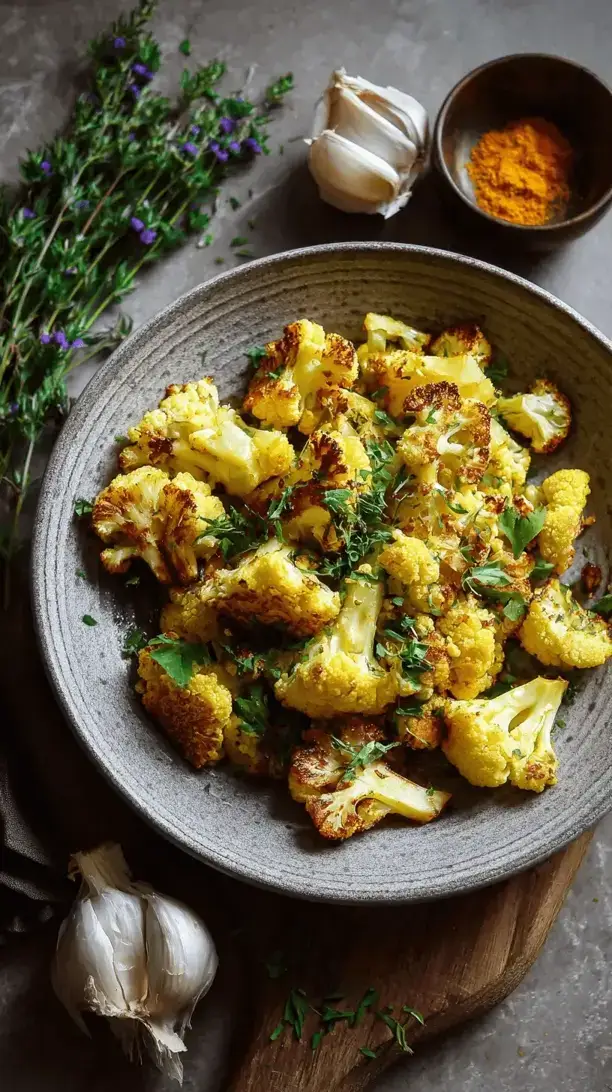
Roasted Cauliflower With Turmeric
My go-to recipe for golden, crispy roasted cauliflower with turmeric! This simple, flavor-packed side dish is a total game-changer. Perfectly spiced & ready in 40 minutes.
Ingredients
Ingredients
-
1 large head cauliflower (about 800g-1kg)
-
3 tablespoons olive oil (or avocado oil)
-
1 tablespoon ground turmeric
-
3 cloves garlic (minced)
-
1 teaspoon smoked paprika
-
1/2 teaspoon ground cumin
-
1/2 teaspoon fine sea salt (plus more to taste)
-
1/4 teaspoon freshly ground black pepper
-
1 tablespoon fresh lemon juice
-
2 tablespoons fresh parsley or coriander (chopped (for serving))
Instructions
-
First, preheat your oven to 220°C (425°F). This high heat is crucial for getting that beautiful browning and crisp texture. While the oven heats up, line your large baking sheet with parchment paper. This isn't just for easy cleanup—it also helps prevent the turmeric paste from sticking and burning onto the pan.01
-
Now, prepare the cauliflower. Remove the outer leaves and slice the head in half through the core. Cut out the tough core, then break or cut the florets into even-sized pieces, about 3-4 cm (1.5 inches) big. The trick is to get them as uniform as possible so they all cook at the same rate. Place all the florets in your large mixing bowl.02
-
In a small bowl or jar, whisk together the olive oil, ground turmeric, minced garlic, smoked paprika, cumin, salt, and black pepper. You'll get this wonderfully fragrant, vibrant yellow paste. Honestly, just smell it—it's incredible. This is where all the flavour magic happens.03
-
Pour the turmeric paste over the cauliflower florets in the large bowl. Now, get your hands in there! Toss and massage the paste onto the cauliflower until every single floret is evenly and generously coated. That yellow colour should be everywhere. This hands-on approach ensures maximum flavour in every bite.04
-
Spread the coated cauliflower out in a single layer on your prepared baking sheet. Make sure the florets aren't touching each other. This is the most important step for achieving roast, not steam! Pop the tray into the preheated oven.05
-
Roast for 15 minutes, then carefully remove the tray from the oven. Use a spatula to flip and stir the florets. This helps them brown evenly on all sides. You'll already notice some gorgeous golden edges starting to form. Return the tray to the oven for another 10-15 minutes.06
-
The cauliflower is done when it's tender enough to easily pierce with a fork and has deep golden-brown, slightly crisp spots all over. Keep an eye on it towards the end to avoid burning, as all ovens vary a little. The garlic will smell sweet and toasted, not bitter.07
-
As soon as you take the cauliflower out of the oven, drizzle it with the fresh lemon juice and give it a gentle toss. This brightens everything up beautifully. Transfer it to a serving dish and sprinkle with the fresh chopped parsley or coriander for a burst of colour and freshness.08


