

Why You’ll Love This Roasted Cauliflower with Turmeric
- It’s a total flavor bomb. Turmeric brings this warm, earthy depth that pairs beautifully with the natural sweetness of the roasted cauliflower. A touch of garlic powder and a good pinch of salt create a simple yet incredibly satisfying seasoning that coats every single floret.
- The texture is absolutely perfect. We’re roasting at a high enough heat to get those gorgeous, crispy, browned bits on the edges while the inside of the cauliflower becomes meltingly tender. It’s that contrast that makes it so hard to stop eating straight from the baking sheet.
- It’s incredibly versatile. This dish is a fantastic team player. Serve it as a simple side, toss it into grain bowls, blend it into a soup, or even use it as a topping for a hearty salad. It’s a building block for so many meals throughout the week.
- It’s as easy as it gets. Seriously, the active prep time is about five minutes. Chop, toss, spread, and roast. That’s it. It’s the kind of low-effort, high-reward recipe that you’ll find yourself making on repeat.
Ingredients & Tools
- 1 large head of cauliflower (about 2 to 2.5 pounds)
- 3 tablespoons olive oil or avocado oil
- 1 teaspoon ground turmeric
- 1/2 teaspoon garlic powder
- 3/4 teaspoon fine sea salt, plus more to taste
- 1/4 teaspoon freshly ground black pepper
- 1 tablespoon fresh lemon juice (optional, for serving)
- 2 tablespoons chopped fresh parsley or cilantro (optional, for serving)
Tools: A large baking sheet, a large mixing bowl, and a sharp knife for chopping.
The quality of your turmeric really makes a difference here—fresh, vibrant turmeric powder will have a much more potent aroma and color than a jar that’s been sitting in the cupboard for a year. And don’t skip the black pepper! It’s not just for heat; it actually helps your body absorb the beneficial compounds in turmeric.
Serves: 4 | Prep Time: 10 minutes | Cook Time: 25-30 minutes | Total Time: 35-40 minutes
Before You Start: Tips & Ingredient Notes
- Choose the right cauliflower. Look for a head that feels heavy for its size with tightly packed, crisp white florets. Avoid any with significant brown spots or a limp appearance—freshness is key for the best texture.
- Don’t overcrowd the pan! This is the golden rule of roasting any vegetable. If you pile all the cauliflower onto one small baking sheet, it will steam instead of roast. We want dry heat circulating around each piece to achieve that beautiful caramelization. Use a large enough sheet or even two if needed.
- Embrace the turmeric stains. Turmeric is a powerful natural dye. It will temporarily stain your hands, wooden cutting boards, and silicone spatulas a cheerful yellow. Don’t panic! The stain on your hands will fade after a wash or two, and a little baking soda paste works wonders on cutting boards.
- Consider adding a pinch of spice. While this base recipe is wonderfully simple, feel free to add a pinch of smoked paprika, cumin, or even a tiny bit of cayenne pepper if you like a little kick. It’s a great canvas for your own spice preferences.
How to Make Roasted Cauliflower with Turmeric
Step 1: First, preheat your oven to 425°F (220°C). This high heat is crucial for getting that perfect roast—it quickly caramelizes the natural sugars in the cauliflower without making it mushy. While the oven heats up, line your large baking sheet with parchment paper for easy cleanup. Trust me, you’ll thank yourself later.
Step 2: Now, let’s prep the star of the show. Remove the green leaves from the base of the cauliflower head. Using a sharp knife, cut the head in half straight through the core, then cut each half into quarters. Carefully cut the core away from each quarter—it’s tough and we don’t want to eat it. Then, just break or cut the florets into bite-sized, even pieces. You’ll want them all roughly the same size so they cook at the same rate. Don’t worry about perfection here!
Step 3: In your large mixing bowl, combine the olive oil, ground turmeric, garlic powder, salt, and black pepper. Whisk it all together until it forms a smooth, vibrant yellow marinade. The aroma at this point is just incredible—earthy and warm.
Step 4: Add all of the cauliflower florets to the bowl. Now, get your hands in there! Toss and massage the spiced oil mixture onto every surface of the cauliflower. This hands-on approach ensures every nook and cranny is coated, which leads to maximum flavor and even browning. You’ll notice your fingers turning yellow—that’s how you know you’re doing it right.
Step 5: Transfer the coated cauliflower to your prepared baking sheet and spread it out into a single, even layer. Make sure the pieces aren’t touching each other too much. This is the most important step for getting crispy results. If the pan looks crowded, it is! Use a second sheet.
Step 6: Roast for 25-30 minutes. You’re looking for deeply golden brown edges and a tender texture when pierced with a fork. I like to give the pan a good shake or stir the florets with a spatula about halfway through the cooking time to promote even browning. The smell filling your kitchen will be your guide.
Step 7: Once the cauliflower is perfectly roasted, remove it from the oven. For a final bright, fresh kick, drizzle over the fresh lemon juice and sprinkle with the chopped herbs if you’re using them. Give everything one last gentle toss right on the hot pan. Taste and adjust with more salt if needed. Serve immediately while it’s hot and wonderfully crispy.
Serving Suggestions
Complementary Dishes
- Lemon Herb Grilled Chicken — The bright, zesty flavors of the chicken cut through the earthiness of the turmeric beautifully, creating a really balanced and satisfying plate.
- Creamy Lentil Dal — Spoon this golden cauliflower over a bowl of spiced dal for a fantastic vegetarian meal that’s packed with protein and fiber. The textures are a dream together.
- Simple Quinoa Pilaf — The fluffy, nutty quinoa acts as a wonderful base to soak up any delicious juices from the cauliflower, making for a complete and hearty grain bowl.
Drinks
- A Crisp, Dry White Wine — A Sauvignon Blanc or Pinot Grigio with its high acidity and citrus notes provides a refreshing contrast to the warm, roasted spices.
- Sparkling Water with Lemon — For a non-alcoholic option, the bubbles and citrus cleanse the palate between bites, making each mouthful taste just as good as the first.
- A Light-bodied Pale Ale — The slight bitterness and carbonation of a pale ale can stand up to the earthy flavors without overwhelming the dish.
Something Sweet
- Orange and Almond Cake — The citrus notes in the cake are a lovely, light follow-up to the savory, spiced main course, and the almond adds a nice richness.
- Mango Sorbet — The tropical sweetness of mango is a fantastic pairing with turmeric, and the cold, smooth sorbet is a refreshing way to end the meal.
- Simple Ginger Cookies — The warm spice of ginger echoes the turmeric in the main dish, creating a cohesive and comforting flavor journey from start to finish.
Top Mistakes to Avoid
- Mistake: Using wet cauliflower. If you wash your florets, make sure you dry them thoroughly with a kitchen towel or salad spinner. Any excess water will create steam on the pan, preventing that crucial crispy, caramelized exterior we’re after.
- Mistake: Skipping the black pepper. I know it seems like a small thing, but black pepper contains piperine, a compound that significantly enhances the bioavailability of curcumin, the active compound in turmeric. So it’s not just for flavor—it’s for your health, too!
- Mistake: Stirring too often. I know it’s tempting to check on it, but try to resist opening the oven door too much. Let the heat work its magic. Stirring just once halfway through is perfect. Constant disturbance prevents the edges from getting properly crispy.
- Mistake: Cutting the florets too small. If the pieces are tiny, they have a higher chance of burning before the insides become tender. Aim for hearty, bite-sized pieces that can withstand the high heat.
Expert Tips
- Tip: Add a splash of acid at the end. While optional, that squeeze of fresh lemon juice after roasting is a game-changer. It brightens all the flavors and cuts through the richness of the oil, making the dish taste fresher and more complex.
- Tip: Grate fresh turmeric for a flavor boost. If you can find the fresh root, try grating about a teaspoon of it along with the ground turmeric. It has a brighter, more peppery flavor that’s really special. Just be warned, it stains even more!
- Tip: Roast on a preheated pan. For the absolute crispiest results, place your empty baking sheet in the oven while it preheats. Carefully add the cauliflower to the hot pan—you’ll hear a satisfying sizzle that jump-starts the cooking process.
- Tip: Don’t throw out the core and leaves! The core can be chopped up and roasted too—it just takes a minute or two longer. The tender inner leaves can be tossed in the oil and spices and roasted alongside the florets; they become deliciously crispy, like kale chips.
FAQs
Can I make this ahead of time?
You can absolutely prep the cauliflower ahead! Chop the florets and store them in an airtight container in the fridge for up to 2 days. You can even mix the oil and spices separately. When you’re ready, just toss and roast. However, roasted cauliflower is best served immediately for optimal texture. If you have leftovers, they will soften but are still delicious reheated in a skillet or air fryer to re-crisp.
My cauliflower is still a bit hard after 30 minutes. What happened?
This usually means your florets were either too large or your oven temperature is running a bit low. Oven thermostats can be inaccurate! I highly recommend using an oven thermometer to check. If the pieces are large, just give them more time, checking every 5 minutes. You can also cover the pan with foil for the first 15 minutes to steam them tender, then uncover to brown.
Can I use frozen cauliflower?
You can, but the results will be different. Frozen cauliflower contains a lot of water, so it will steam and soften more than roast, resulting in a less crispy texture. If you do use it, don’t thaw it first—toss it frozen with a little less oil (as ice crystals will melt) and spread it on the pan. Expect a longer cooking time and a softer final product.
How can I prevent the turmeric from staining everything?
Honestly, some staining is inevitable, but you can minimize it. Using a glass or stainless steel bowl is better than plastic or wood. Wearing disposable gloves while tossing is a great trick. For cleaning, soap and water usually work, but for stubborn stains on plastic, a paste of baking soda and water left to sit for a bit before scrubbing does wonders.
What other vegetables can I roast with the cauliflower?
This spice blend is fantastic on so many things! Try adding chopped carrots, sweet potatoes, or red onion to the mix. Just keep in mind that different vegetables have different cooking times—you might need to add denser veggies like carrots to the pan first, then add the cauliflower later so everything finishes at the same time.
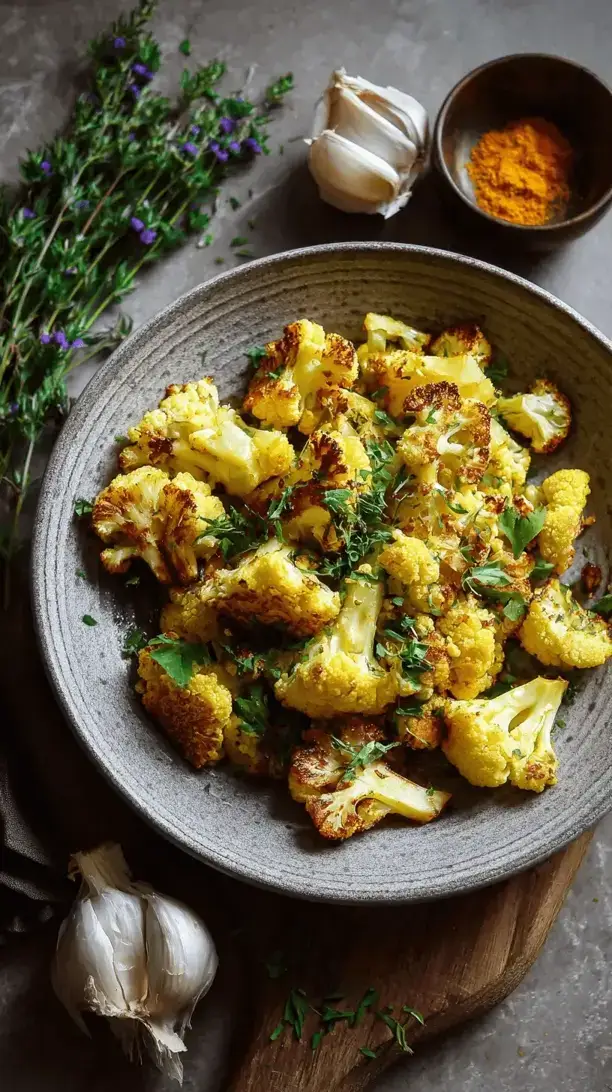
Roasted Cauliflower With Turmeric
Transform cauliflower with turmeric in this easy roasted recipe! Get crispy, golden florets with warm earthy flavors. Perfect weeknight side dish that steals the show. Ready in 35 mins!
Ingredients
Ingredients
-
1 large head cauliflower (about 2 to 2.5 pounds)
-
3 tablespoons olive oil or avocado oil
-
1 teaspoon ground turmeric
-
1/2 teaspoon garlic powder
-
3/4 teaspoon fine sea salt (plus more to taste)
-
1/4 teaspoon freshly ground black pepper
-
1 tablespoon fresh lemon juice (optional, for serving)
-
2 tablespoons chopped fresh parsley or cilantro (optional, for serving)
Instructions
-
First, preheat your oven to 425°F (220°C). This high heat is crucial for getting that perfect roast—it quickly caramelizes the natural sugars in the cauliflower without making it mushy. While the oven heats up, line your large baking sheet with parchment paper for easy cleanup. Trust me, you'll thank yourself later.01
-
Now, let's prep the star of the show. Remove the green leaves from the base of the cauliflower head. Using a sharp knife, cut the head in half straight through the core, then cut each half into quarters. Carefully cut the core away from each quarter—it's tough and we don't want to eat it. Then, just break or cut the florets into bite-sized, even pieces. You'll want them all roughly the same size so they cook at the same rate. Don't worry about perfection here!02
-
In your large mixing bowl, combine the olive oil, ground turmeric, garlic powder, salt, and black pepper. Whisk it all together until it forms a smooth, vibrant yellow marinade. The aroma at this point is just incredible—earthy and warm.03
-
Add all of the cauliflower florets to the bowl. Now, get your hands in there! Toss and massage the spiced oil mixture onto every surface of the cauliflower. This hands-on approach ensures every nook and cranny is coated, which leads to maximum flavor and even browning. You'll notice your fingers turning yellow—that's how you know you're doing it right.04
-
Transfer the coated cauliflower to your prepared baking sheet and spread it out into a single, even layer. Make sure the pieces aren't touching each other too much. This is the most important step for getting crispy results. If the pan looks crowded, it is! Use a second sheet.05
-
Roast for 25-30 minutes. You're looking for deeply golden brown edges and a tender texture when pierced with a fork. I like to give the pan a good shake or stir the florets with a spatula about halfway through the cooking time to promote even browning. The smell filling your kitchen will be your guide.06
-
Once the cauliflower is perfectly roasted, remove it from the oven. For a final bright, fresh kick, drizzle over the fresh lemon juice and sprinkle with the chopped herbs if you're using them. Give everything one last gentle toss right on the hot pan. Taste and adjust with more salt if needed. Serve immediately while it's hot and wonderfully crispy.07


