

Why You’ll Love This Rice Paper Veggie Rolls
- Endlessly Customizable. The basic formula is a blank canvas. Not a fan of mint? Use basil. Craving some protein? Toss in some tofu or shrimp. This recipe is a fantastic starting point for your own creations.
- Incredibly Fresh and Light. These rolls are the epitome of eating the rainbow. They’re packed with raw, crunchy vegetables and fragrant herbs, making them feel hydrating and energizing—perfect for a warm day or when you want a meal that won’t weigh you down.
- A Fun, Hands-On Experience. Making these is an activity. Gather friends or family around the table with all the ingredients laid out and let everyone assemble their own. It’s a wonderful way to get people involved in cooking.
- They Look Impressively Professional. Don’t be fooled by their elegant appearance; with a little practice, you’ll be rolling them up like a pro. They make any plate look instantly more gourmet and thoughtful.
Ingredients & Tools
- 12 sheets round rice paper wrappers (22 cm / 8.5-inch size is ideal)
- 100 g rice vermicelli noodles
- 1 large carrot, julienned or grated
- 1 medium cucumber, julienned (seeds removed)
- 1 large avocado, sliced
- 1 red bell pepper, thinly sliced
- 1 cup red cabbage, thinly shredded
- 1 large handful fresh mint leaves
- 1 large handful fresh cilantro leaves
- Optional: Butter lettuce or romaine leaves, torn to size
Tools: A large, shallow bowl or pie dish for dipping, a clean damp kitchen towel, a sharp knife, and a cutting board.
The beauty here is in the freshness and crunch of the vegetables. Honestly, don’t stress about exact amounts—a little more carrot or a little less pepper won’t hurt a thing. The key is having everything prepped and within easy reach before you even touch the rice paper.
Serves: 4 (makes about 12 rolls) | Prep Time: 30 minutes | Cook Time: 5 minutes (for noodles) | Total Time: 35 minutes
Before You Start: Tips & Ingredient Notes
- Don’t skip the damp towel. This is your secret weapon. Laying your rolled rice paper on a damp (not wet) towel prevents it from sticking to the plate and tearing when you go to pick it up.
- Rice paper is delicate, not difficult. The biggest fear is tearing the wrapper. The trick is to not over-soak it. A quick 5-10 second dip in warm water is all it needs—it will continue to soften on your work surface.
- Prep everything first (Mise en Place). This is non-negotiable. Once you start dipping the rice paper, you can’t stop to julienne a carrot. Have all your fillings chopped, your herbs washed, and your noodles cooked and drained.
- Embrace the “ugly” first roll. Your first roll might be a bit messy or loose. That’s totally normal! Consider it the chef’s treat—eat it immediately for quality control. You’ll get the hang of it by the second or third one.
How to Make Rice Paper Veggie Rolls
Step 1: Prepare Your Fillings. Start by cooking the rice vermicelli noodles according to package directions—this usually involves pouring boiling water over them and letting them sit for 5 minutes. Then drain and rinse with cold water to stop the cooking process. While they sit, julienne your carrot, cucumber, and bell pepper. Thinly slice the avocado and shred the cabbage. Wash and dry your herbs. Arrange everything in little bowls or sections on a large plate for easy access.
Step 2: Set Up Your Rolling Station. Clear a large space on your counter. Place your large shallow bowl and fill it with warm (not hot) water. Have your plates of fillings on one side, and a clean damp kitchen towel laid flat on the other side. This towel will be your rolling surface and where the finished rolls will rest.
Step 3: The Dip and Soften. Take one rice paper sheet and submerge it completely in the warm water for about 5 to 10 seconds. You’ll feel it start to become pliable. Don’t wait for it to be completely soft—it will continue to absorb water. Gently lift it out, let the excess water drip off, and lay it flat on the damp towel.
Step 4: Arrange the Fillings. Now for the fun part! On the bottom third of the softened rice paper, layer your ingredients. Start with a small pile of noodles, then add a few strips of carrot, cucumber, bell pepper, and cabbage. Top with a couple of avocado slices and a few mint and cilantro leaves. The trick is not to overfill—a little goes a long way, and it makes rolling much easier.
Step 5: The Roll-Up. Gently fold the bottom edge of the rice paper up and over the fillings, tucking it under them snugly. Then, fold the left and right sides inward, like you’re making a burrito. Finally, holding the folds securely, continue rolling the bundle away from you until it’s sealed. The rice paper is sticky, so it should seal itself. Place the finished roll seam-side down on a serving plate that’s also been lined with the damp towel or a piece of lettuce to prevent sticking.
Step 6: Repeat and Serve. Continue with the remaining rice paper sheets and fillings. You’ll notice you get faster with each one. Serve the rolls immediately with your favorite dipping sauce—a classic peanut sauce or a simple mix of soy sauce, lime juice, and a touch of chili is perfect.
Serving Suggestions
Complementary Dishes
- A light Miso Soup — The savory, umami-rich broth provides a wonderful warm contrast to the cool, crisp freshness of the rolls. It turns the meal into something more substantial without overpowering the main event.
- Edamame with Sea Salt — This is the ultimate easy side. The simple, salty pods are fun to eat and add a different texture and a boost of plant-based protein to your spread.
- Asian-Inspired Slaw — A tangy, vinegar-based slaw with sesame oil and seeds echoes the flavors in the rolls but offers a more mixed, salad-like experience on the side.
Drinks
- Iced Jasmine Green Tea — The floral, slightly sweet notes of jasmine tea are incredibly refreshing and complement the herbal notes in the rolls without adding any heaviness.
- A Crisp Sauvignon Blanc — If you’re enjoying these as a starter for a dinner party, a wine with bright acidity and citrus notes will cut through the richness of a peanut sauce beautifully.
- Sparkling Water with Lime — Sometimes simple is best. The bubbles and citrus cleanse the palate between each delicious bite, making every roll taste like the first.
Something Sweet
- Fresh Mango Sticky Rice — This classic dessert continues the Southeast Asian theme. The sweet, creamy coconut rice and ripe mango are a dreamy way to end the meal.
- Lychees Chilled in Their Syrup — Incredibly simple yet elegant. The floral, perfumed taste of lychees is a light and hydrating finish that feels like a real treat.
- Ginger Cookies — A little unconventional, but the warm spice of a good ginger cookie provides a lovely, comforting contrast to the meal’s fresh and savory profile.
Top Mistakes to Avoid
- Mistake: Over-soaking the rice paper. This is the number one cause of torn rolls. A quick dip is all you need. If it’s still a little stiff in the center, it will soften on the towel by the time you add your fillings.
- Mistake: Overstuffing the roll. It’s tempting to pack in all the goodness, but too much filling makes it impossible to roll tightly. The roll might burst, and it becomes difficult to eat. Less is more here.
- Mistake: Using a rough surface for rolling. Rolling directly on a dry plate or countertop will make the delicate rice paper stick and tear. The damp towel is essential for a smooth rolling process.
- Mistake: Making them too far in advance. These are best eaten immediately. If left for too long, the rice paper can become tough and the vegetables can lose their crispness. If you must prep ahead, wrap each roll individually in cling film.
Expert Tips
- Tip: Use warm, not hot, water. Hot water can make the rice paper too soft and gummy too quickly, making it prone to tearing. Warm water gives you more control over the softening process.
- Tip: Add a lettuce leaf base. Placing a piece of soft butter lettuce under your fillings before you roll adds an extra layer of protection against sharp vegetable edges poking through the wrapper.
- Tip: Keep a bowl of cold water nearby. If your fingers get too sticky from handling the rice paper, a quick dip in cold water will solve the problem instantly, making the process much smoother.
- Tip: Get creative with dipping sauces. Beyond peanut sauce, try a hoisin-based dip, a sweet chili sauce, or even a creamy sriracha mayo. The sauce can completely change the character of the roll.
FAQs
Can I make these rolls ahead of time?
You can, but with a caveat. They are truly best eaten within an hour or two of making them. If you need to prep them a few hours ahead, the key is to prevent them from drying out or sticking together. Individually wrap each roll tightly in plastic wrap and store them in a single layer in the fridge. The plastic wrap creates a humid microenvironment that keeps them soft. Bring them to room temperature for about 15 minutes before serving.
My rice paper keeps tearing! What am I doing wrong?
This is almost always one of two things: over-soaking or overfilling. First, try shortening your dip time in the water to just a quick submersion. Second, try using about 25% less filling than you think you need. The rice paper is more delicate than it looks, and a smaller, tighter bundle is much easier to roll successfully. Also, ensure you’re using a damp surface to work on.
What are some good protein additions?
These are fantastic with protein! For a cooked option, try sliced grilled shrimp, shredded rotisserie chicken, or pan-seared tofu strips (press the tofu first to remove water). For a no-cook option, canned tuna (mixed with a little mayo) or even thin slices of smoked salmon work wonderfully. Just add your protein on top of the veggie pile before rolling.
Why are my rolls sticking to the plate?
This is a common frustration! The simple fix is to not let them touch a dry surface. Always place your finished rolls on a plate that has been lined with a damp paper towel, a lettuce leaf, or—my favorite—a clean, damp kitchen towel. This creates a barrier and provides just enough moisture to prevent sticking without making them soggy.
Can I use different vegetables?
Absolutely! This recipe is a guideline. Feel free to swap in what you have or love. Think crunchy elements like jicama or daikon radish, or tender ones like blanched asparagus or snap peas. Just avoid vegetables with very high water content (like super-ripe tomatoes) as they can make the rolls soggy. The world—or rather, your vegetable drawer—is your oyster.
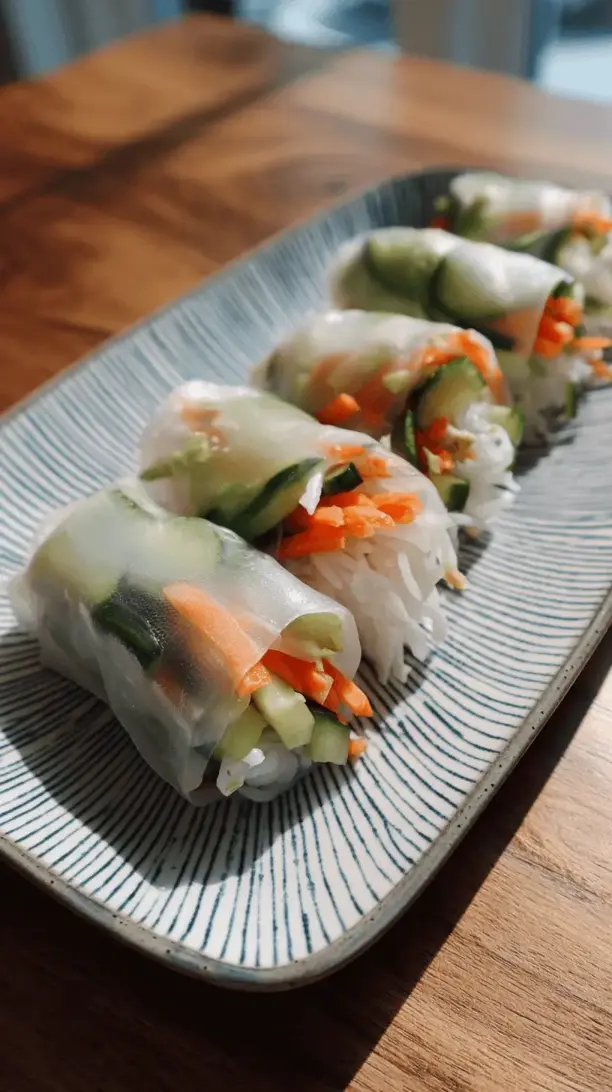
Rice Paper Veggie Rolls
Learn to make fresh, vibrant rice paper veggie rolls with this easy guide! Perfect for a light lunch or impressive appetizer. Customizable, healthy, and fun to assemble.
Ingredients
Ingredients
-
12 sheets round rice paper wrappers (22 cm / 8.5-inch size is ideal)
-
100 g rice vermicelli noodles
-
1 large carrot (julienned or grated)
-
1 medium cucumber (julienned (seeds removed))
-
1 avocado (sliced)
-
1 red bell pepper (thinly sliced)
-
1 cup red cabbage (thinly shredded)
-
1 large handful fresh mint leaves
-
1 large handful fresh cilantro leaves
-
Butter lettuce or romaine leaves (Optional, torn to size)
Instructions
-
Prepare Your Fillings. Start by cooking the rice vermicelli noodles according to package directions—this usually involves pouring boiling water over them and letting them sit for 5 minutes. Then drain and rinse with cold water to stop the cooking process. While they sit, julienne your carrot, cucumber, and bell pepper. Thinly slice the avocado and shred the cabbage. Wash and dry your herbs. Arrange everything in little bowls or sections on a large plate for easy access.01
-
Set Up Your Rolling Station. Clear a large space on your counter. Place your large shallow bowl and fill it with warm (not hot) water. Have your plates of fillings on one side, and a clean damp kitchen towel laid flat on the other side. This towel will be your rolling surface and where the finished rolls will rest.02
-
The Dip and Soften. Take one rice paper sheet and submerge it completely in the warm water for about 5 to 10 seconds. You'll feel it start to become pliable. Don't wait for it to be completely soft—it will continue to absorb water. Gently lift it out, let the excess water drip off, and lay it flat on the damp towel.03
-
Arrange the Fillings. Now for the fun part! On the bottom third of the softened rice paper, layer your ingredients. Start with a small pile of noodles, then add a few strips of carrot, cucumber, bell pepper, and cabbage. Top with a couple of avocado slices and a few mint and cilantro leaves. The trick is not to overfill—a little goes a long way, and it makes rolling much easier.04
-
The Roll-Up. Gently fold the bottom edge of the rice paper up and over the fillings, tucking it under them snugly. Then, fold the left and right sides inward, like you're making a burrito. Finally, holding the folds securely, continue rolling the bundle away from you until it's sealed. The rice paper is sticky, so it should seal itself. Place the finished roll seam-side down on a serving plate that's also been lined with the damp towel or a piece of lettuce to prevent sticking.05
-
Repeat and Serve. Continue with the remaining rice paper sheets and fillings. You'll notice you get faster with each one. Serve the rolls immediately with your favorite dipping sauce—a classic peanut sauce or a simple mix of soy sauce, lime juice, and a touch of chili is perfect.06


