
Why You’ll Love This Quinoa Pasta with Roasted Vegetables
- It’s a texture dream. You get the perfect al dente bite from the quinoa pasta, contrasted with the tender, almost creamy interior and slightly charred edges of the roasted vegetables. Every forkful is interesting.
- The flavor builds layer by layer. Roasting isn’t just cooking; it’s concentrating. The natural sugars in the vegetables caramelize, making them incredibly sweet and complex, which then infuses the simple olive oil sauce with so much depth.
- It’s wonderfully adaptable. Have a lonely sweet potato or some asparagus about to turn? Toss it in! This recipe is a blueprint for clearing out the veggie drawer in the most delicious way possible.
- It feels like a treat but is packed with goodness. You can enjoy a generous bowl without that heavy, sluggish feeling. It’s a meal that truly satisfies your soul and your body.
Ingredients & Tools
- 1 lb (450 g) quinoa pasta (fusilli, penne, or shells work great)
- 1 large red bell pepper, chopped into 1-inch pieces
- 1 large yellow bell pepper, chopped into 1-inch pieces
- 2 medium zucchinis, halved lengthwise and sliced into half-moons
- 1 pint (about 2 cups) cherry or grape tomatoes
- 1 large red onion, cut into wedges
- 4 cloves garlic, minced
- 1/3 cup extra virgin olive oil, divided
- 2 tbsp balsamic vinegar
- 1 tsp dried oregano
- 1/2 tsp red pepper flakes (optional, for a little heat)
- 1/2 cup freshly grated Parmesan cheese, plus more for serving
- 1/4 cup fresh basil leaves, thinly sliced (chiffonade)
- Kosher salt and freshly ground black pepper
Tools: Large baking sheet, large pot for pasta, colander, large mixing bowl.
The quality of your olive oil really matters here since it’s a key component of the sauce. And don’t skip the fresh basil and Parmesan at the end—they add a bright, salty freshness that brings the whole dish to life.
Serves: 4 | Prep Time: 20 minutes | Cook Time: 30 minutes | Total Time: 50 minutes
Before You Start: Tips & Ingredient Notes
- Chop your veggies uniformly. This isn’t just for looks—it ensures everything roasts at the same rate. You don’t want burnt onion and raw zucchini in the same bite!
- Don’t crowd the pan. If your baking sheet looks packed, use two. Overcrowding steams the vegetables instead of roasting them, and we’re after that delicious caramelization, not a soggy result.
- Quinoa pasta cooks fast—watch it! It can go from perfectly al dente to mushy in a matter of minutes. Start tasting a minute or two before the package instructions suggest.
- Reserve that pasta water! This is the golden rule for great pasta dishes. The starchy, salty water is like liquid gold for creating a silky, emulsified sauce that clings to every noodle and vegetable.
How to Make Quinoa Pasta with Roasted Vegetables
Step 1: Roast the Vegetables. Preheat your oven to 425°F (220°C). On your large baking sheet, toss the chopped bell peppers, zucchini, cherry tomatoes, and red onion with about 3 tablespoons of the olive oil, the balsamic vinegar, dried oregano, and a generous pinch of salt and pepper. Spread everything out in a single layer. Roast for 20-25 minutes, or until the vegetables are tender and have some beautiful browned spots. You’ll notice the tomatoes will have started to burst—that’s exactly what you want.
Step 2: Cook the Pasta. While the veggies are roasting, bring a large pot of well-salted water to a boil. Add the quinoa pasta and cook according to package directions until al dente. Just before draining, scoop out about 1 cup of the starchy pasta water and set it aside. Drain the pasta in a colander.
Step 3: Create the Sauce. Return the drained pasta to the warm pot (off the heat). Immediately add the remaining olive oil, the minced garlic, and the optional red pepper flakes. The residual heat from the pasta will gently cook the garlic, taking away its raw edge and infusing the oil. Give it a good stir—you should smell the garlic aroma right away.
Step 4: Combine Everything. Now, add the entire tray of roasted vegetables and any juices from the pan into the pot with the pasta. Sprinkle in about half of the grated Parmesan. Add a 1/4 cup of the reserved pasta water to start. Toss everything together vigorously. The pasta water, oil, and cheese will emulsify into a light sauce that coats everything beautifully. If it seems a bit dry, add another splash of pasta water.
Step 5: The Final Touches. Taste and adjust the seasoning with more salt or pepper if needed. Gently fold in most of the fresh basil, saving a little for garnish. The heat will wilt the basil just slightly, releasing its incredible fragrance.
Step 6: Serve Immediately. Divide the pasta among bowls, topping each with a final sprinkle of the remaining Parmesan cheese and fresh basil. This dish is best enjoyed right away while the pasta is still perfectly textured and the veggies are warm.
Serving Suggestions
Complementary Dishes
- A simple arugula salad with lemon vinaigrette — The peppery arugula and sharp lemon provide a crisp, refreshing contrast to the rich, roasted flavors of the pasta.
- Grilled chicken or shrimp — For those wanting a extra protein boost, simply seasoned grilled meat or seafood makes this a heartier meal without complicating the flavors.
- Garlic bread made with a crusty baguette — Because is it even a pasta night without something to sop up every last bit of that delicious oily sauce? I think not.
Drinks
- A crisp Pinot Grigio or Sauvignon Blanc — The bright acidity and citrus notes in these white wines cut through the richness of the dish beautifully.
- A light-bodied, fruity red like a Pinot Noir — If you prefer red, choose one with low tannins so it complements rather than overpowers the vegetables.
- Sparkling water with a squeeze of lemon — The ultimate non-alcoholic option that cleanses the palate and keeps everything feeling fresh and light.
Something Sweet
- Lemon sorbet — It’s the perfect palate-cleansing finish—zesty, light, and incredibly refreshing after a savory meal.
- Dark chocolate almond clusters — A few pieces of something rich and slightly bitter with a bit of crunch feels like a sophisticated yet simple ending.
- Fresh berries with a dollop of whipped cream — Sweet, juicy, and effortless. It feels like a treat without being overly heavy.
Top Mistakes to Avoid
- Mistake: Underseasoning the roasting vegetables. This is your first and best chance to build a foundation of flavor. Salt draws out moisture and helps with caramelization, so be generous!
- Mistake: Adding the garlic to the roasting pan at the beginning. Minced garlic burns incredibly quickly at high heat and will become bitter. We add it off the heat with the warm pasta instead.
- Mistake: Skipping the pasta water. I’ve messed this up before too, thinking it wasn’t important. Trust me, it is! It’s the secret to a sauce that clings and doesn’t just pool at the bottom of the bowl.
- Mistake: Overcooking the quinoa pasta. It doesn’t have the same resilience as traditional wheat pasta. Mushy pasta can ruin the texture of the whole dish, so set a timer and taste-test diligently.
Expert Tips
- Tip: Roast your vegetables on parchment paper. This isn’t just for easy cleanup—it prevents the balsamic vinegar from sticking and burning on the pan, which can create a bitter taste.
- Tip: Let the roasted tomatoes do the work. When you toss everything together, gently press on some of the burst tomatoes. They’ll create a kind of instant, chunky sauce that’s just wonderful.
- Tip: Add a protein boost effortlessly. Stir in a can of drained and rinsed chickpeas for the last 5 minutes of roasting. They’ll get crispy and add fantastic texture and plant-based protein.
- Tip: Make it ahead for lunches. This pasta holds up surprisingly well. It’s delicious served at room temperature, making it a perfect pack-and-go lunch for the next day.
FAQs
Can I use a different type of pasta?
Absolutely! This recipe works with any pasta you like. Regular semolina pasta, whole wheat, chickpea pasta, or even rice noodles would be fine. Just adjust the cooking time according to the package directions. The key is still to reserve that starchy cooking water to help create the sauce, no matter what pasta you choose.
My dish turned out a bit dry. What happened?
This usually means you needed a bit more of the reserved pasta water! The pasta and vegetables will absorb the liquid as they sit. The fix is easy: next time, don’t be shy with adding that starchy water, a quarter-cup at a time, until the sauce looks glossy and clings nicely. If it’s already made, you can gently reheat it with a splash of regular water or more olive oil to loosen it up.
Can I make this recipe vegan?
Easily! Just omit the Parmesan cheese or use your favorite vegan Parmesan alternative. The dish gets so much flavor from the roasted vegetables and garlicky oil that it’s still incredibly satisfying without the cheese. You could also add a sprinkle of nutritional yeast for a cheesy, umami flavor.
What other vegetables would work well?
Oh, so many! Broccoli florets, cauliflower, sliced mushrooms, asparagus (add it for the last 10 minutes of roasting), cubed butternut squash, or even thinly sliced fennel would be fantastic. The trick is to choose vegetables that will roast in roughly the same amount of time, or add quicker-cooking veggies later in the process.
How should I store leftovers?
Let the pasta cool completely, then store it in an airtight container in the refrigerator for up to 3 days. The pasta will absorb more liquid, so when reheating, add a tablespoon or two of water to the pan or microwave-safe bowl to help revive it. It’s also delicious cold straight from the fridge!
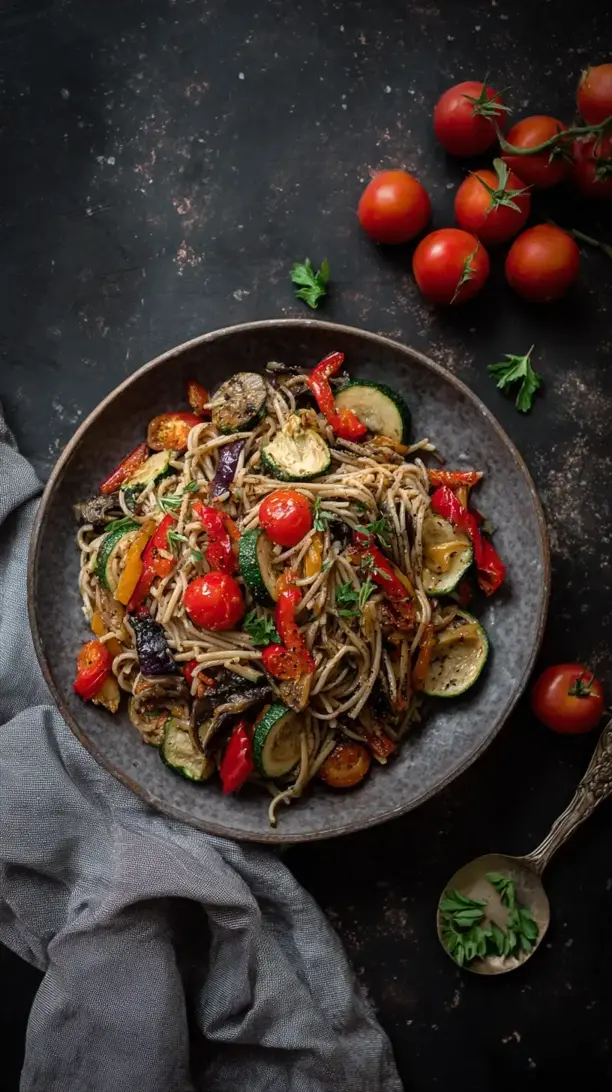
Quinoa Pasta With Roasted Vegetables
Whip up this easy Quinoa Pasta with Roasted Vegetables! A gluten-free, flavor-packed weeknight meal with caramelized veggies & a garlicky olive oil sauce. Simple, healthy, and delicious.
Ingredients
Ingredients
-
1 lb quinoa pasta (fusilli, penne, or shells work great)
-
1 large red bell pepper (chopped into 1-inch pieces)
-
1 large yellow bell pepper (chopped into 1-inch pieces)
-
2 medium zucchinis (halved lengthwise and sliced into half-moons)
-
1 pint cherry or grape tomatoes (about 2 cups)
-
1 large red onion (cut into wedges)
-
4 cloves garlic (minced)
-
1/3 cup extra virgin olive oil (divided)
-
2 tbsp balsamic vinegar
-
1 tsp dried oregano
-
1/2 tsp red pepper flakes (optional, for a little heat)
-
1/2 cup Parmesan cheese (freshly grated, plus more for serving)
-
1/4 cup fresh basil leaves (thinly sliced (chiffonade))
-
Kosher salt (to taste)
-
freshly ground black pepper (to taste)
Instructions
-
Roast the Vegetables. Preheat your oven to 425°F (220°C). On your large baking sheet, toss the chopped bell peppers, zucchini, cherry tomatoes, and red onion with about 3 tablespoons of the olive oil, the balsamic vinegar, dried oregano, and a generous pinch of salt and pepper. Spread everything out in a single layer. Roast for 20-25 minutes, or until the vegetables are tender and have some beautiful browned spots. You'll notice the tomatoes will have started to burst—that's exactly what you want.01
-
Cook the Pasta. While the veggies are roasting, bring a large pot of well-salted water to a boil. Add the quinoa pasta and cook according to package directions until al dente. Just before draining, scoop out about 1 cup of the starchy pasta water and set it aside. Drain the pasta in a colander.02
-
Create the Sauce. Return the drained pasta to the warm pot (off the heat). Immediately add the remaining olive oil, the minced garlic, and the optional red pepper flakes. The residual heat from the pasta will gently cook the garlic, taking away its raw edge and infusing the oil. Give it a good stir—you should smell the garlic aroma right away.03
-
Combine Everything. Now, add the entire tray of roasted vegetables and any juices from the pan into the pot with the pasta. Sprinkle in about half of the grated Parmesan. Add a 1/4 cup of the reserved pasta water to start. Toss everything together vigorously. The pasta water, oil, and cheese will emulsify into a light sauce that coats everything beautifully. If it seems a bit dry, add another splash of pasta water.04
-
The Final Touches. Taste and adjust the seasoning with more salt or pepper if needed. Gently fold in most of the fresh basil, saving a little for garnish. The heat will wilt the basil just slightly, releasing its incredible fragrance.05
-
Serve Immediately. Divide the pasta among bowls, topping each with a final sprinkle of the remaining Parmesan cheese and fresh basil. This dish is best enjoyed right away while the pasta is still perfectly textured and the veggies are warm.06