
Why You’ll Love This Pork Tenderloin with Roasted Veggies
- It’s a complete, balanced meal on one pan. Seriously, the protein and veggies cook together, which means fewer dishes to wash and a wonderfully cohesive flavour profile. Everything just… belongs together.
- The texture contrast is absolutely perfect. You get a beautifully seared, tender, and juicy pork tenderloin alongside veggies that are crispy on the edges and soft in the middle. It’s a real symphony in your mouth.
- It’s surprisingly simple but feels special. Pork tenderloin has this elegant reputation, but it’s honestly one of the easiest cuts of meat to cook correctly. This recipe demystifies it and gives you a foolproof path to a gorgeous dinner.
- The leftovers are fantastic. If you’re lucky enough to have any left, sliced cold pork makes for an incredible sandwich the next day, and the roasted veggies are delicious tossed into a salad or scrambled with eggs.
Ingredients & Tools
- 1 (approx. 450-500 g) pork tenderloin
- 2 tbsp olive oil, divided
- 1 tsp dried thyme
- 1 tsp garlic powder
- 1 tsp smoked paprika
- 1/2 tsp salt, plus more to taste
- 1/4 tsp freshly ground black pepper
- 450 g baby potatoes, halved
- 2 medium carrots, peeled and cut into 2-inch chunks
- 1 large red onion, cut into wedges
- 1 bell pepper (any colour), cored and sliced
- 2 cloves garlic, minced
- 1 tbsp fresh parsley, chopped (for garnish)
Tools: A large rimmed baking sheet, parchment paper (optional but helpful for cleanup), a small bowl for the rub, a sharp knife, and tongs.
The quality of your ingredients really shines here. A good olive oil helps the herbs stick and promotes browning, and using fresh garlic alongside the powder gives a more complex, rounded flavour. Don’t stress about the veggie choices—this is a great recipe for cleaning out the crisper drawer!
Serves: 3-4 | Prep Time: 15 minutes | Cook Time: 25-30 minutes | Total Time: 40-45 minutes
Before You Start: Tips & Ingredient Notes
- Pat that pork dry! This might be the single most important step for getting a beautiful sear. Use paper towels to thoroughly dry the surface of the tenderloin before adding the oil and rub. A dry surface browns; a wet one steams.
- Cut your veggies uniformly. Try to get the potatoes and carrots into similar-sized pieces so they cook at the same rate. Nobody wants a burnt carrot next to a rock-hard potato.
- Don’t crowd the pan. If your baking sheet looks a little too packed, use two. Overcrowding causes the vegetables to steam instead of roast, and we’re all about that crispy, caramelized texture.
- Let the meat come to room temperature. Take the pork tenderloin out of the fridge about 20-30 minutes before you plan to cook it. This helps it cook more evenly from edge to center.
How to Make Pork Tenderloin with Roasted Veggies
Step 1: First, preheat your oven to 220°C (425°F). This high heat is key for getting a good sear on the pork and roasting the veggies quickly and efficiently. While the oven heats up, line your large rimmed baking sheet with parchment paper if you’re using it—it makes cleanup an absolute dream.
Step 2: Now, prepare the pork. Pat the entire tenderloin completely dry with paper towels. This is the secret to a good crust! In a small bowl, mix together the dried thyme, garlic powder, smoked paprika, salt, and pepper. Drizzle one tablespoon of the olive oil over the pork and rub it all over the surface. Then, sprinkle the herb and spice rub evenly over the pork, massaging it in so it adheres nicely.
Step 3: Time for the vegetables. In a large bowl, toss the halved baby potatoes, carrot chunks, red onion wedges, and bell pepper slices with the remaining one tablespoon of olive oil. Season generously with a pinch more salt and pepper. You want everything to be lightly and evenly coated. Spread the veggies out on the prepared baking sheet in a single layer.
Step 4: Nestle the seasoned pork tenderloin right in the center of the baking sheet, surrounded by the vegetables. This setup is perfect—the pork juices will mingle with the veggies as they cook, adding incredible flavour. Pop the whole tray into the preheated oven.
Step 5: Roast for 15 minutes. You’ll start to smell the amazing aromas. After 15 minutes, carefully remove the pan from the oven. The pork should be starting to brown. Use tongs to flip the tenderloin over. This ensures even cooking and browning on both sides. Give the vegetables a good stir and shuffle them around the pan at this point, too.
Step 6: Return the pan to the oven and roast for another 10 to 15 minutes. The total cooking time will be around 25-30 minutes. To check for doneness, insert an instant-read thermometer into the thickest part of the pork—you’re aiming for 63°C (145°F). The veggies should be tender and nicely caramelized at the edges.
Step 7: This next step is crucial for juicy pork: resting. Transfer the pork tenderloin to a cutting board and tent it loosely with foil. Let it rest for at least 5-10 minutes. This allows the juices to redistribute throughout the meat. While it rests, you can give the veggies one final taste and adjust seasoning if needed.
Step 8: Finally, slice the rested pork tenderloin into 1-inch thick medallions. Arrange them on a platter with the roasted veggies, drizzle any accumulated juices from the cutting board over everything, and garnish with the fresh chopped parsley. Serve immediately and enjoy the deliciousness!
Serving Suggestions
Complementary Dishes
- A simple arugula salad with a lemon vinaigrette — The peppery, sharp freshness of the salad cuts through the richness of the pork and veggies beautifully, balancing the whole plate.
- Creamy polenta or mashed potatoes — If you’re feeling extra indulgent, a soft, creamy base is wonderful for soaking up all the delicious juices from the pork and vegetables.
- Crusty bread or dinner rolls — Absolutely non-negotiable for mopping up every last bit of flavour from your plate. A warm, crusty baguette is perfect.
Drinks
- A medium-bodied red wine like Pinot Noir — Its bright acidity and red fruit notes complement the pork without overpowering the delicate roasted vegetables.
- A crisp, dry cider — The apple flavours are a classic pairing with pork, and the effervescence cleanses the palate wonderfully between bites.
- Sparkling water with a squeeze of lemon — For a non-alcoholic option, the bubbles and citrus are refreshing and help highlight the savoury notes of the meal.
Something Sweet
- Warm apple crumble with vanilla ice cream — It continues the cozy, autumnal vibe of the main course. The warm spices and cool ice cream are a perfect ending.
- Dark chocolate pots de crème — Rich, silky, and not too sweet, this dessert feels elegant and provides a deep, satisfying finish to the meal.
- Poached pears with a hint of cinnamon — Light, fragrant, and simple, this dessert feels sophisticated without being heavy after a satisfying dinner.
Top Mistakes to Avoid
- Mistake: Skipping the pat-dry step. I’ve rushed this before and ended up with pale, steamed pork instead of a beautifully browned crust. It takes ten seconds and makes a world of difference.
- Mistake: Overcooking the pork. Pork tenderloin is very lean, so it can go from juicy to dry surprisingly fast. Trust your thermometer! 63°C (145°F) is the sweet spot for safe, succulent meat.
- Mistake: Not letting the meat rest. If you slice into the pork right away, all those precious juices will run out onto the cutting board. Letting it rest ensures every bite is moist.
- Mistake: Using a dull knife to slice. A sharp knife will give you clean, beautiful slices. A dull one will tear the meat and make it look ragged. It’s worth the quick sharpening!
Expert Tips
- Tip: Add delicate veggies halfway. If you want to include quicker-cooking vegetables like asparagus, cherry tomatoes, or zucchini, add them to the pan when you flip the pork. This prevents them from turning to mush.
- Tip: Make a quick pan sauce. After removing the pork and veggies, place the hot baking sheet on the stove over low heat. Add a splash of broth or wine, scrape up the browned bits, and simmer for a minute for an incredible, instant sauce.
- Tip: Customize the spice rub. This recipe is a template! Love heat? Add some chilli flakes. Prefer herbs? Use rosemary or herbes de Provence. Make it your own.
- Tip: Use the leftovers creatively. Thinly slice the leftover pork and toss it with the veggies into a frittata, or pile it all on a baguette with some aioli for a next-level sandwich.
FAQs
Can I use a different cut of pork?
You can, but the cooking time will change significantly. Pork tenderloin is long, thin, and lean, so it cooks quickly. A pork loin roast is thicker and will take much longer. I’d stick with tenderloin for this specific recipe to keep the timing synced with the vegetables. If you do substitute, you’ll likely need to par-cook the larger roast before adding the veggies to the pan.
My vegetables aren’t crispy. What happened?
The most common culprit is overcrowding the pan. If the veggies are piled on top of each other, they’ll steam instead of roast. Make sure they’re in a single, even layer. Also, ensure your oven is fully preheated—a hot oven is essential for that initial blast of heat that creates crispiness. Using enough oil to coat everything lightly is key, too.
How do I know the pork is done without a thermometer?
While I highly recommend a thermometer for accuracy, you can press on the pork with your finger. It should feel firm but still have a little give, similar to the fleshy part of your palm when you touch your thumb to your middle finger. The juices should also run clear when pierced with a knife. But honestly, a thermometer is a small investment for perfect results every time.
Can I prepare this ahead of time?
Absolutely! You can chop the vegetables and make the spice rub a day in advance. Store them separately in airtight containers in the fridge. When you’re ready to cook, just pat the pork dry, rub it with oil and the spice mix, toss the veggies with oil, and you’re good to go. This cuts the prep time down to almost nothing.
What other vegetables work well?
So many! This is a very flexible recipe. Think root vegetables like parsnips, sweet potatoes, or beetroot (though beetroot will stain everything). Broccoli or cauliflower florets are great (add them halfway). Butternut squash cubes are wonderful. Just keep in mind their cooking times and adjust when you add them to the pan accordingly.
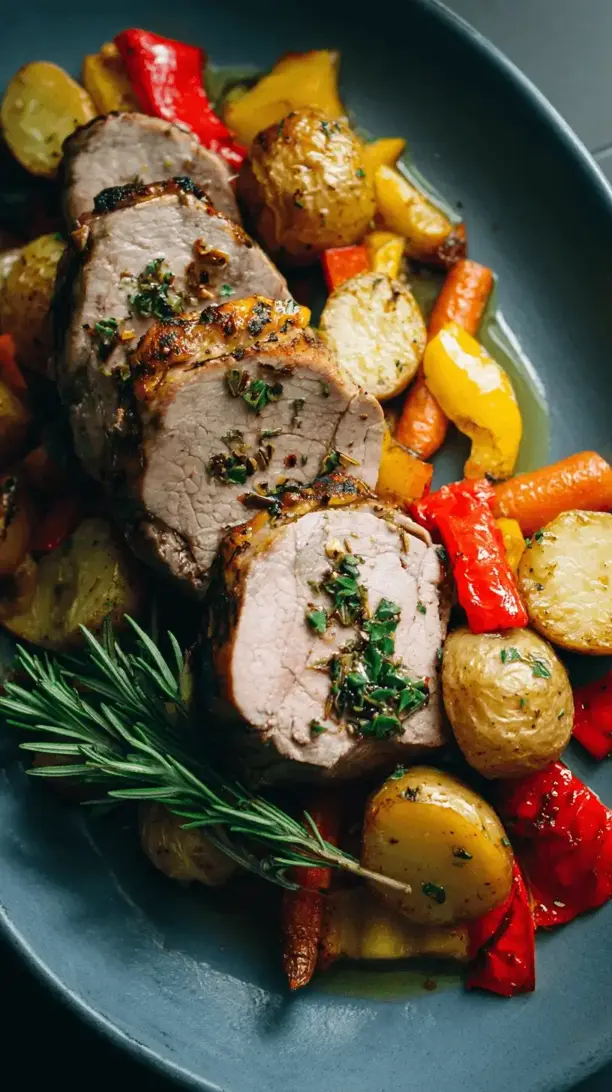
Pork Tenderloin With Roasted Veggies
My easy one-pan pork tenderloin with roasted veggies! A juicy, herb-rubbed pork tenderloin & caramelized vegetables cook together for a simple, elegant weeknight dinner.
Ingredients
Ingredients
-
1 pork tenderloin (approx. 450-500 g)
-
2 tbsp olive oil (divided)
-
1 tsp dried thyme
-
1 tsp garlic powder
-
1 tsp smoked paprika
-
1/2 tsp salt (plus more to taste)
-
1/4 tsp freshly ground black pepper
-
450 g baby potatoes (halved)
-
2 medium carrots (peeled and cut into 2-inch chunks)
-
1 large red onion (cut into wedges)
-
1 bell pepper (any colour, cored and sliced)
-
2 cloves garlic (minced)
-
1 tbsp fresh parsley (chopped (for garnish))
Instructions
-
First, preheat your oven to 220°C (425°F). This high heat is key for getting a good sear on the pork and roasting the veggies quickly and efficiently. While the oven heats up, line your large rimmed baking sheet with parchment paper if you're using it—it makes cleanup an absolute dream.01
-
Now, prepare the pork. Pat the entire tenderloin completely dry with paper towels. This is the secret to a good crust! In a small bowl, mix together the dried thyme, garlic powder, smoked paprika, salt, and pepper. Drizzle one tablespoon of the olive oil over the pork and rub it all over the surface. Then, sprinkle the herb and spice rub evenly over the pork, massaging it in so it adheres nicely.02
-
Time for the vegetables. In a large bowl, toss the halved baby potatoes, carrot chunks, red onion wedges, and bell pepper slices with the remaining one tablespoon of olive oil. Season generously with a pinch more salt and pepper. You want everything to be lightly and evenly coated. Spread the veggies out on the prepared baking sheet in a single layer.03
-
Nestle the seasoned pork tenderloin right in the center of the baking sheet, surrounded by the vegetables. This setup is perfect—the pork juices will mingle with the veggies as they cook, adding incredible flavour. Pop the whole tray into the preheated oven.04
-
Roast for 15 minutes. You'll start to smell the amazing aromas. After 15 minutes, carefully remove the pan from the oven. The pork should be starting to brown. Use tongs to flip the tenderloin over. This ensures even cooking and browning on both sides. Give the vegetables a good stir and shuffle them around the pan at this point, too.05
-
Return the pan to the oven and roast for another 10 to 15 minutes. The total cooking time will be around 25-30 minutes. To check for doneness, insert an instant-read thermometer into the thickest part of the pork—you're aiming for 63°C (145°F). The veggies should be tender and nicely caramelized at the edges.06
-
This next step is crucial for juicy pork: resting. Transfer the pork tenderloin to a cutting board and tent it loosely with foil. Let it rest for at least 5-10 minutes. This allows the juices to redistribute throughout the meat. While it rests, you can give the veggies one final taste and adjust seasoning if needed.07
-
Finally, slice the rested pork tenderloin into 1-inch thick medallions. Arrange them on a platter with the roasted veggies, drizzle any accumulated juices from the cutting board over everything, and garnish with the fresh chopped parsley. Serve immediately and enjoy the deliciousness!08