
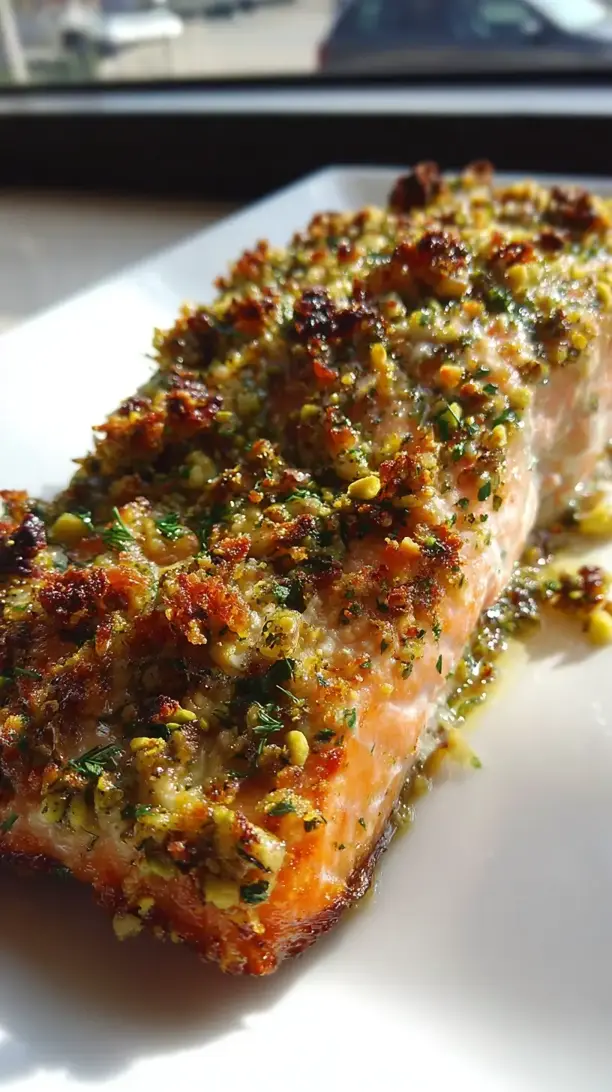
This pistachio crusted salmon is an elegant yet easy dinner that’s perfect for weeknights or entertaining. The rich, flaky fish pairs beautifully with a crunchy, savory-sweet pistachio crust for a luxurious texture and flavor contrast. It’s a simple, impressive meal that always delights.
Why You’ll Love This Pistachio Crusted Salmon
- Texture party: Crispy crust meets tender, flaky salmon in every bite.
- Complex flavor: Buttery pistachios, sharp Parmesan, and fresh herbs create a balanced taste.
- Foolproof & versatile: Easy to scale and forgiving for any occasion.
- Stunning presentation: Vibrant green and golden crust looks as good as it tastes.
Ingredients & Tools
- 4 salmon fillets, skin-on or skinless (about 150-180 g each)
- 1 cup shelled pistachios, unsalted
- 1/3 cup Panko breadcrumbs
- 1/4 cup grated Parmesan cheese
- 2 tbsp fresh parsley, finely chopped
- 1 tbsp fresh dill, finely chopped
- 2 cloves garlic, minced
- Zest of 1 lemon
- 3 tbsp olive oil, divided
- 1 tbsp Dijon mustard
- 1/2 tsp salt (or to taste)
- 1/4 tsp black pepper
- 1 lemon, cut into wedges for serving
Tools: A food processor or a sharp knife and cutting board for chopping the pistachios, a baking sheet, parchment paper, a small bowl.
Notes: Use fresh, raw, unsalted pistachios for best flavor control. Don’t skip the fresh herbs and lemon zest—they add bright, aromatic notes.
Nutrition (per serving)
| Calories: | 485 kcal |
| Protein: | 38 g |
| Fat: | 32 g |
| Carbs: | 12 g |
| Fiber: | 3 g |
Serves: 4 | Prep Time: 15 minutes | Cook Time: 12-15 minutes | Total Time: 30 minutes
Before You Start: Tips & Ingredient Notes
- Pat your salmon dry. This is a small step with a huge impact. Taking a moment to pat the fillets dry with a paper towel ensures the mustard and oil will stick properly, and it helps the crust adhere instead of sliding off a wet surface.
- What if my pistachios are salted? No panic! If you can only find salted pistachios, simply reduce or omit the added salt in the crust mixture. Give the nuts a quick taste first to gauge their saltiness.
- To skin or not to skin? I personally prefer skin-on fillets for this recipe. The skin gets wonderfully crisp in the oven and acts as a natural barrier, keeping the bottom of the salmon incredibly moist. You can easily remove it after cooking if you prefer, but it’s deliciously edible when cooked this way.
- Don’t over-process the pistachios. You’re aiming for a coarse meal with some smaller bits and a few larger pieces for texture, not a fine, dusty powder. A few quick pulses in the food processor is all you need.
How to Make Pistachio Crusted Salmon
Step 1: Prepare the Crust. Start by preheating your oven to 200°C (400°F) and lining a baking sheet with parchment paper. Add the shelled pistachios to your food processor. Pulse them just 5-7 times until they’re coarsely chopped—you want a mix of textures, from fine crumbs to some small chunks. If you don’t have a processor, you can chop them by hand on a cutting board; it’s a bit more work, but it works perfectly. Transfer the chopped pistachios to a medium bowl.
Step 2: Combine the Crust Ingredients. To the bowl with the pistachios, add the Panko breadcrumbs, grated Parmesan, chopped parsley, dill, minced garlic, and lemon zest. Pour in 2 tablespoons of the olive oil and mix everything together with a fork until it’s well combined and has a crumbly, damp-sand consistency. The oil will help the crust brown beautifully and bind it together. Give it a taste and adjust the seasoning with salt and pepper if needed.
Step 3: Prep the Salmon. Place your salmon fillets on the prepared baking sheet. Pat them thoroughly dry with paper towels—this is crucial for adhesion. In a small dish, stir together the remaining 1 tablespoon of olive oil and the Dijon mustard. Using a pastry brush or the back of a spoon, generously coat the top (non-skin side) of each salmon fillet with this mustard-oil mixture. This acts as your flavorful “glue” for the crust.
Step 4: Apply the Crust. Now, take a handful of the pistachio mixture and gently press it onto the top of each mustard-coated salmon fillet. Use your hands to pack it down firmly and evenly, creating a uniform layer that covers the entire surface. Don’t be shy—press it on there! A good, firm press ensures the crust will stay put during baking and form a lovely, cohesive topping.
Step 5: Bake to Perfection. Place the baking sheet in the preheated oven and bake for 12-15 minutes. The exact time will depend on the thickness of your fillets. You’re looking for the crust to be a deep golden brown and the salmon to be opaque and flake easily with a fork at its thickest part. For medium, aim for the 12-minute mark; for well-done, go closer to 15. You’ll notice the most wonderful nutty aroma filling your kitchen.
Step 6: Rest and Serve. Once out of the oven, let the salmon rest on the baking sheet for about 2-3 minutes before serving. This allows the juices to redistribute throughout the fish, ensuring every single bite is moist and flavorful. Serve immediately with fresh lemon wedges on the side for a bright, finishing squeeze.
Storage & Freshness Guide
- Fridge: Store leftovers in an airtight container for up to 2 days.
- Freezer: Not recommended; crust becomes soggy upon thawing.
- Reviving: Reheat in a 175°C (350°F) oven for 10 minutes to restore crispness.
Serving Suggestions
Complementary Dishes
- Lemon Herb Quinoa — The light, fluffy texture and citrusy notes are a perfect, protein-packed base that soaks up any delicious juices from the salmon.
- Simple Roasted Asparagus — Toss asparagus spears with olive oil, salt, and pepper and roast them alongside the salmon for a truly effortless, elegant side.
- Creamy Mashed Potatoes — For the ultimate comfort food pairing, the creamy, mild potatoes provide a wonderful contrast to the crunchy, flavorful salmon crust.
Drinks
- A Crisp Sauvignon Blanc — Its signature notes of citrus and green herbs mirror the flavors in the crust and cut through the richness of the fish beautifully.
- Sparkling Water with Cucumber & Mint — A non-alcoholic option that feels incredibly refreshing and palate-cleansing, resetting your taste buds between bites.
Something Sweet
- Lemon Sorbet — A scoop of tangy, clean lemon sorbet is the perfect, light dessert to follow the rich salmon, leaving you feeling satisfied but not overly full.
- Dark Chocolate and Orange Truffles — The deep, bitter notes of dark chocolate and the bright citrus of orange are a sophisticated and delightful way to end the meal.
Top Mistakes to Avoid
- Mistake: Using a wet salmon fillet. If the surface of the salmon is even a little bit wet, the crust mixture won’t stick properly and will likely slide right off during baking or serving. A quick pat-dry is your best friend here.
- Mistake: Grinding the pistachios into a powder. Over-processing the nuts robs the dish of its wonderful textural contrast. You want a coarse chop with varied bits to create that satisfying crunch in every mouthful.
- Mistake: Not pressing the crust on firmly. Gently sprinkling the crust on top won’t create a cohesive layer. You really need to use the palm of your hand to press and pack the mixture onto the salmon to form a solid, beautiful crust.
- Mistake: Overcooking the salmon. Salmon continues to cook from residual heat after it comes out of the oven. Pull it out when it’s just slightly under your desired doneness in the very center, and let it carry-over cook during the resting period for a perfectly moist result.
Expert Tips
- Tip: Toast your pistachios for a deeper flavor. Before you chop them, spread the shelled pistachios on a baking sheet and toast them in a 175°C (350°F) oven for 5-7 minutes. Let them cool completely before proceeding. This simple step intensifies their nutty flavor incredibly.
- Tip: Make it ahead for easy entertaining. You can prepare the crust mixture and coat the salmon with the mustard-oil “glue” up to 4 hours in advance. Keep them separate in the fridge, then just press the crust on right before baking. It makes dinner party prep a breeze.
- Tip: Use the broiler for a final crisp. If your crust isn’t as golden as you’d like after baking, pop the baking sheet under the broiler for the last 60-90 seconds. Watch it like a hawk—it can go from golden to burnt in a flash!
- Tip: Try a different nut or herb. This method is very adaptable. Swap the pistachios for almonds or pecans, and the dill for tarragon or thyme. It’s a great way to use what you have on hand and create a new favorite.
FAQs
Can I make this with frozen salmon?
Absolutely, but you need to thaw it properly first. The best method is to transfer it from the freezer to the fridge the night before you plan to cook. Never try to crust and bake salmon that is still frozen or even partially frozen, as it will release too much water and the crust will become soggy and detach. Once fully thawed, pat it extremely dry before you begin.
Can I use a different type of fish?
You sure can! This crust works wonderfully on other firm-fleshed fish like cod, halibut, or even sea bass. Just be mindful that cooking times may vary depending on the thickness and type of fish you choose. Always cook until the fish is opaque and flakes easily.
How do I store and reheat leftovers?
Store any leftover salmon in an airtight container in the refrigerator for up to 2 days. To reheat, place it on a baking sheet in a 175°C (350°F) oven for about 10 minutes, until warmed through. I don’t recommend using the microwave, as it will make the crust very soft and soggy.
Is it okay to use dried herbs instead of fresh?
While fresh herbs provide the best, brightest flavor, you can use dried in a pinch. The general rule is to use one-third the amount of dried herbs since they are more concentrated. So, for 1 tablespoon of fresh dill, you would use about 1 teaspoon of dried dill.
My crust is browning too quickly. What should I do?
If you notice the pistachio crust getting dark brown before the salmon is cooked through, simply tent the baking sheet loosely with a piece of aluminum foil. This will shield the crust from direct heat and allow the salmon to finish cooking without the topping burning.
Pistachio Crusted Salmon
Make this easy Pistachio Crusted Salmon for a gourmet weeknight meal. A crunchy, flavorful crust tops tender salmon. Get the simple recipe and cook it tonight!
Ingredients
For the salmon and crust:
-
4 salmon fillets (skin-on or skinless (about 150-180 g each))
-
1 cup shelled pistachios (unsalted)
-
1/3 cup Panko breadcrumbs
-
1/4 cup grated Parmesan cheese
-
2 tbsp fresh parsley (finely chopped)
-
1 tbsp fresh dill (finely chopped)
-
2 cloves garlic (minced)
-
Zest of 1 lemon
-
3 tbsp olive oil (divided)
-
1 tbsp Dijon mustard
-
1/2 tsp salt (or to taste)
-
1/4 tsp black pepper
-
1 lemon (cut into wedges for serving)
Instructions
-
Start by preheating your oven to 200°C (400°F) and lining a baking sheet with parchment paper. Add the shelled pistachios to your food processor. Pulse them just 5-7 times until they’re coarsely chopped—you want a mix of textures, from fine crumbs to some small chunks. If you don’t have a processor, you can chop them by hand on a cutting board; it’s a bit more work, but it works perfectly. Transfer the chopped pistachios to a medium bowl.01
-
To the bowl with the pistachios, add the Panko breadcrumbs, grated Parmesan, chopped parsley, dill, minced garlic, and lemon zest. Pour in 2 tablespoons of the olive oil and mix everything together with a fork until it’s well combined and has a crumbly, damp-sand consistency. The oil will help the crust brown beautifully and bind it together. Give it a taste and adjust the seasoning with salt and pepper if needed.02
-
Place your salmon fillets on the prepared baking sheet. Pat them thoroughly dry with paper towels—this is crucial for adhesion. In a small dish, stir together the remaining 1 tablespoon of olive oil and the Dijon mustard. Using a pastry brush or the back of a spoon, generously coat the top (non-skin side) of each salmon fillet with this mustard-oil mixture. This acts as your flavorful “glue” for the crust.03
-
Now, take a handful of the pistachio mixture and gently press it onto the top of each mustard-coated salmon fillet. Use your hands to pack it down firmly and evenly, creating a uniform layer that covers the entire surface. Don’t be shy—press it on there! A good, firm press ensures the crust will stay put during baking and form a lovely, cohesive topping.04
-
Place the baking sheet in the preheated oven and bake for 12-15 minutes. The exact time will depend on the thickness of your fillets. You’re looking for the crust to be a deep golden brown and the salmon to be opaque and flake easily with a fork at its thickest part. For medium, aim for the 12-minute mark; for well-done, go closer to 15. You’ll notice the most wonderful nutty aroma filling your kitchen.05
-
Once out of the oven, let the salmon rest on the baking sheet for about 2-3 minutes before serving. This allows the juices to redistribute throughout the fish, ensuring every single bite is moist and flavorful. Serve immediately with fresh lemon wedges on the side for a bright, finishing squeeze.06