

Why You’ll Love This Pineapple Coconut Pancakes
- They’re a total mood-lifter. The combination of bright pineapple and warm coconut is instantly transportive, turning an ordinary morning into something feel-good and special.
- The texture is pure magic. We’re talking incredibly fluffy pancakes with little pockets of juicy, caramelized pineapple and a subtle crunch from toasted coconut flakes.
- They’re surprisingly simple to master. While they taste gourmet, the method is straightforward pancake-making—just with a few tropical twists that make all the difference.
- They’re wonderfully versatile. Enjoy them as a decadent weekend treat, or make a bigger batch and freeze them for a quick, sunny breakfast on a busy weekday.
Ingredients & Tools
- 1 ½ cups all-purpose flour
- 2 tbsp granulated sugar
- 2 tsp baking powder
- ½ tsp baking soda
- ½ tsp salt
- 1 ¼ cups well-shaken canned coconut milk (not light)
- 1 large egg
- 3 tbsp melted coconut oil (plus extra for the pan)
- 1 tsp pure vanilla extract
- 1 cup finely chopped fresh pineapple (about ½ a small pineapple)
- ½ cup unsweetened shredded coconut, divided
- Maple syrup or honey, for serving
Tools: A large mixing bowl, a medium mixing bowl, a whisk, a griddle or large non-stick skillet, a ¼-cup measuring cup or ladle for pouring.
The quality of your coconut milk really matters here—go for a full-fat version for the richest flavor and texture. And using fresh pineapple instead of canned makes a world of difference, giving you that perfect bright, tangy pop in every bite.
Serves: 3-4 (makes about 10-12 pancakes) | Prep Time: 15 minutes | Cook Time: 15 minutes | Total Time: 30 minutes
Before You Start: Tips & Ingredient Notes
- Pineapple Prep is Key. Make sure to chop your pineapple into small, pea-sized pieces. Larger chunks can make the pancakes difficult to flip and can release too much moisture, leading to a gummy center.
- Shake That Can! Always give your can of coconut milk a really vigorous shake before opening. This helps emulsify the creamy top layer with the thinner liquid at the bottom, giving you a consistent texture for the batter.
- Toasting Coconut for Maximum Flavor. While you can use shredded coconut straight from the bag, toasting half of it first unlocks a deep, nutty aroma that takes these pancakes to another level. It only takes a few minutes in a dry pan and is totally worth it.
- Don’t Overmix the Batter. This is the golden rule of fluffy pancakes. A few lumps in the batter are absolutely fine—overmixing develops the gluten in the flour and will result in tough, flat pancakes.
How to Make Pineapple Coconut Pancakes
Step 1: Toast the Coconut. Place a dry skillet over medium heat. Add about ¼ cup of the shredded coconut. Stir constantly for 2-3 minutes, until the coconut turns a beautiful golden brown and becomes fragrant. Be careful—it can burn quickly! Immediately transfer it to a small plate to cool. This toasty flavor will be our secret weapon.
Step 2: Combine the Dry Ingredients. In your large mixing bowl, whisk together the flour, sugar, baking powder, baking soda, and salt. You want to ensure the leavening agents are evenly distributed throughout the flour for a consistent, fluffy rise in every single pancake.
Step 3: Whisk the Wet Ingredients. In the medium bowl, whisk the coconut milk, egg, melted coconut oil, and vanilla extract until they are smoothly combined. The mixture might look a little separated at first, but just keep whisking—it will come together into a creamy, homogenous liquid.
Step 4: Bring It All Together. Pour the wet ingredients into the dry ingredients. Using your whisk or a spatula, gently fold the mixture together. Stop as soon as you no longer see large streaks of flour. Remember, lumps are your friend here! Then, gently fold in the chopped pineapple, the toasted coconut, and the remaining ¼ cup of untoasted coconut. The untoasted coconut will provide a lovely chewy texture.
Step 5: Heat the Griddle. Place your griddle or non-stick skillet over medium heat. Let it get properly hot—a good test is flicking a few drops of water onto the surface; they should sizzle and dance. Lightly grease the surface with a bit of coconut oil or a neutral cooking spray.
Step 6: Cook to Golden Perfection. Using your ¼-cup measure, pour batter onto the hot griddle. You’ll notice bubbles starting to form on the surface and the edges will look set after about 2-3 minutes. This is your cue to peek underneath. When the bottom is a deep golden brown, it’s time to flip. Cook for another 1-2 minutes on the second side until equally golden and cooked through.
Step 7: Keep Them Warm. As you cook the pancakes in batches, transfer them to a wire rack set on a baking sheet in a 200°F (95°C) oven. This keeps them warm and crispy-edged without getting soggy, which is a common fate for pancakes stacked on a plate.
Step 8: Serve Immediately. Pile those golden, coconut-flecked pancakes high on a plate. Drizzle generously with warm maple syrup or a drizzle of honey, and if you’re feeling extra, a little extra fresh pineapple on the side never hurts. Dig in right away—they’re at their absolute best when hot off the griddle.
Serving Suggestions
Complementary Dishes
- Crispy Coconut Bacon — The smoky, salty, crispy crunch is an unbelievable contrast to the sweet, fluffy pancakes. It sounds wild, but trust me, it’s a game-changer.
- Fresh Mango Slices — Adding another tropical fruit to the plate enhances the vacation vibe and adds a different kind of juicy sweetness that pairs beautifully with the pineapple.
- Scrambled Eggs with Chives — For a more substantial brunch, a simple side of softly scrambled eggs provides a savory, protein-rich balance to the sweet pancakes.
Drinks
- Strong Cold Brew Coffee — The bold, slightly bitter notes of a good cold brew cut through the sweetness of the pancakes perfectly, creating a wonderfully balanced flavor experience.
- Fresh Pineapple Orange Juice — Double down on the tropical theme with a bright, freshly squeezed juice blend. It’s like sunshine in a glass.
- Coconut Ginger Tea — A warm, soothing cup of tea with coconut and ginger notes complements the flavors in the pancakes without being too heavy.
Something Sweet
- Toasted Macadamia Nut Ice Cream — For the most decadent brunch-dessert hybrid imaginable, place a single, warm pancake in a bowl and top with a scoop of rich, buttery macadamia nut ice cream.
- Coconut Whipped Cream — A dollop of lightly sweetened coconut whipped cream on top of the stack adds an extra layer of cloud-like creaminess.
- Dark Chocolate Shavings — A light snowfall of bitter dark chocolate over the syrup-drizzled pancakes introduces a sophisticated, grown-up twist that’s simply divine.
Top Mistakes to Avoid
- Mistake: Using a batter that’s too thin. If your batter seems runny, the pancakes will spread too much and be thin and floppy. The batter should be thick enough to slowly dollop off the spoon. If it’s too thin, add a tablespoon of flour at a time until it thickens up.
- Mistake: Flipping too early. Impatience is the enemy of a good flip. Wait for those bubbles to form on the surface and the edges to look matte and set. If you try to flip too soon, you’ll end up with a messy, undercooked pancake.
- Mistake: Crowding the pan. Give each pancake plenty of room to spread and cook evenly. If they’re too close together, they’ll steam instead of developing a nice, crispy exterior, and flipping becomes a tricky maneuver.
- Mistake: Pressing down on the pancakes after flipping. I’ve been guilty of this too! Pressing them with the spatula squeezes out the air you worked so hard to incorporate, resulting in denser pancakes. Just let them be.
Expert Tips
- Tip: Make a “test pancake.” Always cook one small pancake first to test your batter consistency and griddle temperature. This allows you to adjust the heat or the batter before committing to the whole batch.
- Tip: Use an ice cream scoop for perfect portions. A spring-loaded ice cream scoop (like a #16 or #20 disher) is fantastic for portioning batter. It’s quick, clean, and ensures all your pancakes are the same size for even cooking.
- Tip: Get creative with mix-ins. Feel free to add a tablespoon of rum extract to the batter for a piña colada twist, or fold in some mini white chocolate chips for an extra treat. This recipe is a wonderful canvas.
- Tip: Freeze for later. These freeze beautifully. Let the cooked pancakes cool completely, then layer them between parchment paper in a freezer bag. Reheat in a toaster or oven for a fast, fantastic breakfast any day of the week.
FAQs
Can I use canned pineapple instead of fresh?
You can, but there are a couple of things to keep in mind. First, make sure it’s canned pineapple in juice, not heavy syrup, to avoid making the pancakes overly sweet. Second, and this is crucial, you must drain the pineapple extremely well and pat it completely dry with paper towels. The extra moisture from the can will make your batter too wet and the pancakes gummy. Fresh pineapple really is best for texture and flavor, but in a pinch, well-drained canned will work.
My pancakes are turning out dense. What did I do wrong?
Dense pancakes are almost always a result of overmixing the batter. When you combine the wet and dry ingredients, you only want to mix until they are *just* combined. Lumps are perfectly fine! Overmixing develops the gluten in the flour, which leads to toughness. Another culprit could be old baking powder or soda, which lose their leavening power over time. Check the expiration dates on yours.
Can I make the batter the night before?
I don’t recommend it for the fluffiest results. The chemical reaction between the baking powder/soda and the liquid ingredients starts as soon as they’re mixed. Letting the batter sit overnight will cause it to deflate, and you’ll lose that wonderful rise. For a make-ahead option, you’re better off mixing the dry ingredients and the wet ingredients in separate containers the night before, then quickly combining them in the morning.
How can I make these pancakes vegan?
It’s quite easy! For the egg, use a “flax egg” (1 tbsp ground flaxseed mixed with 3 tbsp water, let sit for 5 minutes to gel). Just make sure your sugar is certified vegan, as some regular white sugar is processed with bone char. The rest of the recipe is naturally vegan-friendly. The coconut milk and oil provide plenty of richness.
What’s the best way to reheat leftover pancakes?
The absolute best method is to reheat them in a toaster or a conventional oven preheated to 350°F (175°C) for about 5-10 minutes. This will restore their crispy edges. The microwave will make them soft and steamy, which isn’t ideal. If you must use a microwave, do it for just 15-20 seconds and then consider giving them a quick sear in a hot pan to crisp them up again.
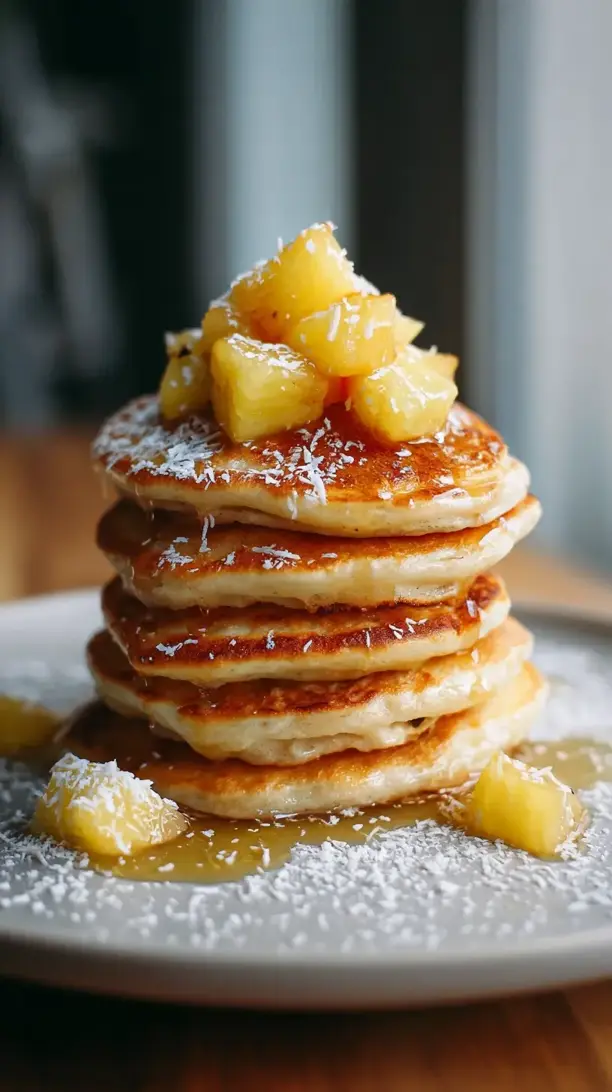
Pineapple Coconut Pancakes
Whip up a taste of the tropics with these fluffy Pineapple Coconut Pancakes! An easy, from-scratch recipe that turns your weekend brunch into a sunny, feel-good vacation. Perfectly golden and bursting with flavor.
Ingredients
Ingredients
-
1 ½ cups all-purpose flour
-
2 tbsp granulated sugar
-
2 tsp baking powder
-
½ tsp baking soda
-
½ tsp salt
-
1 ¼ cups canned coconut milk (well-shaken, not light)
-
1 large egg
-
3 tbsp coconut oil (melted, plus extra for the pan)
-
1 tsp pure vanilla extract
-
1 cup fresh pineapple (finely chopped (about ½ a small pineapple))
-
½ cup unsweetened shredded coconut (divided)
-
Maple syrup or honey (for serving)
Instructions
-
Toast the Coconut. Place a dry skillet over medium heat. Add about ¼ cup of the shredded coconut. Stir constantly for 2-3 minutes, until the coconut turns a beautiful golden brown and becomes fragrant. Be careful—it can burn quickly! Immediately transfer it to a small plate to cool. This toasty flavor will be our secret weapon.01
-
Combine the Dry Ingredients. In your large mixing bowl, whisk together the flour, sugar, baking powder, baking soda, and salt. You want to ensure the leavening agents are evenly distributed throughout the flour for a consistent, fluffy rise in every single pancake.02
-
Whisk the Wet Ingredients. In the medium bowl, whisk the coconut milk, egg, melted coconut oil, and vanilla extract until they are smoothly combined. The mixture might look a little separated at first, but just keep whisking—it will come together into a creamy, homogenous liquid.03
-
Bring It All Together. Pour the wet ingredients into the dry ingredients. Using your whisk or a spatula, gently fold the mixture together. Stop as soon as you no longer see large streaks of flour. Remember, lumps are your friend here! Then, gently fold in the chopped pineapple, the toasted coconut, and the remaining ¼ cup of untoasted coconut. The untoasted coconut will provide a lovely chewy texture.04
-
Heat the Griddle. Place your griddle or non-stick skillet over medium heat. Let it get properly hot—a good test is flicking a few drops of water onto the surface; they should sizzle and dance. Lightly grease the surface with a bit of coconut oil or a neutral cooking spray.05
-
Cook to Golden Perfection. Using your ¼-cup measure, pour batter onto the hot griddle. You'll notice bubbles starting to form on the surface and the edges will look set after about 2-3 minutes. This is your cue to peek underneath. When the bottom is a deep golden brown, it's time to flip. Cook for another 1-2 minutes on the second side until equally golden and cooked through.06
-
Keep Them Warm. As you cook the pancakes in batches, transfer them to a wire rack set on a baking sheet in a 200°F (95°C) oven. This keeps them warm and crispy-edged without getting soggy, which is a common fate for pancakes stacked on a plate.07
-
Serve Immediately. Pile those golden, coconut-flecked pancakes high on a plate. Drizzle generously with warm maple syrup or a drizzle of honey, and if you're feeling extra, a little extra fresh pineapple on the side never hurts. Dig in right away—they're at their absolute best when hot off the griddle.08


