
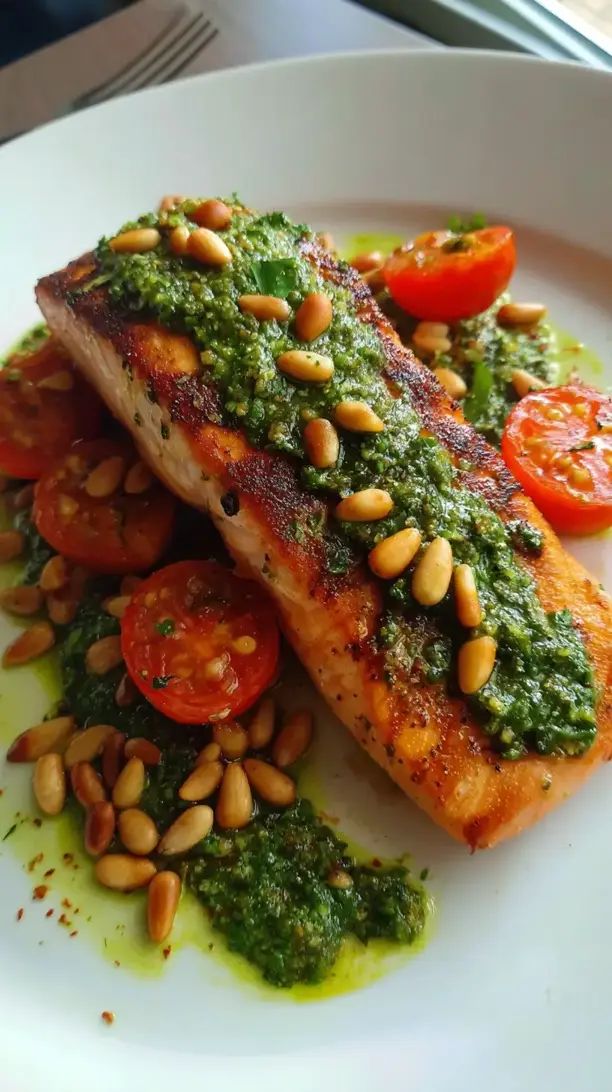
This pesto salmon recipe delivers a vibrant, restaurant-quality meal in under 20 minutes. The herby pesto forms a gorgeous crust while sealing in the salmon’s natural juices. It’s a simple yet impressive dish perfect for any night of the week.
Why You’ll Love This Pesto Salmon
Quick & Easy: Ready in 20 minutes with minimal hands-on effort.
Knockout Flavor: Buttery salmon pairs perfectly with bright, garlicky pesto.
Versatile Serving: Great over pasta, salads, grains, or roasted veggies.
Indulgent & Healthy: Packed with omega-3s, protein, and fresh basil goodness.
Ingredients & Tools
- 4 salmon fillets (about 150-180 g each), skin-on or skinless
- ½ cup basil pesto (homemade or good-quality store-bought)
- 1 tbsp olive oil
- 1 lemon
- ¼ tsp salt, or to taste
- ¼ tsp freshly cracked black pepper
- 2 tbsp pine nuts (optional, for garnish)
- Fresh basil leaves (optional, for garnish)
Tools: A baking sheet, parchment paper or aluminum foil, a small bowl, a pastry brush (optional but helpful).
Notes: Don’t stress about making your own pesto—a good store-bought version works wonderfully. A squeeze of fresh lemon at the end is non-negotiable.
Nutrition (per serving)
| Calories: | 415 kcal |
| Protein: | 35 g |
| Fat: | 29 g |
| Carbs: | 3 g |
| Fiber: | 1 g |
Serves: 4 | Prep Time: 5 minutes | Cook Time: 12-15 minutes | Total Time: 20 minutes
Before You Start: Tips & Ingredient Notes
- What kind of salmon should I use? Look for fillets labeled “center-cut” as they tend to be a more uniform thickness, which leads to even cooking. You can use either skin-on or skinless; the skin can help protect the bottom from drying out and gets deliciously crisp.
- Homemade vs. store-bought pesto. Honestly, both are great! If you have five extra minutes, a quick homemade pesto with fresh basil, garlic, pine nuts, Parmesan, and olive oil is phenomenal. But a high-quality jarred pesto will still give you a fantastic, flavorful result with zero fuss.
- Don’t skip the pat-dry. Before you season the salmon, use a paper towel to gently pat the fillets dry. This removes excess surface moisture, which helps the pesto adhere better and promotes a beautiful sear on the outside instead of steaming.
- Bring your salmon to room temperature. If you have a few minutes, let the salmon sit out for 10-15 minutes before cooking. This isn’t strictly mandatory, but it helps the fish cook more evenly from edge to center, preventing an overcooked exterior and a cold, undercooked middle.
How to Make Pesto Salmon
Step 1: First, preheat your oven to 200°C (400°F). This is the perfect temperature for cooking salmon—hot enough to get a nice cook on the pesto and cook the fish quickly, but not so hot that it burns the delicate herbs. While the oven is heating up, line a rimmed baking sheet with parchment paper or a small sheet of foil. This isn’t just for easy cleanup; it also prevents the salmon from sticking and any pesto drippings from burning onto your pan.
Step 2: Now, prepare your salmon fillets. Place them on the prepared baking sheet and use a paper towel to pat them completely dry on all sides. This is a small step that makes a huge difference! A dry surface allows the pesto to stick properly and helps the fish develop a better texture. Once dry, drizzle the fillets with the olive oil and rub it all over. Then, season both sides generously with the salt and black pepper.
Step 3: It’s pesto time! Spoon the pesto onto the top of each salmon fillet. I like to use the back of the spoon to spread it into a nice, even layer that covers the entire surface, going all the way to the edges. You want a good, generous coating—about two tablespoons per fillet. The pesto will act as a flavorful blanket, basting the salmon from the top as it bakes and forming a deliciously aromatic crust.
Step 4: If you’re using pine nuts for garnish, now is the time to sprinkle them over the pesto-covered salmon. They’ll toast up beautifully in the oven, adding a lovely crunch and nutty flavor that complements the pesto perfectly. Slide the baking sheet into the preheated oven, placing it in the middle rack for the most consistent heat.
Step 5: Bake for 12 to 15 minutes. The exact time will depend on the thickness of your fillets. You’re looking for the salmon to be opaque and flake easily when pressed gently with a fork. A good visual cue is that the pesto will look set and might be just starting to brown slightly at the edges. Be careful not to overcook it—the salmon will continue to cook for a minute or two after you take it out of the oven due to residual heat.
Step 6: Once out of the oven, let the salmon rest on the pan for 2-3 minutes. This allows the juices to redistribute throughout the fillets, ensuring every bite is moist and tender. Just before serving, cut your lemon in half and squeeze fresh juice over the top of each fillet. This bright, acidic finish is the final touch that really makes the dish sing. Garnish with a few fresh basil leaves if you have them, and serve immediately.
Storage & Freshness Guide
- Fridge: Store leftovers in an airtight container for up to 2 days.
- Freezer: Not recommended; pesto may darken and texture can suffer.
- Reviving: Reheat gently in a covered dish at 300°F with a splash of water.
Serving Suggestions
Complementary Dishes
- Creamy Parmesan Risotto — The rich, creamy texture of the risotto is a dreamy base for the flaky salmon and its flavorful pesto topping.
- Simple Arugula Salad — The peppery bite of arugula dressed with just a squeeze of lemon and a drizzle of olive oil provides a fresh, crisp contrast to the rich fish.
- Roasted Asparagus or Broccoli — Tossed in olive oil and roasted until tender-crisp, these veggies can cook in the oven alongside the salmon for a truly effortless meal.
Drinks
- A Crisp Sauvignon Blanc — Its citrusy and herbal notes mirror the flavors in the pesto and lemon, cleansing the palate beautifully between bites.
- Sparkling Water with Lemon — For a non-alcoholic option, the bubbles and citrus are incredibly refreshing and help balance the dish’s richness.
- A Light Pinot Noir — If you prefer red, a light-bodied, fruity Pinot Noir won’t overpower the salmon and complements its earthy notes.
Something Sweet
- Lemon Sorbet — A scoop of tangy, refreshing lemon sorbet is the perfect palate-cleansing finish that continues the citrus theme.
- Almond Biscotti — The nutty flavor of the biscotti echoes the pine nuts in the pesto, making for a sophisticated and simple dessert pairing.
- Fresh Berry Crostata — A rustic, not-too-sweet fruit tart provides a lovely, bright end to the meal without feeling too heavy.
Top Mistakes to Avoid
- Mistake: Overcooking the salmon. This is the number one way to ruin a perfectly good piece of fish. Overcooked salmon becomes dry and chalky. Remember, it continues to cook after it comes out of the oven, so take it out when it’s just slightly under your desired doneness in the very center.
- Mistake: Using a cold baking sheet. Placing salmon on a cold pan and then into the oven can lead to uneven cooking and a less appealing texture. Always preheat your oven first and use a room-temperature baking sheet.
- Mistake: Skipping the pat-dry. I’ve messed this up before too, thinking it wasn’t a big deal. But if the salmon is wet, the pesto slides right off and the fish steams instead of getting that perfect, flavorful crust.
- Mistake: Forgetting to let it rest. Cutting into the salmon the second it comes out of the oven will cause all those precious juices to run out onto the plate. Letting it rest for a few minutes ensures a moist, tender fillet.
Expert Tips
- Tip: For an extra flavor boost, mix a teaspoon of lemon zest into your pesto before spreading it on the salmon. It amplifies the citrus notes and makes the entire dish taste even brighter and more vibrant.
- Tip: If your salmon has the skin on and you love crispy skin, start it skin-side down in a hot oven-safe skillet on the stovetop for 3-4 minutes before transferring the entire skillet to the oven to finish cooking. This gives you perfectly crispy skin and evenly cooked flesh.
- Tip: Don’t have pine nuts? Toast some slivered almonds or walnuts in a dry pan until fragrant, then chop them finely and use them as your garnish. It’s a great, budget-friendly substitution that still delivers that essential nutty crunch.
- Tip: To check for doneness without cutting into the fish, use the tip of a sharp knife to peek into the thickest part. The flesh should be opaque and should separate easily into large, moist flakes. Alternatively, an instant-read thermometer inserted into the thickest part should read between 52-54°C (125-130°F) for medium-rare or 57°C (135°F) for medium.
FAQs
Can I make this pesto salmon in an air fryer?
Absolutely, and it turns out wonderfully! Preheat your air fryer to 190°C (375°F). Prepare the salmon with pesto as directed, then place the fillets in the basket in a single layer, making sure they aren’t touching. Air fry for 8-10 minutes, depending on thickness. The circulating hot air gives the pesto a really nice, slightly crisp finish. Just keep a close eye on it during the last couple of minutes to prevent the pesto from burning.
How do I know when the salmon is perfectly cooked?
The most reliable method is to use an instant-read thermometer. Insert it into the thickest part of the fillet; you’re aiming for about 52-54°C (125-130°F) for a medium-rare, still-juicy center, or 57°C (135°F) for fully opaque, flaky medium. Without a thermometer, gently press the top of the salmon with a fork or your finger. It should feel firm but still have a little give, and it will flake apart easily.
Can I use a different type of pesto?
Of course! This recipe is very adaptable. A sun-dried tomato pesto would be rich and tangy, a kale and walnut pesto would be earthier, and a cilantro-based pesto would give it a vibrant, almost Latin-inspired twist. The method remains exactly the same—just swap in your pesto of choice and enjoy the new flavor profile.
What are the best leftovers strategies?
Leftover pesto salmon is fantastic flaked cold over a salad or stirred into pasta. To reheat it gently, place it in a covered oven-safe dish with a splash of water or broth and warm it in a 150°C (300°F) oven for about 10 minutes. Avoid the microwave, as it will very quickly overcook the fish and make it rubbery.
My pesto browned a lot in the oven. What happened?
This is common and usually means your oven was a bit too hot, or the rack was too high. Pesto, especially if it’s homemade with fresh basil, can brown quickly. It’s still perfectly safe to eat and often tastes deliciously toasted! For next time, you can tent the baking sheet loosely with foil for the first half of the cooking time, then remove it to let the top set for the final few minutes.
Pesto Salmon
Make perfect Pesto Salmon in 20 minutes! This easy, healthy recipe features a flavorful pesto crust. Get the simple, step-by-step instructions now.
Ingredients
For the Ingredients
-
4 salmon fillets (about 150-180 g each, skin-on or skinless)
-
½ cup basil pesto (homemade or good-quality store-bought)
-
1 tbsp olive oil
-
1 lemon
-
¼ tsp salt (or to taste)
-
¼ tsp freshly cracked black pepper
-
2 tbsp pine nuts (optional, for garnish)
-
Fresh basil leaves (optional, for garnish)
Instructions
-
First, preheat your oven to 200°C (400°F). While the oven is heating up, line a rimmed baking sheet with parchment paper or a small sheet of foil.01
-
Now, prepare your salmon fillets. Place them on the prepared baking sheet and use a paper towel to pat them completely dry on all sides. Once dry, drizzle the fillets with the olive oil and rub it all over. Then, season both sides generously with the salt and black pepper.02
-
It’s pesto time! Spoon the pesto onto the top of each salmon fillet. Use the back of the spoon to spread it into a nice, even layer that covers the entire surface, going all the way to the edges.03
-
If you’re using pine nuts for garnish, now is the time to sprinkle them over the pesto-covered salmon. Slide the baking sheet into the preheated oven, placing it in the middle rack for the most consistent heat.04
-
Bake for 12 to 15 minutes. The exact time will depend on the thickness of your fillets. You’re looking for the salmon to be opaque and flake easily when pressed gently with a fork.05
-
Once out of the oven, let the salmon rest on the pan for 2-3 minutes. Just before serving, cut your lemon in half and squeeze fresh juice over the top of each fillet. Garnish with a few fresh basil leaves if you have them, and serve immediately.06