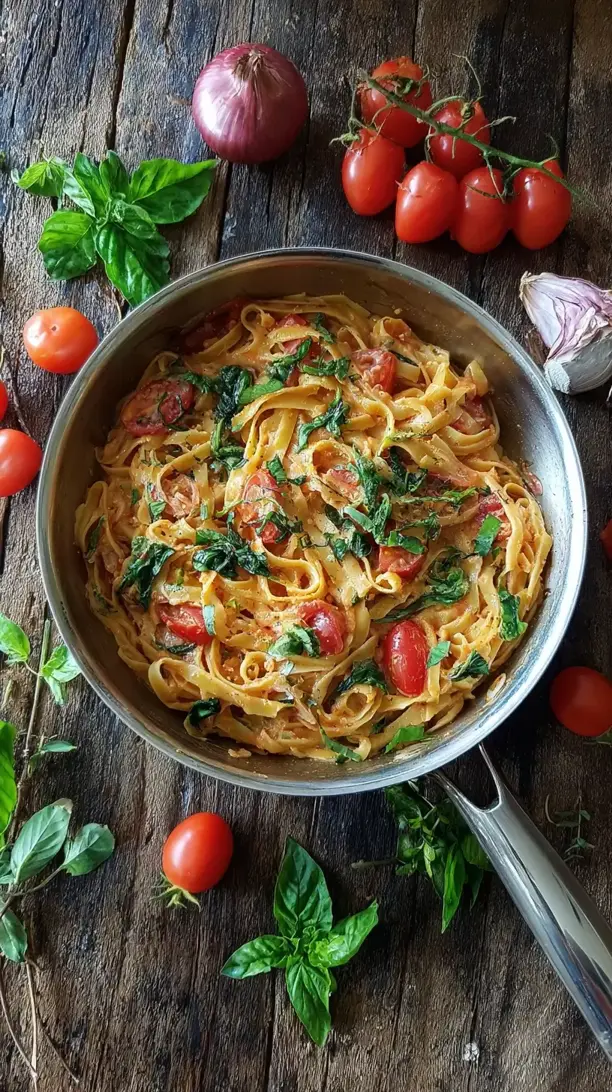

Why You’ll Love This One Pot Tomato Basil Pasta
- It’s a true one-pot wonder. This is the biggest win, honestly. From start to finish, everything happens in a single pot. That means less time scrubbing and more time relaxing with your plate of pasta. You’ll really appreciate this on those nights when the thought of a pile of dishes is just too much.
- The flavor is incredibly deep and cohesive. Because the pasta cooks directly in the tomato broth, it soaks up all that savory, garlicky goodness from the inside out. It’s a different level of flavor compared to just tossing cooked pasta with a sauce. Every single strand is infused with the essence of the dish.
- It’s surprisingly hands-off. Once you’ve done the quick initial sauté and added the liquids, the pot mostly takes care of itself. You just need to give it an occasional stir to prevent sticking. It’s the perfect time to set the table, make a quick salad, or just enjoy a few quiet minutes.
- It feels fancy without any fuss. The final flourish of fresh basil and a drizzle of good olive oil makes this dish look like it came from a rustic Italian trattoria. It’s humble ingredients transformed into something really special, and you get all the credit.
Ingredients & Tools
- 2 tablespoons olive oil
- 1 medium yellow onion, finely chopped
- 4 cloves garlic, minced
- 1 (28-ounce / 800 g) can crushed tomatoes
- 4 cups (1 liter) vegetable broth (or chicken broth)
- 12 ounces (340 g) linguine or spaghetti
- 1 teaspoon dried oregano
- 1/2 teaspoon red pepper flakes (optional, for a little heat)
- 1 cup fresh basil leaves, packed, plus more for garnish
- Salt and black pepper to taste
- 1/2 cup (50 g) freshly grated Parmesan cheese, plus more for serving
Tools: A large, heavy-bottomed pot or Dutch oven (this is key for even cooking), a wooden spoon, and a microplane or box grater for the cheese.
The quality of your canned tomatoes really makes a difference here—splurge on the good stuff if you can. And that fresh basil at the end? Non-negotiable. It brings a bright, peppery freshness that ties the whole dish together.
Serves: 4 | Prep Time: 10 minutes | Cook Time: 20 minutes | Total Time: 30 minutes
Before You Start: Tips & Ingredient Notes
- Your Pot Matters. Use a wide, heavy-bottomed pot or Dutch oven. A thin pot might cause the pasta to scorch on the bottom before it’s cooked through. The heavy base distributes heat evenly, which is crucial for this method.
- Don’t Skip the Onion Sauté. Taking those few extra minutes to properly soften the onion is the foundation of your sauce’s flavor. You’re not looking for color, just translucency. This step builds a sweet, savory base that makes all the difference.
- Break the Pasta. Yes, you read that right. To ensure everything fits and cooks evenly in the pot, break your linguine or spaghetti in half before adding it. It might feel a little sacrilegious, but it’s a practical must for this recipe.
- Freshly Grated Parmesan is Key. The pre-grated stuff in a tub often contains anti-caking agents that can make your sauce grainy and prevent it from melting smoothly. Taking a minute to grate your own cheese will give you a much silkier, more flavorful result.
How to Make One Pot Tomato Basil Pasta
Step 1: Start by building your flavor base. Heat the olive oil in your large pot over medium heat. Add the finely chopped onion and cook, stirring occasionally, for about 4-5 minutes, until it becomes soft and translucent. You’ll notice the kitchen starting to smell amazing. Now, add the minced garlic and cook for just one more minute—until it’s fragrant but not browned. Burnt garlic can turn bitter, so keep a close eye on it.
Step 2: It’s time for the main event. Pour in the entire can of crushed tomatoes and the vegetable broth. Add the dried oregano, red pepper flakes (if using), a good pinch of salt, and several grinds of black pepper. Give everything a really good stir with your wooden spoon, scraping the bottom of the pot to incorporate all those flavorful bits from the onion and garlic.
Step 3: Carefully submerge the broken pasta into the liquid. Use your spoon to gently press it down so it’s fully covered. The trick is to make sure all the pasta is wet—this ensures even cooking. Bring the liquid to a lively simmer, then immediately reduce the heat to medium-low to maintain a steady, gentle bubble.
Step 4: This is the hands-off part, but not completely off! Let the pasta cook uncovered for about 12-15 minutes, but you’ll need to stir it every 2-3 minutes. This is super important to prevent the pasta from sticking to the bottom of the pot. You’ll see the liquid reduce and the pasta soften and swell as it absorbs the flavorful broth.
Step 5: Check for doneness. The pasta should be al dente—tender but still with a slight bite. The sauce should have thickened significantly. If it looks a little too liquidy, let it cook for another minute or two. If it seems too thick or dry, you can stir in a splash more broth or water.
Step 6: Turn off the heat. Now, stir in the full cup of fresh basil leaves—you can tear them with your hands for more aroma or just throw them in whole. They’ll wilt perfectly in the residual heat. Finally, stir in the half cup of freshly grated Parmesan cheese. This adds a wonderful saltiness and helps the sauce become beautifully creamy.
Step 7: Give it a final taste and adjust the seasoning. Does it need more salt? Another grind of pepper? This is your moment to make it perfect. Let the pasta sit for a couple of minutes off the heat—it will thicken up just a bit more. Then, serve it immediately, garnished with extra basil leaves and a generous sprinkle of Parmesan.
Serving Suggestions
Complementary Dishes
- A Simple Arugula Salad — The peppery bite of arugula dressed with just lemon juice and olive oil provides a crisp, refreshing contrast to the rich, saucy pasta. It’s a textural dream.
- Garlic Bread or Focaccia — You’ll want something to sop up every last bit of that delicious sauce. A crunchy, buttery slice of garlic bread is the perfect tool for the job, and it feels like a celebratory meal.
- Roasted Asparagus or Green Beans — A side of simply roasted vegetables adds a lovely earthy note and makes the meal feel even more balanced and complete without much extra work.
Drinks
- A Light-bodied Red Wine — A Chianti or a Pinot Noir has enough acidity to cut through the tomato sauce without overpowering the delicate basil. It’s a classic pairing for a reason.
- Sparkling Water with Lemon — For a non-alcoholic option, the bubbles and citrus are incredibly refreshing and help cleanse the palate between bites of the savory pasta.
- A Crisp Italian Lager — The light, clean taste of a lager is fantastic with tomato-based dishes. It’s effervescent and thirst-quenching, making each bite of pasta feel new again.
Something Sweet
- Lemon Sorbet — The ultimate palate cleanser. A scoop of bright, tart lemon sorbet after this meal feels light, refreshing, and perfectly satisfying.
- Dark Chocolate Almond Biscotti — For a little crunch and a hint of bitterness, a biscotti alongside a cup of espresso is a wonderfully Italian way to end the evening.
- Fresh Berries with Whipped Cream — Sometimes simple is best. A bowl of juicy, seasonal berries with a dollop of lightly sweetened cream is a effortless and beautiful finale.
Top Mistakes to Avoid
- Mistake: Using a pot that’s too small. The pasta and liquid need room to bubble and reduce without boiling over. A crowded pot leads to uneven cooking and a big mess on your stovetop. A 5-quart Dutch oven is ideal.
- Mistake: Not stirring frequently enough. I’ve messed this up before too… it’s tempting to walk away. But the starch from the pasta can cause it to stick and burn on the bottom of the pot. Set a timer and give it a gentle stir every few minutes.
- Mistake: Adding the basil and cheese while the heat is still on. The residual heat is plenty to wilt the basil and melt the cheese. If you add them while the pot is actively cooking, the basil can turn dark and bitter, and the cheese can become stringy or clumpy.
- Mistake: Overcooking the pasta. Because the pasta continues to absorb liquid and soften even after the heat is off, it’s best to take it off the heat when it’s just a minute or two shy of being perfectly al dente. It will finish cooking as it rests.
Expert Tips
- Tip: Let it rest before serving. After you’ve stirred in the basil and cheese, let the pasta sit off the heat for 2-3 minutes. This allows the sauce to thicken slightly and the flavors to meld together even more beautifully. Patience is a virtue here.
- Tip: Boost the umami. For an even deeper, savorier flavor, add a tablespoon of tomato paste when you’re cooking the onions and garlic. Let it cook for a minute until it darkens slightly—this caramelizes the sugars and adds a wonderful complexity.
- Tip: Make it creamy. If you’re feeling indulgent, stir in a splash of heavy cream or a couple of tablespoons of mascarpone cheese at the very end, along with the Parmesan. It creates a luxuriously rich and velvety sauce.
- Tip: Add protein easily. This is a great base for adding cooked protein. Stir in some shredded rotisserie chicken, cooked shrimp, or canned (drained) chickpeas during the last few minutes of cooking just to heat them through.
FAQs
Can I use a different type of pasta?
Absolutely! While long shapes like linguine and spaghetti work great, you can use shorter pasta like penne, rigatoni, or fusilli. The key is to adjust the liquid slightly if needed. Shorter pasta might require a tiny bit less liquid, so start with 3.5 cups of broth and add a little more if the pasta isn’t fully submerged after the first few minutes of cooking. The cooking time might also vary by a minute or two.
My sauce is too watery. How can I fix it?
Don’t worry, this happens sometimes! The first thing to do is let the pasta sit off the heat for a few more minutes—it will continue to absorb liquid. If it’s still too thin, you can turn the heat back on to medium and let it simmer for another 2-3 minutes, stirring constantly. Another trick is to mix a tablespoon of tomato paste with a splash of the sauce in a small bowl, then stir that mixture back into the pot to thicken it.
Can I make this recipe gluten-free?
Yes, you can! Simply substitute your favorite gluten-free pasta. Just be aware that some gluten-free pastas can release more starch and may cook faster than traditional wheat pasta, so keep a close eye on it and start checking for doneness a few minutes earlier than the recipe suggests. The method remains exactly the same.
How do I store and reheat leftovers?
The pasta will thicken significantly as it cools in the fridge. Store it in an airtight container for up to 3 days. The best way to reheat it is to add a splash of water or broth to a saucepan along with the leftovers. Gently warm it over medium-low heat, stirring frequently, until it’s hot and saucy again. The added liquid will bring it back to the right consistency.
Can I use dried basil instead of fresh?
I really don’t recommend it for this particular recipe. The fresh basil added at the end provides a bright, aromatic flavor that is the star of the dish. Dried basil has a much more muted, earthy flavor and won’t give you that same fresh pop. If you’re in a pinch, you could add a teaspoon of dried basil along with the oregano at the beginning, but still try to garnish with a little fresh parsley or chives for some color and freshness.