
Why You’ll Love This Miso Soup with Tofu and Vegetables
- It’s a hug in a bowl. The umami-rich broth is deeply soothing and warming, perfect for a chilly evening or when you need a little culinary comfort.
- It’s incredibly adaptable. Think of this recipe as a template. Not a fan of mushrooms? Use zucchini. Want more protein? Add some edamame. It’s your soup, your rules.
- It comes together in under 30 minutes. Seriously, once your dashi is simmering, the rest is just a quick assembly job. It’s fast food in the best, most wholesome sense of the phrase.
- The flavor is complex yet simple. You’ll be amazed at how a few ingredients create such a layered taste experience—salty, savory, slightly sweet, and utterly delicious.
Ingredients & Tools
- 4 cups water
- 1 piece (4-inch) kombu (dried kelp)
- 1 cup loosely packed katsuobushi (dried bonito flakes)
- ¼ cup white or yellow miso paste (see notes below)
- 200 g (7 oz) firm or silken tofu, cut into ½-inch cubes
- 4-5 shiitake mushrooms, stems removed and thinly sliced
- 2 cups loosely packed baby spinach or chopped kale
- 2 green onions, thinly sliced
- 1 sheet nori (seaweed), toasted and cut into thin strips (optional, for garnish)
Tools: A medium-sized pot (about 3 quarts), a fine-mesh strainer or sieve, a small bowl, and a whisk or fork.
The real magic here starts with the dashi, the Japanese soup stock. Using good-quality kombu and katsuobushi makes all the difference—it’s the foundation that gives the miso something incredible to build upon. And don’t stress about finding the “perfect” miso; just grab what looks good and we’ll talk about the differences in a moment.
Serves: 2-3 | Prep Time: 10 minutes | Cook Time: 15 minutes | Total Time: 25 minutes
Before You Start: Tips & Ingredient Notes
- What’s the deal with different miso pastes? White (shiro) miso is milder, sweeter, and lighter in color. Red (aka) miso is fermented longer, resulting in a deeper, saltier, more robust flavor. Yellow miso is a great middle ground. For this soup, I honestly love yellow or white.
- Don’t boil the miso! This is the golden rule. You’ll add the miso paste at the very end, off the heat, to preserve its beneficial enzymes and delicate flavor. Boiling makes it grainy and bitter.
- To silken or not to silken? Silken tofu has a wonderfully delicate, custardy texture that melts in your mouth. Firm tofu holds its shape better and gives a more substantial bite. It’s purely a textural preference—both are fantastic.
- Can’t find katsuobushi? You can make a simple kombu dashi by just using the kelp. The broth will be more delicate and vegetarian-friendly. For a quick vegan alternative, a tablespoon of soy sauce added with the miso can help boost the umami.
How to Make Miso Soup with Tofu and Vegetables
Step 1: Make the Dashi. In your medium pot, combine the 4 cups of cold water and the piece of kombu. Let it sit for about 10 minutes if you have time—this helps extract more flavor. Then, place the pot over medium-low heat. You want to bring it just to the point where small bubbles start to form at the edges of the pot, but do not let it come to a rolling boil. Right before it boils, carefully remove the kombu with tongs. Now, turn the heat up to medium, bring the water to a gentle boil, and add the katsuobushi. Immediately turn off the heat. Let the bonito flakes steep for about 5 minutes; they’ll sink to the bottom as they infuse the water.
Step 2: Strain the Broth. Place your fine-mesh strainer over a bowl or another pot. Carefully pour the dashi through the strainer to remove all the bonito flakes. You should be left with a clear, golden, aromatic broth. Discard the flakes (or save them for a second, weaker batch if you’re thrifty!). Pour the clear dashi back into your original pot.
Step 3: Cook the Vegetables. Place the pot with the strained dashi back over medium heat. Add your sliced shiitake mushrooms to the broth. Let them simmer gently for about 3-4 minutes, just until they become tender and have flavored the broth. You’ll notice the broth taking on a slightly deeper color.
Step 4: Dissolve the Miso Paste. This is the most important step! Turn off the heat completely. Scoop out a ladleful of the hot broth into a small bowl. Add your miso paste to this bowl. Using a whisk or a fork, whisk vigorously until the miso is completely dissolved and smooth, with no lumps remaining. This technique prevents clumps of miso from floating in your final soup.
Step 5: Combine and Add Delicates. Now, pour the dissolved miso mixture back into the pot of hot broth and stir gently to combine. The broth should look cloudy and inviting. Immediately add your cubed tofu and the leafy greens (spinach or kale). The residual heat from the broth is enough to wilt the spinach and warm the tofu through perfectly without overcooking anything. Give it a gentle stir.
Step 6: Serve Immediately. Ladle the soup into bowls and top generously with the sliced green onions and the toasted nori strips, if using. The soup is best enjoyed right away, while the broth is hot and the greens are vibrant. Dive in!
Serving Suggestions
Complementary Dishes
- A simple cucumber sunomono salad — The crisp, sweet, and tangy vinegar dressing provides a refreshing contrast to the warm, savory soup.
- Steamed brown rice or a bowl of sushi rice — A small bowl of rice on the side makes this a complete, balanced meal and is the traditional way to enjoy it.
- Grilled salmon or teriyaki chicken — For a more substantial dinner, the rich flavors of grilled fish or chicken pair beautifully with the clean taste of the miso.
Drinks
- Sencha green tea — The slightly astringent, grassy notes of a good sencha complement the umami of the soup without overpowering it.
- A crisp, dry sake — A chilled junmai sake can be a lovely accompaniment for a special dinner, its clean profile enhancing the meal.
- Sparkling water with a lemon wedge — Sometimes, the simplest option is the best for cleansing the palate between spoonfuls.
Something Sweet
- A few slices of fresh orange or a clementine — The burst of citrus sweetness is a light and healthy way to finish the meal.
- Matcha ice cream or mochi — For a truly Japanese-inspired end, the bittersweet flavor of matcha is a perfect follow-up.
- Dorayaki (red bean pancake) — The sweet, creamy adzuki bean paste inside these fluffy pancakes is a classic and delightful treat.
Top Mistakes to Avoid
- Mistake: Boiling the broth after adding the miso. I’ve messed this up before, too, in a hurry. It really does make the soup taste bitter and can destroy the delicate probiotics in the miso. Always take the pot off the heat.
- Mistake: Adding the miso paste directly to the pot. It’s a surefire way to get lumpy soup. Taking the time to dissolve it in a separate ladle of broth is a non-negotiable step for a silky texture.
- Mistake: Overcooking the vegetables. The spinach should be just wilted, and the mushrooms just tender. You want a bit of texture and vibrant color, not a mushy, army-green mess.
- Mistake: Using a very strong, dark miso without adjusting. If you only have a dark red miso, start with half the amount, taste, and then add more if needed. It’s much saltier and more potent than white miso.
Expert Tips
- Tip: Make a big batch of dashi and freeze it. Dashi freezes beautifully. Make a double or triple batch, let it cool, and freeze it in ice cube trays or containers. You’ll have instant miso soup starters for weeks.
- Tip: Toast your nori for maximum flavor. If you’re using nori, quickly pass it over a medium gas flame (or under a broiler for a few seconds) until it becomes crisp and fragrant. It makes a world of difference.
- Tip: Add a splash of mirin. For a touch of subtle sweetness and gloss, add a teaspoon of mirin (sweet rice wine) to the dashi right after you strain it, before adding the vegetables.
- Tip: Grate a little fresh ginger. Adding a teaspoon of freshly grated ginger to the broth with the mushrooms adds a wonderful zing and depth that’s just incredible.
FAQs
Can I make this soup vegan?
Absolutely! Simply omit the katsuobushi (bonito flakes) and make a kombu-only dashi. Just simmer the kombu as described, remove it before boiling, and that’s your broth. To boost the umami, you could add a dried shiitake mushroom or two to the steep, or even a tiny splash of soy sauce at the end. Just be mindful of the saltiness if your miso is already quite salty.
How long does leftover miso soup keep in the fridge?
Honestly, it’s best fresh, but it will keep for 2-3 days in a sealed container. The vegetables will become very soft, and the broth may separate a little. Gently reheat it on the stove over low heat, and never let it boil. You might want to add a fresh garnish of green onions to perk it up.
What other vegetables can I add?
So many options! Thinly sliced carrots or daikon radish are lovely—just add them with the mushrooms so they have time to soften. Wakame seaweed (rehydrated in water first) is a classic addition. Other great choices are thinly sliced cabbage, sweet corn, or even some cubed sweet potato.
My soup tastes a bit flat. How can I fix it?
This usually means it needs a bit more umami or salt. First, add a little more dissolved miso paste to taste. If it’s still lacking, a tiny dash of soy sauce or tamari can work wonders. A pinch of dashi powder (hon-dashi) is another quick fix, but taste as you go!
Is there a way to make this in advance for a quick lunch?
You can do some prep! Make the dashi and store it separately. Chop your vegetables and tofu and keep them in a container. In the morning, heat the dashi, cook the hardy veggies, then turn off the heat, dissolve the miso, and add the tofu and greens. It’ll be ready in under 5 minutes.
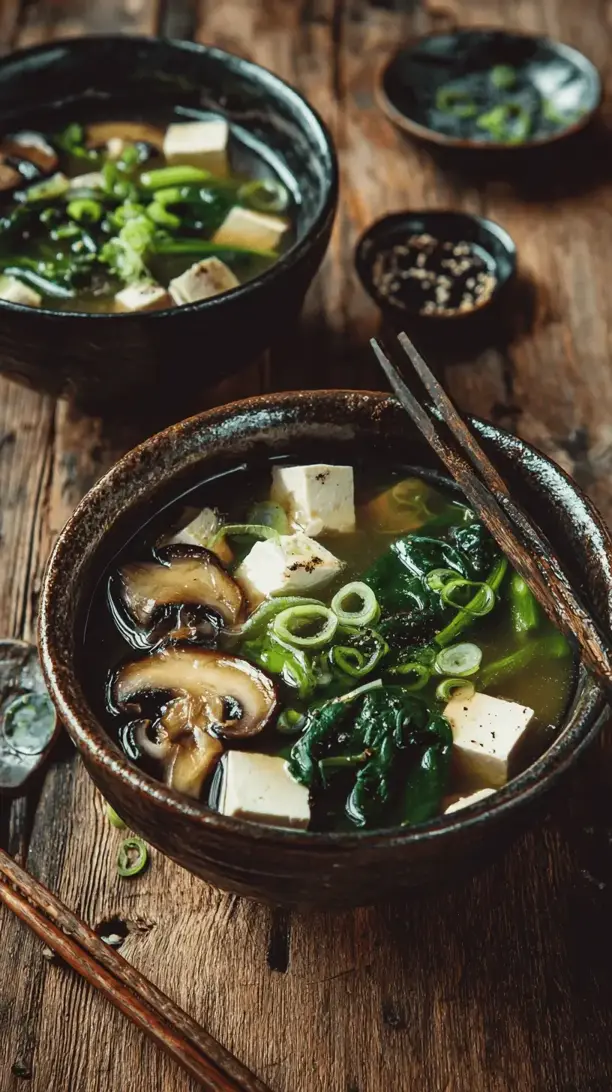
Miso Soup With Tofu And Vegetables
Learn to make authentic miso soup with tofu & veggies! My easy 25-minute recipe creates a deeply comforting, umami-rich broth. Perfect for a healthy lunch or light dinner.
Ingredients
Ingredients
-
4 cups water
-
1 piece kombu (dried kelp) (4-inch)
-
1 cup katsuobushi (dried bonito flakes) (loosely packed)
-
¼ cup white or yellow miso paste
-
200 g firm or silken tofu (7 oz, cut into ½-inch cubes)
-
4-5 shiitake mushrooms (stems removed and thinly sliced)
-
2 cups baby spinach or chopped kale (loosely packed)
-
2 green onions (thinly sliced)
-
1 sheet nori (seaweed) (toasted and cut into thin strips (optional, for garnish))
Instructions
-
Make the Dashi. In your medium pot, combine the 4 cups of cold water and the piece of kombu. Let it sit for about 10 minutes if you have time—this helps extract more flavor. Then, place the pot over medium-low heat. You want to bring it just to the point where small bubbles start to form at the edges of the pot, but do not let it come to a rolling boil. Right before it boils, carefully remove the kombu with tongs. Now, turn the heat up to medium, bring the water to a gentle boil, and add the katsuobushi. Immediately turn off the heat. Let the bonito flakes steep for about 5 minutes; they'll sink to the bottom as they infuse the water.01
-
Strain the Broth. Place your fine-mesh strainer over a bowl or another pot. Carefully pour the dashi through the strainer to remove all the bonito flakes. You should be left with a clear, golden, aromatic broth. Discard the flakes (or save them for a second, weaker batch if you're thrifty!). Pour the clear dashi back into your original pot.02
-
Cook the Vegetables. Place the pot with the strained dashi back over medium heat. Add your sliced shiitake mushrooms to the broth. Let them simmer gently for about 3-4 minutes, just until they become tender and have flavored the broth. You'll notice the broth taking on a slightly deeper color.03
-
Dissolve the Miso Paste. This is the most important step! Turn off the heat completely. Scoop out a ladleful of the hot broth into a small bowl. Add your miso paste to this bowl. Using a whisk or a fork, whisk vigorously until the miso is completely dissolved and smooth, with no lumps remaining. This technique prevents clumps of miso from floating in your final soup.04
-
Combine and Add Delicates. Now, pour the dissolved miso mixture back into the pot of hot broth and stir gently to combine. The broth should look cloudy and inviting. Immediately add your cubed tofu and the leafy greens (spinach or kale). The residual heat from the broth is enough to wilt the spinach and warm the tofu through perfectly without overcooking anything. Give it a gentle stir.05
-
Serve Immediately. Ladle the soup into bowls and top generously with the sliced green onions and the toasted nori strips, if using. The soup is best enjoyed right away, while the broth is hot and the greens are vibrant. Dive in!06