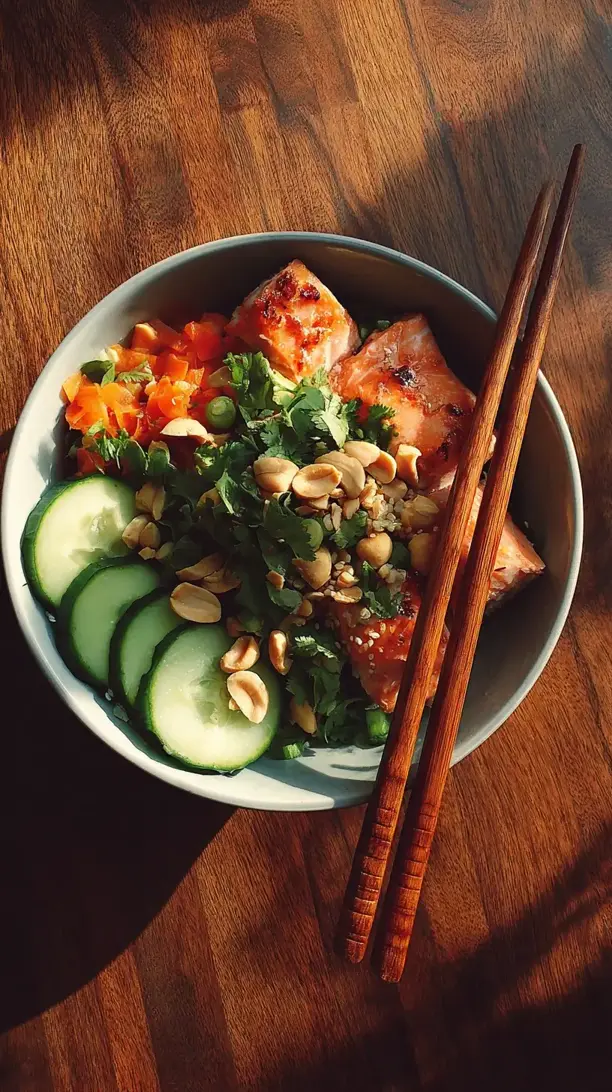

This Miso Soup with Salmon transforms a comforting classic into a complete, nourishing meal. The rich, umami-packed broth, silky tofu, and tender salmon create a harmony of flavors and textures. It’s a deceptively easy weeknight dinner that feels both rustic and elegant.
Why You’ll Love This Miso Soup with Salmon
- Complete meal: Protein, veggies, and broth in one satisfying bowl.
- Next-level umami: Fermented miso and savory salmon create a rich, complex broth.
- Quick & forgiving: Ready in about 30 minutes with flexible ingredients.
- Rustic elegance: Equally perfect for a cozy night or impressing guests.
Ingredients & Tools
- 4 cups dashi stock (see notes for homemade vs. instant)
- 200 g skinless salmon fillet, cut into 1-inch cubes
- 3–4 tbsp white or yellow miso paste (adjust to taste)
- 100 g firm tofu, cut into ½-inch cubes
- 2 green onions, thinly sliced
- 1 sheet nori (dried seaweed), cut into thin strips
- 1 tbsp wakame (dried seaweed), rehydrated
- 1 small carrot, julienned or thinly sliced
- 2 tsp soy sauce (or tamari for gluten-free)
- 1 tsp mirin (optional, for a touch of sweetness)
Tools: A medium-sized pot (about 3-quart), a small bowl, a whisk or fork, a ladle, and a fine-mesh sieve (optional, for dashi).
Notes: The quality of your miso paste and dashi really makes a difference here—they are the soul of the soup. Don’t be shy with the salmon, either; its oils will gently melt into the broth, creating a wonderfully rounded flavor.
Nutrition (per serving)
| Calories: | 285 kcal |
| Protein: | 24 g |
| Fat: | 12 g |
| Carbs: | 18 g |
| Fiber: | 4 g |
Serves: 2 | Prep Time: 10 minutes | Cook Time: 15 minutes | Total Time: 25 minutes
Before You Start: Tips & Ingredient Notes
- What kind of miso should I use? White (shiro) miso is milder and slightly sweeter, while yellow miso is a bit stronger. Red miso is the most robust. For this soup, I find white or yellow offers the perfect balance that doesn’t overpower the delicate salmon.
- Don’t boil the miso! This is the golden rule. Once you add the miso paste to the broth, you must never let it come to a rolling boil. High heat destroys its delicate enzymes and alters the flavor, making it less complex and more bitter.
- What is dashi, and can I make it myself? Dashi is a Japanese stock made from kelp (kombu) and bonito flakes (dried fish). You can absolutely make it from scratch by steeping these ingredients, but for a quick version, instant dashi granules or packets work wonderfully and are what I often use on a busy day.
- Prepping the salmon. Make sure your salmon is cut into even, bite-sized cubes. This ensures they cook quickly and evenly, staying tender and flaky rather than becoming tough or overcooked in the hot broth.
How to Make Miso Soup with Salmon
Step 1: Start by preparing your dashi broth. If you’re using instant dashi granules, simply dissolve them in 4 cups of hot water according to the package directions in your pot. If you’re making it from scratch, gently heat the water with a piece of kombu until just before boiling, then remove the kombu, add a handful of bonito flakes, let it steep for a few minutes, and strain. Bring your prepared dashi to a gentle simmer over medium heat.
Step 2: While the dashi is heating, prepare your miso slurry. This is a crucial step to avoid lumps! Scoop your miso paste into a small bowl. Ladle a few tablespoons of the warm (not boiling) dashi from the pot into the bowl with the miso. Use a whisk or a fork to vigorously mix them together until you have a completely smooth, lump-free paste. This makes it much easier to incorporate seamlessly into the soup later.
Step 3: Now, let’s build the soup. To the simmering dashi, add your julienned carrot. Let them cook for about 3-4 minutes until they just begin to soften—you want them to retain a slight crunch. Then, gently add your cubed salmon and tofu. The trick is to lower them in carefully so you don’t break the tofu. Let everything simmer gently for another 3-4 minutes. You’ll know the salmon is done when it turns opaque and flakes easily with a fork.
Step 4: This is the most important part: incorporating the miso. Turn the heat down to the lowest possible setting. You don’t want the broth to be bubbling at all. Stir in your smooth miso slurry, along with the soy sauce and mirin (if using). Swirl it in gently until it’s fully dissolved into the broth. Taste it—this is your moment to adjust. Want it saltier? Add a bit more miso or soy sauce. Deeper? A splash more mirin.
Step 5: Finally, it’s time for the finishing touches. Turn off the heat completely. Now, stir in your rehydrated wakame (it only needs a minute in the hot broth to soften), most of your sliced green onions, and the nori strips. Giving it one last gentle stir will wake up all the aromas. Ladle the soup immediately into warm bowls and garnish with the remaining green onions. Serve it right away while it’s piping hot for the very best flavor and texture.
Storage & Freshness Guide
- Fridge: Store in a sealed container for up to 2 days. Reheat gently over low heat; do not boil.
- Freezer: Not recommended, as tofu and seaweed textures degrade significantly.
- Reviving: If too salty, dilute with hot water or unsalted dashi; balance with a pinch of sugar or mirin.
Serving Suggestions
Complementary Dishes
- A simple cucumber sunomono salad — The crisp, sweet, and tangy vinegar dressing provides a fantastic, refreshing contrast to the warm, savory depth of the miso soup, cleansing the palate between spoonfuls.
- A bowl of steamed Japanese white rice — It’s the classic, comforting partner. Spooning a little soup over the rice or taking alternating bites is the traditional way to enjoy a heartier meal.
- Gyoza (pan-fried dumplings) — The crispy, savory filling of pork and vegetable gyoza adds a wonderful textural contrast and makes the meal feel like a special occasion feast.
Drinks
- Sencha green tea — Its slightly astringent, grassy notes complement the umami in the soup beautifully without overpowering it, making for a very harmonious pairing.
- A light, crisp lager or a dry sake — The effervescence of a lager cuts through the richness, while a good sake enhances the soup’s complex fermented flavors, elevating the entire dining experience.
Something Sweet
- Matcha (green tea) ice cream — The slight bitterness of the matcha is a perfect follow-up to the savory soup, and its cool, creamy texture is a delightful way to end the meal on a refreshing note.
- Dorayaki (red bean pancake) — These sweet, pancake-like sandwiches filled with sweet red bean paste are a classic Japanese treat that provides a gentle, satisfying sweetness after the salty broth.
Top Mistakes to Avoid
- Mistake: Boiling the soup after adding the miso. I’ve messed this up before, too, and it really does make a difference. Boiling miso makes it grainy and dulls its complex, fermented flavor. Always add it off the heat or at the very lowest simmer.
- Mistake: Overcooking the salmon. Since the salmon is cut into small pieces, it cooks incredibly fast. If you leave it simmering for too long, it will become tough, rubbery, and lose its delicate, flaky texture. Add it towards the end and watch it carefully.
- Mistake: Adding the miso paste directly to the pot. This almost guarantees you’ll end up with clumps of miso that never fully dissolve, creating an uneven broth. Taking the extra 60 seconds to make a smooth slurry is a non-negotiable step for a silky soup.
- Mistake: Using overly strong, dark miso. A very dark red miso can be overpowering and will dominate the delicate flavor of the salmon. Stick with white or yellow miso for the best-balanced result where all the ingredients can shine.
Expert Tips
- Tip: Make a double batch of dashi and freeze it. Dashi freezes beautifully in ice cube trays or small containers. Having it ready to go means you can whip up this soup in under 15 minutes on any given weeknight—a total game-changer.
- Tip: For a richer broth, briefly sear the salmon. If you have an extra minute, quickly pan-sear the salmon cubes on one or two sides before adding them to the soup. This adds a lovely caramelized flavor and helps the pieces hold their shape better.
- Tip: Customize your vegetables with the seasons. While carrots and green onions are staples, don’t be afraid to add sliced shiitake mushrooms in the fall, or some fresh spinach or snap peas in the spring. The soup is a wonderful canvas.
- Tip: Add a citrusy finish. A tiny squeeze of fresh yuzu or lemon juice right at the end, just before serving, can brighten up all the flavors and add a surprising, refreshing zing that cuts through the richness.
FAQs
Can I use a different type of fish?
Absolutely! While salmon is our star here, this method works wonderfully with other firm-fleshed fish like cod, halibut, or even sea bass. The key is to use a fish that won’t fall apart completely in the simmering broth. Just adjust the cooking time depending on the thickness of your fish cubes. Softer fish like tilapia might break down too much, so I’d stick with the firmer varieties for the best texture.
How long does leftover miso soup keep?
Honestly, it’s best enjoyed immediately. However, you can store leftovers in a sealed container in the refrigerator for up to 2 days. Reheat it very gently over low heat, and never let it boil. You might notice the seaweed gets a bit soft and the salmon may be a little less tender, but the flavor will still be great. I don’t recommend freezing it, as the texture of the tofu and seaweed suffers too much.
Is there a substitute for dashi?
If you’re in a real pinch, you can use a light vegetable or chicken broth. The flavor profile will be different—it will lack the distinct oceanic umami of dashi—but it will still be a tasty soup. To mimic that umami, you could add a tiny splash of fish sauce or a small piece of kombu to your substitute broth while heating it.
My soup is too salty. How can I fix it?
It happens! The saltiness can vary between miso brands. The easiest fix is to simply dilute the soup by adding a bit more hot water or unsalted dashi until it reaches your preferred taste. You can also balance it with a tiny pinch of sugar or an extra splash of mirin to counteract the salt without making the soup sweet.
Can I make this vegetarian?
Of course! Simply omit the salmon and use a fully vegetarian dashi (made only with kombu, or using shiitake mushrooms for a deep, savory flavor). The soup will be lighter but still packed with umami from the miso and mushrooms. You could add extra tofu or some hearty vegetables like sliced daikon radish to make it more substantial.

Miso Soup With Salmon
Learn how to make the best Miso Soup with Salmon. This easy 30-minute recipe creates a rich, umami-packed meal. Get the step-by-step guide now!
Ingredients
For the Ingredients
-
4 cups dashi stock
-
200 g skinless salmon fillet (cut into 1-inch cubes)
-
3–4 tbsp white or yellow miso paste
-
100 g firm tofu (cut into ½-inch cubes)
-
2 green onions (thinly sliced)
-
1 sheet nori (dried seaweed, cut into thin strips)
-
1 tbsp wakame (dried seaweed, rehydrated)
-
1 small carrot (julienned or thinly sliced)
-
2 tsp soy sauce (or tamari for gluten-free)
-
1 tsp mirin (optional, for a touch of sweetness)
Instructions
-
Start by preparing your dashi broth. If you’re using instant dashi granules, simply dissolve them in 4 cups of hot water according to the package directions in your pot. If you’re making it from scratch, gently heat the water with a piece of kombu until just before boiling, then remove the kombu, add a handful of bonito flakes, let it steep for a few minutes, and strain. Bring your prepared dashi to a gentle simmer over medium heat.01
-
While the dashi is heating, prepare your miso slurry. This is a crucial step to avoid lumps! Scoop your miso paste into a small bowl. Ladle a few tablespoons of the warm (not boiling) dashi from the pot into the bowl with the miso. Use a whisk or a fork to vigorously mix them together until you have a completely smooth, lump-free paste. This makes it much easier to incorporate seamlessly into the soup later.02
-
Now, let's build the soup. To the simmering dashi, add your julienned carrot. Let them cook for about 3-4 minutes until they just begin to soften—you want them to retain a slight crunch. Then, gently add your cubed salmon and tofu. The trick is to lower them in carefully so you don’t break the tofu. Let everything simmer gently for another 3-4 minutes. You’ll know the salmon is done when it turns opaque and flakes easily with a fork.03
-
This is the most important part: incorporating the miso. Turn the heat down to the lowest possible setting. You don't want the broth to be bubbling at all. Stir in your smooth miso slurry, along with the soy sauce and mirin (if using). Swirl it in gently until it's fully dissolved into the broth. Taste it—this is your moment to adjust. Want it saltier? Add a bit more miso or soy sauce. Deeper? A splash more mirin.04
-
Finally, it's time for the finishing touches. Turn off the heat completely. Now, stir in your rehydrated wakame (it only needs a minute in the hot broth to soften), most of your sliced green onions, and the nori strips. Giving it one last gentle stir will wake up all the aromas. Ladle the soup immediately into warm bowls and garnish with the remaining green onions. Serve it right away while it's piping hot for the very best flavor and texture.05