

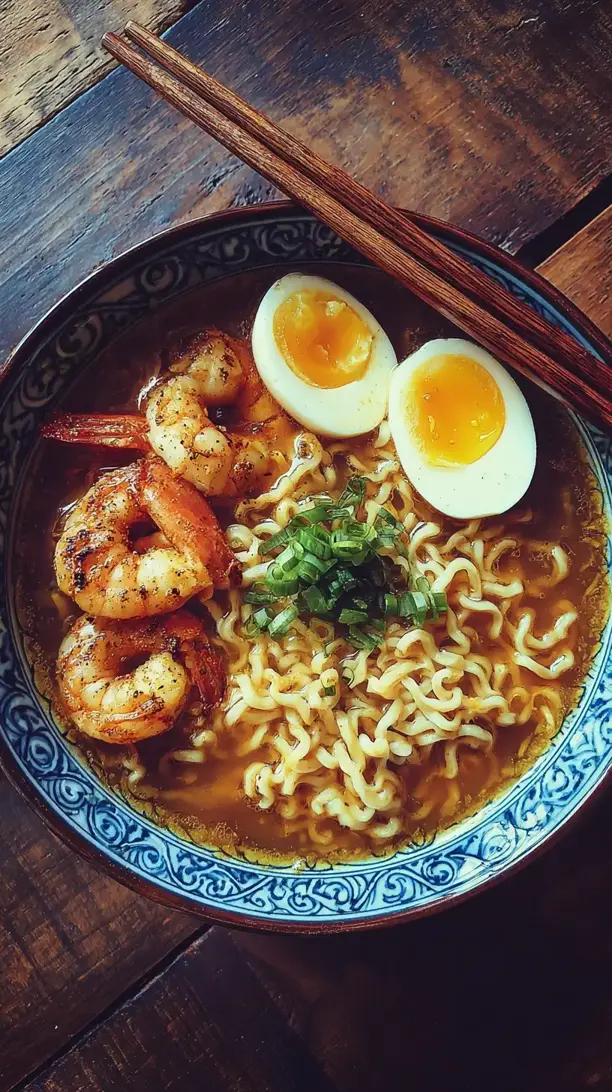
There’s something deeply comforting about a bowl of miso ramen with shrimp. This homemade version is surprisingly easy, delivering rich umami broth, sweet shrimp, and satisfying noodles in under an hour. You control every element for a restaurant-worthy meal that feels like a hug from the inside out.
Why You’ll Love This Miso Ramen with Shrimp
- Flavorful & Customizable: The rich miso broth adapts easily to your taste.
- Surprisingly Fast: Smart shortcuts deliver deep flavor in under an hour.
- Delicate Sweet Shrimp: They cook quickly and soak up the broth beautifully.
- Complete Meal: Protein, veggies, noodles, and broth all in one bowl.
Ingredients & Tools
- 4 cups chicken or vegetable broth
- 3 tbsp white or yellow miso paste
- 1 tbsp soy sauce
- 1 tbsp sesame oil
- 2 cloves garlic, minced
- 1-inch piece fresh ginger, grated
- 200 g ramen noodles (fresh or dried)
- 300 g raw shrimp, peeled and deveined
- 2 soft-boiled eggs
- 100 g fresh spinach
- 2 green onions, thinly sliced
- 1 carrot, julienned
- 1 sheet nori, cut into strips
- 1 tsp chili oil (optional, for heat)
Tools: Large pot, medium saucepan, slotted spoon, mixing bowls, sharp knife, grater
Notes: Using a good-quality broth really makes a difference here. Don’t skip the fresh ginger and garlic; they add that essential aromatic punch.
Nutrition (per serving)
| Calories: | 420 kcal |
| Protein: | 28 g |
| Fat: | 12 g |
| Carbs: | 48 g |
| Fiber: | 5 g |
Serves: 2 | Prep Time: 20 minutes | Cook Time: 25 minutes | Total Time: 45 minutes
Before You Start: Tips & Ingredient Notes
- Don’t boil the miso paste. If you add it to boiling broth, you’ll lose some of its delicate flavor and beneficial enzymes. The trick is to dissolve it off the heat or in a ladle of warm broth first.
- Use fresh, high-quality shrimp. They cook quickly and have a sweeter, more delicate flavor than frozen ones. If you must use frozen, thaw them completely in the fridge overnight and pat them dry before cooking.
- Prep your toppings in advance. Ramen comes together fast at the end, so having your soft-boiled eggs sliced, green onions chopped, and carrots julienned ahead of time makes assembly smooth and stress-free.
- Customize the spice level. Love heat? Add extra chili oil or a sprinkle of togarashi. Prefer it mild? Simply omit the chili—the miso broth will still be wonderfully flavorful on its own.
How to Make Miso Ramen with Shrimp
Step 1: Start by preparing your soft-boiled eggs, if you haven’t already. Bring a small pot of water to a boil, gently lower in the eggs, and cook for 6–7 minutes for a jammy, custardy yolk. Immediately transfer them to an ice bath to stop the cooking process. Once cool, carefully peel and set aside—you’ll slice them in half right before serving.
Step 2: In a large pot, heat the sesame oil over medium heat. Add the minced garlic and grated ginger, and sauté for about a minute until fragrant—you’ll notice the aroma becoming sweet and inviting. Be careful not to burn them, as that can introduce a bitter note to your broth.
Step 3: Pour in the chicken or vegetable broth and bring it to a gentle simmer. Let it cook for about 10 minutes to allow the flavors to meld together. Meanwhile, cook your ramen noodles according to package instructions, then drain and rinse briefly under cold water to stop them from overcooking. Toss them with a tiny bit of oil to prevent sticking.
Step 4: Reduce the heat under the broth to low—you want it hot but not boiling. In a small bowl, whisk together the miso paste with a ladleful of the warm broth until it’s completely smooth. Stir this back into the pot along with the soy sauce. Taste and adjust seasoning if needed—the broth should be deeply savory with a rich umami kick.
Step 5: Add the shrimp to the simmering broth and cook for 2–3 minutes, just until they turn pink and opaque. Be careful not to overcook them, or they’ll become rubbery. Using a slotted spoon, remove the shrimp and set them aside temporarily.
Step 6: Stir the fresh spinach into the hot broth—it will wilt almost instantly, which is exactly what you want. This adds a lovely pop of color and a subtle earthy note that balances the richness of the miso.
Step 7: Now, it’s time to assemble your bowls. Divide the cooked ramen noodles between two large bowls. Ladle the hot broth and spinach over the noodles, then artfully arrange the shrimp, soft-boiled egg halves, julienned carrot, and nori strips on top.
Step 8: Finish with a sprinkle of sliced green onions and a drizzle of chili oil, if using. Serve immediately—the contrast of the hot broth with the cool, creamy egg yolk is part of the magic. Slurp happily!
Storage & Freshness Guide
- Fridge: Store broth, noodles, and toppings separately for up to 2 days.
- Freezer: Broth only freezes well for 1 month; noodles and shrimp don’t freeze well.
- Reviving: Gently reheat broth (don’t boil); refresh noodles in hot water before serving.
Serving Suggestions
Complementary Dishes
- Simple cucumber salad — The crisp, refreshing crunch and tangy dressing provide a lovely contrast to the rich, savory broth.
- Steamed edamame with sea salt — These are easy to prepare and add a fun, interactive element to your meal, plus a boost of plant-based protein.
- Pan-seared gyoza — Their crispy bottoms and juicy filling make them the perfect little sidekick to dip into your ramen broth.
Drinks
- Cold Japanese beer — The crisp, clean bubbles cut through the richness of the miso and cleanse your palate between slurps.
- Warm green tea — Its subtle bitterness and earthy notes harmonize beautifully with the umami flavors in the ramen.
- Yuzu sparkling water — The bright, citrusy zing adds a refreshing lift that balances the dish’s deep savory character.
Something Sweet
- Matcha ice cream — The creamy, slightly bitter sweetness is a delightful way to end the meal on a cool, soothing note.
- Mochi with red bean paste — These chewy, sweet bites offer a lovely textural contrast and a hint of traditional Japanese flavor.
- Black sesame cookies — Their nutty, toasty flavor and crumbly texture provide a simple yet satisfying finale.
Top Mistakes to Avoid
- Overcooking the shrimp. They only need a few minutes in the hot broth—any longer, and they’ll turn tough and rubbery. You want them just cooked through, still tender and sweet.
- Adding miso to boiling broth. This can make the flavor flat and diminish its nutritional benefits. Always dissolve it off the heat or in a separate ladle of warm broth first.
- Skipping the ice bath for the eggs. If you don’t shock them in cold water, they’ll continue cooking and you’ll lose that perfect jammy yolk texture.
- Using low-quality broth. Since the broth is the soul of this dish, a bland or watery base will let the whole bowl down. Opt for a good-quality stock, or better yet, make your own if you have time.
Expert Tips
- Toast your nori lightly. If you have a gas stove, you can quickly pass the nori sheet over a low flame for a few seconds—this enhances its flavor and adds a lovely smoky note.
- Infuse the oil with garlic and ginger. For an even deeper flavor base, gently heat the sesame oil with the garlic and ginger until fragrant before adding the broth. It’s a small step that makes a big difference.
- Make a double batch of soft-boiled eggs. They keep well in the fridge for a couple of days, and having them on hand makes throwing together another bowl of ramen even easier.
- Use the broth to cook the noodles. If you want an extra-rich result, cook your noodles directly in the broth instead of water. Just be aware that it will make the broth a bit cloudier.
FAQs
Can I use a different protein instead of shrimp?
Absolutely! Thinly sliced chicken, pork belly, or even firm tofu work wonderfully here. Just adjust the cooking time accordingly—chicken will need a bit longer, while tofu can be pan-seared first for extra texture. The miso broth is quite versatile, so feel free to experiment with what you have on hand.
How do I store and reheat leftovers?
Store the broth, noodles, and toppings separately if possible. The noodles can become mushy if left in the broth too long. To reheat, warm the broth gently on the stove (don’t boil if it contains miso), and add fresh noodles or briefly reheat the existing ones in hot water. The shrimp are best eaten fresh but can be gently warmed through.
What type of miso is best for this recipe?
White or yellow miso are ideal—they’re milder and sweeter than red miso, which can be quite salty and intense. If you only have red miso, you might want to use a bit less and adjust the soy sauce accordingly. The goal is a balanced, umami-rich broth, not an overly salty one.
Can I make this recipe vegetarian or vegan?
Easily! Use vegetable broth and swap the shrimp for mushrooms, tofu, or extra veggies. Replace the eggs with marinated tofu or avocado slices. Just double-check that your miso paste is vegan—some varieties contain bonito (fish), but many are plant-based.
Why do you rinse the noodles after cooking?
Rinsing stops the cooking process and removes excess starch, which prevents them from becoming gummy and sticking together. It also keeps them from absorbing too much broth too quickly once you assemble your bowl, so each slurp remains perfectly textured.
Miso Ramen With Shrimp
Make delicious Miso Ramen with Shrimp at home in under an hour! This easy recipe features a rich umami broth, sweet shrimp, and perfect noodles. Get the recipe now!
Ingredients
For the Broth & Aromatics:
-
4 cups chicken or vegetable broth
-
3 tbsp white or yellow miso paste
-
1 tbsp soy sauce
-
1 tbsp sesame oil
-
2 cloves garlic (minced)
-
1 inch piece fresh ginger (grated)
For the Noodles & Protein:
-
200 g ramen noodles (fresh or dried)
-
300 g raw shrimp (peeled and deveined)
For the Toppings:
-
2 soft-boiled eggs
-
100 g fresh spinach
-
2 green onions (thinly sliced)
-
1 carrot (julienned)
-
1 sheet nori (cut into strips)
-
1 tsp chili oil (optional, for heat)
Instructions
-
Start by preparing your soft-boiled eggs, if you haven't already. Bring a small pot of water to a boil, gently lower in the eggs, and cook for 6–7 minutes for a jammy, custardy yolk. Immediately transfer them to an ice bath to stop the cooking process. Once cool, carefully peel and set aside—you'll slice them in half right before serving.01
-
In a large pot, heat the sesame oil over medium heat. Add the minced garlic and grated ginger, and sauté for about a minute until fragrant—you'll notice the aroma becoming sweet and inviting. Be careful not to burn them, as that can introduce a bitter note to your broth.02
-
Pour in the chicken or vegetable broth and bring it to a gentle simmer. Let it cook for about 10 minutes to allow the flavors to meld together. Meanwhile, cook your ramen noodles according to package instructions, then drain and rinse briefly under cold water to stop them from overcooking. Toss them with a tiny bit of oil to prevent sticking.03
-
Reduce the heat under the broth to low—you want it hot but not boiling. In a small bowl, whisk together the miso paste with a ladleful of the warm broth until it's completely smooth. Stir this back into the pot along with the soy sauce. Taste and adjust seasoning if needed—the broth should be deeply savory with a rich umami kick.04
-
Add the shrimp to the simmering broth and cook for 2–3 minutes, just until they turn pink and opaque. Be careful not to overcook them, or they'll become rubbery. Using a slotted spoon, remove the shrimp and set them aside temporarily.05
-
Stir the fresh spinach into the hot broth—it will wilt almost instantly, which is exactly what you want. This adds a lovely pop of color and a subtle earthy note that balances the richness of the miso.06
-
Now, it's time to assemble your bowls. Divide the cooked ramen noodles between two large bowls. Ladle the hot broth and spinach over the noodles, then artfully arrange the shrimp, soft-boiled egg halves, julienned carrot, and nori strips on top.07
-
Finish with a sprinkle of sliced green onions and a drizzle of chili oil, if using. Serve immediately—the contrast of the hot broth with the cool, creamy egg yolk is part of the magic. Slurp happily!08