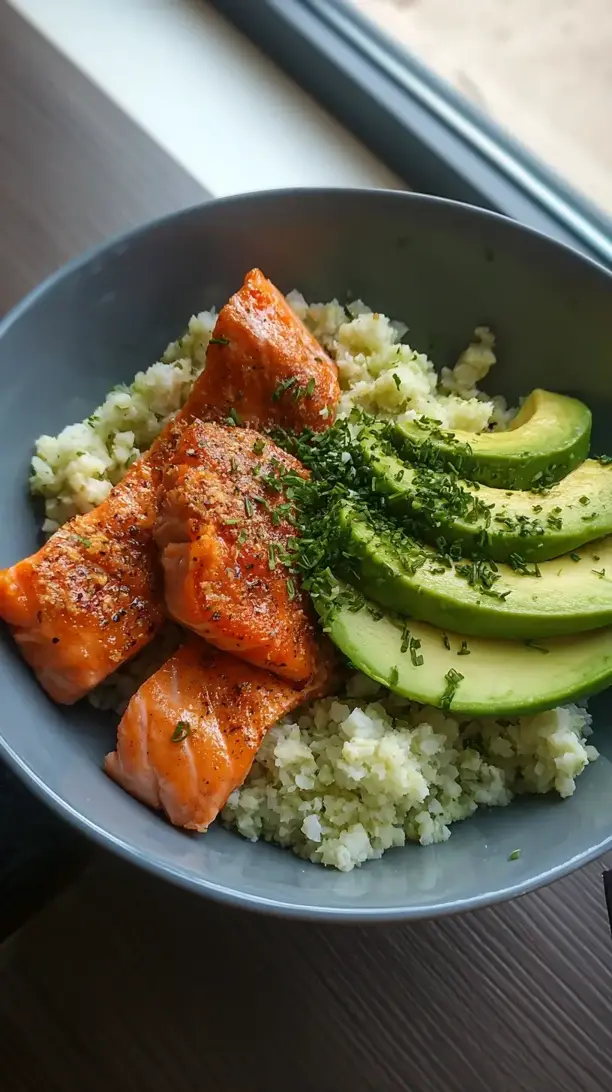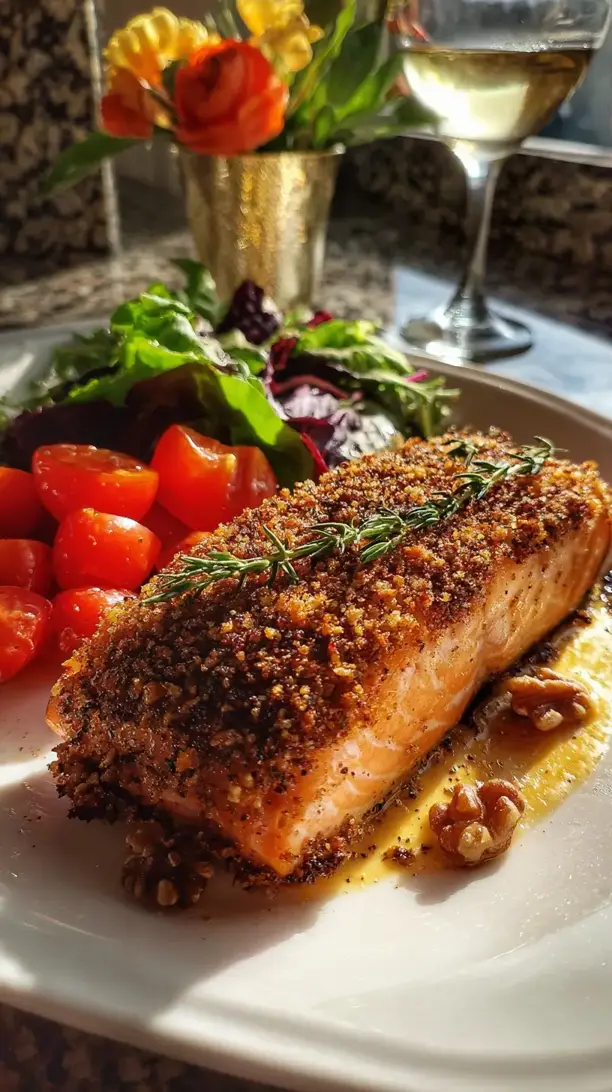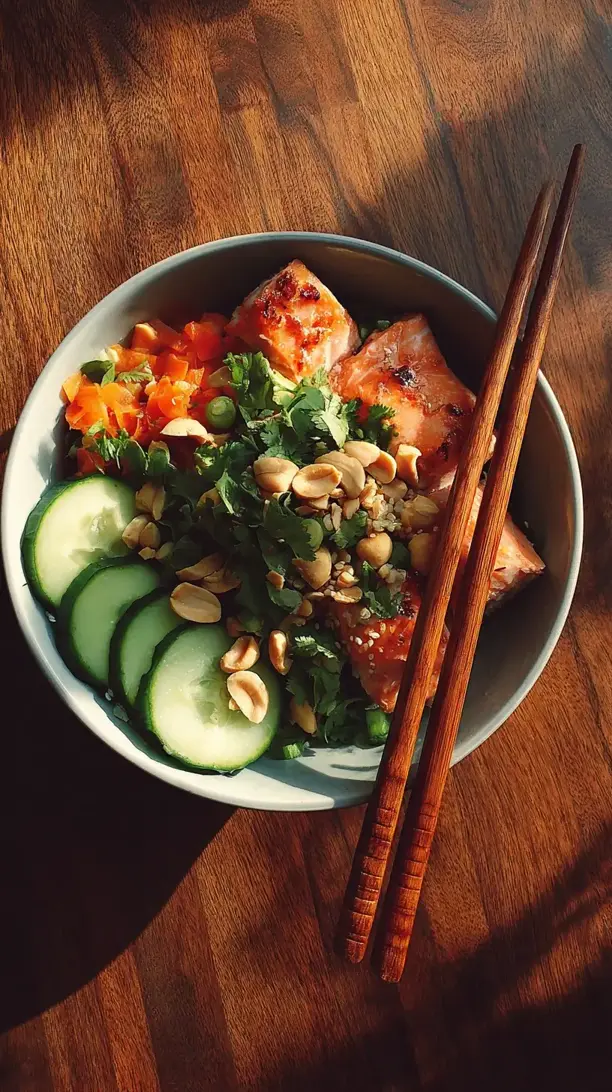

If your weeks feel like a constant race against time, these Meal Prep Salmon Bowls are your new best friend. They’re vibrant, full of textures and flavors, and actually get better as they meld together. The star is the flaky, seasoned salmon, but the quinoa, crunchy veggies, and zesty lemon-dill sauce make this meal feel like a treat.
Why You’ll Love This Meal Prep Salmon Bowls
- Effortless Lunches: Do the work once and enjoy four ready-to-eat lunches.
- Texture Symphony: Tender salmon, nutty quinoa, crisp cucumber, and creamy avocado in every bite.
- Wildly Customizable: Swap grains or add greens to make it your own.
- Stays Fresh: Components hold up beautifully for 3-4 days without getting soggy.
Ingredients & Tools
- 2 salmon fillets (about 6 oz / 170 g each), skinless
- 1 cup uncooked quinoa
- 1 large English cucumber, diced
- 1 pint cherry tomatoes, halved
- 1 ripe avocado, sliced (add fresh on serving day for best results)
- 1/4 red onion, thinly sliced
- 3 tbsp olive oil, divided
- 1 lemon, juiced and zested
- 2 tbsp fresh dill, chopped
- 1/4 cup Greek yogurt or mayonnaise
- 1 tsp garlic powder
- 1/2 tsp smoked paprika
- Salt and black pepper to taste
Tools: Baking sheet, medium saucepan, small mixing bowl, four 3-cup meal prep containers
Notes: I recommend skinless, sustainably sourced salmon for best results. The quality of ingredients, especially the salmon and fresh herbs, makes a difference.
Nutrition (per serving)
| Calories: | 520 kcal |
| Protein: | 30 g |
| Fat: | 25 g |
| Carbs: | 42 g |
| Fiber: | 8 g |
Serves: 4 | Prep Time: 20 minutes | Cook Time: 20 minutes | Total Time: 40 minutes
Before You Start: Tips & Ingredient Notes
- Can I use a different grain? Absolutely! Quinoa is my go-to for its protein content and fluffy texture, but an equal amount of cooked brown rice, farro, or even couscous works wonderfully. Just adjust the cooking time according to the package directions.
- What’s the best way to store the avocado? To prevent browning, I highly recommend storing the avocado separately and adding it fresh when you’re ready to eat. A little squeeze of lemon juice on the slices can also help if you must prep it ahead.
- Is the sauce better with yogurt or mayo? This is a personal preference! Greek yogurt gives a tangy, lighter sauce, while mayonnaise creates a richer, creamier consistency. Both are delicious, so use what you love or have on hand.
- Don’t skip the fresh dill. I know it’s tempting to use dried, but honestly, the fresh herb makes the sauce. It provides a bright, almost grassy flavor that dried dill just can’t replicate.
How to Make Meal Prep Salmon Bowls
Step 1: First, let’s get your quinoa cooking since it takes the longest. Rinse 1 cup of quinoa thoroughly in a fine-mesh strainer—this removes its natural bitter coating. Add it to a medium saucepan with 2 cups of water and a pinch of salt. Bring it to a boil, then reduce the heat to low, cover, and let it simmer for about 15 minutes. You’ll know it’s done when the grains are translucent and the little white spirals (the germ) have separated. Once cooked, fluff it with a fork and let it sit, covered, to steam while you prepare everything else.
Step 2: While the quinoa is working its magic, preheat your oven to 400°F (200°C). Pat the salmon fillets completely dry with paper towels—this is the secret to getting a nice surface instead of a steamed one. Place them on a parchment-lined baking sheet. Drizzle with 1 tablespoon of the olive oil and season generously with garlic powder, smoked paprika, salt, and black pepper. Rub the seasoning all over to coat evenly.
Step 3: Roast the salmon for 12-15 minutes. The exact time will depend on the thickness of your fillets. You’re aiming for salmon that flakes easily with a fork but is still moist in the center. When it’s done, remove it from the oven and let it cool for a few minutes. Then, use a fork to break it into large, beautiful chunks. Don’t break it up too finely; you want nice, substantial pieces in your bowl.
Step 4: Now, for the star of the show—the lemon-dill sauce. In your small mixing bowl, combine the Greek yogurt (or mayo), the remaining 2 tablespoons of olive oil, the juice and zest of your lemon, and the freshly chopped dill. Whisk it all together until it’s smooth and creamy. Give it a taste and season with salt and pepper. You’ll notice how the lemon zest really makes the flavor pop. Set this aside.
Step 5: Time to assemble your bowls! Grab your four meal prep containers. Divide the fluffy quinoa evenly among them as your base. Now, artfully arrange your toppings: a handful of diced cucumber, the halved cherry tomatoes, and those pretty slices of red onion. Place a portion of the flaked salmon on top of each. The trick is to keep the sauce separate until you’re ready to eat to keep everything from getting mushy. Portion the sauce into four small containers or condiment cups with lids.
Step 6: For the final touch, store your avocado separately. Slice it and place it in a small airtight container with a squeeze of lemon juice to prevent browning. When you’re ready for lunch, simply add the fresh avocado to your bowl, drizzle over that glorious lemon-dill sauce, give everything a gentle toss, and dig in. It’s a complete, restaurant-worthy meal that you made yourself.
Storage & Freshness Guide
- Fridge: Store assembled bowls (sauce and avocado separate) for 3-4 days.
- Freezer: Not recommended; texture of salmon and cucumbers becomes unappealing.
- Reviving: Enjoy cold or gently reheat quinoa/salmon portion, then add cold toppings and sauce.
Serving Suggestions
Complementary Dishes
- A simple arugula salad — The peppery bite of arugula dressed with just a squeeze of lemon provides a crisp, refreshing side that contrasts beautifully with the rich salmon.
- Roasted asparagus — A few spears of asparagus roasted with olive oil and garlic until tender-crisp add a lovely green element and a different, warm texture to your meal.
- Garlic sautéed spinach — It wilts down so quickly and adds a boost of iron and a savory, garlicky note that pairs perfectly with the lemony flavors in the bowl.
Drinks
- A crisp Sauvignon Blanc — The wine’s citrusy and herbal notes are a classic pairing for salmon and will mirror the lemon and dill in your sauce beautifully.
- Sparkling water with lemon — For a non-alcoholic option, the effervescence cleanses the palate between bites, and the lemon wedge continues the bright theme of the dish.
- Iced green tea — Its slightly grassy, refreshing quality complements the healthy, clean-eating vibe of the bowls without overpowering any of the delicate flavors.
Something Sweet
- Lemon sorbet — It’s light, palate-cleansing, and continues the citrus thread from the main course in the most delightful, refreshing way.
- Fresh berry medley — A mix of raspberries, blueberries, and blackberries provides a natural, slightly tart sweetness that feels like a perfect, healthy ending.
- A small square of dark chocolate — Just a bite of high-quality dark chocolate (70% or higher) offers a rich, bittersweet finish that satisfies without feeling too heavy.
Top Mistakes to Avoid
- Overcooking the salmon. There’s nothing sadder than dry, chalky salmon. Remember, it will continue to cook a little after you take it out of the oven, so pull it when it’s just opaque and still juicy in the middle.
- Mixing the sauce in with the bowls during storage. I’ve made this mistake before, and it turns your crisp veggies soft and your quinoa soggy. Keeping the sauce separate until the moment you eat is non-negotiable for texture.
- Skipping the quinoa rinse. That bitter coating (saponin) is real, and if you don’t rinse it off, your entire grain base will have an unpleasant, soapy aftertaste that can ruin the dish.
- Using wilted or old herbs. The dill is a key flavor component in the sauce. If it’s brownish and sad, your sauce will be too. Fresh, vibrant green dill makes all the difference.
Expert Tips
- Tip: Let your salmon come to room temperature for 10-15 minutes before roasting. This helps it cook more evenly from edge to center, preventing that dreaded overcooked outside and raw inside situation.
- Tip: For an extra flavor boost, toast your quinoa in the dry saucepan for a few minutes before adding the water. You’ll notice a lovely, nutty aroma, and it deepens the overall flavor of the grain.
- Tip: If you want a more vibrant red onion with a milder bite, quick-pickle the slices! Just submerge them in a mix of equal parts vinegar and water with a pinch of sugar and salt for 15-20 minutes before assembling.
- Tip: Double the sauce recipe. Seriously. It’s that good. You can use the extra as a dip for veggies during the week, a spread for sandwiches, or a dressing for other salads.
FAQs
How long do these salmon bowls last in the fridge?
Honestly, they hold up beautifully for 3 to 4 days. The key is the assembly—keeping the sauce and avocado separate. After day 4, the salmon can start to develop a stronger fishy odor and the overall texture of the veggies will decline. I don’t recommend freezing these bowls, as the thawed texture of the salmon and cucumbers would be very unappealing.
Can I use frozen salmon?
You absolutely can! Just make sure to thaw it completely in the refrigerator overnight first. Pat it extra dry with paper towels before seasoning and roasting, as frozen fillets tend to release more water. Cooking from frozen isn’t recommended for this recipe, as it will steam rather than roast and throw off your cooking time.
What’s a good dairy-free substitute for the sauce?
For a dairy-free version, you have a couple of great options. Vegan mayonnaise works perfectly as a one-to-one substitute for the Greek yogurt. Alternatively, you could use a tahini base—just thin it out with lemon juice and water until it reaches a drizzling consistency. It adds a lovely, subtle sesame flavor that pairs really well with the salmon.
My quinoa turned out mushy. What happened?
This usually means there was too much water or it was cooked for too long. The standard ratio is 1 cup quinoa to 2 cups liquid, but some brands can vary. Make sure you’re simmering on the lowest possible heat once it comes to a boil, and set a timer. As soon as the 15 minutes are up, check it. If the water is absorbed, take it off the heat immediately to stop the cooking process.
Can I eat this bowl cold, or should I heat it up?
This is totally up to your personal preference! These bowls are designed to be delicious either way. I personally love them cold straight from the fridge—all the flavors are bright and the textures are distinct. If you prefer a warm lunch, you can gently reheat the quinoa and salmon portion in the microwave for 60-90 seconds, then add the cold veggies, avocado, and sauce afterward.
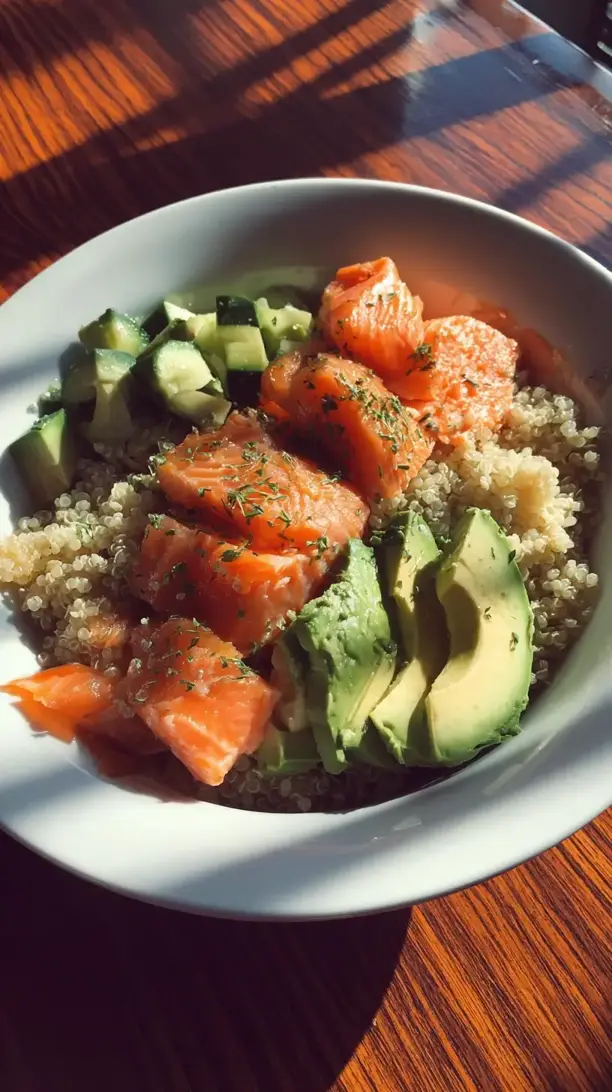
Meal Prep Salmon Bowls
Make healthy eating easy with these Meal Prep Salmon Bowls. A complete, flavorful lunch ready in 40 minutes. Get the recipe and prep your week now!
Ingredients
For the Salmon Bowls
-
2 salmon fillets (about 6 oz / 170 g each, skinless)
-
1 cup uncooked quinoa
-
1 large English cucumber (diced)
-
1 pint cherry tomatoes (halved)
-
1 ripe avocado (sliced (add fresh on serving day for best results))
-
1/4 red onion (thinly sliced)
-
3 tbsp olive oil (divided)
-
1 lemon (juiced and zested)
-
2 tbsp fresh dill (chopped)
-
1/4 cup Greek yogurt or mayonnaise
-
1 tsp garlic powder
-
1/2 tsp smoked paprika
-
Salt and black pepper (to taste)
Instructions
-
First, let's get your quinoa cooking since it takes the longest. Rinse 1 cup of quinoa thoroughly in a fine-mesh strainer—this removes its natural bitter coating. Add it to a medium saucepan with 2 cups of water and a pinch of salt. Bring it to a boil, then reduce the heat to low, cover, and let it simmer for about 15 minutes. You'll know it's done when the grains are translucent and the little white spirals (the germ) have separated. Once cooked, fluff it with a fork and let it sit, covered, to steam while you prepare everything else.01
-
While the quinoa is working its magic, preheat your oven to 400°F (200°C). Pat the salmon fillets completely dry with paper towels—this is the secret to getting a nice surface instead of a steamed one. Place them on a parchment-lined baking sheet. Drizzle with 1 tablespoon of the olive oil and season generously with garlic powder, smoked paprika, salt, and black pepper. Rub the seasoning all over to coat evenly.02
-
Roast the salmon for 12-15 minutes. The exact time will depend on the thickness of your fillets. You're aiming for salmon that flakes easily with a fork but is still moist in the center. When it's done, remove it from the oven and let it cool for a few minutes. Then, use a fork to break it into large, beautiful chunks. Don't break it up too finely; you want nice, substantial pieces in your bowl.03
-
Now, for the star of the show—the lemon-dill sauce. In your small mixing bowl, combine the Greek yogurt (or mayo), the remaining 2 tablespoons of olive oil, the juice and zest of your lemon, and the freshly chopped dill. Whisk it all together until it's smooth and creamy. Give it a taste and season with salt and pepper. You'll notice how the lemon zest really makes the flavor pop. Set this aside.04
-
Time to assemble your bowls! Grab your four meal prep containers. Divide the fluffy quinoa evenly among them as your base. Now, artfully arrange your toppings: a handful of diced cucumber, the halved cherry tomatoes, and those pretty slices of red onion. Place a portion of the flaked salmon on top of each. The trick is to keep the sauce separate until you're ready to eat to keep everything from getting mushy. Portion the sauce into four small containers or condiment cups with lids.05
-
For the final touch, store your avocado separately. Slice it and place it in a small airtight container with a squeeze of lemon juice to prevent browning. When you're ready for lunch, simply add the fresh avocado to your bowl, drizzle over that glorious lemon-dill sauce, give everything a gentle toss, and dig in. It's a complete, restaurant-worthy meal that you made yourself.06