
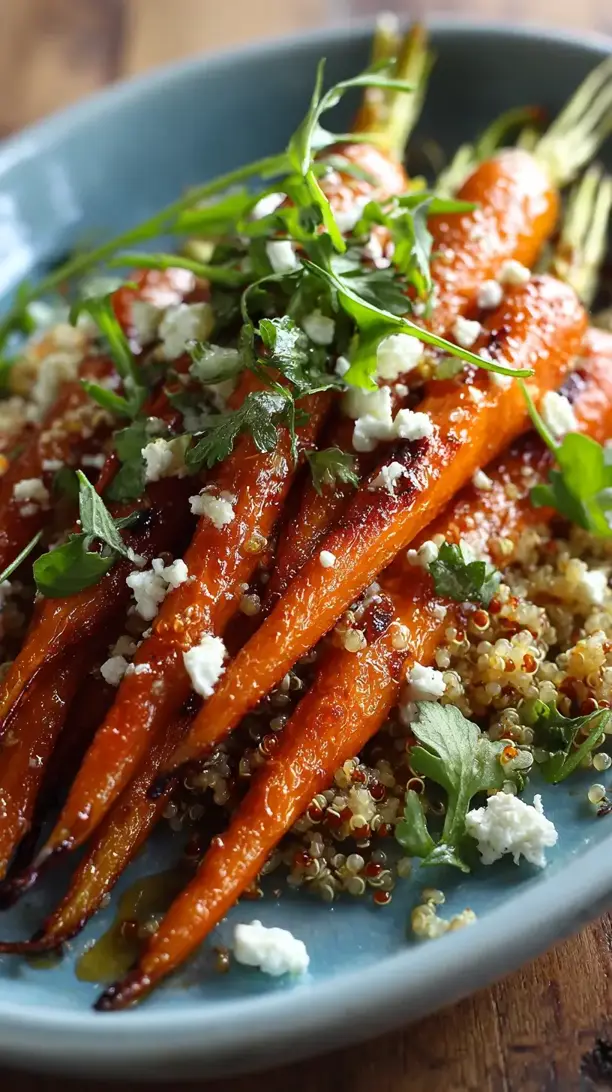

Why You’ll Love This Maple Dijon Roasted Carrot Salad
- A Textural Dream. You get the tender, caramelized carrots, the fluffy quinoa, the creamy burst of goat cheese, and the satisfying crunch of pecans all in one bite. It’s a party in your mouth, and everyone’s invited.
- The Perfect Balance of Flavors. The sweet maple syrup, the sharp Dijon mustard, and the earthy carrots create a base that’s both rich and bright. The fresh herbs and tangy dressing cut through the sweetness beautifully, so every forkful is perfectly balanced.
- It’s Surprisingly Versatile. Serve it warm right out of the oven, at room temperature for a picnic, or even cold straight from the fridge the next day. It’s a fantastic make-ahead option that actually gets better as the flavors mingle.
- It Feels Fancy Without the Fuss. This salad looks like you spent hours in the kitchen, but the active prep time is minimal. Roasting does all the heavy lifting, leaving you free to set the table or simply pour yourself a glass of wine.
Ingredients & Tools
- 1.5 lbs carrots, peeled and cut into ½-inch thick coins or batons
- 2 tbsp olive oil
- 2 tbsp pure maple syrup
- 1 tbsp Dijon mustard
- 2 cloves garlic, minced
- 1 tsp fresh thyme leaves (or ½ tsp dried)
- ½ tsp salt, plus more to taste
- ¼ tsp black pepper
- 1 cup uncooked quinoa, rinsed well
- 2 cups water or vegetable broth
- 4 cups fresh baby arugula or spinach
- ⅓ cup crumbled goat cheese or feta
- ¼ cup chopped pecans, toasted
- 2 tbsp fresh parsley, chopped
- For the Lemon Vinaigrette: 3 tbsp olive oil, 2 tbsp fresh lemon juice, 1 tsp maple syrup, 1 tsp Dijon mustard, salt and pepper to taste
Tools: A large rimmed baking sheet, parchment paper, a medium saucepan, a small bowl for whisking.
Don’t stress if your carrots aren’t perfectly uniform—a bit of variety in size actually adds to the rustic charm. And honestly, using a good, robust Dijon mustard and real maple syrup (not pancake syrup) is the secret to that deep, complex flavor. It really makes all the difference.
Serves: 4 as a main | Prep Time: 20 minutes | Cook Time: 25 minutes | Total Time: 45 minutes
Before You Start: Tips & Ingredient Notes
- Carrot Shape Matters. Cutting your carrots into similar-sized coins or batons ensures they roast evenly. Nobody wants some carrots burnt and others still crunchy! Aim for about ½-inch thickness.
- Rinse That Quinoa! This is a non-negotiable step. Quinoa has a natural coating called saponin that can make it taste bitter or soapy. A good rinse in a fine-mesh strainer under cold water until the water runs clear is all it takes to avoid this.
- Toast Your Nuts. I know it’s an extra step, but toasting the pecans in a dry skillet for a few minutes until fragrant elevates their flavor from “nice” to “essential.” It adds a deep, nutty aroma that complements the sweet carrots perfectly.
- Room Temperature is Your Friend. If you’re using goat cheese, take it out of the fridge about 15-20 minutes before you plan to serve the salad. It will crumble much more easily and have a creamier texture.
How to Make Maple Dijon Roasted Carrot Salad
Step 1: Roast the Carrots to Perfection. Preheat your oven to 400°F (200°C). Line a large rimmed baking sheet with parchment paper for easy cleanup. In a large bowl, whisk together the 2 tablespoons of olive oil, maple syrup, Dijon mustard, minced garlic, thyme, salt, and pepper. Add the prepared carrot pieces and toss until they are evenly and generously coated. Spread them out in a single layer on the prepared baking sheet. This is key—if they’re crowded, they’ll steam instead of roast. Pop them in the oven for 20-25 minutes, or until they are tender and the edges are starting to caramelize and brown beautifully. You’ll know they’re ready when you can easily pierce one with a fork.
Step 2: Cook the Quinoa Flawlessly. While the carrots are roasting, cook your quinoa. Combine the rinsed quinoa and water (or broth for extra flavor) in a medium saucepan. Bring it to a boil over high heat, then immediately reduce the heat to low, cover with a tight-fitting lid, and let it simmer for about 15 minutes. You’ll know it’s done when the grains are translucent and the little white “tails” (the germ) have spiraled out. Remove it from the heat and let it sit, still covered, for 5-10 minutes. Then, fluff it gently with a fork—this helps separate the grains and make it light and fluffy.
Step 3: Whisk Together the Simple Vinaigrette. In a small bowl or a jar with a lid, combine the 3 tablespoons of olive oil, fresh lemon juice, 1 teaspoon of maple syrup, and 1 teaspoon of Dijon mustard. Add a pinch of salt and pepper. Whisk vigorously or shake the jar until the dressing is emulsified and looks smooth and slightly thickened. Taste it! This is your chance to adjust the balance—maybe you want a little more lemon for tang or another pinch of salt.
Step 4: Assemble the Salad with Care. In a large serving bowl, create a bed with the fresh baby arugula or spinach. Spoon the fluffy, warm quinoa over the greens—the slight heat will just barely wilt the greens, which is lovely. Now, artfully arrange the gorgeous, glazed roasted carrots on top. The goal here is distribution, not perfection. Drizzle about half of the lemon vinaigrette over everything and give it a very gentle toss to combine.
Step 5: Add the Final Flourishes. Now for the fun part! Scatter the crumbled goat cheese, the toasted pecans, and the fresh parsley over the top. This is where the salad really comes to life with color and texture. Drizzle with the remaining dressing right before serving. The trick is to add the final toppings after the initial gentle toss so they stay distinct and don’t get lost in the mix.
Serving Suggestions
Complementary Dishes
- Pan-Seared Chicken Breast or Salmon — The simple, protein-rich flavors of a perfectly seared piece of chicken or salmon won’t compete with the salad. They’ll sit alongside it beautifully, making for a complete and satisfying meal.
- Creamy Lentil Soup — For a cozy, plant-based meal, a bowl of hearty lentil soup next to this vibrant salad is pure comfort. The earthiness of the lentils echoes the carrots in a really lovely way.
- Garlicky White Beans on Toast — This is a fantastic option for a lighter lunch or brunch. The creamy, savory beans on crunchy toast provide a fantastic textural contrast to the soft, sweet carrots.
Drinks
- A Crisp Sauvignon Blanc — The herbaceous notes and bright acidity in a good Sauvignon Blanc will cut through the richness of the maple glaze and complement the fresh herbs in the salad perfectly.
- A Light-bodied Pinot Noir — If you prefer red wine, a Pinot Noir with its earthy, cherry notes can stand up to the roasted flavors without overwhelming the dish’s delicacy.
- Sparkling Water with Lemon and Thyme — A non-alcoholic option that mirrors the salad’s own flavors. The bubbles are refreshing, and the thyme is a nice, subtle echo.
Something Sweet
- Lemon Olive Oil Cake — The bright, citrusy finish of a moist olive oil cake is a fantastic palate cleanser after the savory-sweet salad. It feels light and elegant.
- Dark Chocolate and Sea Salt Bark — A few pieces of sophisticated dark chocolate with a hint of salt satisfy the sweet tooth without being too heavy. It’s a simple, impressive way to end the meal.
- Poached Pears with a Dollop of Yogurt — Warm, spiced poached pears are a classic fall dessert that continues the theme of gentle, natural sweetness found in the carrots.
Top Mistakes to Avoid
- Mistake: Crowding the Baking Sheet. If you pile all the carrots onto one small pan, they’ll steam and become soggy instead of developing those delicious, caramelized edges. Use two sheets if you need to—it’s worth it for the texture.
- Mistake: Skipping the Quinoa Rinse. I’ve made this mistake before, and it really does impart a bitter, off-putting flavor. It only takes a minute, so please don’t skip it! Your taste buds will thank you.
- Mistake: Adding the Dressing Too Early. If you toss the arugula with the dressing and then let the salad sit, the greens will become sad and wilted. Add the final drizzle of dressing just before serving to keep everything crisp and vibrant.
- Mistake: Overcooking the Carrots. You want them tender with a bit of bite, not mushy. Start checking at the 20-minute mark. They should be easily pierced with a fork but not falling apart.
Expert Tips
- Tip: Make it a Meal Prep Star. Roast the carrots and cook the quinoa up to 3 days in advance. Store them separately in airtight containers in the fridge. Assemble the salad quickly on the day you want to eat it for a fast, healthy lunch.
- Tip: Play with Your Roots. This maple-Dijon glaze is fantastic on other root vegetables too! Try adding parsnips, sweet potatoes, or even beets to the mix for a colorful and flavorful variation.
- Tip: Add a Protein Boost. To make it more substantial, add a can of rinsed chickpeas to the baking sheet with the carrots for the last 10 minutes of roasting. They’ll get crispy and add plant-based protein.
- Tip: Toast Your Spices. For an even deeper flavor, add a pinch of toasted cumin seeds or coriander to the maple-Dijon glaze. Toasting whole spices in a dry pan for a minute until fragrant before grinding them unlocks their full potential.
FAQs
Can I make this salad ahead of time?
Absolutely, and it’s a great strategy! The key is component prep. Roast the carrots and cook the quinoa up to 3 days ahead and store them separately in the fridge. Whisk the dressing and keep it in a jar. Then, on the day you want to serve it, you can assemble everything in minutes. I’d recommend bringing the quinoa and carrots to room temperature or giving them a quick warm-up in the microwave before assembling, as the contrast between the warm components and cool greens is part of the magic. Just wait to add the final dressing, nuts, and cheese until the very end.
What can I use instead of goat cheese?
No problem at all! Goat cheese has a distinct tang, but there are plenty of substitutes. Feta cheese is a brilliant swap—it’s salty and crumbly. For a vegan version, a creamy vegan feta or even some mashed avocado would work well to add that rich, creamy element. If you’re not a fan of tangy cheeses, a mild shaving of Parmesan or even a handful of sharp cheddar cubes could be delicious. It’s your salad—make it work for you!
My carrots aren’t caramelizing. What did I do wrong?
This usually comes down to one of two things: oven temperature or crowding. First, make sure your oven is fully preheated—an oven thermometer can be a game-changer for accuracy. Second, double-check that the carrots are in a single layer with a little space between them. If they’re too crowded, they release moisture and steam instead of roast. If all else fails, a quick blast under the broiler for the last 1-2 minutes can help achieve those beautiful, caramelized edges (but watch them like a hawk!).
Is there a substitute for quinoa?
Of course! While quinoa provides a lovely, fluffy base, you can easily use another grain. Farro would add a wonderful chewy texture, couscous is lightning-fast to prepare, or even freekeh would be great. For a low-carb option, you could use cauliflower rice (just sauté it quickly until tender) or simply serve the roasted carrots and toppings over a larger bed of arugula. The recipe is very adaptable.
Can I use a different type of nut?
Definitely. Pecans have a buttery quality that pairs wonderfully with maple, but walnuts would be a very close second. For a different flavor profile, try toasted almonds or pumpkin seeds (pepitas) for a nut-free option. The goal is to add that crucial crunchy element, so feel free to use whatever nut or seed you have on hand or love the most.


