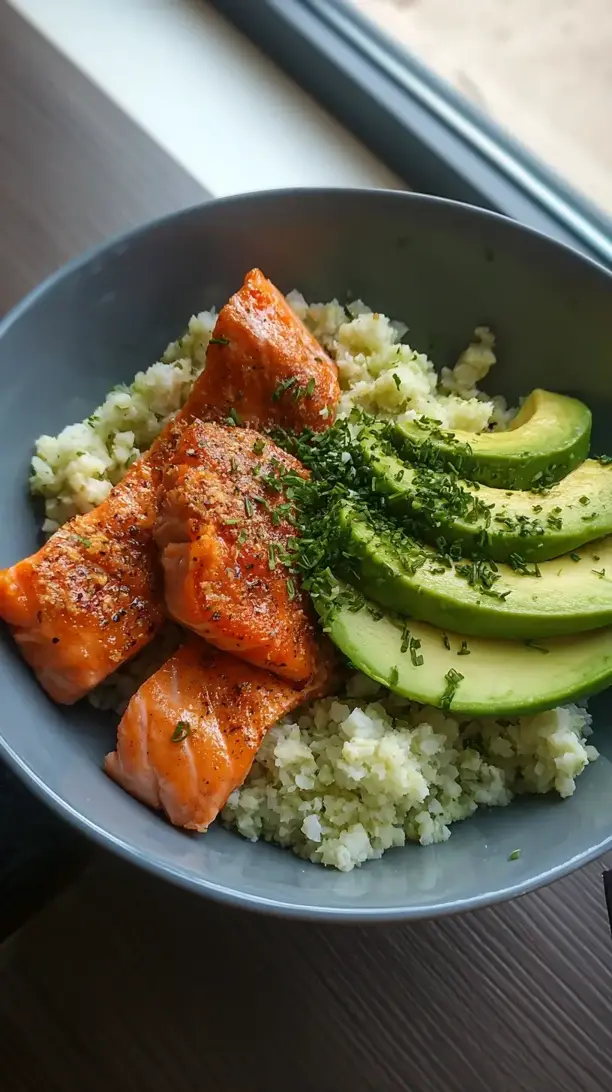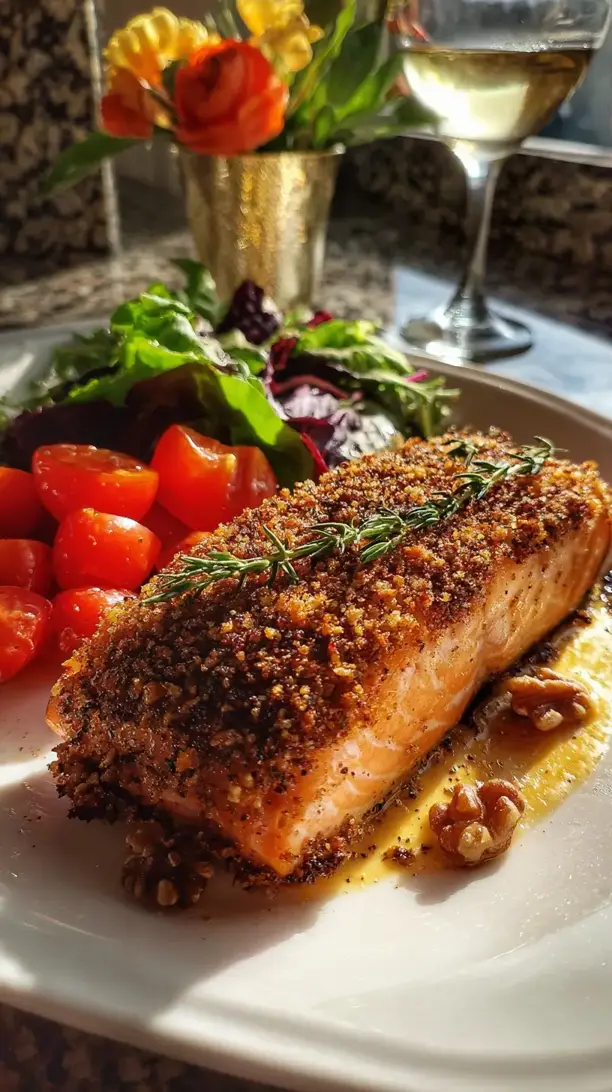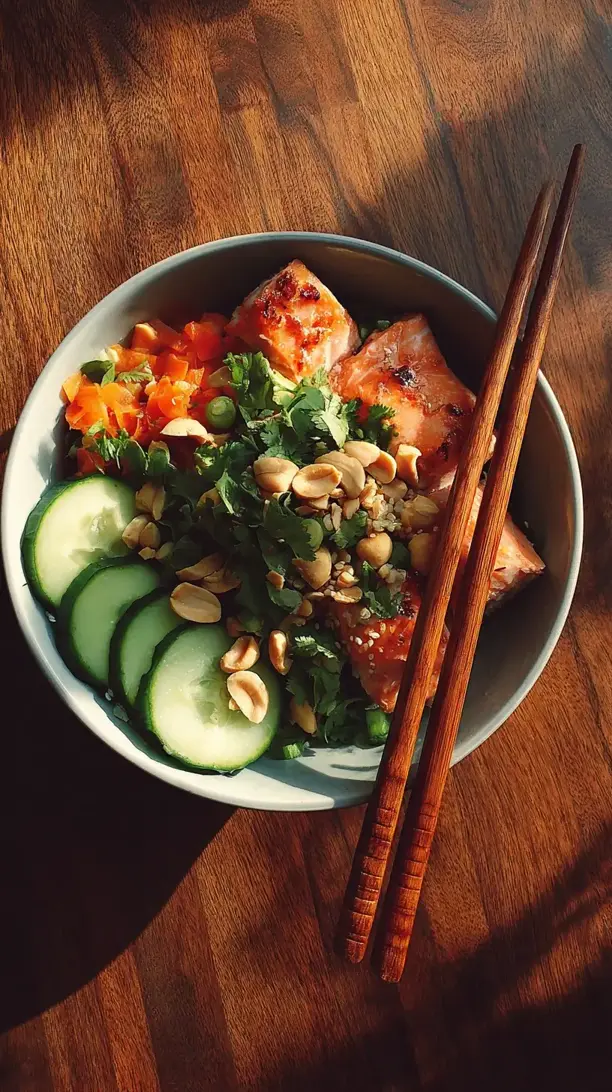

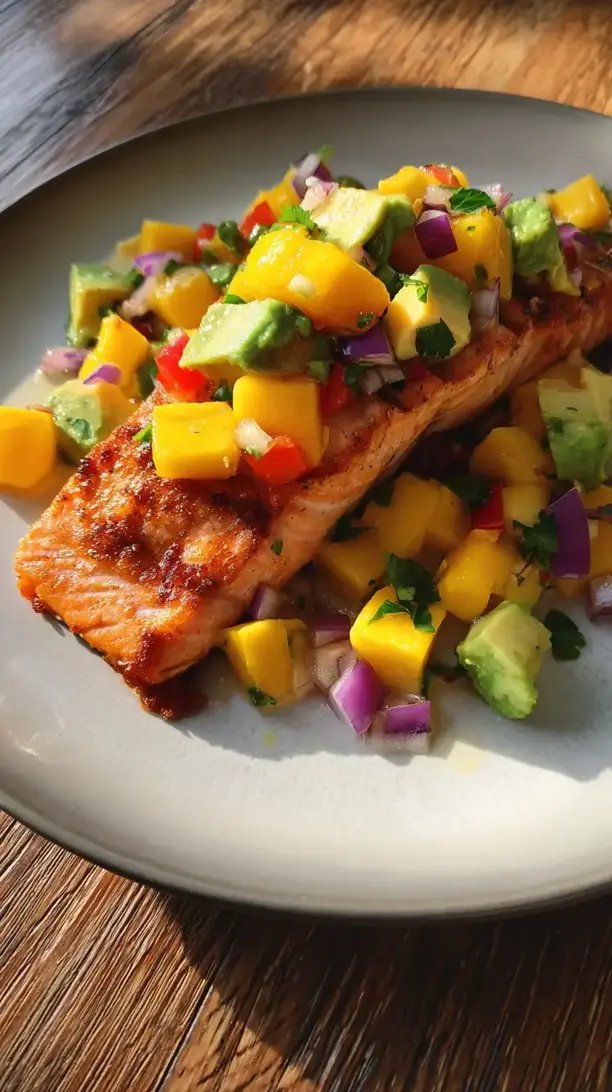
This Mango Salsa Salmon is a vibrant, restaurant-quality meal that’s surprisingly simple to pull off. The contrast between rich, buttery salmon and bright, zesty mango salsa creates a tropical flair with a touch of heat. It’s incredibly flexible—bake, pan-sear, or grill the salmon while the fresh salsa comes together in minutes.
Why You’ll Love This Mango Salsa Salmon
Flavor explosion: Sweet mango, spicy jalapeño, and zesty lime create a refreshing, exciting salsa.
Easy & fast: On the table in under 30 minutes with minimal effort.
Healthy & satisfying: Packed with omega-3s, protein, vitamins, and freshness.
Versatile base: Adapt the herbs, heat, and sides to your mood and pantry.
Ingredients & Tools
- 4 salmon fillets (about 150–180 g each), skin-on or skinless
- 1 tbsp olive oil
- 1 tsp smoked paprika
- ½ tsp garlic powder
- Salt and black pepper to taste
- 1 large ripe mango, diced
- ½ small red onion, finely diced
- 1 jalapeño, seeds removed and finely diced
- ½ red bell pepper, diced
- ¼ cup fresh cilantro, chopped
- 2 tbsp fresh lime juice (about 1 lime)
- 1 tbsp fresh orange juice (optional, for extra sweetness)
- 1 avocado, diced (for serving, optional)
Tools: A sharp chef’s knife, a cutting board, a medium mixing bowl, a baking sheet (if baking) or a large oven-safe skillet.
Notes: Use a ripe but firm mango for distinct cubes, not mush. Skin-on salmon gets crispy and moist, but skinless works too. Don’t skip fresh lime juice—bottled lacks bright zing.
Nutrition (per serving)
| Calories: | 385 kcal |
| Protein: | 35 g |
| Fat: | 20 g |
| Carbs: | 18 g |
| Fiber: | 4 g |
Serves: 4 | Prep Time: 15 minutes | Cook Time: 15 minutes | Total Time: 30 minutes
Before You Start: Tips & Ingredient Notes
- How to pick the perfect mango? Give it a gentle squeeze—it should have a little give, similar to a ripe avocado. The skin color can vary, so don’t rely on that alone. A fragrant aroma near the stem is a great sign. If your mango is rock-hard, leave it on the counter for a day or two to ripen up.
- Is the salmon skin a deal-breaker? Not at all! If your fillets have skin, I highly recommend cooking them skin-side down. The skin acts as a natural barrier, protecting the delicate flesh from direct heat and locking in moisture. Plus, when it’s seared or baked until crispy, it’s absolutely delicious. You can always remove it after cooking if you prefer.
- Can I make the salsa ahead of time? You absolutely can, and it might even taste better! Preparing the mango salsa 1–2 hours in advance allows the flavors to meld and develop. Just hold off on adding the avocado until you’re ready to serve to prevent it from browning. Give it a good stir before spooning it over the hot salmon.
- What if I’m sensitive to spice? No problem! The primary heat in a jalapeño comes from the seeds and white membranes. For a very mild salsa, remove all the seeds and ribs carefully. You can even substitute the jalapeño with a milder poblano pepper for a different, gentle flavor profile.
How to Make Mango Salsa Salmon
Step 1: Prepare the Mango Salsa. Start by making the salsa so the flavors have a little time to get to know each other. In your medium mixing bowl, combine the diced mango, red onion, jalapeño, red bell pepper, and chopped cilantro. The colors should look incredibly vibrant—all those reds, oranges, and greens. Pour in the fresh lime juice and the optional orange juice, then toss everything gently to combine. You’ll notice the lime juice immediately brightens everything up. Season with a small pinch of salt, stir again, and then set the bowl aside at room temperature.
Step 2: Season the Salmon Fillets. Pat the salmon fillets completely dry with paper towels. This is a crucial step for getting a beautiful sear and preventing the fish from steaming. Place the fillets on a plate and drizzle them with the olive oil, rubbing it over all sides. In a small dish, mix together the smoked paprika, garlic powder, and a generous amount of salt and black pepper. Sprinkle this seasoning mixture evenly over the top (flesh-side) of each salmon fillet, pressing gently so it adheres.
Step 3: Cook the Salmon. You have two fantastic options here. For baking, preheat your oven to 200°C (400°F). Place the seasoned salmon fillets on a parchment-lined baking sheet, skin-side down if they have skin. Bake for 12–15 minutes, until the salmon is opaque and flakes easily with a fork. For pan-searing, heat a tablespoon of oil in a large, oven-safe skillet over medium-high heat. Place the salmon fillets in the skillet, skin-side down if applicable, and sear for 4–6 minutes until the skin is crispy. Then, carefully flip and cook for another 2–3 minutes, or transfer the entire skillet to a 200°C (400°F) oven to finish cooking for 5–7 minutes.
Step 4: Final Assembly and Serve. Once the salmon is perfectly cooked—it should be firm yet still moist and flake beautifully—it’s time to bring it all together. If you reserved the avocado, gently fold the diced avocado into the mango salsa now. Give the salsa one final stir and taste it, adjusting salt or lime if needed. Place a warm salmon fillet on each plate and generously spoon the fresh mango salsa over the top. The heat from the salmon will slightly warm the salsa, making the flavors pop even more. Serve immediately and watch it disappear.
Storage & Freshness Guide
- Fridge: Store leftover salmon and salsa separately in airtight containers for up to 2 days.
- Freezer: Freeze cooked salmon (without salsa) for up to 2 months. Thaw in fridge before reheating.
- Reviving: Reheat salmon gently in a 300°F oven until warm. Refresh salsa with a squeeze of lime.
Serving Suggestions
Complementary Dishes
- Cilantro-Lime Rice — The fresh, zesty notes in the rice mirror the salsa and provide a fluffy, neutral base that soaks up all the delicious juices.
- Simple Arugula Salad — A handful of peppery arugula with a light lemon vinaigrette adds a fresh, bitter contrast that cuts through the richness of the salmon beautifully.
- Grilled Asparagus — The smoky, charred flavor of grilled asparagus pairs wonderfully with the sweet mango and the savory, spiced crust on the salmon.
Drinks
- A Crisp Sauvignon Blanc — Its citrusy and herbaceous profile is a classic pairing for dishes with mango and lime, cleansing the palate between each flavorful bite.
- Sparkling Water with Lime — For a non-alcoholic option, the effervescence is incredibly refreshing and helps balance the slight fattiness of the salmon and the sweetness of the fruit.
- Light Mexican Lager — A cold, crisp lager doesn’t overpower the dish and its carbonation provides a nice counterpoint to the textures and rich flavors.
Something Sweet
- Mango Sorbet — It’s a playful continuation of the mango theme, offering a clean, icy, and intensely fruity finish that feels light and satisfying.
- Coconut Macaroons — These chewy, sweet cookies bring a tropical coconut flavor that harmonizes with the mango and provides a lovely textural contrast.
- Key Lime Pie Bars — The sharp, tangy lime custard is the perfect palate-cleanser after the main course, ending the meal on a bright, zingy note.
Top Mistakes to Avoid
- Mistake: Overcooking the salmon. This is the number one error. Salmon continues to cook after you take it off the heat (carryover cooking). You want to remove it from the oven or pan when it’s still slightly translucent in the very center—it will finish cooking to perfection as it rests. Overcooked salmon becomes dry and chalky.
- Mistake: Using a soft, overripe mango. If your mango is too soft, it will turn to mush when you dice it and mix it with the other ingredients. You’ll lose the lovely chunky texture of the salsa and it can make the whole dish feel a bit soggy.
- Mistake: Skipping the step of drying the salmon. If the surface of the salmon is wet, it will steam instead of sear. That means you’ll miss out on that delicious, flavorful crust that the seasoning creates. A quick pat with a paper towel makes a world of difference.
- Mistake: Adding the avocado too early. If you dice the avocado and mix it into the salsa more than 15-20 minutes before serving, it will start to oxidize and turn an unappetizing brown. Fold it in at the very last moment for the best color and texture.
Expert Tips
- Tip: Let the salmon come to room temperature. Take the salmon out of the fridge about 15-20 minutes before you plan to cook it. This helps it cook more evenly, preventing a scenario where the outside is overdone before the inside is cooked through.
- Tip: Use the “poke test” for doneness. Instead of just relying on time, press the top of the salmon fillet gently with your finger. If it feels firm and barely gives, it’s done. If it feels very soft and squishy, it needs more time. If it’s hard, it’s overdone.
- Tip: Add a hint of mint. Along with the cilantro, try adding a tablespoon of finely chopped fresh mint to your mango salsa. It introduces a cool, refreshing layer that plays amazingly well with the mango and lime.
- Tip: Create a flavor base for pan-searing. When pan-searing, after you remove the salmon, toss a tablespoon of butter, the juice of half a lime, and some of the diced red onion from your salsa into the hot pan. Swirl it around for a minute to create a quick, incredible pan sauce to drizzle over the plated dish.
FAQs
Can I use frozen mango for the salsa?
You can, but there are a few things to keep in mind. Thaw the frozen mango completely first, and then pat it very dry with paper towels. Frozen mango is often much softer and releases more water, which can make your salsa watery. For the best texture and flavor, fresh is definitely preferred, but in a pinch, well-drained frozen mango will work. Just be gentle when mixing it.
How do I know when the salmon is perfectly cooked?
The most reliable method is to check the internal temperature with an instant-read thermometer. You’re aiming for about 52–54°C (125–130°F) in the thickest part for medium-rare to medium, which is where salmon is most moist and flaky. Visually, the flesh should be opaque and should separate into large, moist flakes when gently pressed with a fork. Remember, it will continue to cook a bit after being removed from the heat.
Can I prepare this dish ahead of time for a party?
Yes, with a little planning. You can make the mango salsa (minus the avocado) up to a day in advance and keep it covered in the fridge. The salmon, however, is best cooked just before serving. You can season the fillets a few hours ahead and keep them refrigerated. When your guests arrive, all you have to do is cook the salmon and assemble the plates—it comes together in under 15 minutes!
What can I use instead of cilantro?
If you’re one of those people for whom cilantro tastes like soap, don’t worry! Fresh basil or mint are fantastic substitutes. Basil will add a sweet, aromatic note, while mint will bring a cool, refreshing quality. You could also use flat-leaf parsley for a more neutral, herby freshness that still provides that pop of green color.
Is it okay to eat the salmon skin?
It is not only okay, it’s encouraged if you enjoy it! Salmon skin is edible and, when cooked properly until crispy, is delicious and packed with healthy fats and nutrients. If your fillets have skin, make sure to cook them skin-side down for most of the time to render the fat and achieve that perfect crispiness. If you don’t like it, you can easily slide a spatula between the skin and flesh after cooking to leave it behind on the pan.
Mango Salsa Salmon
Make this easy Mango Salsa Salmon recipe in under 30 minutes for a healthy, flavorful meal. Get the step-by-step guide and serve it tonight!
Ingredients
For the Salmon:
-
4 salmon fillets (about 150–180 g each, skin-on or skinless)
-
1 tbsp olive oil
-
1 tsp smoked paprika
-
½ tsp garlic powder
-
Salt and black pepper (to taste)
For the Mango Salsa:
-
1 large ripe mango (diced)
-
½ small red onion (finely diced)
-
1 jalapeño (seeds removed and finely diced)
-
½ red bell pepper (diced)
-
¼ cup fresh cilantro (chopped)
-
2 tbsp fresh lime juice (about 1 lime)
-
1 tbsp fresh orange juice (optional, for extra sweetness)
-
1 avocado (diced, for serving, optional)
Instructions
-
Prepare the Mango Salsa. Start by making the salsa so the flavors have a little time to get to know each other. In your medium mixing bowl, combine the diced mango, red onion, jalapeño, red bell pepper, and chopped cilantro. The colors should look incredibly vibrant—all those reds, oranges, and greens. Pour in the fresh lime juice and the optional orange juice, then toss everything gently to combine. You’ll notice the lime juice immediately brightens everything up. Season with a small pinch of salt, stir again, and then set the bowl aside at room temperature.01
-
Season the Salmon Fillets. Pat the salmon fillets completely dry with paper towels. This is a crucial step for getting a beautiful sear and preventing the fish from steaming. Place the fillets on a plate and drizzle them with the olive oil, rubbing it over all sides. In a small dish, mix together the smoked paprika, garlic powder, and a generous amount of salt and black pepper. Sprinkle this seasoning mixture evenly over the top (flesh-side) of each salmon fillet, pressing gently so it adheres.02
-
Cook the Salmon. You have two fantastic options here. For baking, preheat your oven to 200°C (400°F). Place the seasoned salmon fillets on a parchment-lined baking sheet, skin-side down if they have skin. Bake for 12–15 minutes, until the salmon is opaque and flakes easily with a fork. For pan-searing, heat a tablespoon of oil in a large, oven-safe skillet over medium-high heat. Place the salmon fillets in the skillet, skin-side down if applicable, and sear for 4–6 minutes until the skin is crispy. Then, carefully flip and cook for another 2–3 minutes, or transfer the entire skillet to a 200°C (400°F) oven to finish cooking for 5–7 minutes.03
-
Final Assembly and Serve. Once the salmon is perfectly cooked—it should be firm yet still moist and flake beautifully—it’s time to bring it all together. If you reserved the avocado, gently fold the diced avocado into the mango salsa now. Give the salsa one final stir and taste it, adjusting salt or lime if needed. Place a warm salmon fillet on each plate and generously spoon the fresh mango salsa over the top. The heat from the salmon will slightly warm the salsa, making the flavors pop even more. Serve immediately and watch it disappear.04