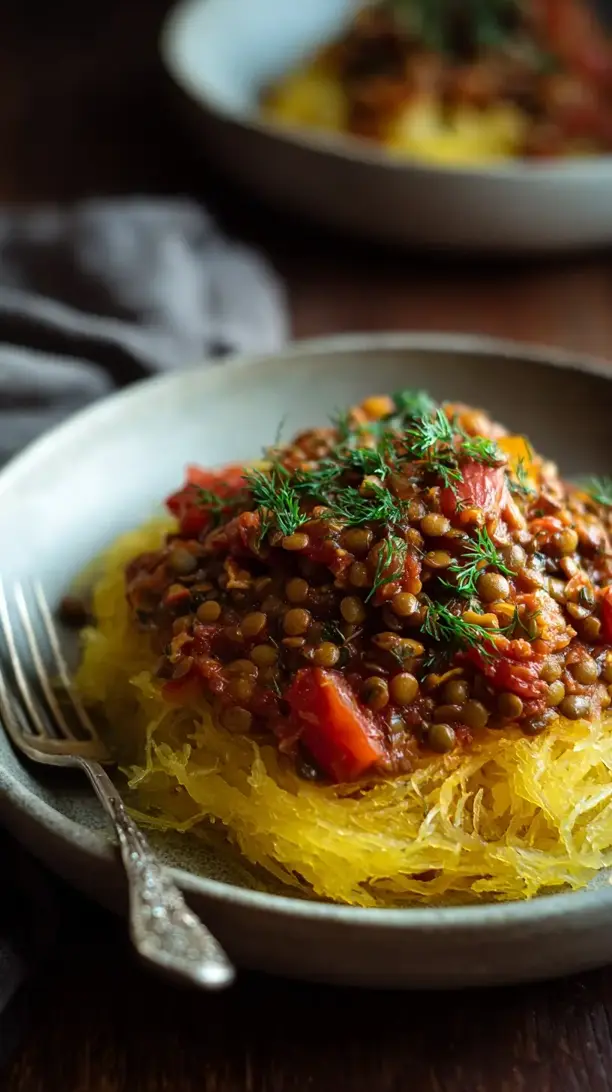

Why You’ll Love This Lentil Bolognese with Spaghetti Squash
- It’s seriously satisfying. Don’t let the lack of meat fool you—the combination of lentils and walnuts creates a wonderfully meaty texture that will keep you full and happy for hours. It’s that stick-to-your-ribs quality we all crave in a good pasta sauce.
- It’s a nutritional powerhouse. Between the protein and fiber from the lentils, the vitamins from the squash, and the healthy fats from the walnuts, this meal is doing your body a whole lot of good. It’s one of those dinners where you feel fantastic after eating it, both physically and mentally.
- The flavor is deep and complex. By taking the time to properly sauté the aromatics and let the red wine reduce, we’re building layers of flavor that rival any traditional Bolognese. The secret ingredient—a dash of soy sauce or tamari—adds an unbelievable umami depth that makes the sauce taste like it’s been simmering for hours.
- It’s wonderfully versatile. Not a fan of spaghetti squash? No problem! This lentil Bolognese is just as delicious over zucchini noodles, your favorite whole-wheat pasta, or even creamy polenta. It’s a master recipe you’ll come back to again and again.
Ingredients & Tools
- 1 large spaghetti squash (about 3-4 pounds)
- 2 tbsp olive oil, divided
- 1 yellow onion, finely diced
- 2 carrots, finely diced
- 2 celery stalks, finely diced
- 4 cloves garlic, minced
- 1 cup brown or green lentils, rinsed
- 1/2 cup dry red wine (like a Chianti or Merlot)
- 1 (28-oz) can crushed tomatoes
- 2 tbsp tomato paste
- 2 cups vegetable broth
- 1/2 cup walnuts, very finely chopped
- 1 tbsp soy sauce or tamari
- 2 tsp dried oregano
- 1 tsp dried thyme
- 1 bay leaf
- Salt and freshly ground black pepper to taste
- For serving: Fresh basil or parsley, and vegan Parmesan cheese (optional)
Tools: A large, sharp knife, a sturdy baking sheet, a large Dutch oven or heavy-bottomed pot, a wooden spoon.
A few notes on the stars of the show: using dry lentils (not canned) is key here, as they hold their shape better and absorb all the lovely sauce flavors. And those finely chopped walnuts? They’re our secret weapon for adding a bit of fat and a texture that’s eerily similar to ground meat. A little goes a long way!
Serves: 4 | Prep Time: 20 minutes | Cook Time: 1 hour | Total Time: 1 hour 20 minutes
Before You Start: Tips & Ingredient Notes
- Don’t rush the veggie sauté. This is the foundation of your sauce! Taking a good 8-10 minutes to cook the onion, carrot, and celery until they’re soft and sweet is non-negotiable for building a deep flavor base. You’ll notice the aroma change and become really fragrant.
- Get your walnuts nice and fine. You want them to blend into the sauce, not stand out as big chunks. Pulse them a few times in a food processor or chop them diligently with a knife until they have a coarse, sand-like texture. This is what creates that authentic Bolognese mouthfeel.
- Why the soy sauce? I know it sounds odd, but trust me on this. The soy sauce is packed with glutamates, which are responsible for that savory, mouthwatering umami taste. It adds a complexity that makes the sauce taste rich and meaty without any meat. You won’t taste “soy,” you’ll just taste “more.”
- Choose your squash wisely. Look for a spaghetti squash that feels heavy for its size and has a firm, pale yellow rind without any soft spots. A heavier squash usually means more strands and a better texture inside.
How to Make Lentil Bolognese with Spaghetti Squash
Step 1: Roast the Spaghetti Squash. First things first, preheat your oven to 400°F (200°C). This is the part that requires a bit of muscle—carefully slice the spaghetti squash in half lengthwise. I find the best way is to pierce it a few times with the tip of a knife and microwave it for 2-3 minutes to soften the skin slightly. Once halved, use a spoon to scrape out all the seeds and stringy bits from the center. Drizzle the cut sides with about a tablespoon of olive oil and sprinkle generously with salt and pepper. Place the halves cut-side down on a baking sheet lined with parchment paper. Roast for 35-45 minutes, or until the flesh is very tender and easily pierced with a fork.
Step 2: Start the Sofrito. While the squash is roasting, let’s build our sauce. Heat the remaining tablespoon of olive oil in your large Dutch oven or pot over medium heat. Add the diced onion, carrot, and celery (this trio is called a soffritto in Italian cooking). Cook, stirring occasionally, for about 8-10 minutes, until the vegetables have softened and the onion is translucent. You’ll notice a wonderfully sweet aroma filling your kitchen. Now, add the minced garlic and cook for just one more minute until fragrant—be careful not to let it burn!
Step 3: Bloom the Tomato Paste & Deglaze. Push the vegetables to one side of the pot and add the tomato paste to the empty space. Let it cook for a minute or two, stirring it in that spot. This “blooms” the paste, caramelizing it slightly and deepening its flavor. Now, mix it into the vegetables. Pour in the red wine to deglaze the pot, using your wooden spoon to scrape up any browned bits from the bottom. Let the wine simmer and reduce by about half, which should take 2-3 minutes.
Step 4: Simmer the Bolognese. Now, add the rinsed lentils, crushed tomatoes, vegetable broth, finely chopped walnuts, soy sauce, oregano, thyme, and the bay leaf to the pot. Give everything a really good stir to combine. Bring the sauce to a boil, then immediately reduce the heat to low, cover the pot with a lid slightly ajar, and let it simmer gently for at least 30-40 minutes. You want the lentils to be tender and the sauce to have thickened significantly. Stir it occasionally to prevent sticking. The trick is to let it go low and slow—this is where the magic happens.
Step 5: Shred the Squash & Assemble. Once the spaghetti squash is cool enough to handle, use a fork to scrape the flesh. You’ll see it separate into beautiful, spaghetti-like strands. It’s honestly so satisfying! Place a generous bed of the squash “noodles” into each bowl. Give your finished Bolognese a final taste and adjust the seasoning with more salt and pepper if needed. Remove the bay leaf. Ladle the hot, hearty lentil Bolognese over the squash strands. Top with a sprinkle of fresh basil or parsley and some vegan Parmesan if you like. Dive in while it’s hot!
Serving Suggestions
Complementary Dishes
- A simple arugula salad with lemon vinaigrette — The peppery bite of arugula and the bright acidity of lemon cut through the richness of the Bolognese perfectly, balancing the meal beautifully.
- Garlicky sautéed kale or spinach — Adding a side of dark leafy greens boosts the nutrition and adds another wonderful texture. A little garlic and a squeeze of lemon is all you need.
- Crusty, warmed sourdough bread — For those who want to make sure not a single drop of sauce goes to waste. It’s perfect for sopping up every last bit from the bowl.
Drinks
- A glass of the same red wine you cooked with — It’s a classic pairing for a reason! The fruity, acidic notes of a Chianti or Sangiovese complement the tomato-based sauce wonderfully.
- A sparkling water with lemon — For a non-alcoholic option, the bubbles and citrus are incredibly refreshing and help cleanse the palate between bites.
Something Sweet
- Dark chocolate almond clusters — A few pieces of something dark and slightly bitter after this savory meal feels just right. It’s a simple, elegant way to end the dinner.
- A small bowl of fresh berries with a dollop of coconut cream — The natural sweetness and lightness of berries provide a lovely, refreshing contrast without being too heavy.
Top Mistakes to Avoid
- Mistake: Not cooking the soffritto long enough. If you rush this step, the vegetables will retain a crunchy, raw texture and their flavor won’t sweeten and mellow, leaving your sauce tasting a bit sharp and underdeveloped.
- Mistake: Skipping the red wine reduction. If you don’t let the wine simmer and reduce, you’ll be left with a harsh, alcoholic taste in your final dish. Letting it cook off is crucial for a rounded, deep flavor.
- Mistake: Overcooking the spaghetti squash. If you roast it for too long, the strands can become mushy and watery, which will make your final dish soggy. You want it tender but still with a slight bite, al dente, just like pasta.
- Mistake: Adding salt at the very end. Season your sauce in layers. Add a pinch of salt with the vegetables, and then again when you add the liquids. Taste and adjust at the end. Lentils can absorb a lot of salt, so seasoning throughout ensures a well-balanced result.
Expert Tips
- Tip: Make it a day ahead. Like many great sauces, this lentil Bolognese tastes even better the next day. The flavors have more time to meld and intensify. Simply reheat it gently on the stove while you roast a fresh squash.
- Tip: Try a flavor booster. For an even deeper umami kick, add a teaspoon of miso paste along with the soy sauce. Or, stir in a tablespoon of nutritional yeast at the end for a cheesy, savory note.
- Tip: Freeze the sauce for later. This Bolognese freezes exceptionally well. Cool it completely, then portion it into airtight containers or freezer bags (leave some room for expansion). It will keep for up to 3 months. Thaw overnight in the fridge for a super quick future meal.
- Tip: Get creative with leftovers. Use any extra Bolognese to make a fantastic lasagna filling, a topping for baked potatoes, or even a hearty filling for stuffed bell peppers. It’s incredibly versatile.
FAQs
Can I use a different type of lentil?
You can, but the results will vary. Brown or green lentils hold their shape beautifully during cooking, which is what we want for a Bolognese texture. Red or yellow lentils will break down completely and create a much softer, more dal-like consistency, which isn’t ideal for this particular recipe. If it’s all you have, reduce the simmering time significantly to about 15-20 minutes.
My sauce is too thin. How can I thicken it?
No worries, this happens! The easiest fix is to simply continue simmering the sauce uncovered for another 10-15 minutes, allowing more liquid to evaporate. If you’re really in a rush, you can mash a small portion of the lentils and sauce against the side of the pot with your spoon—this will release their starch and help thicken the liquid around them quickly.
Is the red wine absolutely necessary? What can I use instead?
It adds a wonderful depth, but you can absolutely omit it. Instead, when you get to the deglazing step, use an additional 1/2 cup of vegetable broth. To mimic the complexity of the wine, you could add a teaspoon of balsamic vinegar at the very end of cooking to brighten the flavors.
Can I make this recipe in an Instant Pot or slow cooker?
Yes! For the Instant Pot: Use the sauté function for the soffritto steps. Then add all remaining sauce ingredients (except fresh herbs for garnish). Pressure cook on high for 15 minutes, with a natural pressure release for 10 minutes. For a slow cooker: Sauté the veggies on the stove first, then transfer everything to the slow cooker and cook on low for 6-8 hours or high for 3-4 hours. Roast the squash separately.
How should I store and reheat leftovers?
Store the squash and the Bolognese sauce in separate airtight containers in the refrigerator for up to 4 days. I don’t recommend mixing them until you’re ready to eat, as the squash can release water and become mushy. Reheat the sauce in a saucepan over medium heat, adding a splash of broth or water if it’s too thick. Reheat the squash strands quickly in the microwave or a skillet.