

Why You’ll Love This Lemon Honey Ginger Tea
- It’s the ultimate comfort in a cup. The warmth is deeply soothing, and the act of sipping something you’ve made with care is incredibly calming for a busy mind.
- You can tailor it to your exact taste. Love a serious ginger kick? Add more. Prefer it sweeter? A little extra honey does the trick. This recipe is a wonderful template for your personal perfect brew.
- It’s made with just three real ingredients. There are no hidden preservatives, artificial flavors, or mysterious “natural flavors.” You know exactly what’s going into your body, and that’s a great feeling.
- It feels like a tiny act of self-care. Taking five minutes to prepare this tea is a promise to yourself to slow down. It’s a pause button in a mug, and we could all use more of those.
Ingredients & Tools
- 1 large piece fresh ginger (about a 3-inch/8 cm piece)
- 4 cups cold water
- 2 tablespoons fresh lemon juice (from about 1 large lemon)
- 1-2 tablespoons raw honey, or to taste
- Optional: A pinch of cayenne pepper or a cinnamon stick for an extra warming kick.
Tools: A small saucepan, a fine-mesh strainer, a grater (a microplane is ideal), a stirring spoon, and your favorite mug.
The quality of your ingredients really matters here. Fresh, plump ginger root will have the most vibrant flavor and potency. And using raw, unpasteurized honey is key—not only for its nuanced flavor but because the high heat of pasteurization can destroy some of its beneficial compounds. A little goes a long way!
Serves: 2 | Prep Time: 5 mins | Cook Time: 15 mins | Total Time: 20 mins
Before You Start: Tips & Ingredient Notes
- Choosing your ginger. Look for ginger root that feels firm and heavy for its size, with taut, shiny skin. Avoid any pieces that are wrinkled or soft—they’re past their prime and won’t pack the same punch.
- Why add honey last? This is crucial! Honey is delicate. Adding it directly to boiling hot liquid can diminish its lovely flavor and some of its natural properties. Always let the tea cool for a minute or two off the heat before you stir in the honey.
- To peel or not to peel? Honestly, it’s up to you. If your ginger is organic and well-scrubbed, you can leave the thin skin on. If it’s conventional or has a particularly thick skin, a quick scrape with the edge of a spoon is the easiest way to peel it.
- Fresh lemon juice is non-negotiable. The bottled stuff just can’t compare. You’ll notice the difference immediately—fresh juice has a bright, clean acidity that balances the sweetness perfectly.
How to Make Lemon Honey Ginger Tea
Step 1: Prepare the Ginger. Give your ginger root a good scrub under cold water. If you’re peeling it, use a spoon to scrape off the skin—it’s surprisingly easy and wastes less of the precious ginger flesh. Now, for the most important part: grating. Using a fine grater or microplane, grate the entire piece of ginger. You’ll notice it creates a lovely, fragrant pulp. Don’t worry about grating your fingers—a little technique goes a long way; stop when you have a small nub left that’s tricky to hold.
Step 2: Simmer to Infuse. Place the grated ginger, including any juices, into your small saucepan. Add the 4 cups of cold water. If you’re using a cinnamon stick or a pinch of cayenne, add it now. Bring this to a boil over medium-high heat. Once it’s boiling, immediately reduce the heat to low and let it simmer gently, uncovered, for about 10-15 minutes. You want the liquid to reduce slightly and turn a beautiful pale gold color. The aroma filling your kitchen will be incredible—warm, spicy, and invigorating.
Step 3: Strain and Steep. After simmering, turn off the heat. Place your fine-mesh strainer over a heat-proof bowl or a large measuring jug. Carefully pour the tea through the strainer to catch all the ginger pulp. Press down gently on the pulp with the back of a spoon to extract every last drop of that flavorful liquid. You should be left with a clear, golden brew.
Step 4: The All-Important Cool-Down. This is a patience step! Let the strained tea sit for a full 2-3 minutes. You want it to be hot, but not scalding. Test it by dipping a clean finger in—if it’s too hot to hold your finger in comfortably, it’s too hot for the honey. This brief waiting period makes all the difference.
Step 5: Add the Lemon and Honey. Now, stir in the fresh lemon juice. Then, add your honey. Start with one tablespoon, stir until it’s fully dissolved, and then taste. This is your moment to customize. Add more honey if you like it sweeter. The tea should have a perfect balance: the spice from the ginger, the tang from the lemon, and the round sweetness from the honey.
Step 6: Serve and Savor. Pour the tea into your favorite mugs. Find a comfortable spot, wrap your hands around the warm mug, and just breathe in the steam for a moment before you take that first sip. Enjoy it while it’s hot—this tea is all about immediate comfort.
Serving Suggestions
Complementary Dishes
- A simple bowl of miso soup — The savory, umami notes of miso create a wonderful contrast to the sweet and spicy tea, making for a light yet deeply satisfying mini-meal.
- Buttery, plain toast or crackers — Sometimes, the best pairing is something simple and neutral. The crisp, bland texture helps cleanse the palate between sips of the potent tea.
- A light garden salad with a lemon vinaigrette — The thematic connection of lemon ties the meal together beautifully, creating a fresh and revitalizing lunch.
Drinks
- A tall glass of cool, still water — It might sound obvious, but staying hydrated is key. The tea is warming, and the cool water provides a perfect, refreshing balance.
- A crisp, non-alcoholic ginger beer — For a fun contrast, the carbonation and cool temperature of a good ginger beer play off the warm, flat tea in a really interesting way.
Something Sweet
- A small piece of dark chocolate (70% or higher) — The bitterness of the chocolate is a fantastic counterpoint to the sweetness of the tea. Let a small square melt on your tongue after a sip.
- A simple shortbread or butter cookie — The rich, buttery flavor and crumbly texture are a classic, comforting pairing that won’t overpower the delicate flavors of the tea.
Top Mistakes to Avoid
- Mistake: Boiling the tea for too long. A vigorous, long boil can make the ginger taste unpleasantly bitter. A gentle simmer is all you need to extract the good flavors without the harsh ones.
- Mistake: Adding the honey while the water is still boiling. I’ve messed this up before too, in a hurry. It really does make a difference! Heat can compromise the delicate flavor and aroma of raw honey. Always wait.
- Mistake: Using powdered or dried ginger. The flavor profile is completely different—much sharper and less nuanced. Fresh ginger is essential for that bright, spicy-sweet core flavor.
- Mistake: Not tasting as you go. Everyone’s palate is different. Your ginger might be more potent, your lemon more tart. Adjust the honey and lemon at the end until it sings for *you*.
Expert Tips
- Tip: Make a ginger concentrate. Simmer a large batch of grated ginger with water, strain it, and store the liquid concentrate in a jar in the fridge for up to 5 days. When you want a quick cup, just heat a few tablespoons of concentrate with hot water and add lemon and honey. It’s a serious game-changer for busy mornings.
- Tip: Freeze pre-grated ginger. Grate a big batch of ginger, spoon it into an ice cube tray, and freeze. Pop out a cube or two directly into your saucepan—no prep needed!
- Tip: Get every last bit of juice from your lemon. Before cutting and juicing, roll the lemon firmly on the countertop with the palm of your hand. This breaks down the internal membranes and makes it yield significantly more juice.
- Tip: For an extra-decadent version, use a milk frother. After adding the honey, use a handheld milk frother to whisk the tea until it’s a little foamy on top. It creates a wonderfully luxurious texture.
FAQs
Can I make a big batch of this tea and store it?
You absolutely can, but with one important caveat: store it *without* the honey and lemon. Let the ginger tea concentrate cool completely, then transfer it to an airtight jar in the refrigerator. It will keep for about 4-5 days. When you’re ready to drink, simply reheat the desired amount (gently, on the stove or in the microwave) and then stir in the fresh lemon juice and honey. This way, the fresh, bright flavors are preserved perfectly for each cup.
What’s the best way to grate ginger without it turning to mush?
A microplane zester is honestly your best friend here. It creates a fine, fluffy pulp that infuses the water beautifully. If you only have a box grater, use the side with the smallest holes. The trick is to use a firm but gentle pressure, and always grate over a plate or cutting board to catch all the precious juice that comes out along with the pulp.
My tea came out too spicy/strong. How can I fix it?
No worries, this is an easy fix! The simplest solution is to dilute it. Just add a bit more hot water to your mug until the spice level is to your liking. Next time, you can either reduce the amount of ginger you use or shorten the simmering time by a few minutes. It’s all about finding your personal preference.
Can I use ground ginger instead?
I really don’t recommend it for this particular recipe. Ground ginger has a very different, much drier and more pungent flavor profile that can become bitter when simmered. It won’t give you the same fresh, vibrant, and soothing quality that fresh ginger root provides. It’s worth seeking out the fresh stuff for the authentic experience.
Is this tea suitable for children?
It can be, with a few adjustments. The ginger can be quite strong for a young palate, so I’d suggest using a much smaller amount of ginger (maybe a 1-inch piece) and simmering it for a shorter time (5-7 minutes). Of course, always check the temperature carefully before giving it to a child. And as with anything new, it’s always best to consult with a pediatrician if you have any concerns.
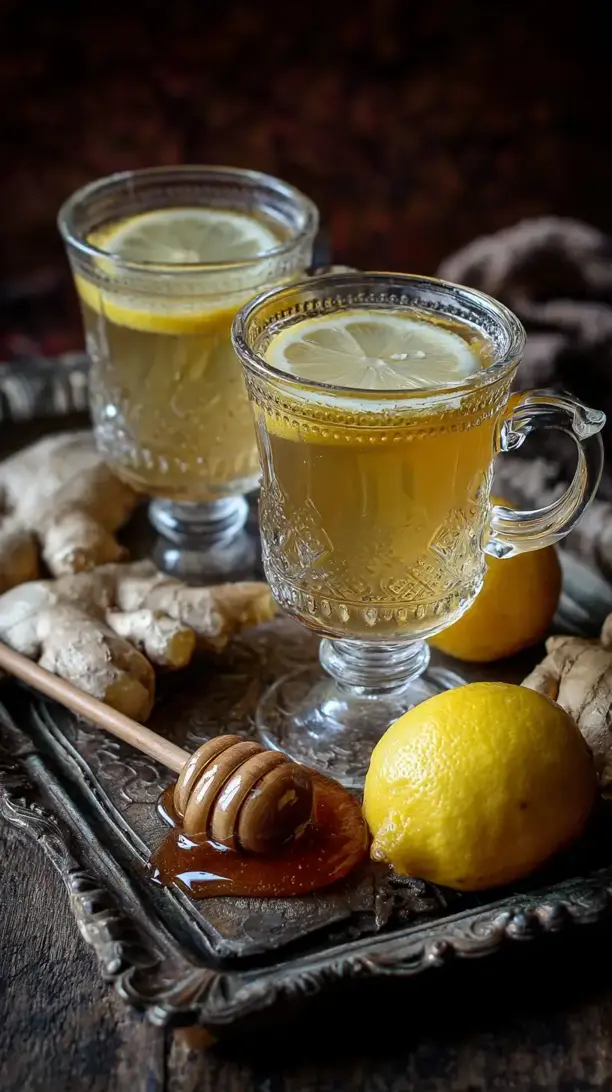
Lemon Honey Ginger Tea
Warm up with my ultimate homemade Lemon Honey Ginger Tea recipe. Made with just 3 real ingredients, it's the perfect soothing remedy for colds or a moment of cozy self-care.
Ingredients
Ingredients
-
1 large piece fresh ginger (about a 3-inch/8 cm piece)
-
4 cups cold water
-
2 tablespoons fresh lemon juice (from about 1 large lemon)
-
1-2 tablespoons raw honey (or to taste)
-
1 pinch or stick cayenne pepper or cinnamon stick (optional, for an extra warming kick)
Instructions
-
Prepare the Ginger. Give your ginger root a good scrub under cold water. If you're peeling it, use a spoon to scrape off the skin—it's surprisingly easy and wastes less of the precious ginger flesh. Now, for the most important part: grating. Using a fine grater or microplane, grate the entire piece of ginger. You'll notice it creates a lovely, fragrant pulp. Don't worry about grating your fingers—a little technique goes a long way; stop when you have a small nub left that's tricky to hold.01
-
Simmer to Infuse. Place the grated ginger, including any juices, into your small saucepan. Add the 4 cups of cold water. If you're using a cinnamon stick or a pinch of cayenne, add it now. Bring this to a boil over medium-high heat. Once it's boiling, immediately reduce the heat to low and let it simmer gently, uncovered, for about 10-15 minutes. You want the liquid to reduce slightly and turn a beautiful pale gold color. The aroma filling your kitchen will be incredible—warm, spicy, and invigorating.02
-
Strain and Steep. After simmering, turn off the heat. Place your fine-mesh strainer over a heat-proof bowl or a large measuring jug. Carefully pour the tea through the strainer to catch all the ginger pulp. Press down gently on the pulp with the back of a spoon to extract every last drop of that flavorful liquid. You should be left with a clear, golden brew.03
-
The All-Important Cool-Down. This is a patience step! Let the strained tea sit for a full 2-3 minutes. You want it to be hot, but not scalding. Test it by dipping a clean finger in—if it's too hot to hold your finger in comfortably, it's too hot for the honey. This brief waiting period makes all the difference.04
-
Add the Lemon and Honey. Now, stir in the fresh lemon juice. Then, add your honey. Start with one tablespoon, stir until it's fully dissolved, and then taste. This is your moment to customize. Add more honey if you like it sweeter. The tea should have a perfect balance: the spice from the ginger, the tang from the lemon, and the round sweetness from the honey.05
-
Serve and Savor. Pour the tea into your favorite mugs. Find a comfortable spot, wrap your hands around the warm mug, and just breathe in the steam for a moment before you take that first sip. Enjoy it while it's hot—this tea is all about immediate comfort.06


