

Why You’ll Love This Lemon Herb Roasted Vegetables
- It’s a flavor explosion. The combination of fresh lemon zest and juice with garlic and a mix of herbs like rosemary and thyme creates a bright, savory coating that soaks into every nook and cranny of the vegetables. It’s far from boring.
- The texture is everything. We’re aiming for that perfect contrast: crispy, almost charred edges with tender, melt-in-your-mouth centers. You’ll notice the difference when you give the veggies enough room on the pan.
- It’s incredibly versatile. Honestly, use whatever vegetables you have on hand! The method stays the same. This recipe is a fantastic guide, but it’s also a blueprint for clearing out your fridge’s crisper drawer.
- It makes you feel good. It’s a beautiful, colorful dish packed with natural goodness. It’s the kind of food that leaves you feeling satisfied and nourished, not heavy.
Ingredients & Tools
- 1 large sweet potato, peeled and cut into 1-inch cubes
- 3 medium carrots, cut into 1/2-inch thick coins
- 1 large red bell pepper, cut into 1-inch pieces
- 1 medium zucchini, cut into 1/2-inch thick half-moons
- 1 small red onion, cut into 1-inch wedges
- 1 head of broccoli, cut into florets
- 4 tbsp extra virgin olive oil
- Zest and juice of 1 large lemon
- 3 cloves garlic, minced
- 1 tbsp fresh rosemary, finely chopped
- 1 tbsp fresh thyme leaves
- 1 tsp kosher salt, plus more to taste
- 1/2 tsp freshly cracked black pepper
- Pinch of red pepper flakes (optional, for a little heat)
Tools: Large mixing bowls, a sturdy baking sheet (or two!), parchment paper or a silicone baking mat, a microplane or zester, a sharp chef’s knife.
A little note on the olive oil and herbs—using a good quality oil really makes a difference here as it’s the base of our marinade. And while dried herbs can work in a pinch, fresh herbs honestly bring a brighter, more aromatic quality that pairs perfectly with the lemon.
Serves: 4-6 as a side | Prep Time: 20 minutes | Cook Time: 25-35 minutes | Total Time: 45-55 minutes
Before You Start: Tips & Ingredient Notes
- Cut your vegetables uniformly. This is probably the most important tip for even cooking. If your sweet potato chunks are huge and your zucchini slices are thin, one will be burnt and the other mushy. Aim for similar sizes and thicknesses.
- Don’t skip the lemon zest! The zest holds incredible aromatic oils that the juice alone doesn’t have. It’s the secret to that powerful, fresh lemon flavor that doesn’t just taste acidic.
- Why two baking sheets? Crowding is the enemy of crispy roasted vegetables. If you pile them all onto one pan, they’ll steam instead of roast. Using two sheets ensures they have space to caramelize properly. It’s a game-changer.
- Feel free to mix and match. Don’t have broccoli? Use cauliflower. Not a fan of sweet potato? Butternut squash is a fantastic substitute. The key is to choose vegetables with similar cooking times, or add longer-cooking ones first.
How to Make Lemon Herb Roasted Vegetables
Step 1: Prep Your Veggies and Oven. First things first, preheat your oven to 425°F (220°C). This high heat is crucial for getting that lovely caramelization. While the oven is heating, wash and dry all your vegetables thoroughly. Then, get chopping! Remember our rule: try to keep the pieces roughly the same size. Place all the chopped vegetables into a very large mixing bowl—you’ll want plenty of room to toss them later.
Step 2: Create the Magical Marinade. In a smaller bowl or a measuring cup, combine the olive oil, lemon zest, lemon juice, minced garlic, chopped rosemary, thyme leaves, salt, black pepper, and red pepper flakes if using. Whisk it all together until it’s well combined. You’ll notice the aroma immediately—it’s so fresh and inviting. This little mixture is the heart and soul of the dish.
Step 3: Toss Everything Together. Now, pour the marinade over the prepared vegetables in the large bowl. Using your hands or a large spoon, toss everything together really, really well. You want every single piece of vegetable to be glistening with the herby, lemony oil. Don’t be shy—get in there and make sure it’s evenly coated. This step is honestly kind of therapeutic.
Step 4: Arrange on Baking Sheets. Line your baking sheets with parchment paper or silicone mats for easy cleanup. Now, here’s the key: spread the vegetables out in a single layer. They shouldn’t be touching or piled on top of each other. If they are too crowded, they’ll steam. If you need to use two baking sheets, do it! It’s worth it for the perfect texture.
Step 5: Roast to Perfection. Place the baking sheets in the preheated oven. Roast for about 15 minutes, then carefully remove the pans and use a spatula to flip and shuffle the vegetables around. This helps them cook evenly and get color on all sides. Put them back in the oven for another 10-20 minutes. You’re looking for tender vegetables with browned, crispy edges. The carrots and sweet potatoes should be easily pierced with a fork.
Step 6: The Final Touch. Once the vegetables are out of the oven, let them sit for a minute on the pan. Then, transfer them to a serving platter. I like to give them one final squeeze of fresh lemon juice and a sprinkle of flaky sea salt right at the end. This brightens everything up beautifully and adds another layer of flavor and texture.
Serving Suggestions
Complementary Dishes
- Grilled Chicken or Fish — The bright, acidic notes of the vegetables cut through the richness of grilled meats beautifully. A simple piece of lemon-herb salmon or a juicy chicken breast makes for a perfectly balanced plate.
- Creamy Polenta or Quinoa — Spoon these vibrant veggies over a bed of soft, creamy polenta or fluffy quinoa. The grains will soak up all the delicious lemony juices, making every bite incredible.
- As a Hearty Salad Topper — Let the vegetables cool slightly and toss them into a bed of leafy greens like arugula or spinach. Add some crumbled feta or goat cheese for a fantastic warm salad.
Drinks
- A Crisp Sauvignon Blanc — The citrusy and herbal notes in this wine are a match made in heaven for the lemon and thyme in the vegetables. It’s a classic pairing for a reason.
- Sparkling Water with Lemon — For a non-alcoholic option, nothing beats ice-cold sparkling water with an extra slice of lemon. It’s refreshing and continues the citrus theme perfectly.
- A Light Pale Ale — The slight bitterness of a pale ale can stand up to the caramelized flavors of the veggies without overpowering them.
Something Sweet
- Lemon Sorbet — Double down on the lemon theme! A light, palate-cleansing lemon sorbet is the perfect way to end a meal that features these vegetables.
- Almond Biscotti — The nutty, crunchy texture of biscotti provides a lovely contrast to the soft, savory vegetables, especially with a cup of coffee.
- Fresh Berries with Whipped Cream — Simple, fresh, and not too heavy. A bowl of mixed berries with a dollop of lightly sweetened whipped cream feels light and satisfying.
Top Mistakes to Avoid
- Mistake: Crowding the pan. I’ve said it before and I’ll say it again! This is the number one reason roasted vegetables turn out soggy. They need their personal space to release moisture and caramelize properly. Use two pans if you need to.
- Mistake: Not preheating the oven. Putting the vegetables into a cold oven will cause them to steam and become mushy before they ever have a chance to roast. A screaming hot oven from the start is non-negotiable.
- Mistake: Skipping the flip. Taking the time to shuffle the veggies halfway through cooking ensures that they get evenly browned on all sides. Otherwise, you might have one side burnt and the other pale.
- Mistake: Using bottled lemon juice. Honestly, the flavor just isn’t the same. Freshly squeezed lemon juice and zest are essential for that bright, authentic flavor. It’s worth the extra minute of effort.
Expert Tips
- Tip: Par-cook harder veggies. If you’re using vegetables like potatoes or carrots that take much longer to cook than, say, zucchini, you can give them a 3-4 minute head start in the microwave or a quick blanch in boiling water before tossing them with the oil and other quicker-cooking veggies.
- Tip: Add delicate herbs at the end. While hardy herbs like rosemary and thyme can stand up to the heat, softer herbs like basil or parsley will wilt and lose their flavor. Stir them in right after the vegetables come out of the oven for a fresh pop.
- Tip: Use the convection setting. If your oven has a convection or fan setting, use it! The circulating air helps evaporate moisture faster, leading to even crispier results. Just reduce the temperature by 25°F and keep a close eye on them, as they may cook a bit quicker.
- Tip: Make a double batch for meal prep. These vegetables are fantastic cold or reheated. They’re amazing tossed into pasta salads, grain bowls, or even on top of a pizza throughout the week. A little goes a long way for easy lunches.
FAQs
Can I make these roasted vegetables ahead of time?
Absolutely, you can! They are a great meal-prep option. Let them cool completely after roasting, then store them in an airtight container in the refrigerator for up to 4 days. To reheat, spread them on a baking sheet and warm them in a 350°F oven for about 10-15 minutes to regain some of their crispiness. Microwaving will work but will make them softer.
What other vegetables work well in this recipe?
So many! Think about vegetables in terms of cooking time. Longer-cooking options include: potatoes, winter squash (butternut, acorn), cauliflower, and Brussels sprouts (halved). Medium-to-quick cooking veggies include: asparagus, mushrooms, cherry tomatoes (whole), and green beans. Just adjust when you add them to the pan if the times vary greatly.
My vegetables are sticking to the pan. What did I do wrong?
This usually happens for one of two reasons: not enough oil, or the oven wasn’t hot enough. Make sure you’re using a sufficient amount of oil to coat everything, and always preheat your oven properly. Using parchment paper or a silicone baking mat is also a foolproof way to prevent sticking.
Can I use dried herbs instead of fresh?
You can, but the flavor will be more muted. The general rule is to use one-third the amount of dried herbs since they are more concentrated. So, for 1 tablespoon of fresh rosemary, use about 1 teaspoon of dried. The fresh flavor is really superior here, though.
How do I know when the vegetables are done?
The best test is the fork test. Pierce a piece of the hardest vegetable (like a sweet potato or carrot cube) with a fork. It should slide in easily without resistance. Visually, you’re looking for tender insides and browned, slightly crispy edges. They should look invitingly caramelized, not burnt.
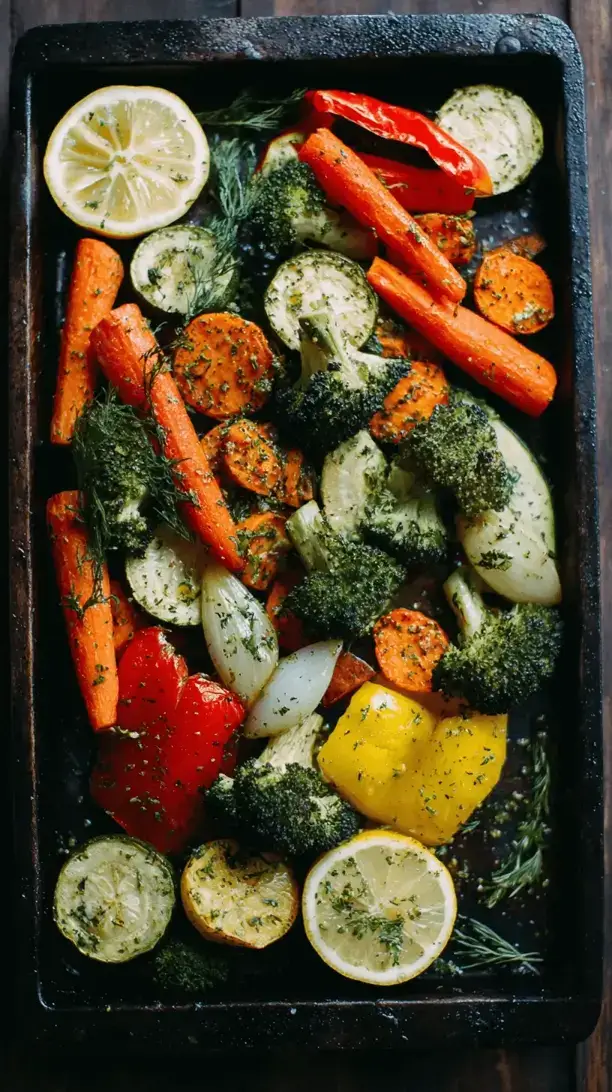
Lemon Herb Roasted Vegetables
Whip up incredibly flavorful lemon herb roasted vegetables! This easy recipe creates crispy, caramelized veggies with a zesty marinade. Perfect weeknight side or meal prep superstar.
Ingredients
Ingredients
-
1 large sweet potato (peeled and cut into 1-inch cubes)
-
3 medium carrots (cut into 1/2-inch thick coins)
-
1 large red bell pepper (cut into 1-inch pieces)
-
1 medium zucchini (cut into 1/2-inch thick half-moons)
-
1 small red onion (cut into 1-inch wedges)
-
1 head broccoli (cut into florets)
-
4 tbsp extra virgin olive oil
-
1 large lemon (zest and juice)
-
3 cloves garlic (minced)
-
1 tbsp fresh rosemary (finely chopped)
-
1 tbsp fresh thyme leaves
-
1 tsp kosher salt (plus more to taste)
-
1/2 tsp black pepper (freshly cracked)
-
Pinch red pepper flakes (optional, for a little heat)
Instructions
-
Prep Your Veggies and Oven. First things first, preheat your oven to 425°F (220°C). This high heat is crucial for getting that lovely caramelization. While the oven is heating, wash and dry all your vegetables thoroughly. Then, get chopping! Remember our rule: try to keep the pieces roughly the same size. Place all the chopped vegetables into a very large mixing bowl—you'll want plenty of room to toss them later.01
-
Create the Magical Marinade. In a smaller bowl or a measuring cup, combine the olive oil, lemon zest, lemon juice, minced garlic, chopped rosemary, thyme leaves, salt, black pepper, and red pepper flakes if using. Whisk it all together until it's well combined. You'll notice the aroma immediately—it's so fresh and inviting. This little mixture is the heart and soul of the dish.02
-
Toss Everything Together. Now, pour the marinade over the prepared vegetables in the large bowl. Using your hands or a large spoon, toss everything together really, really well. You want every single piece of vegetable to be glistening with the herby, lemony oil. Don't be shy—get in there and make sure it's evenly coated. This step is honestly kind of therapeutic.03
-
Arrange on Baking Sheets. Line your baking sheets with parchment paper or silicone mats for easy cleanup. Now, here's the key: spread the vegetables out in a single layer. They shouldn't be touching or piled on top of each other. If they are too crowded, they'll steam. If you need to use two baking sheets, do it! It's worth it for the perfect texture.04
-
Roast to Perfection. Place the baking sheets in the preheated oven. Roast for about 15 minutes, then carefully remove the pans and use a spatula to flip and shuffle the vegetables around. This helps them cook evenly and get color on all sides. Put them back in the oven for another 10-20 minutes. You're looking for tender vegetables with browned, crispy edges. The carrots and sweet potatoes should be easily pierced with a fork.05
-
The Final Touch. Once the vegetables are out of the oven, let them sit for a minute on the pan. Then, transfer them to a serving platter. I like to give them one final squeeze of fresh lemon juice and a sprinkle of flaky sea salt right at the end. This brightens everything up beautifully and adds another layer of flavor and texture.06


